The National Disability Insurance Scheme (NDIS) has delivered much-needed support for children and young adults who have a neurodevelopmental condition or other diagnosed disability. Psychology service provision is one of these supports. However, in recent times the National Disability Insurance Agency (NDIA) has begun to shift away from funding psychological support via the NDIS, seeing Psychology as a treatment service for mental health challenges faced by NDIS participants and more appropriately funded via the Better Access to Mental Health Care scheme.
Central to this development is an apparent perception that psychologists only or predominantly provide a clinical service for mental health concerns experienced by NDIS participants. Though this may be true in many instances, it does not recognise the developmental role and service delivered by psychologists; especially with children and young adults (Pearce, 2011, 2016).
For many children and young adults their mental health concerns are secondary to their developmental diagnosis or disability. In the absence of a psychologist already being involved via NDIS funding, these mental health concerns may be best addressed via the Better Access to Mental Health Care scheme. However, in most instances, the best use of psychologist skills, knowledge and techniques is to provide a developmentally-focused service that supports the attainment of developmental competencies that, in turn, support a positive approach to life and relationships; including in relation to their responsiveness to other NDIS funded supports. Such a psychology service is also anticipated to have a positive impact on the mental health and wellbeing of the NDIS participant.
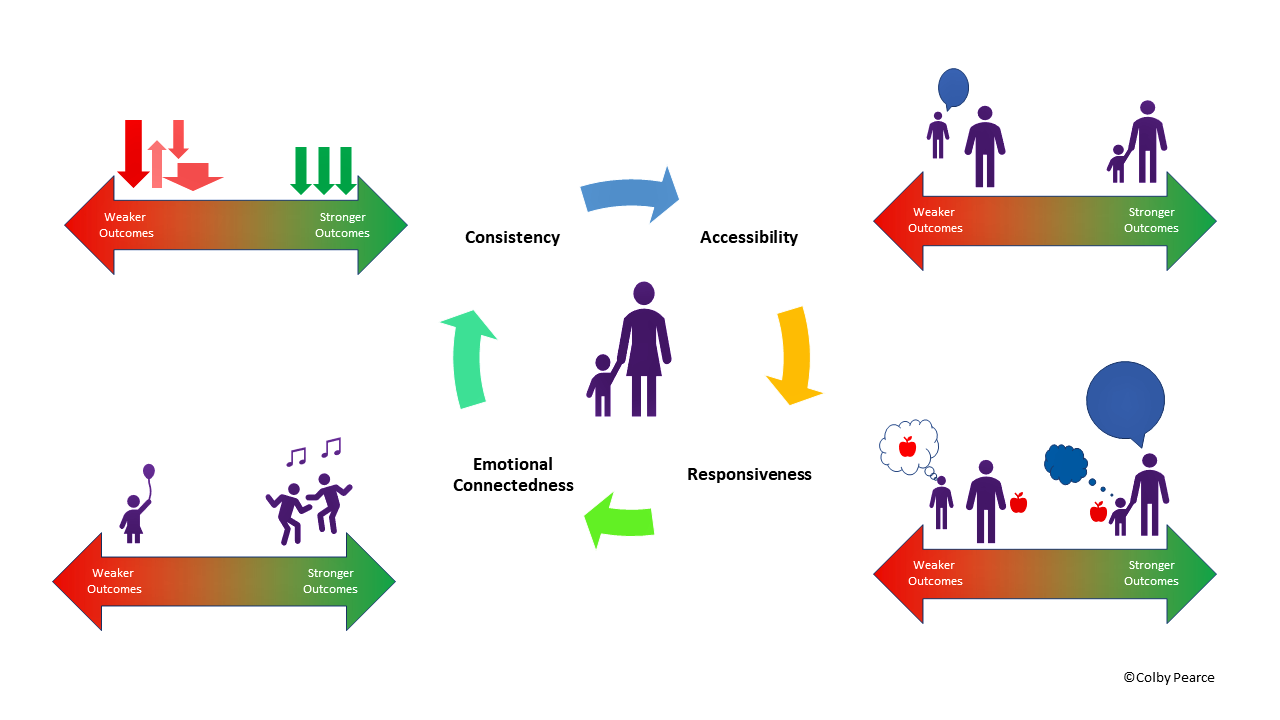
One population of NDIS clients who benefit from a developmental service delivered by psychologists with relevant expertise are those who have experienced adversity and trauma during the developmental period, such that their capacity to engage with their world, including with people and experiences, is compromised (Pearce, 2010, 2016). In such circumstances, all aspects of development are likely to be compromised (Pearce, 2016). This population of clients are anticipated to benefit from specialist psychology services that target the achievement and maintenance of milestones that support developmental growth and, mental health and wellbeing. These milestones include the adoption and maintenance of secure attachment representations, affect regulation and the maintenance of optimal arousal for growth and wellbeing, and functional learning about the accessibility and responsiveness of others in a caregiving role (Pearce, 2010, 2012, 2016).
Denial of a funded psychology service via the NDIS leaves these participants with either no service, or an inadequately funded service via the Better Access to Mental Health Care scheme. The latter must be mental health focused and, potentially, never addresses the core developmental issues that perpetuate mental health and developmental challenges faced by NDIS participants, which hamper the provision and effectiveness of other NDIS supports more generally.
Bio of Author
Colby Pearce is a Psychologist registered with the Psychology Board of Australia and holds an area of practice endorsement in Clinical Psychology. Colby has held professional registration as a psychologist for the past thirty years. Much of Colby’s career has been devoted to service provision to children and young people recovering from complex trauma in the home. Colby has written periodical articles and two books based on his work in this area. Colby has also developed and implemented therapeutic programs in Australia and Ireland. His expertise about childhood trauma is widely known. In addition, from 2010 to 2024, Colby held a number of positions in the National Health Practitioner Regulation Scheme, including Chair and Deputy Chair roles.
References:
Pearce, C.M. (2016) A Short Introduction to Attachment and Attachment Disorder. (Second Edition). London, Jessica Kingsley Publishers
Pearce, C.M (2012). Repairing Attachments. BACP Children and Young People, December, 28-32
Pearce, C.M. (2011). A Short Introduction to Promoting Resilience in Children. London, Jessica Kingsley Publishers
Pearce, C.M. (2010). An Integration of Theory, Science and Reflective Clinical Practice in the Care and Management of Attachment-Disordered Children – A Triple A Approach. Educational and Child Psychology (Special Issue on Attachment), 27 (3): 73-86










 Attachment and Resilience