Attachment is an important consideration in decisions that are made in Child Protection. Attachment security is an aspirational goal for children and young people who could not be safely cared for at home with their birth family. Though this is a worthy goal, it’s application is vexed in consideration of:
· the fact that children can (and generally do) form multiple attachment relationships; and
· the difference between attachment relationship and attachment style (or relative security).
Children and young people form attachments to caregivers who provide physical and emotional care, have continuity and consistency in their life, and an emotional investment in their life (Howes and Spieker, 2016). We refer to these people at ‘attachment figures’. Children can form different attachment relationships to different attachment figures, depending on their experience of care from them. As to which attachment relationships are most influential over a child’s overall attachment style, the evidence favours an integrative formulation, whereby a child’s relative attachment security (and associated social and emotional development and approach to life and relationships) is best predicted by their network of attachment relationships rather than their attachment to any single attachment figure alone (Howes and Spieker, 2016).
In consideration of the above and my own experience observing, thinking about, and writing about attachment for thirty years, it is helpful to think about attachment style as falling on a spectrum of attachment security (hence my reference to “relative security”); from secure at one end of the spectrum to disordered at the other end. Where a child or young person predominantly sits on this spectrum depends on the network of attachment relationships they have, and what type of attachment relationship they have with each of their attachment figures. It has also been my observation that overall attachment style (or relative security) is not fixed, but rather is best thought of as dependent their historical and contemporary experiences of relatedness to attachment figures, and their broader relational world.
What underpins attachment style are a set of (typically) unconscious beliefs about self, other and world. They are variously referred to in the psychological literature as ‘internal working models’, ‘core beliefs’, or ‘schema’. I favour the term ‘attachment representations’. These beliefs are considered to develop in the context of attachment experiences and influence a child or young person’s approach to life and relationships. At the ‘secure’ end of the attachment spectrum these beliefs that influence the child or young person’s approach to life and relationships are typically optimistic, and are reflected in positive adjustment. At the disordered end these beliefs about self, other, and world are very negative and are reflected in significant maladjustment.
How a child predominantly approaches life and relationships reflects their underlying relative security and associated attachment beliefs. However, children are complex, just as we all are. Like us, they don’t just hold beliefs associated with their predominant relative security. They can approach life and relationships under the influence of beliefs at either end of the attachment spectrum, and everywhere in between, depending on their historical and contemporary attachment and relational experiences.
For example, many, if not most, adults who read this opinion will mostly approach life and relationships under the influence of relatively positive attachment beliefs. But something can happen in their life and they can move very easily to the ‘disordered’ end of the spectrum. I observed this while training sector professionals during the covid pandemic, where most adults were able to reflect that in April 2020 they approached life under the influence of beliefs that they were weak and vulnerable, others were a threat, and the world was unsafe.
Turning to a child in out-of-home care, it is possible for them to have a maladaptive attachment to a parent, and relatively more functional attachments to other significant adults in their life, including their other parent, grandparents, their foster mother, familiar school staff, their siblings, and even their therapist. Their overall attachment style will be heavily influenced by their attachment to their parent, but also their relational experiences and associated attachments to other adults who provide (or have provided) physical and emotional care, have continuity and consistency in their life, and an emotional investment in their life. Conceivably, the more positive attachment experiences the child able to have, the greater their relative security and a relatively functional approach to life and relationships.
In terms of the goal of ‘attachment security’, it is worth noting the general finding of research using the Strange Situation paradigm that approximately 60% of young children in western countries have a secure attachment to their mother. In my opinion, this much overlooked research finding is cause for tempering our expectations for those children who could not safely be cared for at home with their birth family.
A more realistic goal, in my opinion, is to facilitate as many positive relationships and relational experiences as possible for children in out-of-home care, in anticipation of this strengthening the influence of secure attachment representations over their approach to life and relationships.
Further, it is my observation and opinion that a much overlooked way of strengthening a child or young person’s relative security is to repair their relationship with their birth parents/family. Relational repair is conceived to have the effect of reducing the negative impact on overall attachment style and relative security of the relationship where harm occurred, and support the development of functional new attachment relationships.
This should be our position when making decisions about contact with birth family for children and young people who could not be safely cared for at home; that the key to future attachment security is repair of the relationships where harm occurred.
References:
Howes, C and Spieker, Attachment Relationships in the Context of Multiple Caregivers. In Cassidy, J & Shaver, P.R. Handbook of Attachment: Theory, Research and Clinical Applications, Guildford Press, London, 2016
Pearce, C.M. (2016) A Short Introduction to Attachment and Attachment Disorder (Second Edition). London, Jessica Kingsley Publishers
Pearce, C.M (2012). Repairing Attachments. BACP Children and Young People, December, 28-32
Pearce, C.M. (2010). An Integration of Theory, Science and Reflective Clinical Practice in the Care and Management of Attachment-Disordered Children – A Triple A Approach. Educational and Child Psychology (Special Issue on Attachment), 27 (3): 73-86
The National Disability Insurance Scheme (NDIS) has delivered much-needed support for children and young adults who have a neurodevelopmental condition or other diagnosed disability. Psychology service provision is one of these supports. However, in recent times the National Disability Insurance Agency (NDIA) has begun to shift away from funding psychological support via the NDIS, seeing Psychology as a treatment service for mental health challenges faced by NDIS participants and more appropriately funded via the Better Access to Mental Health Care scheme.
Central to this development is an apparent perception that psychologists only or predominantly provide a clinical service for mental health concerns experienced by NDIS participants. Though this may be true in many instances, it does not recognise the developmental role and service delivered by psychologists; especially with children and young adults (Pearce, 2011, 2016).
For many children and young adults their mental health concerns are secondary to their developmental diagnosis or disability. In the absence of a psychologist already being involved via NDIS funding, these mental health concerns may be best addressed via the Better Access to Mental Health Care scheme. However, in most instances, the best use of psychologist skills, knowledge and techniques is to provide a developmentally-focused service that supports the attainment of developmental competencies that, in turn, support a positive approach to life and relationships; including in relation to their responsiveness to other NDIS funded supports. Such a psychology service is also anticipated to have a positive impact on the mental health and wellbeing of the NDIS participant.
One population of NDIS clients who benefit from a developmental service delivered by psychologists with relevant expertise are those who have experienced adversity and trauma during the developmental period, such that their capacity to engage with their world, including with people and experiences, is compromised (Pearce, 2010, 2016). In such circumstances, all aspects of development are likely to be compromised (Pearce, 2016). This population of clients are anticipated to benefit from specialist psychology services that target the achievement and maintenance of milestones that support developmental growth and, mental health and wellbeing. These milestones include the adoption and maintenance of secure attachment representations, affect regulation and the maintenance of optimal arousal for growth and wellbeing, and functional learning about the accessibility and responsiveness of others in a caregiving role (Pearce, 2010, 2012, 2016).
Denial of a funded psychology service via the NDIS leaves these participants with either no service, or an inadequately funded service via the Better Access to Mental Health Care scheme. The latter must be mental health focused and, potentially, never addresses the core developmental issues that perpetuate mental health and developmental challenges faced by NDIS participants, which hamper the provision and effectiveness of other NDIS supports more generally.
Bio of Author
Colby Pearce is a Psychologist registered with the Psychology Board of Australia and holds an area of practice endorsement in Clinical Psychology. Colby has held professional registration as a psychologist for the past thirty years. Much of Colby’s career has been devoted to service provision to children and young people recovering from complex trauma in the home. Colby has written periodical articles and two books based on his work in this area. Colby has also developed and implemented therapeutic programs in Australia and Ireland. His expertise about childhood trauma is widely known. In addition, from 2010 to 2024, Colby held a number of positions in the National Health Practitioner Regulation Scheme, including Chair and Deputy Chair roles.
References:
Pearce, C.M. (2016) A Short Introduction to Attachment and Attachment Disorder. (Second Edition). London, Jessica Kingsley Publishers
Pearce, C.M (2012). Repairing Attachments. BACP Children and Young People, December, 28-32
Pearce, C.M. (2011). A Short Introduction to Promoting Resilience in Children. London, Jessica Kingsley Publishers
Pearce, C.M. (2010). An Integration of Theory, Science and Reflective Clinical Practice in the Care and Management of Attachment-Disordered Children – A Triple A Approach. Educational and Child Psychology (Special Issue on Attachment), 27 (3): 73-86
Recently, I was invited to deliver training to staff of a local children’s services organisation. I chose to deliver the training on a reflective process for understanding and responding therapeutically to behaviours of concern exhibited by children and young people recovering from a tough start to life. The session was recorded, and I have provided an edited version below.
To get the most out of the training video, I suggest you download the accompanying handout here.
Transcript
Hi, I’m Colby Pearce. Recently, I was asked to deliver training to a local organisation and its staff with no brief about what that training would be about. So I decided to deliver the training on the topic of responding therapeutically to behaviours of concern.
The training takes you through a reflective process with the intention of being able to answer three critical questions. What’s really going on for the child or young person when they exhibit the behaviour? How can we respond therapeutically to the real reasons for their behaviour and how will we know that we’ve made a difference? The training was recorded and the following video is an innocent version of it. It’s probably of most usefulness to practitioners in child protection, foster carers, kinship carers, residential carers and teachers of children and young people recovering from a tough start to life and other professional stakeholders in their life.
I hope you take something positive from the training. There is a handout to go with the training, a link to which I’ve included in the description of this video. If you take something positive from the video, please give it a thumbs up and subscribe to my channel.
Your interest is highly encouraging of me to continue to make high quality content for those who interact with children and young people recovering from a tough start to life in care, professional and other stakeholder roles. I thought I’d talk to you about something that probably comes up a lot in our work. So I thought I’ll talk about behaviour management because carers, foster carers, kinship carers often like to talk about behaviour management.
What should we do about this behaviour or that behaviour? Notwithstanding that probably it is the case that most if not all carers in the sector these days get training that argues perhaps for relying less on conventional behaviour management strategies and more on providing a therapeutic milieu in the home, a trauma-informed milieu. And certainly also in schools there’s conventional behaviour management strategies are used all the time. So I’m intending to make this a bit of a reflective process.
Hopefully you’ve all got pen and paper and handy. What I want you to do in the first instance is I want you to just think of a child or young person who you either care for or working with and on a piece of paper just want you to write down their name. And now what I want you to do is just is to have a bit of a think about a behaviour that you or others are concerned about that that child exhibits, a child or young person exhibits.
So just write down underneath their name a behaviour that is of concern. In terms of responding therapeutically, which is my aim to impart today, responding therapeutically to behaviours of concern. This is really the simple structure that I am going to follow.
It’s part of the care curriculum, a curriculum that I’ve written over a long period of time. The three essential parts of what’s really going on. How can I respond therapeutically to what’s really going on? And how will I know that I’m successful in my endeavours? So how do we know that we’re successful when we intervene or respond in relation to a presenting issue? You should have the name of a child and a behaviour that you or others are concerned about.
The next thing I’d like you to do is answer these three questions about the child. We’ll write an answer to these three questions about the child. First one is if they could or would, how would they truthfully describe themselves, other people and their world? Don’t worry if it’s very negative because that’s common in our children.
How fast is their motor run? That is, how activated do you think their central nervous system is? Does it run really fast? Often kids whose nervous systems run very fast have problems with sleeping, they display high levels of activity and agitation. Although that can be confusing because also kids whose nervous system is under aroused can be impulsive and overly active as well. Sleep is affected, the children seem to have trouble going to sleep, staying asleep, wake up early but seem to function better than you would expect.
On the lack of sleep, are they anxiety prone or prone to tantrums? Their anxiety, proneness and tantrums tend to be associated with the motor running a bit fast. So just write down what you think, how fast you think their motor is running. Do you think it’s normal? Do you think they’re just very laid back and it’s slow? Or maybe they have ADHD.
With ADHD we have an underactive nervous system that is corrected through psychostimulant medication which has the so-called paradoxical effect of them calming down. And the calming down bit is that they’re less impulsive, less prone to trying to seek movement and activity to increase central nervous system arousal and better able to think and concentrate clearly. It’s a trickier one with ADHD because the behaviours you see are not dissimilar to what you see with a highly anxious child.
But it’s really important to discern whether it’s one or the other because it impacts how you might respond to it. The third thing I’d like you to consider is what do they appear to have learnt about how to get their needs met? Remembering that kids learn about adult responsiveness from very young, from infancy. So the sorts of things to be turning your mind to there include, you know, are they pretty relaxed about adults responding to them? Are they really demanding? Can’t let the adult out of this science.
Will ask for things that they don’t even want or need but just to reassure themselves that they have access to needs provision. Remembering that normality and abnormality are differentiated by frequency, intensity and duration. So by which I mean, if you made an exhaustive list of behaviour of concern that children and young people might exhibit, a good proportion of them would be exhibited by most children.
The difference is frequency, intensity and duration. There are a few exceptions like sexualised behaviour, for example, although there is a developmental phase when children are more interested in their reproductive parts. And with engaging with others a little around that.
But not, you know, not to the extent that we see because it’s more exploratory and interest rather than symbolic, for want of a better word, and representative of unlawful things that have happened to them. Well, hopefully you’ve all got something down for that. The figure on the to the right of it, hopefully you can see it in full, is the AAA model.
I’ve been using the AAA model for a long time as in my work as the basis for understanding the internal world of children and young people. It was first published in 2009, then several times since, including in international peer-refereed journals. But it’s meant to be a model that facilitates us having an understanding of what’s going on for our children and young people.
So the first bits where I asked if they could or would, how would the child truthfully describe themselves to other people in their world, that maps onto attachment, particularly in the AAA model, whereby what we’re talking about is the internal working model is a term that you would see commonly in the attachment literature. I use the term attachment representations. Schema, self-schema, core schema are used.
But what we’re really talking about is the core beliefs that a child or a young person has about themselves, other people and their world. And we all have these. And we all have a set of beliefs that we are lovable, capable, deserving, worthy, the adults are kind, understanding, accessible, responsive, and the world is a safe place.
We also have beliefs that the world can be an unsafe place, that we’re weak and vulnerable, and that other people are unsafe. And what we tend to do if you think about attachment as a spectrum, people kind of move along that spectrum based on what’s happening in their life in terms of these attachment representations. So what I would say to you is that our children and young people, they spend a lot of time down the really negative end.
I’m bad, unlovable, unworthy, adults are mean and nasty and uncaring, the world is an unsafe place. And sometimes they’re up the other end, you know, where they’re starting to believe more in themselves than in others. Sometimes they’re up there too much, they’re down the other end.
Whereas most of us, we’re a lot of time up the good end, secure end, but we do sometimes go down the other end. And the best recent example of that was in about March and April of 2020, when suddenly the world became unsafe, other people were unsafe and a threat, potentially threatening, and we were vulnerable and weak. So we all have it within us to go to that darker place.
But our children, when I say our children and young people, or our children, I mean the children that we work with, they spend too much time there. And, I mean, it’s beyond the scope of this presentation to talk exhaustively about attachment, but where they predominantly sit on that spectrum, really negative down one end, really positive up the other end, secure, disordered, where they sit really just depends on things that are happening in their life now, but more so has a lot to do with the kind of relationships that they’ve had in their life, key relationships. Because most of the young people who we work with have experienced relational trauma, they’re kind of prone to being down the negative end more, but we can move them more towards the positive end by facilitating lots of positive experiences of relatedness and repair of damaged relationships.
That’s why we do family contact. So this is attachment, this is the attachment part of it, and the attachment part of the AAA model, as I said, is what would they say about themselves, other people and their world, if they could or would. Remembering that our children don’t always have the language to express this, it’s more experienced and felt.
Anyway, that’s kind of like their thoughts, feelings. The thing about emotions is that emotions are thought to have two components, arousal and valence. So valence just means good or bad, arousal means level of activation of your nervous system.
So when you’re experiencing emotions, your motor runs faster. When you’re experiencing really strong emotions, your motor runs really fast and is in danger of blowing up. So arousal is the second A of the AAA model.
Our children, they tend to get to blow up really easily. A big part of that is that they idle quickly, they’re highly strung by and large, but they also negatively interpret their world through those attachment representations. So they see threat, they see neglect or they see withdrawal of care everywhere, even when it doesn’t exist.
So they’re particularly anxiety prone, our children. Anxiety is most likely to occur when there’s negative, overly negative appraisals of a situation and your motor’s running too fast. So our children, as I said, motor running too fast.
Accessibility to needs provision is an interesting one. So the literature, the child trauma literature is over the time that I’ve been working and before that, well before that, a lot of it was psychoanalytic thought, but probably attachment theory was the predominant theoretical approach to understanding what’s going on for our kids and young people. Then from about the mid-90s, which is when I started my career in DCP, the work of Bruce Perry and others started to be widely known and thought about and integrated.
So we ended up with content and knowledge around central nervous system development, the neurobiology of trauma. In reality, if you distill it all down, what we’re talking about are nervous systems that are not well developed to be thinking through things before acting and overly prone to activating the deeper structures of the brain that result in increased arousal or high levels of arousal. Apart from my early work in DCP, I did a lot of work in inter-country adoption.
In inter-country adoption, children were coming from quite disadvantaged care environments overseas into quite enriched care environments here in Australia, but they would continue to behave as if they were in the old care environment where they were in an orphanage in a third world country where there was a high ratio of kids to adults, so it was really difficult for babies to get their needs responded to in a timely way. So what it prompted me to do is to think a lot about what children learn in their first days about how to get their needs met. In the AAA model, it’s dealing with the kids’ thoughts, their feelings, so thoughts and feelings, attachment, arousal, and their learning, thoughts, feelings, and learning.
So what we know, probably the best paradigm for understanding what they learn is the operant conditioning paradigm. The operant conditioning paradigm is the paradigm that underpins most, if not all, of what we refer to as conventional behaviour management. So as we’re growing up, we try different behaviours and some behaviours get a response from others, a desirable response from others.
We refer to that as a reinforcer. So a child will do something, they’ll get a desirable response from someone. If they get that response often enough and consistently enough, that behaviour becomes a useful part of their repertoire and they’ll keep doing it.
It’s a bit like when a kid starts school and the teacher says, put your hand up when you need me. Kids have to learn about putting their hands up. If the teacher responds consistently enough, the kids will quickly learn that that’s how you get the teacher’s attention and they’ll put their hand up.
Now they’re not the kids that we’re seeing. I did an international survey a few years back, put a whole great big exhaustive list in of behaviours and potential behaviours of concern. I got responses from kinship carers and foster carers from western countries around the world.
On it they could put a checkmark next to as many behaviours of concern that they were observing in their home. And the most commonly reported was how demanding the children are. Can’t speak on the phone, can’t have someone over for a coffee, can’t even go to the toilet or have a shower without them trying to maintain connection.
We certainly do have kids who alternate between overly demanding and overly self-reliant. By self-reliant, I’m talking about things like, you know, getting up in the night and raiding the fridge in the cupboards, not even getting up in the night, just doing that during the day. But more often than not, they’re just highly demanding.
So this is the AAA model, the way they think, the way they feel and what they’ve learned about how to get your needs met. So moving on to the step number four, with regard to that behaviour of concern that you wrote down for the particular child a little bit earlier, and thinking about your answer to those previous three questions. How would they describe themselves? How fast is their motor running? What did they learn about how to get their needs met? I want you to consider what might be the real reason for the behaviour of concern.
Write that down. What do you think is the real reasons or reasons for the behaviour? And as it says on the handout, if you’re not quite sure, just think about those three further questions. What’s the purpose? Does the behaviour serve? What is their intention when engaged in the behaviour? What needs does the behaviour meet? The behaviour of concern may be that they’re quite demanding.
And as I said, that’s the most common complaint or observation of carers in this space. The conventional behaviour management strategy is to ignore them, take away the reinforcer. And it works.
It works if that behaviour arose under conditions of consistent reinforcement. Now, our children were not raised under the conditions of consistent reinforcement. In real life, in our life, with our children, they’re not responsive to the carer’s attempts to extinguish the behaviour by not responding to it.
They’ll just keep trying and trying and trying and trying and trying, because they’ve learned that if you keep going, eventually you’ll get what you need. And eventually they get what they need. One of the most difficult ones has been in younger children.
The advice is to ignore it. How do you ignore a younger child headbanging? If they got a consistent response to headbanging, you wouldn’t have to ignore it much if you went down that path. I would never recommend it before they stopped, but our kids wouldn’t do that.
They would just keep going and going and going, and often enough do. So I would say you should be turning your mind to the way the child thinks, the way the child feels, and what the child has learned when you’re thinking about why the behaviour of concern is presenting itself. The other part of the operant conditioning paradigm that translates into conventional behaviour management is rewarding the good behaviour.
Our children, if you try to go down such a path, they doubt that people will actually give them the reward, because they’ve learned that they’re unworthy, undeserving, that adults are unpredictable, unreliable. So often enough, they just go, if I can get that reward, give it to me now. No, you have to pull up your socks, you have to do these behaviours that are part of our behaviour management plan.
Well, you’re not going to give it to me anyway. They may not say this. Often enough, our children don’t say these things, but they definitely think it, and if you’re interacting with them and you go, well, I think you were probably thinking they wouldn’t give it to you anyway, and they just come to life, and their eyes open, and they’re like, yes, they wouldn’t have given it, because they find it difficult and maybe even are unmotivated to really say what’s going on in their head and their heart.
We know they find it difficult because, depending on how long they’re in an impoverished early environment, early language learning is impacted, and that’s why a lot of the interventions that I do and support are about supporting expressive language development, because one of our problems is our kids express themselves through their behaviours rather than their words. Often enough, that’s because they either don’t have the words or don’t think adults will listen to them anyway. So, we’ve got to build confidence so adults understand their words, and we’ve got to support them to develop their words.
Punishment, of course, that really sets them off. I knew you were this, that, and the other, and, you know, I’m just bad, and nobody loves me, and I’m unlovable, and I don’t deserve anything. Often our kids, if you give, if you say to them, you choose your punishment, they’ll choose something way worse than the adults had in mind.
So, that’s a clue to what’s going on in their head and in their heart. So, trauma-informed care and practice is less about implementing conventional behaviour management strategies and more about responding therapeutically to the real reasons for the behaviours. So, the next one on the list is, in consideration of all of your previous answers, how do you think this behaviour of concern should be responded to? Write that down.
You may not put much store on what I’m saying and stay still conventional behaviour management, but I would suggest maybe it would be responding with understanding of what’s really going on here. So, now what I want you to do is I want you to write down, now that you’ve identified what you think is the real reason for the behaviour, what you would do, how you would respond to it therapeutically, the actual things that you would do. So, while you’re doing that, if you’re still doing that, it’s okay.
I’ll just, well, I’ve just got a slide up here that represents a model for addressing those three key factors of attachment, arousal and accessibility and needs provision. I like to think in terms of acronyms. Well, acronyms are helpful for people, I’ve found.
Probably the main one I use is CARE. CARE stands for Consistency, Accessibility, Responsiveness and Emotional Connectedness. That’s what’s in my books, for example.
But I like the idea of aura a little bit better, partly because I’m a bit mischievous and in my profession, which is a very serious profession, we shouldn’t be talking about auras too much, but I’m not talking about auras in the metaphysical sense. I’m talking about the actual definition of aura, which is the distinctive atmosphere or quality that a person or a place projects, which is experienced by the young person, their felt experience of us and where they are. And it’s also a handy acronym for what I advocate, that we be accessible.
Being accessible for our kids is reassuring to them. Being proactively accessible is the best way to do it. Being accessible is reassuring, it lowers arousal.
If the carer’s attention is on the child, that supports experiences that they’re a person of worth, that the adult is here and accessible to me. And it provides the basis for changing their learning from, I have to work really hard to control this person to make them respond to me, be there for me and respond to me, to this person, this person is there for me. So accessibility is all about being there, facilitating learning that the adult is there for them, which is reassuring, it lowers arousal and it also supports a more optimistic set of ideas about self, other and world.
Understanding. I often talk about the next three as one, in the sense that we can’t solve all problems in this space, but at least we can respond with understanding in our words, in our actions and in our expressed emotions. And when we do that, the child or young person experiences that we get it.
Not only are we here for them, but we get it, we understand. Often that’s referred to as validation. Validation is like a psychological inoculation against later major mental health concerns.
So our kids benefit from us responding with understanding in our words, in our actions and in our expressed emotions. So the you and or, the strategies that I suggest are that we speak their mind, that we reduce the number of questions that we ask them and rather, if we think we know, if we find ourselves going to ask them a question and we think we know what the answer is, should we give it, we just say the answer. Don’t ask the question.
When we ask our kids questions, they think, oh, another adult that doesn’t understand. Often enough, they think that. When we say the answer, their response is, their experience is, you get it.
I’m a person of worth. I can trust you. And it also helps with developing their expressive language if we do it a lot.
So the you and or is being understanding in our words. The are is responsive. We’re responding proactively to their needs.
Why I say proactively is this distinction. If a child does something and we respond, they only think we responded because they did something to make it so. So they’re not learning anything different than what their historical learning, which is you have to control and regulate adults to get a response and get your needs met.
But when we respond proactively to their needs, when we spend time thinking about the kids and their needs, so we look at this behaviour and we think, well, what’s really going on there with that behaviour? And if we think it’s because they need reassurance that we’re there for them, well, what we’ll do is we’ll make sure that we attend practice with them in sport for sport. If they’re playing sport and make sure we get out to the games. It can be that we just make sure that we touch base with them a couple of more times during the day than we normally would proactively.
I say to our carers, for a few days, just write down all the things they ask of you, or they do to get a need met. Yeah, all the things they ask for and all the things they do to get the needs met. And I’ll say to carers, can you anticipate any of them? Do they always ask for blah, blah, blah after dinner, after tea? Yeah, well, if they always ask for it, don’t wait for them to ask, get in first.
Just do it. When you do that, their experience now is, you just did it without me having to control and regulate you to make it so. Their experience is, you get me.
I’m a person of worth. I can trust and depend on you. What a relief.
So responding proactively to needs supports, as all of these things do, supports moving the kids up towards the secure end of the attachment representation spectrum, lowers arousal and anxiety proneness. Remember, with anxiety, you’re going to see behaviours associated with fight, flight, freeze, right? Controlling, aggressive, destructive, fighting, that’s your fight. Hyperactive, running, running away, exiting the classrooms, for example.
Flight, freeze is just withdrawing, going away in their mind, not responding. Some people talk about form these days as well. But the main things that people see are the fight, flight, freeze type behaviours.
So all of these things, with the aura, lower anxiety proneness and they facilitate a more optimistic learning that adults are there for you and they understand your needs and they will respond to them without you having to push their buttons or pull their strings all the time. And the last letter in aura is A and that’s attunement or affective attunement. Now, attunement is just where you’re in sync with each other emotionally.
Research has been done where they put heart rate monitors on mothers and infants and then during play, what they find is the heart rates vary in sync with each other. So very quickly, the child goes into sync with the mother’s heart rate and vice versa. Heart rate is a sign of arousal or central nervous system activation.
And as I’ve said before, central nervous system activation is the physiological component of emotion. So that’s seen as physiological evidence of emotional connectedness in play or attunement. What attunement does, amongst other things, it’s really good for emotional development, it’s really good for perspective taking, it’s really good for socio-emotional reciprocity down the track and so on.
But at the very least and fundamentally, what it communicates to the child is, I’m here for you. I see you. I feel what you’re feeling.
You are a person of worth. I can be trusted. I care about you.
I’m here for you. The attunement experiences also address all three aspects of that AAA model. My reason for putting up and talking about Aura is all of those elements in Aura address the AAA model.
Now, my next question is, if you respond to the real reason, what would you expect to happen? Write down what you think would happen if you respond to the real reason for the behaviour. There’s two questions that I ask carers. What do you think is going up and how will you know that my intervention has made a difference? So for carers in terms of their care, it is we’re encouraging them to respond more to the reasons and less to just the behaviour of concern.
How will they know that it’s made a difference? And I tell you that that is the hardest question that I ever ask of adults, whether they’re foster and kinship carers, or teachers, or even case managers and social workers like yourselves. We find it very easy to identify behaviours of concern, but what it would look like when there’s an improvement that people tend to find that really hard. It has a bit to do with this.
I’m just going to put an image up. I want you to just look at it and notice what is the first thing that you notice about it. Does that make sense? Notice what you first notice about this image.
When I use that slide in my training, very commonly people just call it out. What stood out to you about that image, that array of maths equations? That’s the most common thing that people notice about it. Aside from, I’m not maths, I hate maths.
We’re problem solvers. We’re programmed that way. Our central nervous system makes us look for problems to solve, or privileges looking for problems.
And this is why it’s a really easy question to answer when I say what are the behaviours of concern? It becomes a really difficult question to answer when I say, how will you know that we’ve been successful in our endeavours? What will you notice that’s changed? Other than, well, the behaviour will be less. It is a problem that our nervous system is very good at focusing on problems, but not so good on noticing that nine out of 10 was right. We’re not good at noticing the things that are going well, because that’s not the way we’re built.
If we’re not noticing them very well, we can get bogged down in the problems of caring for these children. We skew towards looking for problems to solve. That’s just the way we are.
And that can be overwhelming for our carers, and it’s not great for our kids, because our children are very susceptible to the looking-glass self. The looking-glass self is a construct that was first talked about over 100 years ago by a fellow called Charles Horton Cooley, who wrote a book that was published in 1902. But basically, the premise of the looking-glass self is that we see ourselves as we experience other people to see us.
We see ourselves as we experience other people to see us. Now, adults are sophisticated enough to try and influence how other people see them, but kids are not so sophisticated, and teens just start in the process of being more and more sophisticated. So our children are very vulnerable to seeing themselves as we see them.
So they see themselves as a problem more often than not, unless we can also identify some really positive things to look out for and acknowledge. The other problem with our tendency to be problem-focused is this next slide. This is called the nine-dot problem, and your task here is to put your pen on the page at one dot, one of them, and join up all nine dots with four straight lines without taking your pen off the page.
The nine-dot problem was developed by Edward de Bono. The problem focus we have is frustrating. So this rubs off on our kids.
If we’re annoyed, they become agitated as well. So it’s important to know what success in our endeavours look like. Next to step eight, I’ve got the question, how might a child or young person approach life and relationships differently if you respond in the way that you’ve written in step seven? I’m going to put a slide up that you might want to reference.
You might reference it too. And you can also do that last one too, step eight, how might the child or young person approach life and relationships differently when you respond in the way that you proposed at step five and six? And obviously, by having this up, I’m suggesting that you’d be addressing the real reasons for the behaviours as they’re organised under arousal attachment and accessibility. What I’ve tried to do in relation to getting behaviour management right is talk about or get you thinking about what’s really going on, how we can respond therapeutically to what’s really going on, and how will I know that we’re successful in our endeavours, that we’re getting it right.
This week, I had the pleasure of releasing a podcast interview I did with Richard Rollinson.
Richard has had a 51-year association with The Mulberry Bush Therapeutic Community in Oxfordshire, including 10 years as it’s Director. Richard has also engaged in other distinguished endeavours across the UK, Ireland and Portugal (see his bio below). As with all of my podcast guests, I feel very privileged to have interviewed him.
Richard is a very entertaining speaker and I found myself laughing often and smiling throughout the recording and editing of this interview. You can listen to the podcast here, or watch here:
Richard’s Bio
Richard was, until 31 December 2019, the Director of the Planned Environment Therapy Trust and remains an Independent Consultant in the fields of Therapeutic Child Care, Education and Mental Health across the voluntary, statutory and private sectors.
Richard has a long association with Residential Therapeutic Communities, having worked at the Mulberry Bush School for well over 20 years and where, from 1991 to 2001, he was its Director. He was also Director, Children and Young People, at the Peper Harow Foundation, from 2001 to 2005.
Amongst his activities in this field, he worked for many years with The Department of Social Welfare [Seguranca Social] in Portugal to support the development of Specialist Therapeutic Residential Communities across the country. He continues to work in a consultant role with several organisations in Ireland and Portugal.
Richard qualified as a Social Worker with an MSc from Oxford University in 1983, following the then Part 1 training in Child Psychotherapy at the Tavistock Centre. In 2005 he completed the Ashridge MA and training in Organisational Consulting. He has been Chairman of the Charterhouse Group of Therapeutic Communities and for many years the Chairman of the Care Leavers’ Foundation. In 2014 he became Chair of Trustees at the Mulberry Bush School, only recently stepping down from that position, while remaining a Trustee with a special brief for the links and development of the contacts with and participation of former pupils. He has published numerous articles and continues to lecture widely across the UK and Europe.
Over 35 years he has undertaken numerous Serious Case Reviews into the deaths of, or serious harm sustained by children and adolescents as well as Service Inquiries into organisations providing care and treatment for vulnerable populations. He was also involved in The Commission of Inquiry into Historical Child Abuse in Ireland and contributed a Chapter [Vol. 5, Ch. 6] to the Final Ryan Commission Report in 2009.
Transcript
Welcome to the Secure Start podcast.
And one of the most powerful words, I believe in therapeutic residential care is the word we, we. So if we encourage the sense of belonging and it’s very strong, it provides an alternative to presenting disruptive behavior.
Hence, we always talk about, you come to the Mar-a-Lago school to learn to live with yourself and other people. That they’ve had time stolen from them. The time to be a child, to be well-grounded and rooted.
And we’re there to help give them some of that time back. The long-term hurt many of these children, young people have suffered requires some long-term work. I don’t feel held in the adult mind.
And because I can’t feel I’m in their mind, I produce behaviors continually to be on their mind. Even though I know it has negative consequences, it’s better for me. Because if I can’t be in their mind, I better be on their mind.
Because if I’m not either of those places, I’m out of their mind and out of my mind. And we have to wait and give the child the space and the opportunity to make amends for what they do. Welcome to the Secure Start Podcast.
I’m Colby Pearce and joining me for this episode is a longstanding and highly respected figure in the world of therapeutic residential communities and practice in the UK and beyond. Before I introduce my guest, I’d just like to acknowledge the traditional custodians of the lands I come to this podcast from, the Kaurna people of the Adelaide Plains. And I’d like to acknowledge the continuing connection the living Kaurna people feel to land, waters, culture and community.
I’d also like to pay my respects to their elders past, present and emerging. My guest this episode is Richard Rollinson. Richard was until 31 of December, 2019, the director of the Planned Environment Therapy Trust and remains an independent consultant in the fields of therapeutic childcare, education and mental health across the voluntary, statutory and private sectors.
Richard has a long association with residential therapeutic communities, having worked at the Mulberry Bush School for well over 20 years and where from 1991 to 2001, he was its director. He was also director, children and young people at the Pepper Harrow Foundation from 2001 to 2005. Amongst his activities in this field, Richard worked for many years with the Department of Social Welfare in Portugal to support the development of specialist therapeutic residential communities across the country.
He continues to work in a consultant role with several organisations in Ireland and Portugal. Richard qualified as a social worker with an MSc from Oxford University in 1983, following the then part one training in child psychotherapy at the Tavistock Centre. In 2005, he completed the Ashridge MA and training in organisational consulting.
He has been chairman of the Charterhouse Group of Therapeutic Communities and for many years, the chairman of the Care Leavers Foundation. In 2014, he became chair of trustees at the Mulberry Bush School, only recently stepping down from that position while remaining a trustee with a special brief for the links and development of the contacts with and participation of former pupils. He has published numerous articles and continues to lecture widely across the UK and Europe.
Over 35 years, he has undertaken numerous serious case reviews into the deaths of or serious harm sustained by children and adolescents, as well as service inquiries into organisations providing care and treatment for vulnerable populations. He was also involved in the Commission of Inquiry into Historical Child Abuse in Ireland and contributed a chapter to the final Ryan Commission Report in 2009. Welcome, Richard.
Thank you very much. I was just thinking, I’d like to meet that guy sometime. It sounds quite interesting.
Yes, well, of course, our podcast guests will never know what a hash I made of some of those sentences. With the magic of recording and editing, I can make it sound perfectly seamless. And also, I’ve just discovered that my editing software allows, with AI involvement, allows me to look as though my eyes are on the camera the whole way through as well.
So that’s good as well. Yeah. Technology, when it works, it’s wonderful.
It is, it is. Was there anything else that you might wish to add to that bio? No, I think the bio is accurate and truthful. I think what it offers is a sense of structure that when going through it, living and working through it, sometimes didn’t feel that way, do you know? It sounds like everything was done.
And actually, the experience is sometimes just getting on and getting on, and other times, really just trying to survive. And that sort of evens it out in a framework. So while it’s true, the truth, as anyone who’s involved in very close working with troubled populations and managing oneself in those, can have a very different feel at times.
So it is interesting to hear an introduction in that way, and then have this sense of, it was a very interesting journey. Sometimes in the Chinese curse sense, may your life be interesting. Look, as you were saying that, I was also thinking to myself that about, over a long career, we becomes immersed in what we’re doing in the here and now.
And we’re not necessarily spending a lot of time thinking about what’s gone before or what may come in the future. So my career hasn’t been as long as yours. I’m only in decade number four.
We had a little catch up a few weeks ago before when we were talking about doing this podcast. And am I right in thinking that it’s been a 52 year long history of association with the Cotswolds? Not so much- With the Mulberry Bush. Yes, I mean the Cotswolds.
Yeah, the Mulberry Bush. We always had good links with the Cotswold community. And of course you’ve spoken to John Whitwell already, someone who I greatly admire.
And he was quite an important person to many of us in this sector. His capacity to contain anxiety really percolated through the community and went beyond the dispersal of Cotswolds people to other places. And of course the real link was Mrs. Dr. Drysdale, the founder of the Mulberry Bush, was also the consultant for a number of years to Cotswold community too.
So there are these links, but it’s right. Yes, I arrived at the Mulberry Bush on the 8th of October, 1974. 51 years ago.
Yeah, yeah. And I always remember that because there was a child who started that day as well. And all these years later, we’re still in touch.
Oh, really? That’s wow. Yeah. Yeah.
So yes, it’s- It’s remarkable. Tell us a little bit about, I mean, I’m sure many people who listen to this podcast will know something of the Mulberry Bush school because it’s had such an incredible history and long history, starting as it did by Mrs. Drysdale and her husband. But perhaps if you could tell me a little bit about, or tell us a little bit about the work of the Mulberry Bush school over these past decades that you’ve been associated with it.
In many ways, its emergence was out of a social and international experience of disorder and disarray and danger and risk, namely World War II. And at the start of World War II, very briefly, because it’s a long and interesting story, Mrs. Drysdale, who was a housewife, opened up a nursery and play group for families in the locality in Oxfordshire because many of the husbands were away at the war already and were also working themselves for the war effort. And she did that.
Then with the evacuation of children and young people from urban centers because of the bombing, she found herself giving shelter to a good number of individuals. And what emerged was the people who were organizing the evacuation. And Donald Winnicott was a consultant to that process.
Though she didn’t meet him then, they discovered that Mrs. D seemed to have a much greater ability to contain and maintain those children who found it impossible in many other places and had been moved on and moved on and moved on. And even when they went home, they weren’t able to remain there. The dislocation was so great and it really emerged from there.
So that was during the war. But by 1948, she was left with 28 children, all of whom were not able to return home, either because there was no home to return to or actually they just weren’t felt to be and didn’t feel to be a part of those home bases anymore. And so she found a place here in Oxfordshire where the Moberly Bridge School is now.
And they moved sometime in May in 1948. We’re not sure of the exact date, but everybody was on a bus, including her own children and seven cats. And they came over to the site.
So the Moberly Bush, its foundation as a, not even a charity, wasn’t even a charity then, was from 1948. Though the story goes, begins earlier than that. And the reason it’s a school is twofold.
One of which is, every child, wherever they are in the UK, has to be registered in a school. And so it was a school, even though it was a particular kind of school and we’ll get to that, I’m sure. But the other thing was, instinctively and intuitively, Mrs. D knew that it would be of no help at all to children to become emotionally whole and wholesome, insightful, if they didn’t have the educational experiences and capacities that many of their contemporaries would have.
And so she was very committed to that, but also committed to the particular nature of the school they needed. So that’s a bit of the history of how we got there. And right from the start, the educational experience was primarily emotionally led, with a population of children who had been so damaged by the presence of some treatments and the absence of others, that they hadn’t been able to live with themselves or with other people.
Hence, we always talk about, you come to the Marbury Bush School to learn to live with yourself and other people. Living to learn, learning to live. The words come easy, but it’s not glib.
It’s a foundation to the reality of what children have needed and how they have to engage with themselves and being helped to do that and discover themselves as part of that process. So, as you can see, I can go on. You can.
Well, I was going to, look, I’m a history buff, outside of psychology. And I love hearing these stories about, and have done a little bit of reading actually about the history of the Marbury Bush School and the work of, I’ve never heard her referred to as Mrs. D before, but definitely as Mrs. Docker Drysdale. Yes, yes.
Rarely. I think I got corrected by referring to her as Barbara or gently corrected at one stage. Yes, yes.
Well, actually it’s interesting. Cotswold, she was always Mrs. Drysdale. Yeah.
At the Marbury Bush, she was Mrs. D, but she was always the same person. Yes, yes. So you arrived in 1974. And over that time, that span of involvement, which is 50 years, how has it evolved as a school and as a, I mean, it’s really a therapeutic community with a worldwide reach these days. A colleague of mine, and frankly, one of the influences for me and on me of my work is Adrian Ward.
And he was a colleague when I was teaching at university and for a brief interregnum in my time at the Marbury Bush. And we were reflecting upon what is the particular enduring nature of the Marbury Bush? And it really matched something that Mrs. D and Winnicott were very keen on. This notion of always becoming.
So the Marbury Bush did not emerge, who is it like? I’m trying to think of the God that sprang from Zeus’s brow, all fully armored and things, but it didn’t emerge fully formed. It was always becoming. And it was opened to becoming and continues to this day to be open to becoming, which is not just keeping on, keeping on, though that’s important.
It is seeing opportunities for further growth and development, not simply in service to itself, but in service to a commitment to a task to help other people who are troubled and at times troublesome find a way through to a different way of being. And that’s the real continuity. And so it built up over times.
And even during my tenure as director of the Marbury Bush, people would talk sometimes in rather rarefied ways ourselves included about the therapeutic community and the therapeutic task. And that was important. But equally, there were times where I would acknowledge, look, if we were only to identify ourselves as a therapeutic community, because things are going so well, I’d have to have a buzzer on my desk and press the buzzer sometimes to cease being that because we were in total chaos.
That was part of the work. Part of the work was supporting functioning and development and managing breakdown, but in a way that made a difference. And so that’s really the task.
And we would sometimes begin to go a bit off course. And in a culture and in an environment where inquiry was at its heart, there was always thankfully someone to say, hang on, I’m a bit concerned. What is it that we are doing? And even the children sometimes would say to the grownups, that’s not fair, we don’t do that.
And we’d have to listen and we’d say, yeah, okay. And we would think about what was going on that was making us be a bit too controlling of things. So open communication and genuine discourse and dialogue was really, really important.
And it could easily be quashed and squashed, not consciously, but with this anxious belief that everything had to be orderly. No, we don’t welcome breakdown and disorder. The Mulberry Bush doesn’t do that even now, but we accept it as part of the work that will help us regain an equilibrium where we are all together in our thinking and growing and learning and not just the children.
I often say people in my work, people talk about conflict as a bad thing. And many of the children I work with, they lose relationships where there’s conflict. And conflict has been such a negative experience for them.
But I’ve always held the view that conflict is really important. Disagreement is really important in our work. Excuse me, sorry.
You can see I get enthusiastic. That’s all right, it’ll happen both ways. But how else will children learn that relationships will persist after conflict? Yes, exactly.
And things can be mended with the commitment of all. And we’ve had a number of former pupils come back, sometimes years after, and two themes, but really the same. One of which the communication is, I don’t know how you ever put up with me.
I was outrageous. I was this, that, and the other. And you say, well, actually, you really weren’t as bad as you think you were.
You gave us a run for the money, that’s fair enough. But there was always something about you that let us look after you and care for you. And you made good use of it.
And the other one is, and this is quite a sad observation, a number come back and say, I come back to you because you’re the only ones who didn’t give up on me. Yeah, that is a sad observation. Yeah, it reminds me of a young person who said to me once, Colby, do you know why I keep coming to see you? And I thought about it and I thought, I said to them all, that would be because I guess you had the experience that I really understand you and I help you.
Oh no, she said, I keep coming to see you because you’re the only one who’s stuck around. Well, there is that. And really, that’s such an important communication, stuck around, absolutely.
But not forcing ourselves on them, but them knowing they’re available. I still only live less than a quarter of a mile away from the Mulberry Bush. And that was my mistake.
That was my mistake earlier. For some reason, I got Cotswolds stuck in my head instead of, yeah, in Oxfordshire there near the Mulberry Bush School. Yes, that’s what I was trying to say.
You’ve been part of the community fabric as well as the community. Yeah, for 52 years. Yes.
Mind you, our son’s take on his childhood and youth was he was being held prisoner in a rural gulag because he was always a city boy. But actually, he did acknowledge that his childhood was okay. So it’s a lovely village, if you like villages.
And I grew up in New York City. So I’m quite happy having had my city time to be in a rural environment. So how did you find yourself there having grown up in New York City and people will notice the accent that has persisted? Indeed.
Well, you’ll probably have to buy the first 14 volumes of my autobiography for the full story. But briefly, and this is relevant, ultimately, I spent four years in a seminary studying to be a priest. Thankfully, I was rescued by two Susans from a life of celibacy.
And I left the seminary. And I was rather wandering while being a perpetual student. And I saw an advert for study abroad in the UK at City University of New York.
I thought, well, I’ll go. Long story short, suddenly in the September, 1970, I was over there in England and I liked it so much. I asked if I could stay and they said, yes.
And in fact, my girlfriend then, who’s now my wife, she had heard about the Marbury Bush. And in 1974, I drove her down for a visit. I was signed up as a PhD student and we visited it for a weekend.
And it was fascinating. It was much more interesting than social and economic history. And we both ended up staying.
52 years ago, 54 years ago. Say that again. 52 or 54 years ago. Yeah, 51.
It was a long time. This is not the maths podcast. And as they say, and the rest is history and hysteria.
But yeah, it was just so interesting. And I hope this isn’t premature. I always puzzled over what attracted me so much to the Marbury Bush School the day I walked in to it.
And it is a very lively environment. And it was very different from any other space I thought I’d encountered. Only after, it’s really only been in the last, within the last 10 years, I realized what the connection was.
Between being in a seminary and being at the Marbury Bush. And it’s not a religious or belief-based thing. It’s the actual experience of living and working, not just in a group, but as a group.
That’s the link. And while the religious vocation wasn’t there, there was some kind of call, I felt, to be a part of a culture and an environment where really living to learn and learning to live as a group was important. And as we know, learning can be sometimes painful, certainly for the children, but there are a number of cringe occasions in my own experience where I had to see myself as others saw me.
And it wasn’t quite the image I like to have of myself. And I’d say, oh yeah, did I do that? Did I say that? Oh God. So it is really about learning and being open to it.
Yeah. And you mentioned earlier when I botched the locations and mentioned the Cotswolds, but you did mention John Whitwell as a colleague and someone that you drew, had tremendous respect for and drew inspiration from. And were there other, along the way, have there been, you also mentioned another fellow who- Adrian Ward.
Adrian Ward, yeah. Have there been others as well? And- Yes. And in fact, I mean, the Cotswold community is quite significant.
And when I was still green behind the ears or whatever the phrase is, I visited the Cotswolds for the first time when Richard Balberni, its founder- Aye, aye. Was there. And he was totally terrified and intimidated by the force of himself and his personality.
And Mike Jinks was the deputy at the time. And he took me under his wing, so to speak, on that occasion. We kept in close touch.
And he and several other people were quite instrumental in supporting my learning and understanding and my leadership. He was very key there. He passed away some years ago now.
And I was really, really saddened by it because he was such a fine person. John, who had succeeded as the leader of Cotswold community, was there as well. So these were key people, but I was very well looked after in my early times at the Mulberry Bush by some of the staff there.
John Armstrong, who was the head, was very clear, you know, real Scots clarity, who was very honest with the children and very committed to them. And many of them still hold him in very high regard. But there was the deputy, Roger, and there was this occasion, and I think it was about the first month that I was at the Mulberry Bush.
And breakfast was at 8.30 and at 8.29 and 30 seconds, the group of children I was working with, I think one had a sock on, the others were, frankly, to use the clinical term, bare ass naked and bouncing around. And Roger came through and he said, is this the way you’re treating Richard? You know he’s new. That’s no way to treat him.
Come on, you guys, you know, breakfast is downstairs now, get ready. I didn’t know whether to hug him or punch him in the nose for making me look bad, you know? But it was those kinds of experiences of communication, naming something. And I thought, I’m never gonna be able to do that.
How do they do that? What I learned over time, thankfully, is that children need the grownups to be direct and honest with them, to name things, not blame, to name things and say, this is not how we do it. And on they go. So it’s, you know, there is a period of survival, but while you’re surviving, I think it’s a much more widespread experience than simply my own.
We’re learning to use ourselves, including those occasions where we do have to see ourselves as others see us, for better or worse. So that’s the real culture of inquiry that is sometimes talked about. Yeah, and one of the things that I’ve been quite interested in on this podcast has been the conversations that I’ve had with leaders talking about the importance of having mentors whilst they’re leading organisations.
And I noted in there that you did mention that you had people who, even through those years, that you were leading the Cotswold community who were really important to you as mentors. Yes, well, I was leading the Mulberry Bush, linked to the Cotswold community. But yes, they were there.
Did I say the Cotswold community again? You did, yeah. But they were readily available. And it felt collaborative, but there were times where I could honestly have my L plates on, you know, the learner driver, the learner leader, and it would be okay because they were recognising that, you know, from their own experience, the experience one goes through.
And, you know, yeah, yes, I’m very grateful, which is why in more recent years, I’ve been very committed to supporting other people doing this work, you know, here in the UK, in Portugal and in Ireland, because I felt so well supported in doing the work and continuing to do the work. And, you know, what’s that word, bearing the unbearable, because it can be, as anyone in the work knows, it can be unbearable. For us, just as for the children, the young people, the adults, in any environment that seeks to be therapeutic, you don’t quash the feelings and squash them, you inquire.
But it’s easier said than done. And you need someone to hold space for you. Yes.
Hold space for you just as we hold space for the children. Well, it’s interesting you say that because it is exactly the same thing. And let’s see, I’ll use it.
Kirsty, I’ll call her. If I use another name, ignore it. I can do some fancy editing.
She taught me at the age of six, a very important thing, which is, I said to her social worker, oh, I’d like to see her and speak to her to see if she wants to come to the Marble Bridge. And the social worker was horrified. How could, why do you want to talk to her? We can’t get any sense out of her.
That’s why we’re referring her to you. I said, well, okay. But the work has to start here, and so I’ll do it.
And she told me this very convoluted story, Kirsty, and it involves snakes wrapped around ankles and things. But in the end, when I thought about it and reflected upon it, what she was saying was, I don’t feel held in the adult mind. And because I can’t feel I’m in their mind, I produce behaviors continually to be on their mind.
And even though I know that has negative consequences for me, I mean, I’m interpreting it, she was only six, but this was the message that she needed me to hear. Even though I know it has negative consequences, it’s better for me, because if I can’t be in their mind, I better be on their mind, because if I’m not either of those places, I’m out of their mind and out of my mind. No mind, no minding.
So it’s quite interesting that we have this role in the UK called childminders. And it’s just used as a term, and it’s sometimes a very undervalued and always underpaid role. And yet childminding, holding the child in mind, is the real important dimension of all the practical ways we have to go about making sure that children are well-fed, well-cared for, well-looked after, and all those things, minding the child.
As we were just speaking about beforehand, being held in mind as a practitioner in this space is very important. And it reminds me of something a previous guest on the podcast, Simon Benjamin, said. Now, you may or may not remember him, but Simon actually worked at the Mulberry Bush School for a period of time around 2010.
And I think I might’ve mentioned this to you in our previous conversation. And he is an Englishman. He came and worked in Australia for a while from memory, went back to the UK, worked at the Mulberry Bush School.
While he was there, he met Adella Holmes and Susan Barton. And they’re two people of high repute in the therapeutic communities sector in Victoria, our adjoining state. And he met them and showed them around, and ultimately came back to Australia and worked for them separately at the two organisations they came from.
Anyway, Simon does, it works as an independent consultant these days, but he said something which I think captures this little part of our conversation. And that is, he said, what we do for the children, we need to be doing at all levels of the organisation. Yes.
I look forward to meeting him sometime. You can watch his podcast, at the very least. Yes.
I’m trying to think of, there’s that, you know, there are some, I think it was Goethe who called them eternal verities. And, you know, what Simon is saying is very, very true. And it has been long recognised, even if not regularly or sufficiently honoured.
But I’m trying to think of the Latin phrase. I studied Latin for 11 years, and it’s, quisquis custodes custodiat. Who looks after those who are looking after? And that’s really, so, you know, we’re talking about over a millennium or two millennia of human existence.
It’s recognised and still sometimes ignored or honoured in the breach. Yeah. That’s another, goodness, Richard, you’ll get at me off on tangents as well.
Another, I was speaking to another person from just having conversation with him last night from the UK, Paul Van Heswyk, who- Oh yeah, I know Paul. Yeah, who also worked at the Cotswold community as a consultant after Mrs. D. And yeah, anyway, I’ve lost it. It came and it went.
Well, it was something about providing, making provision for the adults in the work in ways that supports them. So they are able to support within that fashion, the children and young people or the prisoners in TC’s within prisons together. It is something about having the experience and the discipline.
You know, we’re talking about something about naming things and enquiring into them as if this is such a wonderful thing, it’s the best thing to happen. It can be really, really painful, really painful for these children and young people to be faced with a space inhabited by others together with them to look at what they’ve been doing. And, you know, occasionally at the Marbury Bush, you know, I would say to a child, do you see what you did? Did you realize that Ricky’s crying because you hit them and they give you that look? The look, what’s the look? The look is it encapsulates communication.
Why are you bothering me talking about this? Yeah, I hit him. Where was anybody when I was being beaten to within an inch of my life? Where was anybody when I was being neglected? And now you’re picking me up because I smacked Ricky who probably deserved it. Forget about whether he deserved it or not.
No, if we got what we deserved, God help us. However, you could understand these children saying, it’s a completely alien culture. We’re inviting them to join because they need it, but we ain’t gonna be thanked straight away.
We’re certainly not gonna be thanked. The amazing thing is how often we are 10, 15, 20, 30 years later, which is good. And still taken to task on occasions for things we did or didn’t do in a way.
But it is that thing that we need to recognize how much we are asking while trying to give something that will be essential. And we need the space to name things, to reflect on things. And hopefully we have enough of capacity to do that.
So I think that continuity and what you were saying from Simon is really quite key. Yes, and which led you into the quote in Latin, which led me to reflect upon conversation with Paul Van Heswick last night. But also it’s something that Patrick Tomlinson and I have talked about a number of times.
And which is, I guess, one of the themes that really underpins the reason for this podcast, which is the number of times after a long career or at least a longish career that we realize, we come to a realization that where we are now, others were at that same place at some point in time before us. And so it’s kind of like the way that I put it in two words is we already knew that, or we always knew that. So yeah, and you were saying, back in 2000 years ago, people knew about needing to look after those who look after.
And I think that’s really part of why this podcast, one of the main reasons for this podcast in a way is because I think if we spend, as I have, I’m the first to put my hand up and say, I’ve spent 30 years getting to this level of understanding that I am at now. Yeah, only to find that, you know, there were a plethora of other people who reached that level of understanding. Yeah, before.
And that’s, in the end, it’s reassuring because one of the Mowbray Bush trustees, early on when I was the director, he had been there for a while, Ian Blair, his name was, and he gave me two phrases. One of them was, people need reminding much more often than they need telling. And I’ve never forgotten that because it’s something about recognizing that and how it opens communication if we are reminding.
Let me remind you of something. I know you know it, but let’s remember it together. And I think too often telling people can be experienced as telling off.
And Mrs. D was very, very keen. We never had a culture where we would impose acts of restitution on children because she made very clear, she said, too often restitution imposed by adults is really retribution by adults. And we have to wait and give the child the space and the opportunity to make amends for what they do.
And I remember, I’ll call her Lulu, again, if I say a different name, but totally chaotic behavior, this, that, and the other thing and it’s like, okay, you know. And in the end, I said, okay, you know, time to go back to the house. And she said, you’re not gonna make me do anything.
And I said, no, no. I mean, the important thing was we interrupted what you were doing that couldn’t happen, but you know, it’s down to you to think about what you might want to do. And a couple of days later, she said, would anybody like a cup of tea? And you know, there’s four or five people.
Yeah, okay. She made this cup of tea. Meanwhile, my heart is in my throat because she was a slight thing and she’s carrying this tray, but you know, you have to tolerate anxiety and uncertainty sometimes, and she brought it out.
And really, that was her way of making her own restitution for having undone some things. She now did something for others. And you know, it’s a small everyday thing, but it’s hugely significant.
That’s why living to learn, learning to live in and as a group offers these opportunities through the ordinary unfolding of a day, a week, a month. And remember, this population we’re talking about, and I’m sure it will be the same in Australia with a profile, their grasp of time and its passage is very often for some time at best tenuous. And the structure and routine of a day can be a very, very therapeutically powerful feature that gives some sense of the structure of the day.
It puts a boundary around things and define space. It’s not a barrier. It’s a boundary that defines space.
And I remember after I’d been there, God, it was at least a year, Anthony comes up to me, one of the children says, Richard, are you a grownup here? I said, yeah. He said, oh, sorry, I thought you were a student. Why are you here? Why don’t you just go get a job? I said, Anthony, why should I go get a job? I mean, I’m here at the Mulberry Bush.
We have great times together playing. We have fantastic meals and everything. I’m not gonna go out and get a job.
I’m gonna stay here with you guys. Oh, okay. So, you know, the nine-year-old child catching up something and said, oh, that’s what we’re here for.
It’s not work. Mind, we are doing hard work, but it was good to know that he had this sense of people being together. That was a task.
You’ve talked about, so the outcomes, when I was gonna ask you about a question about outcomes, but you’ve talked about the importance of learning to live with yourself and with others as an outcome. Do you think that that’s something that was regularly achieved? I think there are always differences in degree. Always.
And there was a very famous beer commercial years ago for Heineken, and it was Heineken reaches the parts other beers don’t reach. And I have to acknowledge for some children, they didn’t have the mulberry bush equivalent of the Heineken effect. I don’t think many children went away feeling entirely unhelped, but quite a few children were able to do, dare I borrow a phrase, good enough, good enough for.
And it gave them the capacity, two things, to do more than just survive, having moved on as they had to eventually, but also it opened them up to an understanding that, their life doesn’t have to be the reproduction of sameness. In other words, the traumatic experiences and events that they suffered in the past and that overwhelms them in the present does not necessarily have to be, sorry, have to be the outcome of their future. It gives them a hopeful expectation that things can be different and a bit better.
And that they’ve had an experience of being able to use other people to assist them to learn, change, and grow. So I think that’s really an important change. So even for some of the ones that we didn’t quite do good enough for, a number of them have been able to make future use of people and service.
And again, it’s going back to that thing about mind. There is a healthy mind available if one can find it. And it’s sometimes not easy in our society.
The dangerous mind of the street is much more prominent. I mean, over here in the UK, it’s hilarious. There’s regular things about, oh, these out of control use and things.
In the last 15 years, over 80% of youth services has been closed down. I’m not making a particular political thing. It’s just the reality.
It’s all closed down. And what’s available? What’s available? Much more available is the dangerous mind of the street to belong somewhere. And so those people who, they’re not gonna fall down and bow down and say, oh, Richard, thank you so much for all that you did for me.
I’m waiting for that to happen someday. It hasn’t yet. But there are ways of recognizing that they experienced something that gave them at least, as I said, a hopeful expectation that things for them can be different.
So there’s a bit of belief. And you do do, as I mentioned in the opening, you do do the follow-up contact with former pupils and you also have former pupils who initiate contact with the school and reconnection with the school. And one of the things I’ve noticed about my own work is that it’s not always the case that the outcomes are achieved in the time that the young people are engaged with the service.
But those, as you have rightly put it, it is introduced possibility to them and that can be realized years down the track. And I think that’s, do you think that given that not all children who have experienced relational trauma, trauma in the home, can be in a therapeutic community like the Mulberry Bush School and are in fact still trying to find their way in mainstream education settings and mainstream education settings are trying to respond to their needs as best they can. Do you think that there’s anything particularly that was able to be delivered at the Mulberry Bush School that could be rolled out in mainstream education settings to support these children? Yes, and not only just support these children, and I understand there’s a particular population, but support all the children and young people in school.
It is an enduring source of regret to me that schools, state schools, private schools, have a captive audience five days a week for, I mean, God, I don’t know how many weeks they’re in education but you know what I mean. 40 odd weeks, yeah. And they’ve got them there and that potential capacity is rarely used too much is focused on the over-concrete performance.
And look, I’m a big fan of reading. I always struggled with maths but I knew it was important. My father was an accountant.
I mean, he was happy with me in a lot of ways. He must have been disappointed with me about maths. But yeah, so all these educational dimensions we’ve already covered, we recognize them and it’s important, but my gosh, surely you’ve got an environment where people can be together once or twice a day, three times a week where the real focus is how are we doing? What’s going on? And one of the most powerful words, I believe in therapeutic residential care is the word we, we.
How are we? Actually, what’s going on? We don’t usually do that. We don’t need to do that. When things are difficult, we can do it a different way.
That’s readily transferable to schools, not just for behavior management, but for that sense of being a part of something rather than a totally reluctant, dragged in for what they have to do and create disruption. There’s something about, is this how we wanna be here? It is so grossly underused in our culture of education. And I don’t mean turn every school into a therapeutic community.
That would be perverse, but it is providing a space where people can be together and just think together about how we are. And it’s a very powerful thing, readily transferable. And it highlights the importance of the language that we use.
Indeed, yes. Yeah, and also to me, it sends chills down my spine when I think that the often one of the, one of the more common ways of schools where I am, and I’m presuming in many jurisdictions, if not all around the world, is when children, when the school is having significant difficulty with managing a child, then they exclude the child from the way. And they set them apart as a child apart.
And then of course they don’t, if they don’t feel part of the community, then they won’t conform to the standards of the community. Yes, it’s this sense of belonging. Yeah.
Belonging. And what’s that word? Unconditional, but not necessarily uncritical. We will name things, we will call some things out if we need to, but it is all in service to belonging, which is one of those interesting words of mine.
My favorite book is the Oxford English Dictionary based on historical principles. And I have to have a real copy of it because it’s online now, but I have to have it. And the word be is a very interesting one.
A defective word is the definition, the first definition of the word be in it. And because it needs something else, it’s incomplete, it needs something else to make sense. Even to be or not to be, it is very explicitly present, the presence of Hamlet in that thing, for me to be or not to be.
And of course, longing, which is a yearning, usually after something or someone that is unattainable. If not ameliorated, it will become, I’m trying to think of the right word now, I’m having a senior moment, but it makes it worse and worse till you just become depressed and disconnected. But if you put be, a defective word, and longing together, you create something, you forge something, and it’s about belonging, being a part of something and some others rather than apart from.
So as we know, in atomic theory, fusion, putting things together, creates a very powerful bond. And fission breaks the bond and creates terrible things. So if we encourage the sense of belonging, and it’s very strong, it provides an alternative to presenting disruptive behavior that reproduces the same thing.
You’re out, not for the first time in your life, probably, and probably not for the last time. It continually happens because there’s never been enough space to hold the presence and make someone feel they belong. And as you will know from attachment and attachment disorders, it is, sometimes you can get in too close as well as other times far away.
So it’s about emotional and social distance regulation, a good enough connection, as Winnicott says. Look, I could speak to you for hours. We just had a bit of a break at this end in transmission.
Oh. That’s okay. I thought you were looking at me with complete puzzlement because I was going off on one.
No. Actually, the internet has been pretty good for most of these podcasts. So, look, I could sit here and talk to you for hours, but perhaps we don’t have hours at least this time.
There’s a couple of things that we’ve been trying with the podcast. I usually give my guests an opportunity to ask me a question without notice. But, and we’ve also just started to bring in the notion of the current guest asking a question of the next guest.
So we’ve got three parts here. We got, is there a question you’d like to ask me? I’ve got a question from my most recent past podcast guest, and there’s a opportunity for you to pose a question that I can ask my next guest. And in the, given that time might be a little bit against us now, in those seminal words of Meatloaf, two out of three ain’t bad.
I wonder if we go with two out of three of those, because I’m wondering if we just, perhaps unless, have you got a burning question you’d like to ask me, or should we save that for another conversation? Well, look, let’s save that for another, you know, there’s always things I can be curious about, but I think in the context, I’m happy to save it. It’s not burning. Yeah.
Yeah. Yeah. My most recent past podcast guest was a fellow named Andrew Isaac, who I’ve known for more than a decade.
And he heads up BSN Social Care and the Children’s Services Development Group. And his question was, is there a tipping point or is there something that you notice while working in a therapeutic school that really gives some sense of the capacity to reintegrate into a mainstream school or back into family successfully, or are they going to be reliant on a kind of a congregate environment for their care and schooling going forward? What kind of environment? I missed that word. Congregate or a congregate or group environment.
Oh, right. Yeah. Yeah.
I guess my answer is, well, I don’t know. It depends. Like so much, it depends.
And what does it depend on? It depends a lot about the child or young person, him or herself, and engaging with them about, here’s the now and what about the future? And they will find ways to let us know. So it really is the whole of the treatment experience is geared for not just being here, but actually being elsewhere. But we’re here for now.
And I guess from my experience, my counsel would be, let’s not be too quick to jump to a decision either way. And it’s always, well, it can often be a finely balanced decision. And we have to be opened to what the child or young person is telling us in words and also in the way they behave.
Yeah. I’m sorry, Andrew, I can’t, there’s much more we can say. And I just think we have the lived experience and the relationship we have with the children and young people will help us support the decision-making.
See, that’s the other thing. Ultimately, the mulberry bush doesn’t decide, it advises. And often the advice is heeded and acted upon.
Sometimes it isn’t. And sometimes it goes quite badly wrong. Other times, it seems to have gone well enough.
So we have to do the best we can given all that we know, think we know, and hope for this person and never send somebody to something that we know is gonna be. A total breakdown. But, you know, we gotta let go sometimes.
I’m reminded of the conversation I have with John Whitwell where, and I believe he was quoting Winnicott when he was talking about Winnicott seeing children as like bulbs. Okay. You know, the growth is within them.
They just need the right environment to thrive. And I think, and then linking that up with what we were touching on earlier, which is sometimes we see, let me backpedal one little bit, is that I think part of being a parent, part of any caregiving endeavour is a bit like being a farmer who raises crops. Yes.
And so as a farmer, you prepare the growing environment, you till the soil, you remove the weeds, you then seed the field and you pray for rain and you wait. And of course, part of the growing environment is you have fences and other things, but every now and then things get, pests get in or other adverse influences get in that we would prefer didn’t. But the main thing is that parenting is a bit like that.
We put in what we put in and we wait. And sometimes we, in an ordinary family environment, we wait nearly two decades in many respects to see the outcome of our endeavour. So I do think in this space, of course, it’s fantastic if you can see and people always wanna see, they wanna see progress, they wanna see outcomes achieved, wanna see results.
It’s fantastic if you can see them. Now, but you have to remember that children are like bulbs. And the growth is within them in the right environments for them.
And yeah, and the growth can happen at any time. And that’s often enough our experience, is it not when we hear from people that we’ve worked with in the past, that things have clicked at some point. And as I was saying to you earlier, I only had a lad ring me today.
I crossed his mind. And he thought, oh, I must ring Colby. He thought I was retired.
I might’ve been retired already. But he rang and he just rang to let me know how he’s going. And when I first met him, I won’t, yeah.
When I first met him, he was in a very bad way. And yeah, he’s doing very well in his life now. So that’s fantastic.
And I think what you talk about, that kind of horticultural, if you were to broaden the thing, perspective, it’s terribly important. The long-term hurt many of these children, young people have suffered, requires some long-term work. And a lot of it is not forcing growth, so my eldest granddaughter, when she was three, Nana went with her and they planted some sunflower seeds.
And for the whole of the rest of the weekend, she would go out squatting over the pot, waiting for it to grow, a bit like Jack and the Beanstalk. And how to be explained to her, it takes time and it will come up and you have to nurture it in the way you were talking about, Colby. But it is also true, if you force growth, the sunflower will shoot up, but it won’t have a well-grounded rooting system and it’ll be too thin, because it was forced and it will fall over.
So we have to do just as you say and create that horticultural mind. And I like music, I’m not very good at it, I’ve never played a musical instrument, but I learned a bit from others about it. And there’s this phrase, tempo robo, in music, in a piece, in a conductor.
And they’re not there to tell the score, it’s to interpret and they do it. And sometimes if they pace things up, what a good conductor recognizes is, they’ve stolen some time and the piece has to be given it back. So that it is a full, complete, healthy and helpful expression of the musical score.
And it’s the same with these children and young people. They’ve had time stolen from them, the time to be a child, to be well-grounded and rooted. And we’re there to help give them some of that time back.
So we’re conducting something as well. And again, to be good enough, it might not be the most beautiful sunflower in the world, but it’s well-grounded and it has the potential to come out with that beautiful sunflower head. And this is what we have to wait some time for.
We do, yeah. We wait, but while we wait, we hold space for that. Yeah.
Yeah, I could say more, but I know we’re good here. Absolutely, we’ll have to do part two and part three at some point. I’d be very keen to have you back for another chat if you feel up to doing it.
I’d be up for it, yeah. You’ve been very kind and warm and listening to me. Well, you know what? I like talking to adults because I taught the children all day.
There you go. I do talk to their carers as well. So the podcast has been a fantastic experience for me too.
I have a wonderful quote from Václav Havel who spoke about hope. And the challenge and the opportunity of it. And I guess I’d be curious of her about, in the current circumstances, globally, UK and Scotland based, where is she feeling hopeful? As general as that, in terms of the world of work that we’re doing and the vulnerability and the potentials for young people.
I think that’s a great question. Yeah, yeah. Well, thank you for that, Richard.
And thank you again for being on the podcast. And you mentioned me providing a relaxed space for you. And of course you tolerated some of my, a couple of my own gaffes along the way.
And I’ll do my best with the editing. That’s fine. I felt very, very, very positive throughout.
Yeah. Thank you. And thank you to you too.
And yeah, good luck to you. And maybe, yeah, it would be fantastic to speak another time. And all the best to everyone. Cheers.
I am pleased to advise that episode 13 of The Secure Start podcast is live.
My guest for this podcast is Andrew Isaac.
Andrew is a highly accomplished leader within heavily regulated healthcare, children’s services and special needs education environments.
Andrew is the Chair of BSN Social care, the parent company of six of the UK’s leading foster care agencies servicing much of England and Wales.
Andrew is also the Chair of the Children’s Services Development Group (CSDG), a coalition of leading independent providers of care and specialist education services, who work closely with policymakers, regulators and local authorities to develop policy solutions that will ensure the best possible outcomes for children and young people with complex needs.
Andrew was previously the marketing and communications manager for the National Fostering Agency, which is when we first interacted with each other. I was under the impression that he retired some time ago, but as we will hear that does not appear to be the case.
I would love a politician to say, if we spend this now, these are the benefits of the country over 10, 15 years. If you reduce the number of looked after children, or children being through the care system in prison, you would release almost a billion pounds worth of cost.
The law at the moment in the UK at 18 is a cliff edge for young people. 18 plus are seven times more likely to commit suicide than their peers. So the balance of how you talk to foster carers, or potential foster carers when they’re interested, is really, really important.
If I were talking to somebody that wanted to go into it, I would ask them what they were worried about first. There’s a sort of rule of thumb really, most people react to something on the third prompt. Foster care is by far the best setting for most children that need care outside their own families.
Yeah, the best place for any child to survive is within mainstream education, but the mainstream education has got to have the right facilities to encourage that young person. Welcome to the Secure Start podcast. I’m Colby Pearce, and joining me for this episode is one of the earliest supporters of my work in the UK to make themselves known to me.
Before I introduce my guests, I’d just like to acknowledge the traditional custodians of the land that I come to this meeting on, the Kaurna people of the Adelaide Plains, and the continuing connection the living Kaurna people feel to land, waters, culture, and community. I’d also like to pay my respects to their elders, past, present, and emerging. My guest this episode is Andrew Isaac.
Andrew is a highly accomplished leader within heavily regulated healthcare, children’s services, and special needs education environments. Andrew is the chair of BSN Social Care, the parent company of six of the UK’s leading foster care agencies serving much of England and Wales. Andrew is also the chair of the Children’s Services Development Group, a coalition of leading independent providers of care and specialist education services who work closely with policymakers, regulators, and local authorities to develop policy solutions that will ensure the best possible outcomes for children and young people with complex needs.
Andrew was previously the marketing and communications manager for the National Fostering Agency, which is when we first interacted with each other. I was under the impression that Andrew had since retired some time ago, but as we’ll hear, that does not appear to be the case. Welcome, Andrew.
Thank you. Hi, Colby. You sent me a bio and it was quite extensive and impressive, and you asked me not to include all of that in my introduction, but was there anything that I missed there or any comment you want to make about the retirement scenario? I never really ended up retiring, so it was more about a point of what you know, and the experience that you’ve had, and you can benefit other people, so you just keep going, which I’m sure you will do so yourself.
Yeah, well, maybe. Who knows? Maybe I’ll still be doing podcasts when I give up consulting. I think you will.
When you give up being active, I think you won’t because you’ll still be doing it. I’ll almost wager a lunch on that with you. Aye, aye.
Well, yeah, and a lunch, as we were just talking about before we came on, a lunch over in your neck of the woods in the UK would be a very attractive proposition for me, as long as it’s not above 30 degrees, as I’m hearing that you’ve been having lately there in the UK. It’s probably good Australian weather, actually. Every time I’ve been to Australia, it’s been in your summertime, and it’s been wonderful.
I’m thinking, oh, I wish we could have that weather over here, and so we have. My wish has come true. We can cope with it as well as you do, I don’t think.
I don’t know if you’re set up for it like we are, although you do often have double-glazed windows in your houses, which we don’t, which is quite uncommon in Australia, so heat transfer from outside to inside is an issue, but we do have air conditioning, by and large, in our houses. And look, I’ll correct you on one thing. There is a difference between the hot weather in the UK and the hot weather here, particularly where I am.
I’m in the middle-south part of Australia, in the driest state on the driest continent on Earth. The heat is dry. And whereas in your neck of the woods, it’s humid.
And we do have parts of Australia where the heat is humid, but I just don’t like humidity at all, having always been here. And in fact, funny story, whenever I used to go to Ireland for work, I used to take jackets with me and never wore them. And one day, I was with my son, we were out at a lighthouse on Fannad Head in County Donegal, so right out on the Atlantic Ocean out in the west, and it was 10 degrees Celsius at the time.
And I was feeling warm in a T-shirt, and a local Irish lady came up and started seemingly berating me. And I couldn’t understand the words she was saying because she was berating me in Irish. And I mean, I think when I looked perplexed enough, she corrected to English.
And yeah, it was just basically saying, how can you possibly be standing out here in this force 10 gale in a T-shirt? But you know, the humidity that you have there is just horrible from my perspective, growing up in a dry environment. Well, I suppose, and the differences as well, when you walk around here, especially springtime, the green colour of the trees and the grass is fabulous. I’ve travelled all over the world, and I’ve never seen it recreated in the way you get it for those few weeks in the spring.
Although the autumn is different because you go to various parts of the USA and you have lovely autumn colours, but the spring green, it lifts your spirits hugely. Yeah, yeah. So I got you on because you have had a long career in management and something of a post career, but the career has been ongoing in social care and related sectors.
And I firstly just wanted to ask you, Andrew, how you got into management in the social care setting? Well, ironically, I used to work for Marriott International. And they merged, which is a family company, and they merged with a company called Sodexo, which is also predominantly a family company. And for some reason, I ended up in the healthcare division in the UK for Sodexo dealing with healthcare provision in the NHS hospitals, which I had no experience at all.
But with sales and marketing and communications experience, you suddenly learn what you’ve got to do. So I found it interesting for a number of years. And then my old CEO moved sectors.
He moved into the National Fostering Agency in the UK. It’s a new CEO. And, you know, he and I got on extremely well.
And effectively, I moved with him. Thinking, ah, what have I done? Well, your skills are transferable. And actually, it’s probably the best thing I ever did.
Because when you look at the difference you can make, particularly in children’s social care, it doesn’t matter whether it’s fostering or special needs education, you can use your skills to, let’s take fostering, for example. There was a very quaint view of quaint, perhaps that’s a little bit unkind, but an old fashioned view of foster carers and how they were recruited and what they did. And when the market in the UK was deregulated in the late 90s, there was an opportunity for independent fostering agencies to be created.
And as part of that, then people had a choice as to whether they went to work for local governments of foster carer, or they went to work for an independent fostering agency. And basically, there’s never enough foster carers. I’ve never come across any country in the world where there’s enough foster carers that are doing it in a professional manner.
And I think this is where we need to drive it forward even more in foster carers need to be regarded as being professional. So I realised that part of my job would be, how can we recruit foster carers in a more professional way? It also meant using my marketing experience to make sure that we gained the interest of people wanting to know about it. But once they wanted to know about it, making sure they were fully informed before they made their decisions.
And then making sure that during, there’s a very lengthy assessment process in the UK, probably on average takes at least six months. And that’s going through all the appropriate background tracks, blah, blah, blah. But also during that process, making sure they’re trained to deal with all sorts of things.
Now that was 20 odd years ago. And it worked extremely well. And we recruited lots of foster carers.
And our organisation at the time became the largest provider of independent fostering services in the UK. And I thought, gosh, I need to learn more and more and more. So part of my communication skills, I began getting involved with Children’s Services Development Group as a member.
And looking at the legislation that applies to social care is outmoded and outdated because it was written for a time that doesn’t exist anymore. If you look, should we say, over the last, say since around about 2010, there’s been a 30% increase in children in care in England. And that’s a phenomenal amount.
It’s gone from 60 odd thousand to 80 odd thousand. If then you might say, oh, yeah, that’s only 30,000 children. But sit and look at what’s behind it.
Look at the number of foster carers. Look at the number of residential settings. And then into your world, look at the number of therapies and social care support that’s needed to ensure those children that should be at the focus of everything that everybody does, that they can transit into adulthood and develop a life for themselves.
That’s pretty level headed and straightforward. Doesn’t matter about whether they go to university or not, but it’s about their life skills and all sorts of things. So you suddenly take that and you suddenly got a huge range of support organizations that need to be there to help that young person on their journey through life.
And when you get that in huge numbers, that then starts putting a huge amount of pressure on the infrastructure that’s actually used to support them. And I’ll take you back maybe to the financial banking crisis. At that particular point, lots of funds were taken out to make economies and all sorts of things.
And give you an example on Sure Start, because I know, you know, the early years, you know, I’m as passionate about the early years as you are. In the sense that if you can intervene at an early stage with a young family or child, you can make such a difference in those early years where they don’t need support later on in life. Probably about 30 or 40% of Sure Start centers were lost during that financial period.
Now, everybody said, oh, that’s fine. Now, 10, 12, 14 years on, there is an influx of young, middle teens, people coming into the care system. Now, I’m sure with your experience, you know the difference between looking after a 14, 15 year old, six foot two young man, than it is a four or five year old.
So that doubles the workload that you need to do to help them go through the issues that they’ve got. And often issues that they’ve developed over a long period of time. So on top of that, you’ve increased the volume of what’s going through, but also going back to the Sure Start areas at the beginning, you’ve also lost the intellectual property that was around at those times that isn’t passed down to new people that are coming into the sector.
So you do have at the moment, people entering the sector for all the right reasons and great qualifications. What you don’t have is a huge amount of older people, older, more mature people that have been in sector a long time to be able to pass their knowledge on. And that’s an area that I’m probably disappointed in life in really, because I’m not a social worker and I have met social workers who are career social workers and their understanding of how to help a child or a young person is phenomenal.
It’s almost an automatic insight that they have with all the different types of elements that present themselves as a young person. So I suppose, rattling on a bit here, as I worked through with National Fostering Agency, I could see along with my other senior colleagues, the more work that needed to be done. And when I left NFA or my quasi-retirement, so to speak, I was fortunate enough to maintain my children’s services development group role and as chair there, an independent chair, because my company I actually work for are not members.
That is a small membership organization of larger companies. 90% of their settings are all rated outstanding or good. So the quality thresholds are there.
But importantly, we can’t all say because we’re all outstanding, you won’t have issues. You know, you’ve worked with children long enough to know that one issue and all sorts of things can go wrong, but they have an infrastructure set up to deal with a problem if a problem occurs at a grassroots level. Part of that also in the UK, it’s a mixed economy.
Overall in children’s services, maybe 43% of services are delivered by the independent sector and the rest by the state. But in England alone, we have 150 plus local authorities with their own character, their own style, their own political backgrounds, et cetera. So things are always done slightly differently.
But legally, the local authority is the corporate parent of a child in care and that comes with statutory obligations. And when you see the rises that we’ve talked about in volumes, you can actually see what the problem could be when one, the legislation doesn’t change for it, but sadly, when the funding doesn’t keep pace. So what worries me in today’s society is, we don’t want the child to become a transaction.
People that are looking after and have responsibility for that child to look and say, what does that child need? What does that young person need? How best can we work with them to deliver the right things they need to transition into adulthood? And those questions, Andrew, that you pose, they’re predicated on people who work in the sector having the time to stop and think about the young person and think about their needs and think about what services would be of assistance to them and what the outcomes look like. As it is, I think in probably many, a great many jurisdictions around the world, including my own jurisdiction here in South Australia, the exponential increase in the number of children coming into care, coupled with not enough funding to keep pace with that has meant that the work has become more procedural and less reflective, is how I put it. Yeah, I totally agree with you.
And then you then look at, and it doesn’t really matter which country you’re in, in certainly Australia or the UK, most of the original legislation was created in the late 90s. Now in the late 90s, bringing up a child was in a certain type of environment and setting. Today, the society doesn’t relate at all to what it was in the 90s.
Pressures on individual children, I mean, especially with all the things they’re exposed to on social media and the use of the internet and the lack of development of interaction with people. There’s 101 different things that people far more qualified than I can recognise. My view from trying to persuade the government to look at it, what’s appropriate to children and young people today is different to what it was 25 years ago.
And you need then to reflect the type of service that you give them. If you take residential care, with residential, there are some children benefit from being in residential care, whether that’s physical or mental or sensory, whatever it might be, there will be a need for residential care to be provided. Now, over the years, the UK has ended up with the majority of residential settings being provided by the independent organisations.
Probably two thirds of local authorities do not either have any residential facilities or very few. And that’s just the way the market goes. But then you have to question what type of child do we put into a residential care? What type of young person was best for them? And you go back to saying, what is it that young person needs? I know and you know, that young person needs to be in a family orientated setting.
Foster care is by far the best setting for most children that need care outside their own families. And that will provide them with a balanced trade forward. So actually putting children into a residential, one is far more expensive, but doesn’t bring the best out of them.
And then you take the next bit, what other support do they need going around their foster care? What sort of trauma have they been through in their lives? Because let’s face it, originally they’re in situations which they did not create themselves. So whether the families they’re born into, or the situations they’re born into, was no original fault of their own. So once you understand that and saying, right, okay, quite a lot of them could go into fostering.
When they’re in fostering, what support do we need to give the foster carers in order to deal with it? And secondly, what emotional support can they give them to get them through to their adulthood? And in a lot of instances, it is more than just training the foster carers. You do need external professionals to come in and help, particularly on the mental health side in being able to allow these young people to understand why their behavior is like it is. And then that in turn impacts on education.
So they may be fall out of school, they’re excluded from school. Their learning becomes more inward looking and it just doesn’t happen. So it’s, all right, you need some special educational needs.
Yeah, the best place for any child to survive is within mainstream education. But the mainstream education has got to have the right facilities to encourage that young person, because they need to integrate back into the mainstream run in order to develop the social skills they need. And again, in a lot of instances, mainstream school may not be the right place because there are one-to-ones that are probably needed.
I know schools where you have individual pupils that are residential that require two or three adults 24 seven. In those instances, you put the price tag on that, that’s phenomenal. It might cost a lot of money, but that’s where the service is built around the child.
So I’d love to go back to a situation where the social workers that are dealing with the child at the front line, they’re dealing with a family where the child has come from. And they’re looking and say, the foster care is where the child is planned to go, that they look at the matching skills behind it. And they’re the ones that say, this is the best setting for that child.
Yeah. Doesn’t happen anymore, as you know, it goes up to, well, this is a transactional thing and this person X, Y, Z, child X, Y, Z, you know, that’s going to cost us this and what are the alternatives that cost? I don’t think that’s right, but I understand why we’ve got to that. Yeah.
But that’s looking and currently in the UK, legislation is being changed phenomenally. You know, there’s a big new bill going through parliament currently, which will bring a lot of things up today. But that will require a lot of implementation.
So you might have to parliament this past, but then you’ve got to implement it. And that means detailed changes to regulation, to guidelines, which will take some time. And this look, there’s so much in that, in what you’re talking about.
And I think you’ve really laid it out in terms of that exponential increase in young people ending up in care in the UK over the last couple of decades. I want to take you back to your role in the National Fostering Agency. And you talked a little bit about earlier about recruitment of foster carers.
And I guess one of the biggest challenges has been with that increase of young people coming into care, that there’s been a need to really step up the recruitment. And you’ve been competing, I guess, as well with other independent bodies that came into the marketplace, so to speak. I’m really interested to hear about, and I’m sure our listeners will be, about the recruitment of foster carers, your experience as when you’re in the National Fostering Agency, what you thought helped or hindered that process of securing enough quality foster carers.
Yeah, I think if you go back to the basics of foster care recruitment, it’s you need to attract the right person for the right reasons in the first instance. And going back a number of years, there was a situation where you could assure them, well, actually, you’re not doing it all for nothing. You are being given fees in which to cover your costs and the time that you spend.
Because there is a statute, tax benefit statute in the UK, which we managed a couple of years ago to get doubled so that they can have these fees which were going to track income tax. And that’s part of it in today’s cost of living crisis. But going back to your original question, there’s a sort of rule of thumb, really.
Most people react to something on the third prompt. So if you get interest from somebody who may have watched a TV program where fostering has been involved, and many of the soap operas, certainly in the UK, which I’m sure are broadcast in Australia as well, have had storylines based around fostering. And I know that because we advised on a number of them.
And you’re watching that and you think, oh, our kids are getting older or left home, empty nesters, all that sort of thing. Maybe we could foster. And they think about it.
And as they’re going through their daily life, they might see an article in a magazine. They might see something online. They might look at one of your podcasts.
Or they might see a huge big hoarding or something. Whatever it might be, might then be a second prompt. And then probably a year or months or whatever later, they will come across a situation that they recognize on the how, the call to action, how to do it.
And this could be a period of a few months or typically that is over a year or so, whilst people think about it. You know, and then they’re moving from, oh, it’s in there to, well, actually, we really need to look about this. Now, at that point, whoever is providing the service and whomsoever they contact need to be aware of community and location.
It is no good somebody in the north of England talking to somebody on the south coast, telling them what it’s like on the south coast. They would need to talk to somebody in their vicinity, part of their community that say, in our community, we have this number of children that need looking after. These are the types of children they are.
And this is where you could make a good difference. And that dialogue explaining the child, and then understanding from the potential foster carers where they feel their skills lie. Bearing in mind that none of them would necessarily, apart from bringing up their own children, would have any knowledge.
And that’s when you talk to them about, well, if you’re interested in looking after teenagers, then the type of training we give you will help you deal with situations you will come across. And where your own experience with your own teenagers is hugely helpful. But these probably are not as typical as your own kids would be.
So the process then is talking to them and not pressurizing and understanding what they have to go through to get it. Now that’s part of it. And once I think, okay, I’m gonna put my toes in the water and I’m gonna fill in this application form, which is hugely long.
And that’s where the social workers themselves can make the difference in talking to people and explaining, this is hard, but the results are worth it. And going through the assessment process is challenging. It does go, it does dig into your innermost thoughts, your personal life.
It can expose an awful lot of things. It talks to your family, all sorts of stuff. For all the right reasons because safeguarding is paramount for the child.
So going back again is how do you approach people? Now in today’s society, kind of let’s come up to date now, you’ve got metropolitan cities, you know, London, Manchester, Birmingham, Melbourne, Sydney, et cetera, property prices through the roof. If you’re in London and you’ve got a couple of spare rooms and you want to, should we say, increase your money into the household, you could probably rent the room out to somebody for a lot more than you would get fostering. So therefore that, you know, the property value becomes an issue.
You then have a lot of exposure in the media about accusations and allegations from children and young people. And that people will say, do I really want to go through that? Because if you look through, you know, and yes, these things happen and sometimes they’re not good. I can mention a couple of cases in the UK where immediately you would be fully aware of what it was about.
But there are also allegations made that aren’t true. And that has a huge effect on potential foster carers in the first place. So the balance of how you talk to foster carers or potential foster carers when they’re interested is really, really important.
Understanding their motivation. If I were talking to somebody that wanted to go into it, I would ask them what they were worried about first. What worries you about becoming a foster carer? Because that way you’re bringing it to the front and not leaving it in the background somewhere.
So that halfway through their assessments, you know, they’ve had enough. You know, when they go to the more difficult training, well, you know what to do with restraint and all that sort of stuff. You know, they’re more equipped for that.
So apart from recruitment, there’s also retention of foster carers. Yeah. Particularly those that maybe had a bad experience or who haven’t been able to manage a particular placement and there’s been a placement breakdown.
You then got to look at how you deal with that. I met a couple in London and they’d been long-term foster carers. They have three young people.
They were full-time. They didn’t have other jobs. One young person was disabled.
But they went on all the relevant training to deal with his disability. Great. They had a couple of other young people in.
One who had special educational needs and one who was a great kid with the other two. That makes sense. And when one of the children moved on, they then turned to preparing babies for adoption.
And which the adoption process can be interminably long, even for little babies. And often they would have those babies from a couple of days old or a few weeks old through to two or three. During that period, in order that child develops, they have to attach.
So the child itself is going through the normal procedure. And this couple were phenomenal at this. And the problem happens then when an adoptive parent is found.
And they then go through a number of months when they’re working with the adoptive family to transfer costs and all the usual things about the day-to-day routine. And then the day comes when the baby is handed over or the young child is handed over. They maintain contact for questions, that sort of thing.
And then we found, it was almost like a bereavement process for the foster carers. How then do we counsel them? They know what they’ve done is for the best interest of the young person, the child. But how do they deal with the emotional side of then relinquishing? Those two or three years of relinquishing.
And then the husband, he used to go for about three days into his shed at the bottom of the gulf and bang nails into bits of wood and scream and yell at himself to get out that. So we developed at that point quite a lot of little bits of counselling that will wrap around them. Make sure that they went through the process and realised they weren’t on their own.
But that is a difficulty within fostering if you’re doing that. I so admire those people because you’re an attachment specialist. I mean, I would struggle with that.
I don’t know if you would. To perform the role, absolutely. And certainly for the children as well.
I mean, children will not be unaffected by this process as well. And one of the things that you’ve talked about in terms of the recruitment of foster carers is that balance of what you say to them, how you prepare them in the early stages of them expressing their interest and then through the assessment process. And what I heard you say is that it’s important to be realistic.
And it’s interesting because I have, in an earlier part of my career, I was involved in inter-country adoption assessments, assessing couples who wanted to adopt children from overseas. And everything was upbeat about it. These were people who were going to ensure that children grew up in a family environment as opposed to an institution in a third world country.
And it was also very positive. And then there was a movie that was made about the two lads that were adopted by a… Well, two lads were adopted by a couple in New Zealand from India. It centred around one of those particular lads.
And I cannot remember the name of it, but it was a very good portrayal of how complicated it is raising children who have experienced relational traumas or attachment traumas at the least. If a child has grown up in a family until they’re three, and then they go to another family, there are consequences associated with that. And I’m well and truly on the side of being as open and transparent as we can be about both the blessings and the curses, so to speak.
Because I think people need to be prepared. And then that feeds into retention, of course. Because you don’t want people who find six months in, 12 months in, two years into providing a placement or placements, that this is not what they were told it was going to be.
Because then you’ve got potential harm for them, the foster parents who have to relinquish children because it is not what they were expecting. Usually they’ve not felt supported enough or that the decisions that are taken by the child protection authorities are run counter to what they think should happen. And in my jurisdiction, and I’m sure in plenty of others, birth family connection and birth family contact is one of those vexed issues.
So it’s not only is it tremendously impactful for foster carers to come to the realisation that this is not what they signed up for and that it is harming them in some way, but then those children as well. Those children that have been in their home, the impact for them of a foster placement that has to come to an end. A lot of what you’re saying is really resonating with me.
If you can’t tell the story warts and all, then how can people be prepared for it? Yes, and I think you have to be truthful and establish what their worries are. But then you must also outline the benefits. And just to give you another example, a couple I know have three young people with them, brother and sister and now a six or seven-year-old.
And the two older children were in a bit of a state when they arrived. And this couple have done some amazing work with them to the extent that the issues with family contacts were dealt with. And the two older children are in our position to choose and select.
And they chose no further family contact. It was their choice and they had all the right support in doing it. But the older children now, when they get to 18, want to change their name to that of their foster carers.
That’s an amazingly successful placement where the two older children have been there eight, nine years now. And they feel as if they’re in a fully-fledged family environment. But they are also working with their foster parents on a younger child that’s come in who has been through a very traumatic time.
And the youngsters are helping. And I just think that’s quite wonderful. So I suppose what you’ve got to look at is we often hear, well, we regularly hear when things go wrong.
What you don’t hear about is when things go right. And there are so many wonderful stories out there where things go right. And it’s getting that balance.
My other hobby horse is what happens at 18. Because the law… Tell me what you think. The law at the moment in the UK at 18 is a cliff edge for young people.
Transition into adulthood. Up to 18, there is a corporate parent structure where there are statutory obligations and they’re dealing with one agency. Day after their 18th birthday, they deal with eight, nine, 10 different agencies.
You tell me what young person at 18 that’s had a pretty traumatic upbringing, been stabilised by good foster carers, how on earth are they going to cope with that? You know, it’s your own children you don’t kick out at 18. The downside is, whilst there’s a lot of rhetoric going on about it, the foster carers who make their life as foster carers, so the fees they receive per their mortgage and their bills and things like that, have no option at 18. But if they’ve got a spare room, move on to the next young person coming in.
If the older child is to stay, there is a facility called Staying Put in the UK, but the finances of that don’t work for the foster carer. So you imagine you’ve got, you know, we did some CSDG, quite a lot of research a few years ago in terms of what happens to kids post 18. 23% of the UK prison population has been through the care system or contact with the care system.
Yeah, there are, 18 plus are seven times more likely to commit suicide than their peers. We worked with a couple of homeless charities and the number of young people that were sofa hopping because they had nowhere to live. How on earth do we expect them to move into and become self-sufficient when we don’t track them through? So my advocacy at the moment is, we need to do something to take them on.
And yes, there is statutory legislation. You get the rhetoric back, well, they should do this. We look after them until they’re 25.
Yes, the law is there that highlights that at a senior level, but where is the practical input? You look at the stats and how many kids have lost contact with their original corporate parent. Therefore we haven’t tracked where they’ve gone. And in today’s society, they fall so much easily into the wrong areas.
They become more statistics. There was a study done by the National Economic Foundation a number of years ago now, probably more years than I care to remember. I think it still brings true.
Every pound that was invested in a looked after child will have a life cycle of 16 pounds as you go through. Now you know the numbers on that, it’s huge amounts of money. If you reduce the number of looked after children or children that have been through the care system in prison, you would release almost a billion pounds worth of cost out of the justice system.
Yeah, I don’t know if you’ve had a chance to hear it, but Graham Kerridge was a very interesting podcast guest of mine, one of the earlier podcasts. He’d worked at the beginning of his career in the Cotswold community and had thereafter gone into international health development, health management, quite an illustrious career. But he got me thinking about, well, he was very interested in human capital.
And that was what led him to get involved in social care at the beginning of his career. And when we create a better life for a young person, we’re also creating a better life for their long-term partner, their children and their grandchildren, potentially. There’s that human capital created is intergenerational in effect.
And also, as you say, the services that, and this is tied up in the whole early intervention movement and the rationale behind its importance, but if we can keep our young people out of institutions like the justice institutions, there’s an untold capital almost. When you’re talking about, well, another podcast guest of mine, you’ve touched on it a couple of times, but her name is Adela Holmes. She had this, it sends a chill down your spine quote that the great aspiration of children in care, children who’ve grown up in care is an ordinary life.
And wouldn’t that be great if they could just have an ordinary life, have their own children successfully raised, those children have grandchildren and the saving, not just the saving, but the benefit to society of that happening is. Well, you’re so right, because there’s been some physical studies on early intervention, that if you invest one pound upfront, you’ll double your returns very quickly. So upfront in the early years, it will just save you so much money going forward.
And that’s perhaps trying to change the narrative of how chancellors, the exchequer and treasury ministers look at spending. It’s all short term budget now, because maybe in five years time or 10 years time, they’re no longer gonna be in power. They’re not worried about that.
I would love a politician to say, if we spend this now, these are the benefits of the country over 10, 15 years. And you drive through, you talked about the human capital. Now you take that and I want an ordinary life.
So my human capital is gonna develop. I will get a job. I will pay my taxes.
I will have a partner. I will have children. They will grow up in a more secure environment.
They will grow up normally. Of course, they’re gonna need healthcare and dental care and schooling and that sort of stuff. But hopefully then they will move into job.
So you then start creating revenue for the country as well, incidentally. But the person that kicked it all off, the child who can’t want an ordinary life, gets their wish granted. They become happy, as contented as they could be, best they could possibly be as a human being.
Doesn’t matter if you’re rich as a priest, as poor as a church mouse. It’s about, are you content as a human being that you’ve done your very best in everything that you do? And if you could give those young people the skills to be as good as they could possibly be, then that investment early on pays huge dividends to society. Every time you open a newspaper or you look online at news, there’s some sort of disaster regarding young people or young families.
There’s a major crisis going on. And you think, if you went back, how could that have been avoided? For a kickoff, not knocking the backside out of early start, 15, 20 years ago. I wonder if you can come back to that.
Yeah, yeah. It is something, but I mean, it is what it is and we are where we are. But now we need to make sure that the money invested is invested correctly.
The best place for any child that needs non-birth family help is in a family environment. It’s the same the whole world over. But I think the focus on that, but it’s the short-termism by governments all over the world is probably a fault there.
Yeah, yeah. And the narrative, the whole narrative needs to change. But change in any first world country takes time.
And it’s not political gold. That’s the problem. You know, the problem is always going to be there.
And yeah, children’s services tend to be a Cinderella service across the world. What do you mean by that? Sorry? What do you mean by that? A Cinderella service that it’s out of sight, out of mind. If it’s just plodding along, that’s fine.
The minute it makes a headline, something’s done about it. But most of the time it doesn’t make the headlines because the much more interesting things that politicians say and do that people want to read about. And I don’t think the societal change over the last couple of decades is reflected in how we look after our children these days.
We’re very much reliant on processes, procedures. We’ve always done it this way. Somebody needs to make a change.
It’s a nice, nice spot to pause and reflect on. I mean, we were talking about it early on. And I said that whenever you’re in a, well, I would say that whenever your resources are stretched, you’re time poor and otherwise your resources are stretched with in whatever role that you’re performing.
We do have a, it seems to be a human inclination to become very procedural. This is how we’ve always done it. Stop thinking, stop stopping and thinking, but just becoming very procedural.
And I’ve said it in a number of podcasts as our service delivery in those circumstances where we’re not thinking about ourselves and not thinking about the person, the recipient of our services, when they receive procedural, they can be quite heartless. And that’s not a good outcome. Andrew, thank you for agreeing to come on.
I always, there’s so much I could talk to you about. There was so much in there that I could follow up on. And maybe if you came, we might set up another time down the track a little ways and explore it a little bit more.
I’m particularly would love to talk to you more about the Children’s Services Development Group as well. I’m happy to do that. Quietly in the background, they do a huge amount of work to try and make politicians understand what the real world of children’s services is about.
Now, Andrew, I’d love to as well. I’ve started a trend of getting my podcast guests an opportunity to ask me a question at the end of the podcast. I wonder if there’s a question without notice you’d like to launch onto me, so to speak.
Well, I think one of the things that I’ve always admired, enjoyed and agreed with is how can we teach ordinary folk, whether they be parents, foster carers or workers in our sector, how can we give them simple tools to help with making children more resilient to their circumstances? What would you say the simple tools that foster carers, ordinary parents can use when they’re helping children so those children in today’s society become more resilient? Yeah, well, it’s a good question. I think, I don’t know if I’m aligned with others or a little bit different from others, but I often think that complex problems are not easily solved with complex solutions. Yeah, and in actual fact, the problem with complex solutions such that they depart from conventional caregiving, they’re hard to implement and they’re hard to sustain over time.
And our children, particularly our children who’ve experienced attachment disruption, loss and trauma in their life, if there’s one thing that triggers them, that gets them going is inconsistency. So the last thing you wanna do, I think, is to advocate an approach to caregiving of our young people that is even difficult to implement in the first place, but certainly difficult to maintain over time. And particularly in the face of our young people, the ship doesn’t turn around quickly, very often.
And people can lose hope or lose faith in the worth of strategies. And then they’ll revert back to some other previous approach. Now, that’s the big problem is the reverting back.
So our young people just, they’re left with thinking, oh, are you gonna be like this or are you gonna be like that? Are you gonna be like that? And how long is that gonna go on for before you end up coming back? So my view is that we need to have a look at conventional aspects of caregiving and relating that are very powerful and very important to the recovery, the recovery, the reasonable recovery that we can expect our young people to make. I say that because I think we’re all impacted by what happens during our childhood and the best of us and everyone else as well. And so I think our children retain some enduring sensitivities, but we can put them on that path that you talk about of being resilient to challenges in life, of achieving that goal of an ordinary life where they get caregiving that is conventional.
So it doesn’t stand out like a sore thumb. It’s not triggering. This is not what I’ve seen or experienced before necessarily.
And I say that because all kids who come into care have experienced some level of conventional care prior to removal. It’s just been inadequate, grossly inadequate often enough. But conventional approaches to caregiving or relating is still recognisable to the children.
So all that by way of our children coming to care, often enough, they’ve had a disrupted period of growth and development at the beginning of their life. So the things that we know that support happy, healthy babies and positive growth and development are things like a fairly consistent home environment with consistent carers, caregivers. Those caregivers are there for them, are accessible to them.
They don’t spend a long time away from the infants. You know, if they do move away, they check in on them frequently. And in doing that, the infant first learns, you’re the people that look after me and later learns, you’ll still be there to look after me even when I can’t see you, hear you, smell you, touch you, taste you.
In those circumstances, they develop an appropriate understanding that the people who look after them truly are there for them, are accessible to them. When their tummy is feeling uncomfortable after a feed, they get burped. When their nappy is feeling a bit uncomfortable and wet and yucky, they get changed.
When they’re needing comfort, they get held. When they’re tired, they get put to sleep. When they’re hungry, they get fed.
So the infant’s experience is that the people who look after them understand their experience, understand what’s going on for them. And you can trust this person because they understand me. And not only do they understand what’s going on for me, they respond to what I need, yeah? And when I’m happy, they’re happy.
When I’m sad, they’re sad. When I’m screaming the house down, they’re looking like they’re about to have a meltdown. But then they get themselves under control and they come back and they calm down.
And that’s so reassuring for me as a small child, that I can trust this person to understand me in their thoughts, in their words, in their actions, and in their expressed emotions. But that will then help me regulate back to a calm and contented place. So you did ask the question, this is a rather long answer, but what I’m really getting to is that those things that were really key during infancy and early childhood that were often inadequate in our children in care, they’re the things that we need to enrich and put back and make sure that our young people have a really good experience of it.
It might look a bit different to how you do it with a baby. Undoubtedly, unless you’ve got a baby in your care, it will look different. But what you want is a household that has some things that are consistent about it, that the care that is delivered, including these other things I’m going to say, are delivered consistently.
That you check in with the child or young person proactively. You just bob your head in, see how they’re going, so that they have the experience that you’re thinking of them, aware of them, and you’re there for them. That when you bob your head in, you notice what they’re doing.
And in your words, rather than asking a question, you might say to them, oh, you’re really getting into that game. I’ve seen you watching a lot of this program. You obviously love it.
But they experience this as understanding them, just as the infant does, when we change them when it needs changed or we feed them when they’re hungry. And that we anticipate some of their requests, their reasonable requests, that we would respond to, and we respond to them without them having to ask. Their experience is, wow, I can trust this person.
They understand my needs and respond to them without me having to push their buttons and pull in their strings. And play is every carer’s superpower. When you play, we fall into sync, the adult and the child.
We have a good time together. There’s good moments of emotional connection. And then the adult doesn’t let it go too far and they regulate back to calm and the kids come with us.
They’re not difficult. I mean, a good example, often our kids love, all kids love hide and seek. But often our kids in out-of-home care really love hide and seek.
But they’re really bad at it because they can’t, when you get them to go and hide, they can’t hide without calling out, I’m here. You’re getting closer, come and get, because they want to be found. That hide and seek is such a great game because it helps children to tolerate temporary separations.
But for our kids in care, it’s a great game because it helps them to experience that they will be found. So there you go. That was probably a 10-minute answer.
You might have anticipated a five-minute one. But yeah, being consistent, accessible, responsive and emotionally connected to our kids. That’s what I would.
Yeah. Thank you. Thank you again, Andrew.
Now, Andrew, I’m going to do something that you’re the first person I’m going to do this for. It was a suggestion that was made by my colleague and somewhat of a silent partner for this podcast, Patrick Tomlinson. He has suggested it might be a good idea to get podcast guests to think of a question for the next guest.
Now, I think that would be a little bit hard, a bit rough, unless you knew who the next guest was. So I’m going to tell you and I’m not going to tell anyone else. And you’re the sort of person to ask difficult questions.
Well, I don’t want to become known as the person who asks difficult questions, but yeah, all right. Well, that’s a challenge. Thank you for that.
And thank you again for agreeing to appear on the podcast. And I’d like to talk to you about just the STG. I think that would, yeah, there’s a great opportunity for providers in Australia to do something similar.
Lar Nossa Senhora do Livramento, or “Livramento” for short, is an inspirational home for girls and young women in need, with an interesting 215 year history! That’s right, 215 years since a group of concerned citizens of Porto established a refuge for young mums in precarious circumstances in the wake of the Napoleonic invasions of Portugal. My guests on this episode of The Secure Start Podcast are Ivone, Maria, Carla, Liliana, and Bruna. They each are responsible for aspects of the therapeutic residential care programme at Livramento for girls and young women aged between 6 years of age and 25 years of age. I hope you enjoy the podcast as much as I did.
And in this way, I think we are not giving all the answers. We are just giving a way of thinking about the work and a way of reflecting about the work and the needs of the girls.
In all the different projects or perspectives that we have here working in our more, that we are more responsible for the project, but we are very connected. And of course, we have to be that way. A lot of the times in other organizations, there are the apartments, autonomous apartments.
Then we have here a level in the middle that is the pre-autonomous. And what we evaluate, this is a good practice because it is an autonomy, but inside the house. When we started working with the families, we changed a little bit and we would like to promote health relationships with them.
I really do believe that residential care homes may be the best opportunity to life change of some girls in some situation. Welcome to the Secure Start podcast. I’m Colby Pearce and this episode will be a little different.
Joining me will be the core technical team of a residential childcare home in Portugal, which has provided a home and support for girls and young women for more than, wait for it, 200 years. Before I introduce my guests, I just like to begin by acknowledging the traditional custodians of the land I’m coming to you from, the Kaurna people of the Adelaide Plains. And I’d like to acknowledge the continuing connection that the living Kaurna people, as with all Aboriginal people, feel to land, waters, culture and community.
I’d also like to pay my respects to their elders past, present and emerging. My guests for this episode, and you heard it right, I say guests because there are five of them. They are Yvonne, Maria, Bruna, Paula and Liliana from La Nossa Senhora do Livramento, and I hope I pronounced that correctly.
La Nossa Senhora do Livramento is a non-profit, private social solidarity institution that receives female children and young people aged between 6 and 25 years into its residential care program. The history of Livramento is intertwined with the history of the city of Porto, dating back to the Napoleonic invasions. At that time, a group of citizens organized themselves to protect children and their mothers from abandonment and mistreatment, creating the first shelter in 1810.
Livramento accommodates female children and young people aged 6 and over who are in a situation of danger or neglect and whose reception is requested by the competent entities, Family and Juvenile Court or the Commission for the Protection of Children and Young People at Risk. The objective of this social response is the protection and rehabilitation of children and young people aiming at the following possible life projects, family reunification, foster care, adoption or autonomy. Livramento operates 24 hours a day, seven days a week, ensuring accommodation, food and personal care, as well as monitoring and promoting the integral development of its service recipients.
In recent years, the residential shelter has undergone a very significant transformation process, which I’m hoping to discuss further in this episode of the podcast. Welcome Yvonne, Maria, Carla, Liliana and Bruna. So I think we’ll get started.
I wonder if, just to begin with, if you might introduce yourselves to me and to our listeners and what, I guess, what your role is at Livramento and also how you came to this role. Who’d like to start? Thank you Yvonne. Yes, yes.
So hi, I’m Yvonne. I’m here about 20 years. This year is about 20 years.
I’m a psychologist and I was invited to substitute a colleague, a psychologist, the first one in Livramento because she was pregnant. So that was the starting point of our team. And from then it became to grow.
Three years later, I was invited to become director, replacing the main director that was Anam. And that’s so we later, sometime later Maria came. So I started in 25, 25? No, 2005 working here.
And now I work as a director. And thank you and welcome. Welcome to this podcast.
And yeah, I’m really glad that you continue to communicate with me through some difficulties with my email, it seems. And we’re all here now. Yeah.
So who would like to go next? Well, I can go next. My name is Maria. I am a social worker.
I have been working in Livramento for a bit also like Yvonne. My role, first of all, thank you very much, Colby. I’m sorry, because I think I’m a very eager consumer of podcasts.
And when I heard that your podcast existed, it was very exciting to me to understand that someone was giving voice to such a specific area and field of work. At least I don’t know a lot of podcasts like this one. And to be invited to participate seemed to us all like a really big issue.
So thank you very much for giving us this opportunity too. That being said, so I have been working in Livramento for more or less the same time, Yvonne. I entered a few years later.
And my role is, as I said, I’m a social worker, but I am what we call a reference technician. So technical director and technical references as we are like a multidisciplinary team. And yes, so we have this role of managing several issues that regard the safety, promoting the rights of children and young people in Porto, which is the second city of Portugal.
And very glad to be here. We’ll have the opportunity to talk a lot about this. So thanks.
Thank you. And I’m glad to have you all. And yes, the podcast is very much, well, at least quite a significant part of it is going to be dedicated and has been dedicated to looking at changing narratives that exist about residential care that are less positive than many instances would show it can be.
Yeah. I’m Carla. And I have the same functions as Maria João.
It’s more easy for me, my presentation, because I will make Maria João words mine. And I’m psychologist. And I am in the technical team.
And since Liliana, 15 years, 16 years, more or less. Yes, I think you are since 2010, I think. You might as well go next in Liliana.
Yes. We are introducing ourselves by the time that we are here. So I’m Liliana.
I’m really glad to be here with you. So really, I’m really thankful, as Maria said. And I’m a reference technician.
Also, I’m a social educator. I’ve been working, I was thinking, listening to Ivan. I’m in Liberamento about 12 years now, I think.
And more or less in the child protection, more like 15 or 16 years old, more or less like this. And our role in Liberamento is similar between the three of us, the four of us. Me, Maria, Carla and Bruna.
And the difference is I’m more related to the old young people that we have here. The are related to the promote the skills of autonomy. But we have the opportunity to explain that in more detail.
So I’m very thankful and very glad to be here with you. Thank you. Thank you.
Awesome. Lucky last. It’s me.
I’m Bruna. I’m the new head of the team. I’ve started here on doing an internship three years ago.
And last year, I was integrated the technical team. And then I have the same roles as Maria, Carla and Liliana. Welcome to you too, Bruna.
Now, I’ve nearly forgot to say it, but it’s just popped into my head that I wanted to confess that I visit your country weekly. Through the wonders of modern technology that is. So not only do I produce videos and post them on YouTube, I spend a bit of time on YouTube as well.
So I tend to watch a lot of YouTube channels of people from other parts of Europe and the UK who come to live in Portugal, both in northern and central and set up an off-grid homesteading lifestyle, which is what I do here in Australia when I’m not working. I spend my weekends at my own off-grid homestead. As well.
So, yeah, so a number of the channels that I watch on YouTube are people who are in Portugal. Mainly, is it Casabranco? Yeah, Casabranco that around that central Portugal. If I pronounced it poorly.
I just abbreviated it a little bit. Is White Castle it? Yes, yes. Sorry.
Okay. So I think, look, the obvious first question is if you can tell, one or more of you can tell me and our listeners about Livramento and the services that the, well, a little bit about the history of Livramento and the services that it provides today. Because it is a very interesting history.
Yes, it is. Yes, yes. So maybe I can start and I thank you if you can complete what I’m going to say.
So our story starts with Napoleonic invasions and the girls who were born from soldiers relationship with the girls were put out of their homes because that type of relations. And that means some good people from Porto city decided to protect the child and ladies. So we are talking about more than 200 years back.
And since then, Livramento take care of young girls, protecting them from the risk situations, different kinds of risk situations. So some years later, in 70s, men start to work in Livramento, like Almeida e Souza. And we can say that in that period of time started a big change in our history because the house, it was became open to outside.
It was not so closed like before the orphanage. Orphanage, I think so. And he had this vision already about education and about the graduation of children and so on.
And he invited a group of nuns also with a strong charisma of education to run the house for 40 years, during 40 years. And in that period of time, you can say the pillars of what Livramento is today were started. Foundations of Livramento concerning the focus on education, the focus on knowing the world, the focus on having good results for the girls and so on.
So this is, till the nuns, what happened. They already divided the house in small units in order not to have a huge group of girls to manage. Each of them, it was responsible for a small unit, just the same way we have technicians and reference educators to run.
So then the nuns stopped their work in 2014 because of the age, because of the challenge of the girls that we were accepting at home. So it was a very challenging management for them. And then it’s the first time since 2014 that the house became to be managed and run for someone who is not a nun, not religious.
And we kept the good working, the good vision, but with the worry of having some scientific evidence to having another kind of knowledge. And that was the starting point for our qualification. And we can say that some years later, 2016, and now I give the word to Maria, because we always, as a team, is a characteristic of this team, we wanted to challenge us to do it more and better, to get better results concerning mental health, concerning education, concerning and so on.
And we were not satisfied with what was happening. We wanted more. And it happens in this, concerning this idea of knowing more and knowing better, Maria met Patrick, and now I give the word to Maria.
So from there, she can give us a little bit of Liberamento’s story. I’m just going to add on to your sharing, Yvonne, two details that I think are very relevant in the storytelling of Liberamento. One of them being that when I, when I don’t know if this happened to all of us, but when I was going for my interview, for my job interview in Liberamento, when I was younger, I went to the interview and Enginheiro Almeida de Sousa, who was the president Yvonne was referencing, he did the interview.
And when we, when he was talking with me, and he was a historian lover and a very enthusiastic person about life in general, he puts in my lab a book full of signatures of relevant people that had visited throughout 200 years of time. And the first page was signed by the last King of Portugal, Dom Manuel II. And I was, I was even like trying to clean my hands in my book, like I really have a relic in my hand.
And I realized that the signature of the last King of Portugal was done in a day where Liberamento existed for already 100 years. So imagine that when the last King of Portugal was in our organization, the organization was already 200 years old, 100 years old. And another relevant detail, I think, about our history is that when this man who was very transformative, as Yvonne was saying, entered the Liberamento and got this mission, Portugal was living a dictatorship that only fell in 1974.
And so it’s interesting that this visionary man who had traveled the world, who had like two courses, university studies, with a strong vision about the protectiveness of education, opened up an organization who was very closed, also in a very closed environment, societal environment. And in that context, that was also very innovative. And then he grabbed the most avant-garde religion or congregation that he found, a group of nuns that were spread throughout the world and whose main vocation was also education.
And they didn’t even ever work in an organization like ours. They worked majorly in schools. And so I think this set the ground for a kind of culture that still remains, which is a culture of seeking transformation instead of preventing that transformation to happen.
And so he, as Yvonne said, put girls studying outside instead of inside. He incentivized girls to go to superior studies, breaking through family cycles of low investment in education. And some of the stories of those first girls that went to the university still today are very moving because he was really operating also in a ground of a strong attachment and relationship that was built with these girls, with the staff that he brought and with himself.
He even traveled to the islands of Portugal to visit one of the girls that was on her first job back then. That girl is now a grandma. Yeah.
And so the nuns were innovative. Then we got in Livramento. We realized a lot of good practice was being held, although not very clear the therapeutic intention behind it.
So we maintained a lot of good practice that was happening there. And then the residential care setting in Portugal started to change as it changed everywhere in the world. So the challenges got bigger.
The nuns were getting older also. And that’s just the reality of it. And so we were also concerned of how this transformational process was going to happen.
And public policies were also being set, you know, like in general, as I believe it must have happened in every country. There were a lot of residential care units. There still are in Portugal.
And so there was a need to transform these organizations because the consciousness of working with children and young people in Portugal was also very, it was also transforming very much. And so, but we also realized that in the general picture, organizations were struggling to implement these policies because they came with good practices, but they also came with structural changes that were kind of imposed. And they created impacts that some organization didn’t anticipate.
And some organizations, I’m not telling that this was all negative and not all of the organizations closed, but we observed that some organizations disintegrated and children had to be distributed by other organizations, et cetera. And so we were very interested about these good practices and good policies, but a bit apprehensive on what impacts they could generate. So I think this was the first step of absorbing processes that were being set publicly to the organizations.
And after this, we started implementing these policies without embracing like formally this public policies. And then afterward, we did, but we were already prepared. We set the grounds for it to be implemented in a protective way.
And then in 2014, this training that was happening in Alentejo happened and Patrick Tomlinson was the lead person that was invited to train the people that were… And so I went there. I was the only person from the north. Mainly there were people from Alentejo.
And I think this was a very important few days because I understood that people were building models and people were building therapeutic models. And what I found most exciting was that Patrick was building models grounded in the culture and the context of the organizations. And I was thrilled.
I talked to my colleagues. I said this, we have to work or try to work with this person. I was in contact with Patrick.
He has and still has that group in LinkedIn, which is an interesting place to share thoughts and relevant information. And then a few years later, like 2019, we have the opportunity to make, to cap funds to work with Patrick. And this was European funding with a specific purpose of enhancing the quality of organizations through consulting and mentoring of professionals.
And so we applied for that funding and we started to work with Patrick, developing our model firstly, then implementing our model afterwards. And we kept managing to still work with Patrick. And he still is our main supervisor and consultant in Livramento.
And I think that was really profoundly changing for the organization and life changing for me, specifically personally. Thank you. And if I may say just something, and I will ask my other colleagues to help me.
Some years back, we spoke about the focus on education and mental health of the girls. So some years back, we also made one application with the focus on education in order to support children to have scholarships and to become differentiated on their academic projects, academic way. So, and we made that application and we still today beneficiate of scholarship till the regular, how you say Maria, the 12 years of public school.
Yes, what is obliged. And that is a strong basis for their resilience and as a protective factor, because they can skill themselves, they can start to have another view of the future. But then we were missing something else concerning emotions and these needs to respond to the specific needs of these children with very adverse experiences in all ways.
So then became this application Maria spoke and we still today are working on that. Each of us has the responsibility of lead different areas, like Liliana said, she’s with the eldest girls of the house, working on autonomous skills and promoting autonomy of the girls. And she has, I’ll invite you maybe, so you better explain.
Because we are divided in different projects, we run different projects concerning the model. And after building the model, we work on instruments and work on a methodology. Inside, we organized ourselves, we review policies as well.
So, and maybe I’ll let you, Maria and Karla and Bruno also speak a little bit about these different projects you lead. Well, I will add something that is not so much the history of Liberamento, it’s more about, sorry, it’s more about what we are doing now. But just had an appointment because that what you share about the scholarship is a big part of our history and is very important.
A little appointment is that our house is implemented in society, in the community is a community with very risk factors. So the public school has very high risk factors. That was what invited us and move us to search for other answers.
The other schools, and these are private schools. So our girls, or most of our girls, and if it makes sense for them, for NSECTs, they are in private schools because of that scholarship that is financed by a Spanish organization. It’s sponsored by Naturi, which is an energy company.
A Spanish energy company. Well, our history is made about many applications, trying to have funds to promote, to achieve our goals and our vision that we want to. Yes, that’s because the vision to become innovative, to never stop, always unsatisfied.
So this is our charisma, let’s say, since the beginning. So I was going to help explain what you just asked, Yvonne. So we, for a whole year, the team worked together with Patrick on building the model, designing it and writing it down.
And that was a very strong, reflective process. We had meetings every week. We had material to read.
We would write a section of the model regarding a certain issue. We would discuss it together. We would rearrange it and make changes.
So we would get to a consensus within the team. And that section would be closed. And it would be also translated to English, obviously.
So Patrick would also contribute. And so we did this process throughout the year. And we ended up with, by the end of the year, a document of 200, more or less, pages written in Portuguese and English.
And that was what we designed. That’s what Livramento does, how it does it, for whom it works. And things to implement, things to change, things to work on in the future.
And then came the implementation part. So in this implementation part, which was like for two years, three years more, during the implementation, we divided ourselves in four different fronts. And each of us would lead one of these projects.
Bruna was not in the team yet. But now she also leads one branch of the implementation. And so the four branches were… Sorry? She’s recovering the time.
You just can go a little bit back, Maria, and speak about the participation process of children and staff on the diagnosis phase of the model and on the construction of the model. So this process was also a result of an application. And the purpose of this application was not only to design the model, although this was the main reason why we applied.
And we also designed the system of an evaluation impact system. We also designed a value model, a growth and development program for Livramento and a marketing and communication program. So it was a quite overwhelming year.
But that being said, we had different consultants concerning different areas of the whole application. And this also has a stream of meetings and checkpoints, what is being done. And those meetings and checkpoints also had the representation of different layers of the organization.
Children were there. Educators were there. The board was there.
And this was very relevant because it gave a sense of commitment of everyone within the project. And all the consultants of this application were present. And that’s the stakeholders that Yvonne is referring.
So it was a participated process. And children participated also in important and relevant parts of building the model. And they would have the opportunity to interact.
Patrick would visit Livramento, I think, four or five times that year. He would participate in processes of the house. He would have contact with the children.
So I think a lot of things were very positive during that process. Then COVID happened. We were in the first year of implementing the model.
And so it was a bit impacted, as you imagine. But we didn’t stop the process of implementing it. So I was leading the building, designing and implementing the training program.
My colleague Carla is… I was and I am leading because it didn’t end. And Carla is leading the process of the policies and procedures revision and adaptation. So everything is coherent and congruent with the model.
It’s a huge project with a lot of hard work that has been done. Liliana was responsible for developing the assessments for the children and young people. And this is an assessment that ends up in an intervention plan, individual and family plan.
And from the training and the intention of supporting the development of all professionals in all layers of the organization, we felt in the end of three years of supporting people, that we might benefit on developing a specific instrument and process to support specific needs throughout also an assessment of professionals, because the training is a more collective approach. And we felt that as we do with the girls, we might support the development of adults in a similar language. And this process was started by me because I was responsible by the training.
But now Bruna has been leading that process also and adapting instruments. And we are still testing out how this is helpful to us and to all the team. And we keep the same methodology of the beginning of building the model.
They are responsible for a project, but then the project comes to the team. The team discusses, proposes some corrections and then comes again until we have a consensus. But something that was also very interesting we worked on, it was the impact evaluation.
And that is done over the years. So that is also something innovative in organizations, social organizations to evaluate the impact of our intervention. And we do it with different targets.
Children, staff, professionals, families. It’s a higher challenge to get information from families and with stakeholders also. So every year since 2020, we do it.
And now we are just reviewing our theory of change, because we understand lots of things changed in the last five years. The rules, the laws, the profile of the girls. I don’t know if profile is the right word, but the characteristics of the young girls come into organizations is different comparing with 10 years back or with five years back.
Because they are more descriptive. They have more severe mental health problems. And that means that challenge organizations and the way we are going to work.
So something funny when Maria said we still are in the process, it means this is a never-ending process. And this is a challenge. This is good, but is also a struggle point somehow.
Because we never end. And we do it on our daily routine of work. So just coming to some challenges.
The other one is the human resources. To have someone with the entire time dedicated to this process of creation. But maybe Liliane could explain the process with the autonomous group.
Because it’s something very different. And we have these apartments and so on. And you could explain a little bit better.
You are the best one to explain it. I was thinking about what you are saying, Ivan, right now. And I think it is exactly as you said.
It’s like an ongoing process, as Patrick said a lot of times. It is really an ongoing process. And I think we all feel that in all the different projects, or perspectives that we have here, that we are more responsible for the project.
But we are very connected. And of course we have to be that way. And about exactly the old girls.
The difference between my groups, or related to the groups of Carla, Maria and Bruna, is that I have girls from 16 years old to up. And then they transition. They are not, they are in their groups.
When they are admitted in our house, they go for Maria or Carla or Bruna groups. And then they are evaluated. Their life projects are being analysed and worked out, related to them and their families and the girls.
And it is a process. And of course in the basis we have this tool that we use. For instance, the assessment, the development assessment.
That it is a really help for us to be more connected to the needs of that girl. The needs and for her development. And sometimes it makes sense for this specific girl, in the period of the year, to have this transition for my group.
The pre-autonomous group is a little different because it is more intentionally directed for their working, for their training, their skills on daily routines by themselves. They have all of us groups have a technician reference. That is me or Maria or Carla or Bruna.
And a reference educator and a support educator. It is like a micro team concerning to each group. And the pre-autonomous is not an exception on that.
So I have my reference educator, my support educator, that are there present for the girls to work out with the girls of what they need on a daily basis. But not on a daily basis also. And then it is like if you work like a small house in a big house, it is really, really big.
And it is like a small house. They do their meals every day. They have like a leader, a monthly leader, a young girl.
A manager. Manager, leader, yes, that is responsible for everything that happens on that group. Not only related to the, they go on supermarket, they do the menu, they do the supermarket list, they go there by autonomous.
They go on group, they discuss on assemblies that they have weekly, the problems of the group. Of course, educator is always there to mediate something. Sometimes I’m there also.
But it is more a training more intentionally for their social skills. I can say that like soft skills and social skills to help them to be more, to facilitate their integration or adaptation in society. So they have different roles there that sometimes they are not very, they are very, oh, this is so responsibility.
A lot of things to do. We have to think in so many things. And of course, this is an ongoing exercise for their lives and it’s very important.
And they know that, that they feel that. Of course, it’s more demanding, but their age are different also. They are in a different phase of their life.
They are in secondary, like high school or in the university also. And so, and after that, after a period of time there in pre-autonomous, we are ongoing process on evaluation, on participation of the girl in meetings to see if their needs on priority areas are more answers and the needs are different. And then if we are in a good planning system and achieved some aims that we feel the needs that that young girl should aim for their life, they transition for the apartment.
Now we have two apartments really close to Livramento, like not in a mile. I think it’s not even a mile. It’s really close, but it’s outside.
And the opportunity of that being outside is very, very important for them. Very important. Of course, me and my reference educator and my support educator are still like on behind and always present, but not in presence.
I don’t know if I was clear enough. We are not in presence every day. We are still working with them.
We have, of course, we have related to the policies and the procedure that Carla is responsible for. We have, we created a lot of, some new procedures that we feel the needs that are important. And one example of that is like the transition plan system for autonomy.
We feel the needs of have documents that have this agree, like agree between the criteria or the conditions to the young girl be on the pre-autonomous group or to the young girl be on the apartments. And what we are, and which are the functional areas that we feel that are really important, that we understand and concluded that are really important for them to develop. And some of these functional areas are, it is possible and understanding to work it out with the girls individually.
And some of them are working out on group assemblies and so on. And some of that also functional areas like in alarm red lights are really important to work it out on workshops. And there are themes like transversal for each one of them.
And in some of that opportunities, other girls from other groups that are like 15, 16, we all talk and discuss related to that. And we feel the need for them also to be and integrate on these workshops, like in a preparation of a transition of the pre-autonomous group. Like two weeks ago, we have like two or three.
So in the last month, we’re working out like two workshops related to the politician literacy because we have elections really like two weeks from now. And we feel the need for the girls to be aware of which are the… Yes, so it’s like political support that Liliana tried to be the most… I don’t know how to say it. Ideology.
So they could ask questions, know where to check out the programs. Yes, and understand their ideas. And the financial literacy also, that is a really important area also.
And they have like a workshop like a month ago also. But we do that. This is related also with some project that Carla had, like he’s like the responsible for the training for the young people also, yes.
So I can go back to our… But now I will… I would like to say one thing that is something that is particular for our house that is the experience of having a pre-autonomous group is something different. And it gave us know-how that is a good practice. Not having groups with very protective… They are small groups that are… The adult is always there.
Then a lot of the times in other organizations there are the apartments, autonomous apartments. Then we have here a level in the middle that is the pre-autonomous. And what we evaluate this is a good practice because it is an autonomy, but inside the house.
And it’s like levels that they are going to go through. And I think it is something that differentiates us from other organizations. This pre-autonomous group before the autonomous level.
And we also… Because the girls see the pre-autonomous group as an inspiration. They are an example. It’s like having older brothers, older sisters and brothers that are in a different level where I want to get.
They really are examples for the other girls. And now we came for a long time back to have apartments in the community. And we just got it about one year and a half.
And now another level is to go to outside home. So with less support. Because they are more regulated.
And they have more self-regulation and self-control on that. And they are more skilled that the transition will be smoother. But Liliana, you just didn’t have that about the adult transition plan were built.
The girls participated on it. They also gave their… It was a co-participated process because they read it. They said, here, we’d like to be like this.
We can have this. This is not so important. So can you just explain that process? Yes, I think it is like a practice that we all in our house do in all methods.
And related to the pre-autonomous, of course. Because even because of that, because there are all girls, so they have more critical, they are more connected. And we are involve them, of course, in all the practice and all the things that we think that matter for the girls for their lives.
And the transitional plan for autonomous, but also all the documents, the rules, not the rules, like the internal regulations of the department also. Before that, the internal regulations of pre-autonomous also. And so they are always… We always want them to participate because only on that way it makes sense.
And we do like meetings with them after dinner, in assemblies also. And so we discuss, we distribute the document, we take the document. And so we ask them to read, to give them time to think about that.
Sometimes some days, and after that we go again. And we want to… We want their feedback about what they think, the conditions, what could be different, what they feel the need that is not there, what they would do different and why. And some of their ideas make a lot of sense.
And so we integrate that and we adapt that. And this is like a reflect of the participation that we want for the girls to have. And of course, if we do that also, we are also contributing for them to be a part of something and for them to be active in our society also.
So they are always training their role on society. So I think it is very relevant. For all of us, it is the only way that makes sense.
And they begin at 16. And when do they graduate from the program, so to speak? About what age would they transition out of your program? Out of the apartment. Out of the apartment or out into their own homes? I think I will try to answer.
If I didn’t understand very well, can you correct me, please? So I think that is related to our law system also, the Portuguese law system. Our law says that until the age of 25, the girls or the boys can be on the social system. Right.
Our social system, yes. But they have to be studying, like it is a condition. The condition is that they have to be studying.
But all of my girls are studying. So here in Portugal, if you want to go to the universities, like three years and more, two years for the master’s degree. And so easily they catch the 20, 24, 25 years old.
So our work is to support them on that process. Of course, some of that girls begin to work, sorry, to study and then work on part time. And so they are supportive on that also, because we think that it’s good for them in all matters to have this balanced system.
And it’s good for their responsibility. It’s good for their budget management. It’s good for their training, also for the financial.
And it is like a step by step situation that we are giving support them and working out on individual meetings, group meetings and so on. And we have this experience that they catch this opportunity because a lot of these girls that I have right now at this moment in the pre-autonomous, in the apartments are girls that were financed by Naturgi. You know, this program that we are talking about, like the scholarship that we talked like 20 minutes ago or half an hour.
I’m going to try and summarize all this and ask some other questions. And I’ll be doing well. Yes, a lot of these girls were being supported like in the whole school system, the Portugal school system, like 12 years old.
And after that, university for the ones that want to. And we motivate them a lot to be on the university. And it’s like a group, a nice group question also, because they see the other girls on the university, they want to go to the university.
They have like this protective participation on school until the end of the high school. And so I think it is really the impact of this program, of Naturgi program is outstanding. It’s like life changing, life changing.
Yeah, yeah. And I would like to add to the answer one thing that these are the girls that continue in Livramento. And Portuguese government gives a huge help here too, because if you are in a residential care facility and you want to go to the university, public universities tend to have greater and difficult criteria to match.
And so for a lot of young people in Portugal, they go to private schools whose criteria are a bit more achievable. And in the case of our girls, they apply to a scholarship, a public scholarship, and the majority of them have access to it because they are in residential care. And also, and answering to your question, some of the girls leave the program earlier if there is potential change in the families or whatever was that motivated them to be separated from their families.
And me, Carla and Bruna have experiences in managing processes where girls reintegrate their families before getting to Liliana’s group. When they came to my group, there are only autonomous work it out because this is not the aim of return to the family. They want to be with Livramento, they want to be studying, they want to be there.
And so we give them this opportunity and the courts agree with us, saying that, okay, the girl wants to invest on themselves, they want to be on Livramento, they want to study, and we all, the community, support them on this process. So all the girls that I have are on an autonomy project. It’s not the same thing of Maria, Carla and Bruna.
I was just saying one thing, more than the age, of course, age is a criteria, but also the transition from different groups or transition to home, to society, is the evaluation of the competence. So age is important, the groups, the change, the transition from our three groups to Liliana’s group, the pro-autonomous, of course, age is important. 17, 18, but the competence is the most important.
And the regular emotional regulation, Carla, also. Competence, social, emotional, and so on, and functional, all the competence, this is a criteria, the competence. We work and we need to intervene in the basis of the competence.
This was a topic you just pointed out, Liliana, about, or Maria, I don’t know, about families, our whole intervention with families. And of course, since the first moment they came into Livramento, family is an important target, considering we see family as potential partners, but never forgetting the vulnerability of the families and never forget that if families were okay, girls were not here. So we work in this basis of trying to empower families, to integrate families in the work we do.
It’s a very difficult process sometimes, but because of that, we made another application. So we are living application through application, another application to have some funds to do the work we want to do, because it is expensive. This is another challenge, the sustainability of this process.
So Bruna lead this, maybe you can develop a little bit, this project we had to work with families in a different model of those projects happening in Portugal, because we have another idea about how can work better this work with families towards the unification, towards going back in a good and safe conditions to family. Bruna maybe can help. Yes, firstly, it was the first objective about our work, but when we started working with the families, we changed a little bit and we would like to promote health relationships with them.
So our model was a little bit different because we went to the houses and work there in the context. And it was a little bit different because the family wouldn’t be arriving to the cabinet or a meeting in the house. No, you will come to the houses and work there with the family.
And with these different people of family as well, the significant ones. Yes, we work with all of the system. So it was a logic of systemic and family approach in a systemic way, empower families in their context.
And feel they are part of the solution, not part of the problem. So that is a different vision. And we believe also Bruna and Adriana, it was someone else, she’s a family therapist also.
The purpose was this, to make family to be the authors of their change, the responsible for their change. And in order to believe they are skilled and they can do it. Of course, not all stories are of success, but the main purpose was to promote their skills and relations.
So that was accomplished. Something is very challenging for all of us is that the kids are removed from the home, their home, their natural places, and they were the victims. And then somehow there is an expectation of they go back to family, like if for magic, everything is okay after working with the kids out of their natural context.
So the natural context must be interviewed and must be skilled since first moment. Maria. I was just going to add, because it might sound a bit confusing.
When Bruna was doing this project, she was not a reference technician in the house. So she was not part of the team. She was an external.
She had been working with us, but then she left and she started this project with Adriana, who is a family therapist, with a specific methodology of intervening with family guided by this university. A university in systemic intervention with families with their supervision and consulting. And she was not a part of the technical team.
Otherwise it would be kind of a conflict. And then after this project finished, then Bruna was started to working with us. And we also aim to make a second application to continue this project.
It was a pilot one. It was also written, like the structure of the program, the model we are implementing. And now maybe next year, we plan to have another application to keep going on on this work with some revision of the model we implementing about family.
But also this intervention about family is part of our model. Just like work with the carers of Livimento and with the eldest girls and so on. So… Schools as well? Sorry? The schools.
Do you interact with the schools that the girls go to? Maybe you can explain better. It’s a very close relation, must be a very close relation with schools to prevent lots of things and to promote lots of things. But maybe they can explain better than me because they are the ones who are working on it.
We contact not just with the director. The principal. There are… Like the principal teacher.
Principal teacher. Teacher. Principal teacher.
The reference teacher. Reference teacher. But we also promote meetings with psychologists and the teachers or pedopsychiatrists and the teachers.
We work with… Network. And also there are elements very important. Is the funcionarios.
The… The staff from the school that are not teachers. The staff from the school that are not teachers. Yes, and they are important to know if they are well, to give them information about the girls.
They pay attention when they are playing or they share important information with that element from the school. So… There are strategic people on the field. Yes, they are very possible to us.
And then we make an intervention together to the girls. It’s holistic, isn’t it? I mean, you’ve got… Yes, that’s it. Holistic is… Yes, yes.
Must be. It sounds so wonderful what you’re doing. The jurisdiction in which I live and work, residential care is very different to the way you describe it.
There are a number of questions that I’ve had in my mind as each of you have been talking. I think it sounds like to me, it would be fair to say that there’s been three significant transformations at Liveramento, particularly within, say, the last 50 years. So from the orphanage… And the question I had was, who was staffing the orphanage before the nuns were brought in? Two ladies.
Two very severe ladies. Okay. Managed about… I think we reached 136 girls.
Oh my God. And then 80, 90, two severe ladies. When Engineer Almeida de Sousa was invited in the 70s, he said… He made a revolution.
Yeah, so there was just these two ladies. And he started the revolution then. And then it was in that period of time came the nuns.
The nuns. And did those… So a couple of things that are probably relevant to some of the previous conversations that we’ve had on our podcast, including about the transformation in the Cotswold community from a reformatory… They call it a boar store, I think, in the UK. But it’s young offenders, young male offenders, to a therapeutic community around the same time, I would say.
But the person that you are referencing comes in. What do those two women do? They just take care of basic needs. So did they… You know, like the old girls.
Were just very equal with themselves. They were not… Individual needs were responded. Just they feed, they work on domestic tasks.
They didn’t go to school. It was inside, only the basic knowledge. Only after 18 years old, they were going out.
But before that, they were just closed. Like a kind of a prison, we can say. So it was a very severe thing.
Yeah. And that was like that. Not only in Livramento, but it was a cultural thing in society.
In institutions across Portugal. And then only this was told that the children, the young girls between 14 and 18 wouldn’t leave. So they would stop leaving the house and the facilities when they got to the teenage years, or more or less 13, 14 years.
And they did have a kind of workshops where they would learn useful things like sewing, et cetera. And then I think the thing that happened the most, Engineer Ramirez also told us, was that they would leave these facilities to go to families and like high society families and work like cleaning and cooking, et cetera. And they would not leave before the age of 18.
And he would tell other things that were not very pleasing to hear, like having windows painted, not to look outside to the street, et cetera. So it was very much a closed institution and the girls were institutionalized, basically. And he comes in- Only 50 years back, we’ve made a big change.
Yeah. And so he comes in, did those ladies leave Livramento at that point in time? And the nuns came in. Yeah.
And the nuns came in. And he drew the nuns from outside of Portugal, as well as within Portugal, is that right? Yeah. And so the whole culture, I guess, of the facility would have changed from one of basic subsistence and subservience to one of, you described, a focus on education and developing the individual for, and their capacity to lead a normal life, I guess, an ordinary life in the community at some point.
And so that was quite revolutionary, as you described, for such facilities as Livramento was at that point in time. And then, so they were there, you said, the nuns for about 40 years. So they must have overlapped with you, Maria, and you, Yvonne.
You were there when they were there. And you as well, Karla. Yeah.
And me too, also. But you was just a… I was with them like one year. And it was very interesting because my admission was really, but Yvonne can contextualise better, my admission was concerning their… Replacement.
Their replacement. Leaving. When I want to play about that, it’s like I’m the one that was substituting like the nuns.
Yes, you are right, Maria. You are right, Liliana. And they still have the nuns because they are our friends.
They still have here a room whenever they come to Porto to go for a consultation and so on. They can sleep here and they come to visit us. They sleep here.
They are invited, so they still are part. Yes. Same nuns.
Wow. There’s so many questions I could ask you, but I’ll just go on with my little… First little bit about the transformation. So when that first major transformation, there was very much an opening up and a focus on education and developing the girls for life.
And then you mentioned the nuns left and you had professional carers, I guess, coming in to the role. So that was a trend. And that was, I guess, a time of transformation and change as well.
But then I think you also referenced that there were certain standards, and expectations that were imposed by the authorities in Portugal about what these therapeutic, what these residential care homes would look like and what would be the practices there. The education element continued to be very strong. The education focus continued to be very strong.
And then maybe even another time of transformation or whether it’s, you know, in actual fact, I’m starting to think that it’s just growth. It’s incremental growth and development of Livimento where from, you know, that time when in the seventies where the new director came in and the nuns and then what was set out by the authorities, I guess, in the mid to 2010s to then developing therapeutic model. And alongside that, what we would call a transition from care program, but the older girls, Liliana, that you talked about, and also the project to look at family connection and family reunification.
So it’s really been as far as I’m imagining it to be a continuous growth and development over these past 50 odd years for Livimento. And I just think it’s remarkable really what you describe, what is happening. And in amongst so many questions I could ask you, I guess I was struck by how much of a family environment it must feel, which would be in many jurisdictions and many contexts to describe a residential care facility as a family environment.
People would think that that was not true, not accurate. You know, but you talk with, I’m imagining in my mind, girls from six and older growing up, they can see older girls who are going to private schools, graduating to the older girls program university. And that’s what happens in a regular family, isn’t it? Where you observe your older siblings as they progress and it sets aspirations.
Aspirations beyond survival to aspirations of flourishing and thriving. How many girls kind of start six, seven, eight, nine and go right through to and into the older girls program, to the apartment and beyond? How many girls have you had who’ve been able to make that full progression? So in the last 15 years, there are a big change about the social protection system. Because when I started and Maria and Carla, almost 80% of girls were less than 12 or 15, less than 15.
So now we have only one girl with 10 years old and the average age is about 16 years old. The average age is different. More than 30% are 18 or plus.
So, however, that was the question. Was it the girls that enter here with six years and go through until the… And for one hand, we see, so we have some critical positions because we really do believe, I really do believe that residential care homes may be the best opportunity to life change of some girls in some situation. And sometimes when they come with 16 and 17, we don’t have much time to work on them because it’s different the time we have to transform.
For other hands, we also, yes, because of the attachment. They can live at 18. They can live.
They can decide to live. If they want, they can live at 18. If they came here at 17, we have few time to have a secure attachment with them.
So they sometimes go. We didn’t have time to work on that. Less time with more problems.
For another hand, we also have this experience of admissions of girls with 17, 18. They ask to come to residential care home because they have this conscious of how important is to be protective and the difficult family sometimes have concerning relation and interactions with families. However, I must say that more than before, we have academic success because we are between 99 and 100% of success in academic progress.
Although all these challenges we have, the bigger challenges, whenever they come with 16-year-olds, they already were absence at school, that problems in school and so on. So a protective factor, like we said, is not going to same kind of schools from those they come, but to a different kind of schools. But that means a different kind of friends, of relationships, a different kind of vision about future, of another significant ones around the contest, social contest they start to live.
And that is empowerment also, because they see how this is different. I can do like the other girls, I can do like this, and then they become ambitious. So I don’t know if you answer your question, Colby.
Now we have just one girl, I think, that came here at five, six. And is in the five. We have five girls.
Five currently at university. I was doing the exercise and I can remember five, at least five girls that started really little in Livramento and that are between the 20 and 25 years old. And that’s over, well, that would be over the last 20 years, within the last 20 years, I guess.
Yeah. And so I guess what I’m also understanding is that there has been a change that is probably roughly 10 years or so ago, where the complexity and the age of the girls went up when they came in. Am I right in thinking that? Yeah.
And so that interests me a great deal from the point of view of what you’re doing, Bruna. So are we saying that these are girls who are 15, 16, 17, that you’re looking at family reintegration with, or are they younger girls? On the program, it was that ages, yeah. Yeah.
Yeah. So they, and were they coming, where are these girls coming from that are coming at 15, 16, 17? Are they coming from foster care? Are they coming from their birth family? Where are they coming from? Well, in Portugal, we are just, as you know, we are in the, we have the opposite rates concerning the rest of Europe and the world. So 80% of Portuguese girls with these factors live in residential care home.
Only now we are trying to change this percentage, these weights concerning foster families. So we are still very, very, we have very few foster families, maybe 2% of the young people in system. So mostly they come from families directly to residential care home.
Also because of their age, because it’s easier to go to a foster care family when they are younger, not with 16 or 17. That pushes to think about the prevention, intervention, preventive intervention in the field, how it happens. Because I believe if the girls can, with 16 or 17, the risk factors were there since long time back.
And never change. So that is another situation. That’s it.
To get, if those girls are primarily coming from their birth family and the birth family are struggling, their parents are struggling greatly to provide the level of care that they need. And it’s remarkable to see a transformation whereby they can either or both successfully reintegrate into a family environment that is much safer and much more able to respond to their needs. It’s also remarkable to think that those young people have an opportunity to complete their education and go on to higher education as well.
And we know that education really is the key to rising out of poverty. And for our children and young people in out of home care, for them to change the trajectory of their life. And in doing so, of course, we’re changing lives of their children and grandchildren and so on.
So there’s tremendous human capital built through services like yours where you are changing the trajectory of the lives of young women. When your former director, when he arrived in the early 1970s, how many girls were in the orphanage at that time? I remember when he came, oh, more than 80. I believe 86, 87.
And then when I start, I remember 76, 77 when I start. Then when I became director, it was an objective to have less girls here. And then we reached the number of 45, our protocol.
But these 45 are divided in units of nine. Yeah. I’m just wondering how that was achieved to reduce the numbers of girls at Livramento.
What, how, how we did it? Yes, we proposed social services to reduce the number because at the same time, we became more working more in the individual process of the girl with more trying to promote the development, to organize everything of each girl. They have a different level of intervention. The nuns intervention, it was very good, but it was a very family, in a very family way also.
So we felt it was not standable. We could not stand to work with so many girls and to go deeply in the work on them. Even today, we feel they are too much.
So maybe the girls are too much, or maybe we are too few, the human resources. So we, they made a proposal and that it was accepted to reduce. Okay.
It’s been quite the process of developing and rolling out the therapeutic model with Patrick’s assistance. I’m just curious as to how it’s been received by the carers in, you know, on the ground, the carers that look after the young people, how have they received it? Have there been any challenges in being able to implement with them? Well, we decided that the best way to start implementing the model was to use the training as a source of gradually promoting the appropriation of people. And being such a challenging work and emotionally challenged work for them, who are in the frontline of everyday management with the girls, I think that everyone is very eager to understand better the work, to absorb whatever tools or reflections or knowledge towards the work.
It’s interesting that we were just focusing on the changes, because I think one of the challenge of implementing the model was also the clash between recent entries, professional entries in Developmento and the professionals that were already working in Liverman for several years. And we do still have a few educators that worked there for several years, even though the majority are more recent recruitments. And I think the challenge in the beginning was this is not safe, you know, because everything was done in a certain way and now people are expecting us to think about the work, to express ourselves about the work, to agree on certain basic things and anchor things and to agree on things that have to change.
And there are cultural issues that are very positive of a rigid religious background and a certain way of managing things. But there are also not that positive things associated with that culture and that we have to change and that we still have to change. We have to be very aware of things that are very rooted in the way of managing things and that are not helpful.
And so that was one of the challenges, the resistance to change. But I think that throughout the process of doing the trainings, I think people understood that it was more helpful than damaging to participate, to engage in reading the materials that we distributed. We also do manage the training relatively.
I mean, I’m leading the project, but I’m not the only one that is doing the sessions. Every one of us is doing them and everybody is doing it. And we do everyone in a technical team, obviously.
And everyone is attending to the sessions. Even the boards of administration have sessions to have a certain level, appropriate level of knowledge of what is being done in Livramento and what is working with traumatized people and what helps and what not helps. The cooks have, the general services have, the educators have the sessions and that is very relevant.
Our method is this. We share a bit of material. We share a bit of the model, but we can share things that are not part of the model, an article.
We can build two or three pages on an issue that became relevant in a certain point of time. And then we don’t do like a very class format. We share the material ahead and then we discuss what were the thoughts about that.
What experiences are we having related to this issue? What did people do? What they think about, what they felt about it? And then in this way, I think we are not giving all the answers. We are just giving a way of thinking about the work and a way of reflecting about the work and the needs of the girls. We want people to think about what they’re doing and to be supported and encouraged to stop and think about the work, how it’s impacting us, what we’re doing.
And one of the other things that’s really came through in these podcasts is the importance of doing that right through the organization, and across all the roles in the organization. You want an organization that is aligned, that has a common knowledge base, has a common philosophy or approach. And there’s an understanding across the organization of what that looks like.
Yeah. Something also we felt it was very important and it was a change about the recruitment process because the characteristics and profile of staff are very, very important. And in Portugal, they are not obliged to be graduated.
The one who take care directly with children, sometimes they are not so much skilled. And our recruitment process, we made a system with the help also of Patrick, is focused on the character, the sense of mission, the sense of purpose and so on. The values of people and the resilience also.
Because that’s very important. It’s very easy to become a vicarious trauma or burnout. So it must be emotionally very strong and also with a sense of purpose to work in a place like this one.
And the recruitment process became a very important instrument we made. About different moments, that we have different moments, methodology that we apply of support the educators, the carers. In meetings to the technical and the carer or in a group.
And also the training meetings and the training. Can you help me, Maria João, just clarify what I’m saying? So when we thought about the model and the appropriation of the model, this is the more formal way of appropriating. But what Carly is saying is that we also thought about all of the group processes inside Livramento.
And the group processes go from start the group process from children until the group process between different layers of the team. And so we are responsible for a set of people, each one of us. And so we have the responsibility to meet in a trustworthy, how do you say it? Frequency.
And in those meetings that can be in a one-to-one or one-to-three groups, we discuss what is going on, what people are feeling about what’s going on and what strategies may be put to place to manage what’s going on. We also have these meetings with Yvonne. We have these meetings with the ones that are at our responsibility.
The educators have these meetings with the girls, with the group assemblies. And we do have meetings directly with the girls in a holistic way, as we spoke before, but also in a more internal way of managing things with, for example, the assessment of their developments and the building of the plan of intervention with the girls. And so all of this is support.
All of this is also appropriation of the model and a way to maintain as healthy as possible dynamics inside the referendum. And if this is reliable and systemic, etc., it’s less probable for collusions and subcultures to develop, etc., or it’s difficult for them to happen without visibility. That’s what I mean to say.
And we also have supervision with Patrick and the team and me too. And now the team felt the need of having some more clinical supervision, let’s say, and we add someone to this team. And maybe something we didn’t say about all the applicants, we tried to have a scientific committee that could go through all the phases of the application of the projects and also reflect with us at the same time.
So it was a supportive system all the time in all situations. I mean, I expect nothing less of Patrick, of course, and the contribution that he’s made. I recall a conversation that I had with Patrick some time ago, where I’m trying to think of the… We were talking about questions that you might ask an organisation or ask a group of practitioners about the work to kind of draw out what’s really important.
And in the context of that conversation, I said, I think there’s only really three questions that you need to ask and answer. Maria just said two of them, but in your presentation earlier, all three were encapsulated. And that is to be able to stop and think what’s really going on here.
That’s question number one. And to have a theoretical framework which helps us answer that question. What’s really going on here? What’s going on for our clients, but also what’s going on for ourselves? The next question is, what can we do to respond therapeutically to what’s really going on here? And that’s where the model of care comes in.
Yeah. And often the model of care can have both. It can have the understanding of what we need to know and how we best understand our service recipients and also what we need to do to respond therapeutically.
And then the third question, of course, is how do we know we’re making a difference? And I think you talked about a constant process of evaluating and of course, if we don’t turn our minds to what success looks like in our endeavours, then all the problems just take up our attention and we struggle to see those things. So I think evaluation and constant evaluation review and improvement is so important and very much based on having in our minds what success, what a good outcome looks like. So I’ve heard all of those things today.
So that’s terrific. I know we’re sitting on just a little bit over an hour and a half. I usually give people who come on the podcast opportunity to ask me a question if they like.
I probably would suggest that we don’t have five questions of me. But did you think about, did you think about a question that you might like to ask me before we go? Because I love answering questions without notice. So yeah, we discussed a little bit before this, the beginning.
So recently, I mean, I’ve heard about your podcast because Patrick told us about it and I went and searched and heard, I think three episodes. And I thought it was, I was really blown away by the work of Dr. Nicola Sullivan. I think it’s her name.
And the work that Sally Rhodes did with families, which sounded very innovative and very mind blowing, I thought. And so I was like, Colby has access to people that are doing good and innovative things. And so since you have that access and you are doing this that you’re doing, we would like to know from your position and your lenses looking out, not only in Australia, but throughout the world, what innovative things have been, or have been coming up to you in the field of residential care that you think it’s relevant to share with us and with whoever is listening? Okay, there’s so many things that I would say so far from the various podcasts with people with experience in residential care.
The things that really stick out for me, one is preserving family connection. I think, well, I don’t think, I believe that our attachment style, the way in which we approach life and relationships is an amalgamation of all of our significant attachment experiences. They’re all of our important relationships contribute to our overall attachment style.
So you have attachment relationships and those relationships can be secure, insecure, disorganized, whatever. And then you have attachment style, which is how a person approaches life and relationships in consideration that of all of their attachment experiences and how that is reflected in their internal working model or attachment representations. So it’s very difficult to achieve attachment security in terms of security of attachment style when you leave certain relationships damaged, unrepaired.
And that happens too often in our out-of-home care system. So I think one of the things that has really stood out for me and even going back to the Cotswold community in the UK where Patrick first started his work, what I understand to be the case about other such programs and therapeutic schools, the Mulberry Bush School, is this acknowledgement of the importance of preserving and repairing and strengthening connection with family and how those places, including now in the supported accommodation facilities in the UK that I know of, the children go home. They go home for special occasions.
In the therapeutic schools, they go home in the holidays. So these are very, I guess, in many jurisdictions, including my own, they just wouldn’t consider. They wouldn’t consider these things.
But I think they reflect a way of managing risk and thinking about risk, that life is full of risk, that we can’t get rid of all risk for our young people. We need to be able to manage risk, but we also need to ensure that our children have good family connection. So in a nutshell, I think it’s been, with various programs, the totally different approach to preserving birth family connection.
And that’s why I was really interested to hear about the work that Bruno had been doing as well and that you’re seeking to do more of. I think you brought, you mentioned two of our previous guests, Maria and Sally. Sally is from my jurisdiction.
I provide clinical supervision for her team. And they do terrific things in terms of getting children home, getting children, young people home. Nicola is in Ireland.
And a secondary interest for me beyond residential care is supervision, supervision and support. And what I’ve noticed with most of my guests is this idea of everyone in the organization having supervision. Now, you referred to meetings as well as supervision.
But what I mean by that is that everyone has the opportunity to stop and think and reflect and talk about the work and talk about the individuals where that’s appropriate. So I think that’s, it shouldn’t be innovative, but it is, would be my observation. And look, and I don’t, I don’t have, thank you for suggesting it might be the case, Maria, but I don’t have necessarily the reach that you were saying in terms of people I know around the world.
But what I do know from the jurisdictions in which I have worked is that not everyone in the organization, in fact, very few people in our statutory child protection departments, for example, have even the opportunity to just stop and think about the work that they’re doing, its impact on them, what’s really going on for them and for the children and young people that they’re making decisions about, how to respond to their needs therapeutically and how we know that we’re making a positive difference in our lives. I think without supervision, without that setting aside of time to stop and think, the work becomes very, loses its heart and just becomes very procedural. I’ve said that in other podcasts as well.
When we stop thinking about what we’re doing, we just become very heartless and procedural, and that’s awful for our young people. Sorry, Maria. No, that’s a great answer.
And I do agree with everything that you said. I think we all do. And I think this is also a challenge, you know, because we have this in this structured way since we designed the model.
Obviously, meetings happened before that, but we didn’t think about the flux of meetings in a systemic and systematic way. And maintaining it, it’s a very, for us at least, it’s a very great challenge because of several factors, but one of them being that our context is very unpredictable, although we try to bring the most predictability that we can. And it’s challenging not to reschedule, not to drop the meetings that are planned, etc.
But I do think that this is essential to our work, to have, they might be small, short slots of conversations or longer. It doesn’t matter. I think anxieties go down when people know that they can count on this one meeting that they are going to have in two days, and that it’s very probable that it’s not going to blow away and not happen.
And when we have adults that are less anxious, we will have children that are probably less anxious also. And so I realize that we all reckon that when we started doing this, you can always spot on people that are struggling. And I think the nature of human beings is jump to judgments and think, oh, that person has a problem.
She’s not fitting in or she’s always struggling in the same issues. And it’s very easy for us to personalize an issue on someone rather than on the way things are happening around and in the system. And what was kind of evident to me is that we will always have people that are struggling and whose profiles might be relevant to the good work.
But when the system is working, it’s less probable that this is going to have a negative impact in the girls and the young people. And I’m not saying that we don’t sometimes fail. And that a meeting doesn’t happen.
But I am also very aware that when that happens, things start to happen, like anxiety starts to arise and issues that might have been contained in a certain point are not contained. And so that’s why all of us value so much this consistency and this stream of places where people can think about what is going on, what they’re feeling about the work and the girls, but not only the girls, the work in general, and feel supported and listened to. And that is one very, very relevant issue of our work.
Well, listen, thank you again for agreeing to take part in the podcast. Hopefully we kind of are able to present all the things that you wanted to present. I think it’s such a fantastic endeavour that you’re involved in, and I’m really pleased to be able to make it public through this podcast.
So I just wish you all the best in your continuing endeavours on behalf of the young people. And maybe we might have another chat another time if you’re open to it. Thank you very much,.
Followers of this page will be aware that this year I finally started The Secure Start Podcast. So far I have had eleven highly esteemed guests appear, with more booked in. It has been so encouraging that so many respected experts in their fields of endeavour have been keen to appear on the podcast!
In the video below, I provide a quick snapshot of each podcast interview.
The first speaker is Dr Kiran Modi. Kiran founded Udayan Care in 1994 with the goal of providing a family environment for some of India’s most vulnerable children and young people. The podcast highlights a number of very important endeavours of Udayan Care, some of which we can learn a lot from in Western child protection jurisdictions, especially their use of voluntary house parents, aftercare initiatives, and care leaver networking.
The second speaker is John Whitwell. John is a retired former Principal at The Cotswold Community. and Managing Director of the UK’s first therapeutic fostering programme. Highlights of John’s podcast were his presentation about the role of the growing environment in supporting trauma recovery and the importance of aligned practice at all levels of a social care organisation.
The third speaker is Adela Holmes. Adela has been working in child and family services and out of home care for more than fifty years. In her podcast appearance, Adela spoke powerfully about the “great aspiration” for children and young people recovering from trauma – “an ordinary life”.
The fourth speaker is Catherine Knibbs. Cath is an international expert in children and tech and online harms. In her appearance on the podcast Cath spoke authoritatively about how she supports access to technology, and that the reason children come to harm online and around tech is less about the tech and internet themselves, and more about vulnerability factors that exist for the child ‘off line’.
The fifth speaker is Dr Nicola O’Sullivan. Nicola is a Lecturer, Clinical Supervisor and Social Care Consultant, and has worked with children and families in community and residential settings for 24 years. Nicola spoke powerfully about the importance of reflective supervision in fostering best practice and outcomes for children and young people in out of home care, as well as for the child protection workforce.
The sixth speaker is Lisa Etherson. Lisa is the author of Shame Containment Theory, an exciting and powerful way of understanding behaviours of concern and how we approach life and relationships. Lisa’s presentation about the role of shame in the Netflix show Adolescence is a highlight.
The seventh speaker is Graeme Kerridge. Graeme is an international health development consultant who has worked in over 25 countries throughout Africa, Asia and the Pacific, and in the countries of the former Soviet Union. Graeme worked in The Cotswold Community at the very beginning of his career and offers powerful reflections on how this supported his international health development work thereafter.
The eighth speaker is Simon Benjamin. Simon is an experienced leader and consultant in the complex care sector, and has previously worked at The Mulberry Buch School in the UK, and the Lighthouse Foundation in Australia, where he was CEO of the latter. In his appearance Simon spoke of the importance of alignment in practice endeavours across social care organisations and the importance of supervision for all staff, including leadership.
The ninth speaker is Lynne Peyton. Lynne is a vastly experienced leader and consultant to top teams in the child safeguarding and community services sectors. Echoing the message of Simon Benjamin, Lynne speaks authoritatively about the necessity for supervision and mentoring of the leadership of child safeguarding and social service organisations.
The final speaker is Sally Rhodes. Sally is a highly experienced and respected practitioner in my home jurisdication. Sally formed and continues to lead Connecting Families, a social enterprise that has safely reunified over 1200 children, and prevented the removal of many more from their birth family. Sally speaks powerfully about the importance of careful reflection about decisions that are made in child safeguarding.
This past week I had the privilege to speak to Dr Lisa Cherry FRSA on The Secure Start Podcast. Lisa is an inspirational global voice for children and young people who could not be safely cared for at home, and for the voice of care experienced adults. In this podcast we talk about a range of topics, including parenting, trauma recovery, and what child protection and education authorities should be doing right now to support better outcomes for those children and young people whom they serve. Those who know Lisa and her work will know that, though she is experiencing her own significant health travails, she continues to approach life with the same determination that saw her speak up for her peers from her mid-teen years onwards. Thanks, again, Lisa!
Taking your children into adulthood is probably one of the deepest education experiences that I’ve had. People often talk about breaking the cycle and for me it’s about breaking cycles. There are some things that just repeat, but actually there are some cycles that can be broken and being able to really be present, be connected, be consistent for my children as adults feels to me like a really beautiful breaking of a cycle.
We have to stop thinking about children coming out of care and that’s the end of service.
The people who are doing the work, the direct work, are giving something of themselves every time they do that and what I’m focused on in my next book is how do we make sure that those people, that the people doing that work are looked after in a really deeply and profound way so that they can do that work.
We need to sort out the language. The language that is used to describe children and young people is hugely problematic.
It’s very, very difficult to think about behaviour as communication if you don’t have the time and space to think about how you communicate your own distress when you’re distressed and this is what happens when you starve systems and you reduce capacity and you take away funding and you make the work really, really intense. Unfortunately, it makes real relational work much harder.
Welcome to the Secure Start podcast. I’m Colby Pearce and joining me for this episode is an author, researcher and leading international trainer and consultant who specialises in assisting schools, services and systems to create change to the way that we work with those experiencing and living with the legacy of trauma.
Before I introduce my guests, I’d just like to acknowledge that I’m meeting with them on Kaurna land and I’d just also like to acknowledge the continuing connection that the living Kaurna people feel to land, waters, culture and community and pay my respects to their elders past, present and emerging. My guest for this episode is Dr Lisa Cherry. Lisa is the Director of Trauma Informed Consultancy Services Limited.
She leads a dynamic and creative organisation that provides a one-stop approach to delivering on research, consultancy and learning and development. Lisa has been working in and around education and children’s services for over 35 years and combines academic knowledge and research with professional expertise and personal experience. Lisa’s MA, Research, looked at the impact on education and employment for care experienced adults who experienced school exclusion as children in the 1970s and 80s.
In February 2024, Lisa completed her Doctor of Philosophy research at the University of Oxford. The research asked how do care experienced adults who are also excluded from school make sense of belonging? Lisa is the author of the hugely successful and award-winning book Conversations that Make a Difference for Children and Young People, published in 2021, as well as The Brightness of Stars, which is in its third edition, and Weaving a Web of Belonging, developing a trauma-informed culture for all children, which has been published this year. Welcome Lisa.
Thank you, Colby. It’s lovely to be here and thank you for such a warm introduction. You’re welcome.
Is there anything that I left out that you think is important for our listeners to know about the work that you’ve done and continue to do? Well, listen, bios are just inherently quite uncomfortable to listen to, aren’t they? Because they sound so, you know, like… Formal. Like, yeah, they’re just like a lot, which is lovely. And at this stage of life, you would expect to have a bio that’s got quite a lot of stuff in it because, you know, I’ve been around a long time.
I guess the only other thing that would be worth mentioning is that I have two adult children and I’m a grandma, and taking your children into adulthood is probably one of the deepest education experiences that I’ve had. I’ve always said the same. Yeah.
I mean, it’s probably our greatest achievement, isn’t it? And also our greatest… our kids are often our greatest teachers. Oh, God. I mean, it’s really difficult to even talk about them without feeling emotional, you know, it’s such an emotional thing.
And I think when you’ve also had to recover from your own childhood experiences and felt some of the weight of that appear in your own children, in that intergenerational way that that works, that is very confronting. It’s very confronting. There were periods that were like being in therapy every day, you know, as that experience is mirrored back.
And I’m now at a place, they’re 26 and 28, and I’m now at a place where I see what’s mirrored back is more healing and more recovery. And just how much connection and support your children need, with a deep, deep awareness that I had nothing like that. And so when we think about… I listen to people often talk about breaking cycles, breaking the cycle.
And for me, it’s about breaking cycles. There are some things that just repeat. But actually, there are some cycles that can be broken and being able to really be present, be connected, be consistent.
For my children, as adults, feels to me like a really beautiful breaking of a cycle. Yeah, yeah. Wonderful.
We’ve heard some, some other stories on the podcast so far. One in particular, in Graham Kerridge’s podcast that really reflected that, the significance of breaking the cycle. And it’s something that is very near and dear to my heart.
And, and I often think that our work is intergenerational as well in its impacts. Sure. And so it’s not just the person or the people in front of us that we’re effectively working with, we’re working with their future spouses, or life partners, and their own children and grandchildren, through, as you say, what transmits through, through the generations.
So it’s very powerful and important work that we do. Yeah, I love that. And I love that kind of circle of life, you know, and I always talk about healing.
Often we might be healing an ancestral wound we don’t even know we’re carrying, that is from somewhere completely different. And when we’re talking about children and young people who’ve experienced fractured childhoods, and adoption and care and all of those things, then they’re often working with something within themselves, which will appear across the life course that they might not know where that comes from, they might not know they’re even healing. And that’s deep.
And then when you bounce into the future, and you start thinking about the future, those future spouses and future children, I just think it’s such, it’s such a privilege. And it’s such beautiful work. It was interesting, because Graham got me thinking about this.
And his training was as an economist, economist, and his interest was in human capital. And I just, and it was such a totally different way of thinking about the work we do. Because I’m not an economist.
In fact, my bank balance reflects very, very well that that that is the case. But yeah, yeah. But I mean, it was it’s a nice way of putting it anyway, the looking at it from a human capital point of view that I hadn’t done that before.
But yes, certainly I have been for a while, very much aware of that intergenerational impact of our work. Lisa, I think people who know you would know that your work in this space is influenced by personal experience growing up. But I wonder if you if you can perhaps say just in your own words, what got you into the work that you’ve been doing this past 35 years or so? Yeah, I mean, it’s a really interesting one, isn’t it? And without a shadow of a doubt, my experience of being in care has, you know, provided me with, with my work.
And I guess there are there are aspects of that that are part of me and my personality and the things that I care about, and I’m passionate about, like, you know, I remember as a very young child being very passionate about justice, being very passionate about the society that we lived in. And so I guess I could have gone into different avenues. I wanted to be Kate Adie.
I wanted to be a war correspondent. You know, I was I thought that looked absolutely amazing. And of course, going in, you know, doing research is kind of like really sophisticated, you know, I don’t know if researchers would like this, but journalism and research really sit closely together.
And I was always very interested by journalism and wanting to tell stories and wanting to highlight things that were wrong and that needed change. And I, I felt that very much growing up. But I going into care, of course, exposes you to a world that is very different than a world that you would see if you weren’t in care.
So you start being exposed to a whole range of professions. You might be you’ll be exposed to residential social workers, to foster carers, to social workers. Nowadays, you’ll also have CAMHS workers.
And of course, back then also IROs, an independent reviewing officer. And there’s all these different types of jobs. And if you’re not really engaged in education, but because you’ve got like loads of stuff going on, then it’s almost like a kind of careers opening up.
You know, there’s all these types of jobs and these ways of doing things. So I think the combination of who I was and I was the sort of child who was often writing to the director of social services and making complaints and, you know, kind of seeking justice in the in the children’s home and stuff like that. And that combination, I think, then of seeing people and also experiencing a social worker I was still in contact with, Eunice, who I always refer to as the only social worker whose name I remember, you know, we’d sit in her Ford Escort, I’d be crying going, why is everything so shit? And she’d be making me feel better.
And I thought that looks like a great get a Ford Escort and you get to make people feel better. Yeah, what’s not to love about that? You know, so at sort of 15, 16, she was my social worker only for about a year and a half, but very influential. And probably not at the time realising how influential she was.
But I kind of looked at different social workers and thought I like, I would like to do that. So that’s those seeds were then planted. I mean, unfortunately, coming out of care, I then had, I was homeless for a couple of years.
And I didn’t have an education because I had been expelled from schools. And, you know, that came a bit later. And I was lucky enough to get some funding to do a sociology degree at the age of 21.
I had to do a couple of A-levels, which I was pretty diabolical at, but I obviously ticked the right boxes, help me, the right help me boxes, and got into uni and did sociology, which just further really cemented how I felt about wanting to create change socially. So yeah, yeah. And Lisa, there’s a lot in there.
But the first thing that I was recalling, and I think you shared, you must have shared this video at one stage, was a younger version of yourself on a, being interviewed on a talk show about, that must be back around that time that you were at university, and maybe even before, but talking about young people in care. Yeah, so I guess because I was very articulate, pretty feisty, and have a bit of a streak of determination in me, that did get picked up when I was younger from different organisations. And I’d been in a night shelter around the age of 17, 18, called Centrepoint, who are a big charity for youth homelessness in the UK.
And at the time, a man called Nick Hardwick was the CEO. And once I’d come out of that, we’d kind of stayed in touch a bit. I’d been housed, I was then at uni.
And he asked me if I’d go on this Channel 4 programme about homelessness with Jon Snow, who’s an incredibly wonderful journalist who’s retired now from his time on Channel 4 News. And yeah, so that kind of campaigning element, and wanting to create change, and going through that process of being quite vulnerable, because, you know, I think when I met Nick many years later, you know, he said that they had only just started thinking about children coming out of care and homelessness, that actually the vision at the time, so I’m going back to the late 80s, early 90s, was very much that homelessness was a step, you know, this idea of an older male drinking, you know, that there wasn’t a real deep understanding about children coming out of care and being homeless, which so many of us were. And that piece was part of a massive campaign.
We did lots of things, we did Channel 4, we did lots of newspaper items and magazines and all sorts of things to really raise awareness that children were coming out of care, and they were becoming homeless. For lots of different reasons, you know, one of them might have been just to get as far away from that care experience as possible, thinking you can cope and you can do stuff, and not being able to, alongside we didn’t have legislation back then that made sure that children weren’t homeless, and that there were lots of options. There weren’t lots of options, actually, when you came out of care.
So it was a really, really tricky time. Yeah, and I think it’s something that’s still being grappled with in many jurisdictions around the world, in my own local jurisdiction. And I think you mentioned something in there that resonates with me, that often my observation with young people, and I’ve worked long term with the young people that I do see, and will continue to see them professionally post care, but oftentimes the last thing that they want is for any authority to be assisting them in any way.
They just want done with the government running their lives. And sadly, I mean, that’s a bit of an indictment on their experience in care, and also, sadly, sets them up for a tough run, as you experienced as well with homelessness and various other challenges being part of their experience post care. Yeah.
And that’s why we have to stop thinking about children coming out of care, and that’s the end of service. There has to be, in the same way that you have with your own children, there has to be that ability, you know, because your own kids might turn around as well, you know, both my kids were trying to live independently long before they could, and I think that’s quite a normal thing to happen. But of course, there’s that elastic band, that continuous coming back, and we need to really think about services in a very different way, that understands the science that underpins child development for a start, and that also understands 18 to 25 year olds in terms of the work that’s been done around contextual safeguarding, so that people have that opportunity to recover from some of those experiences, but they can also come back just like your own kids can.
Yes, and I’ve already had done a podcast interview with Kiran Modi, who set up Udayan Care in India, and a remarkable, remarkable person, and what they’ve done, and as you say, she has, they have, they provide a place and people that care leavers can come back to, right through to their mid-20s and beyond. They have what she called volunteer mentor parents in their residential homes, who are parental figures to life for the young people that go through there. Oftentimes I think we, I wonder about this, I wonder whether in our wide western, you know, first world kind of mentality, we think we’re doing it better than anyone else, and the challenges that we have would be the same everywhere, but you know, my experience just very recently in talking to someone from India is that you can do it very differently, and provide extraordinary levels of support and opportunity for our young people.
Anyway, the other thing that stood out for me in when you were talking was you talked about Eunice and her, I think it was Eunice and her Ford Escort, and I wonder if there was any, and you also talked about Jon Snow, the journalist, but also the other chap put you in touch with him, and I was wondering if there’s anyone else that you’d like to, you know, acknowledge or that you would acknowledge as having had a really important and significant impact on you travelling this path, walking this path? Yeah, I mean, to be honest, I wouldn’t know where to start, and I think that’s really part of our work really, isn’t it, that people influence you along the way. I do remember somebody else, I don’t know their name, but I was living in Cornwall, I’d gone down to Cornwall, I was homeless, I lived across all sorts of different types of non-housing across Cornwall for a few months before I went to London, which is where I kind of was saved, if you like, and some journalists came down from shelter and did a piece on homelessness, and as soon as I got to London, I went straight down to the shelter head office on Old Street and became a really pain-in-the-arse volunteer, which was one of the first experiences that I had, but it was, again, it was a stunning experience because it was the 21st anniversary, so it would have been, I suppose, 1987, something like that, the 21st anniversary of Kathy Come Home, and we had this amazing event with all these very famous people, and there’s a wonderful picture of me stood next to Jeremy Irons, kind of gazing at Jeremy Irons on this stand, this podium stand at the age of, well, maybe I was 17, 18, and so those were the kind of things that really, really influenced me, but as I say, you can’t take away who you are as a person as well, because the first thing I did when I got to London was I’m going to find that journalist, that person who did that writing piece. I want to be there, I want to do that, you know, and I think that’s why it’s so important for children, young people, to meet as many different types of people as possible.
I can’t remember her name, but what happened was a chain of events that led me into a campaigns department that led me to start writing articles for their magazine, you know, all of those kind of things that really showed me where my passion was, and so mostly across my work, I’ve never felt like I’m working, because I found that passion, I found what I wanted to do, and if we can give that gift to young people, how incredible is that, to have this exposure to so many different people with different ways of life that spark and ignite a passion that, yes, you’re not always going to be doing the things that you really want to do, but you’re going to be in that field, so yeah, I feel very, very fortunate and can’t ever really feel cross about the experiences that I had, because they gifted me those types of events that have given me the ability to work from a place of passion. Yeah, it’s a not uncommon, I guess, response from people that who have experienced hardship in their life, but it has, and who have overcome it, and they wouldn’t, it’s quite common to say they wouldn’t change those difficult, you know, those things that shape those experiences that shape them, and what’s really coming through, Lisa, listening to you talk is how driven you were to, even in the midst of your own discomfort, and I’m imagining considerable discomfort being homeless, you know, post care, but even in the latter stages of your time in care, you’re being driven to try and to stand up and say, this is not good enough for me, nor my peers who are in this space. Yeah.
Yeah. And again, I feel very blessed that, you know, I have that within me, you know, you’re very focused on attachment. And I absolutely believe that the first attachment relationship that I had with my grandmother was profound in terms of my development.
And, you know, she was present, you know, she could give me things emotionally and through that attachment relationship, that I couldn’t get from my mother, you know, that wasn’t, and still isn’t possible. And so I have so much gratitude for that, because I think if I hadn’t had her, I’d have been in care from very young, you know, and that would have brought a whole other set of challenges and difficulties. And it would be as much as there are no regrets in the sense of the what the experience gave me, there’s still sadness, and there’s still loss, and there’s still grief.
And I think it’s really important to hold both of those things. And I wonder, anyway, I’ve met enough humans, many, many humans to know that sadness, loss and grief is part of the human experience and that whatever experiences you’ve had, invariably, most people are grappling and dealing with their, their own families and their own beginnings in life. Yeah.
Yeah. So at some point, you, you kind of started out your advocacy in care about the conditions within the care arrangement that you’re in, and then move to the homelessness of care leavers post care. And at some point in time, you turned your attention to schools and the experience of young people who had experienced relational trauma and, and their experience of schools.
Do you mind telling us a bit about that? Yeah. So once I got my degree, I moved into, I worked in leaving care teams for nearly 10 years. And then, and then I moved into, and then lots of things changed.
I didn’t like it. I didn’t like it anymore. It became very admin-y.
It lost some of the fusion with youth work that leaving care work had back then, which I loved, and which was very relational and consistent. And it was what it was, it was lovely work. So I wandered across the road and went into the education department.
And that was a very different experience. All of a sudden, you know, I was not in my jeans anymore. I was, you know, covering my tattoos.
It was all very, very, I don’t know how to describe it, but it was a, it was a bit of a culture shock. Everyone was very proper. And social work is just not, it’s not quite as proper.
Yeah, it’s got a bit of activism and it’s got some rebellion in it. It’s got, you know, social work often brings people in with all sorts of different lived experiences. Education back then was incredibly straight.
And so I had a bit of a steep learning curve, but I met some amazing people who kind of taught me how to be in the education space. And I spent time working in schools. I spent time working with people who, children, young people who were not attending school.
And we would be setting up like different tutoring arrangements and alternative plans so they could stay on role at school. It was very much about reducing exclusion, preventing exclusion. So yeah, so I did that for 10 years.
And I kind of got to a point, because I also had two young children at this point as well, that I wanted to drop into doing body work. And so I took some time out and did some work around holistic therapies, which was really the beginning of using a trauma lens and bringing the body into the way that I had been thinking about the work that I was doing. And that was around 2005, so 20 years ago.
And then I did a small piece of work with a local authority, which was very much about creating services across different sectors and getting people around the table. And that was an amazing piece of work, because it really taught me how long it takes to build relationships, not just the relationships that you’re having, but when you’re trying to engage other sectors to sit around a table and talk to each other and become friends, that takes a long time. So that was a real gift to watch that process.
And then it was after that, because we had a change of government and the financial crash. And I also had something personal happen in my life that just threw everything open. And that’s when I became self-employed 15 years ago.
Yeah. And you’ve been very active in that 15 years, as you likely were prior to that. And amongst other things you’ve done is you’ve written three books, which I mentioned earlier in the intro.
I wonder if you just would like to talk a little bit about each of those books and what particular messages they might have for children’s services and for schools. Yeah. So, well, the first book was The Brightness of Stars, and I wrote that back in 2012, 2013.
And I wrote it because I’d hit a bit of a roadblock. I wasn’t particularly open about my experience. I hadn’t really talked about it.
But I was very aware, like lots of people who get to their kind of late 30s, early 40s, that midlife period, that it had massively influenced me and that whatever I hadn’t dealt with in the recovery journey I’d had so far, I was going to have to deal with. And that led me to think, but there must be lots of other people with this experience. Where are they? I mean, think about this.
There’s no Facebook groups. There’s no social media where everyone’s connecting. I think we were sort of very much at the beginning of that.
And so I had a few connections and I wanted to share stories, where I started at the beginning of this podcast talking about sharing stories and journalism. And I wanted to share stories. And I’ve been fortunate enough that Routledge republished that book because I’d self-published originally.
And they published it. And what was beautiful about it was when I read what I’d written, it wasn’t relevant anymore. I didn’t have those feelings about it anymore.
And it made me think everybody that was in it needs to write. What do they think about it now, 10 years later? Let’s have an exploration of the healing journey and how at different points in your life, something really troubles you and is really defining and is really intense. And 10 years later, when you’ve processed it and used writing to make sense of it and perhaps had some therapy and perhaps done some body work and all of those things that help us process stuff.
So there is a new section in there as well that’s more contemporary. But there’s that beautiful section at the beginning that’s got the reflections of what people had written 10 years earlier. So that’s wonderful.
So I guess the messages in that book are about what does the experience look like? And what does a healing journey look like? You know, it’s really good for people to know that over time, we change and we grow and we transform. And I think that’s a real gift of the third edition. Conversations That Make a Difference is very much a book that infuses, as everything that I do, I try and infuse with academic knowledge, professional practice, and lived experience.
And that book infuses that conversations that make a difference for children and young people. And the opening chapters with Eunice are wonderful, wonderful. So there’s, there’s a whole range of conversations in there.
It’s a lovely way of, of sharing conversations in a, in a book like that. Because it’s quite an easy to read. And I’ve tried to make most of my books easy to read.
Practitioners are busy, we haven’t got time to get through Dostoevsky, you know, like, you’ve got to be able to just dip in and read something that really makes a difference. And that makes you think about something in a different way. So there’s lots of reflections.
And then weaving a web of belonging, which has just come out this year, is very much underpinned by the research, the PhD that I did the research, which again, was a really interesting experience. There’s lots of voices in there. But writing academically is so hard and so dry.
And it felt equally hard to strip the dryness back and create a practice book. So it’s very much underpinned by extensive research. But again, I’ve tried to make it very readable.
I’ve even got some recipes in there, some grounding exercises, you know, anything that makes reading about some really difficult stuff just, just a bit more manageable, because the people who are doing the work, you know, the direct work, are giving something of themselves every time they do that. And what I’m focused on in my next book, is how do we make sure that those people that the people doing that work are looked after in a really deeply and profound way, so that they can do that work. That sounds wonderful.
I look forward to reading that book as well. Lisa, I think you’ve, I mean, writing a book is is a very generous thing to do, I think, and particularly when you have had such extensive lived experience and knowledge and drive. And I’m really just really pleased to hear and that they that your books do well and see all the all the posts on on social media of people who have got the latest book on belonging.
Yeah, that’s just wonderful. If you could sit down with, you know, the heads of education or the heads of child protection, child safeguarding, statutory authorities, what do you think you’d say to them? So I guess, I mean, I’d say a lot, but I think there’s two things that I think are important and really misunderstood. So the first thing I’d say is, we need to sort out the language.
The language that is used to describe children and young people is hugely problematic. It’s hugely problematizing of those children and young people, and it shapes and forms the way that they are viewed and the way that they are seen. So language is the first thing.
Let’s get on with a piece of work sorting that out. And I guess the second thing that is also hugely misunderstood is that behaviour is communication. That seems to me to be such a difficult concept for people to understand.
It’s almost as if people think children have an articulation of their trauma, that it can take you decades to get, that they can somehow come and say to you, I’ve got to have a chat with you later because I’m really struggling with something and I’d like to walk it through, you know. And of course, that is not possible. But that’s the expectation.
So when a child shows you, which is what children will always do, that they are struggling with something, I would say that’s something that I would really like to be understood more. And one of the first ways of understanding that is for people to drop into their own central nervous system, their own relationship with shame and their own relationship with struggle. And if they can do that, and that’s some of what I try and do with people, if they can do that, then that expands that space of compassion.
Because then there’s some compassion for self. It’s very, very difficult to think about behaviour as communication. If you don’t have the time and space to think about how you communicate your own distress when you’re distressed.
I think that would be what I would be looking at. Let’s give people some space for reflection. Let’s give people some space for some really good training opportunities.
Let’s give people some space to drop into their own bodies. So that that exploration can happen. Yeah, I think listeners of this podcast will be very, very familiar with me saying that one of my another issue that’s very close to me is the fact that too many practitioners in education and also in child safeguarding are so flat out with the word that they don’t have time to stop and think about what they’re doing.
And it manifests to me in a couple of things. I’ll often ask people, you know, if we don’t say that they’ll give me the shopping list of problems with a young person and then and I’ll say to them a couple of things. One of them would be if my intervention was successful, what would you expect to see? What would be different? And people find that very hard, very, very hard to answer because as you say, they’re so stuck in a problem focus and talking about the problems of the children.
I also say to people, and I think this ties very much in with what you’re saying about just take some time to think about what it would be like if you were struggling, if you were having some of these experiences. I asked three questions. If the child could or would, how would they truthfully describe themselves, other people and their world? How fast is their motor run? And what did they learn in their first learning environments about how you get your needs met? Again, really difficult questions to answer, I’ve found.
But I do think you’re right. I think if I think, and again, people need time. I think if you can, if people have the time to drop in and reflect on their own experiences of struggle or what it would have, what they can imagine it would be like to experience significant struggle.
I remember the first, it was not the first time I thought about it, Lisa, but it’s one of the first times that it really stood out so much that I remember. Very early in my career, mid-90s, in my first posting as a clinical psychologist, doing assessments of young people, I had a young person that I was expecting to see first thing in the morning at the office. And when I arrived, I used to live on one side of my home city of Adelaide and work at the far extremity of the other side.
And depending on traffic in between, that journey could be elongated or otherwise. But anyway, I walked in and I walked into one of the professional areas of the building and there was the young person. I knew it would be her because she had a distinctive background.
So I immediately knew, ah, this must be the young person that’s come to see me. And I was very aware of her surroundings at that time and what she made of them. And the fact that the taxi driver, a taxi driver had collected her from her placement and dropped her at the office.
And she was about nine years old from memory. So yeah, just really, from then on, it was very much foremost in my mind, the experience of our young people. And it’s very hard.
If you don’t give people the time to stop and reflect, then they just become very procedural and the work loses a bit of its heart and it becomes heartless and procedural, I think. We have to stop thinking about people as machines fulfilling a role. You know, this is relational work.
Relational work is deep. It’s meaningful. It’s connecting.
And so people and this is what happens when you starve systems and you reduce capacity and you take away funding and you make the work really, really intense. Unfortunately, it makes real relational work much harder. Now, I say that knowing that some some areas that I work in prioritize it above all else.
But it does mean that something else has to give. So there’s an intentionality when you’re thinking about belonging, relationships, connection, proper staff well-being, not, you know, let’s go bowling every fortnight or something, but the proper stuff that really nourishes and fills people’s cups. And, you know, you’re absolutely right when we don’t have that, then that’s where the procedural stuff comes in and burnout and secondary trauma and, you know, all of that stuff kicks in.
One other thing I just want to say, the language we use, my first edition of the Attachment Book, I say I wrote, I didn’t write two editions, I wrote two books, the first book and the second book. They’re different books and the language is quite different. And a little example, when I do, every now and then I’ve spoken to our heads of our Child Protection Department here in my local jurisdiction, but on the language thing, I’ll say, because another thing that’s really near and dear to my heart is the main, where possible, the maintenance.
And I think it’s more possible than we think, but the maintenance of good connection with birth family. So I will say, you could probably achieve a lot in terms of practice by changing one word in the sentence that is routinely said about our children and young people. What’s routinely said and written is that they cannot be safely cared for at home.
And I say, replace cannot with couldn’t or could not. And I dare say you would, yeah, you would notice a big change. I mean, language is powerful.
It’s so powerful. And maybe could not right now, you know, like, allow parents the opportunity that we all afford ourselves of transformation and recovery and wellness and sobriety and all those other things, you know, in a dynamic trauma sensitive way in the writing, you know, that right now, that wasn’t possible. That doesn’t mean it’s not possible later on.
It’s just not possible now. And it’s those kind of things, isn’t it? It’s having that eye for the life course, that services, unfortunately, are so divided and siloed into what, you know, how they work, that the life course approach and that holistic approach is often lost. And look at us, we could talk for hours.
I think so. We could. I was literally, I say to the kids when, you know, you’re supposed to say, Colby, get out of my head.
It’s rude. You’ve got to ask permission before you’re reading my mind. But you were just literally reading my mind, Lisa, because I was going to say, yes, we could talk for hours.
Maybe we’ll just have to do this conversation in installments, perhaps. But if you’re keen, I do give all of my guests an opportunity to ask me a question without notice at the end. We’ve heard a lot of my voice already.
I’m not sure if you had something that you wanted to ask me. Well, I don’t have anything to ask you today because I’ve already interviewed you on my podcast. So I asked you lots of questions.
So if anybody wants to hear those questions, then I’m sure Colby will drop that episode into the show notes and you can listen to me ask you lots of questions. I think that I’ll do that. Well, I mean, is that a bit I’ll do it because you’ve you’ve raised that.
But I’ll put it’s an invitation. It’s an invitation. Yeah.
And and it would be it would be lovely to share that conversation. And it’s it’s been really lovely to be on the other side of that and and be asked lots of questions. So thank you for having me.
Yeah. Well, thank you for agreeing. And yeah, I hope you have a good day and you and you continue to be well, Lisa. As well as can be.
In this episode of The Secure Start Podcast we do something a little different.
This past week I was interviewed by Edmund Hill-Thompson, Head of Learning at Blue Sky Network Social Care as part of their learning and development series for foster carers. Ed graciously allowed me to re-upload the episode to The Secure Start Podcast.
You can also listen on YouTube by clicking the image below.
Transcript
Hi everybody, welcome to the next episode of our learning podcast. Today we’ve gone head to toe and toe to head across the other side of the world to Australia with Colby. Thank you very much for joining us in the late afternoon from Australia, we very much appreciate it.
How are you? I’m well, I’m actually a little bit chilly. You probably wouldn’t expect to hear that from an Australian. No, you wouldn’t, and I’m actually quite warm because I’m in a shorts and t-shirt, so we flipped.
Could you start by telling us a little bit about your background and how you came to focus on attachment, resilience, trauma-informed care over your career? Tell us a little bit about Colby and his experience. Yeah, sure. I think when I was growing up, I experienced a bit of hardship in relationships and I just was very interested in relationships and how they work.
My attention was drawn to them, I think, through some of the hardships, as I said, that I faced growing up. From my early teens, I was very involved in service to others through youth ministry and managing large groups of young people and the dynamics of all of those relationships. My father wanted me to be a lawyer, but in the back of my mind, I thought I might always work.
I always thought I might work with teenagers when I was an adult. One of my uncles was a clinical psychologist and he was our youngest uncle. In being our youngest uncle, he was our favorite.
He was the cool one. Yeah, he was. He’s not that cool.
He probably of the bunch. He was definitely the pick of the bunch. He was a clinical psychologist.
It didn’t work out, me getting into law or going on to study law. I’d chosen to study psychology anyway. Here in Australia at the time, you couldn’t go straight into law.
You had to study something else first. I got into psychology and stayed in it. Then after my fourth year, which is our honors year, I had a break from study, went and worked as a research officer in our local child and adolescent mental health service.
In that role, the main research focus was young people who attempt to take their own life. It was in that context that my mind was drawn more and more on the role of relationships, especially family relationships and social integration more generally or more broadly. When I went back to university to complete my postgraduate part of my training, I was drawn more to attachment theory.
It’s such a long time ago. I can’t remember what specifically drew my attention to attachment theory. I actually don’t remember any of our lecturers talking about it.
I do remember in the first year of my master’s degree doing an assignment on… It was probably this, that the class was divided up into different developmental domains to look at. The one that I got was socio-emotional, so I went down that. I had to produce an assignment and the rest was history, I guess, so to speak.
You’ve written books on attachment and just accept the scene really. Could you explain why attachment matters so much in our domain in this project? I know, obviously, broadly speaking it matters, but obviously the environment that our foster parents and our foster carers are in, why does having a knowledge of it, why is it so important? Why does it matter? There’s a number of reasons. Attachment refers to a developmental process and it impacts all aspects of development.
Attachment impacts, for example, and the quality of attachment impacts, for example, an infant’s exploration of their world, or infant, small child, and so on. The type of attachment or the quality of attachment that a young person has a correlation with their developmental progression in a whole range of areas, not just in socio-emotional, which is where attachment theory and attachments is particularly important. So we see, for example, that children who have a less than optimal attachment history develop their reading skills less than others who have a secure attachment.
I’ve been working in the child protection sector and out of home care for 30 years and what I’ve observed is even motor development amongst children who have insecure or disorganised attachment styles is different to the motor and movement development that you would see and that I see in children who have a secure attachment style. Attachment is also important because it’s very much implicated in the way in which a person approaches life and relationships from very young in their age. So we have different attachment styles that have been recognised in the literature and through research.
A secure attachment style, we observe that in about 60% of children in Western countries. Most of the rest have either an insecure or insecure ambivalent attachment style and then a small proportion have what we call disorganised or disoriented attachment style. Now, the reason why I talk about that is because upwards of 90% or more of people in society grow up to either have a secure or an insecure attachment style.
So it’s not really… You wouldn’t say 30% to 40% of individuals in society who have an insecure attachment style are… That’s massively impacted on the way in which they approach life and relationships and their developmental progression. The impacts are subtle but they’re not subtle with that. That’s much smaller group who has what we refer to as disorganised disoriented and they’re the kids that we see in out-of-home care by and large.
Other children for whom care has not only been inadequate on a whole bunch of dimensions but their parents have either frightened them or hurt them or both. The final thing, and really there’s just so much I could say about why attachment is important, but the other thing I would say is that attachment is very crucial to a child’s emerging self-concept, their concept of who they are as a person, what their competencies are, but particularly their emerging sense of self-worth. And self-worth really underpins a functional approach, a happy approach, a successful… Let’s not be too grandiose about it.
Self-worth really underpins an ordinary life. People, if we have self-worth, if we have a healthy sense of our own worth, then we tend to make more positive than negative decisions in our life about ourselves. So attachment is very much implicated in a person’s emerging sense of who they are and what their worth is.
Yeah. As well as they develop their competencies. Sorry, I got, when you started talking about self-worth, it just made me start thinking about someone who we both know.
And you were talking about, we’re talking about a lady, Cath Nibbs, and some of our foster carers and foster parents might be familiar with Cath’s work. But one of the kind of the go-tos when it comes to keeping ourselves safe online, I’m doing the inverted commas thing, is that it all solely sits in the technology that we’re using. And actually you need to look so much further than the device that somebody is holding.
And ultimately that self-worth leads into so many behaviours or so many situations that we may be find ourselves in for whatever reason. And actually, so to look, if that self-worth is down here for whatever reason, it doesn’t just mean I’m going to, I’m going to turn this phone off and that’s going to fix everything. Actually, there’s so much other work to be done in the background, isn’t there? Yes, that’s right.
The devices are important to our young people because, primarily because they afford connection. And connection and attachment are very much interrelated constructs. Attachment has survival, it’s thought to exist because it has survival value.
The infants form an attachment to an adult who they perceive, expect, anticipate, experience to be better able to cope with the world and to keep them safe and keep them alive and so on. And so if you think about attachment and connection as being interrelated and very closely aligned constructs, it is not that much for Leap to say that technology that affords opportunity for connection, which essentially is a lot of what they do as well as entertainment, is actually of great importance to our young people. And we see that in how they typically respond very badly to being limited in relation to that.
But it is unsafe. And Kath would say that, Kath’s not against technology, children in technology. And she would, I think, would say that we need to look beyond the device, as you say.
And I would agree with that. I think the most important thing that we can do for our children, the thing that, amongst other things, the thing that will matter most to their safety and wellbeing in the world is to ensure that they have a healthy sense of their own worth, their own self-worth. And that, a healthy sense of your own self-worth, directly comes from good attachment experiences.
Yeah. Good, what we refer to as a set of beliefs, it’s amongst the most important of a set of beliefs that arise out of attachment. These are beliefs we have about ourselves, about other people, and about our world.
And self-worth very much sits across both the beliefs we have about ourself and the belief we have about others and how they’ll interact with us. And if we can facilitate those positive beliefs about self and other, then we’re directly inputting a functional sense of self-worth. And then we’re improving the chances that our young people will grow up to make self-promoting decisions in the world.
Yeah. You’ve described attachment as a spectrum rather than like a fixed category. Is that fair to say? So I was going to ask, how can we tell where our kids are on that spectrum? But I’ve merged my next question into one, because obviously we’ve said that we want to show young people that they’ve got self-worth and everything you’ve just said.
What chances do we have to help grow those things, grow their self-worth and all that stuff? Is it a fixed state? So actually you’ve got insecure attachment, and that’s where you’re always going to sit on the spectrum. Or actually, what can we do to help move them through that spectrum? And at what stages can we strike while the iron’s hot? They’re kind of key points, key times that we can do those things. Attachment is a spectrum.
So actually what I would say is attachment security is a spectrum. We do have these categories of secure, insecure, avoidant, insecure, ambivalent, and disorganised, disoriented. And obviously they’re categorical, and they sit on the spectrum.
And there is a spectrum within each, if you like, within each of those categories. But I think the more important thing to be turning our mind to is underlying attachment security. And underlying attachment security is interesting because we can all be at the secure end, we can all be in the middle, and we can all be down at the not-so-good end.
And what I mean by that is that underlying security, it emerges through time, it emerges through all the significant attachment relationships that we have, the quality of those, and important attachment experiences. And it results in us primarily being somewhere on that spectrum most of the time. But we can… I’ll give you a very good example.
Even people who have a secure attachment style, who see themselves as good and capable and deserving, see other people as reliable and trustworthy and available and responsive, and see the world as a safe place, even those people went to a place of, I’m vulnerable, you’re dangerous, the world is not safe in April 2020. Yeah. Yeah.
So right at the start of the pandemic. So we all move backwards and forwards along that spectrum. And we can move backwards and forwards along that spectrum, depending on what’s happening in life.
But some of us live up one end of the spectrum most of the time, we go to the other end of the spectrum some of the time and in between. Others live at the other end. And that’s where our kids, where they live is down the more disordered end of that spectrum most of the time.
And sometimes when we see those glimmers, sometimes we see them up at the more positive end. And that can be in relation to relational experiences they’re having, or even other things that are happening in their life. So the point I’m really trying to make is that it’s not fixed.
Yeah. And a person’s attachment style is not fixed. The attachment relationships can be relatively stable unless there is a change in the dynamic of that relationship.
But the attachment, your overall attachment style, that impacts your approach to life and relationships and your sense of your own worth, that’s not fixed. So the question, as you say, arises, how do we change that? The opportunities start from the first days of life. The infant is filtering experiences, is beginning to develop an emerging understanding of how relationships work from very early in their life.
But rather than tell, to tell us a shorter story rather than the longer story about how all of this works and cut to the chase, so to speak, there are things that we can do that are really important in moving people, moving our kids up and having them spend more time up at the secure end of the spectrum. Things that we can do are the things that facilitate experiences of them, experiences for them, that they are a person of worth, that they are good enough, that they are deserving, that they are heard, understood, that we get it, we’re here for you, we get it, you can trust and rely on us. So a little acronym that I’m increasingly using that you won’t find in my attachment books, which are really one book, two versions.
So I rewrote it for the second edition. But an acronym that I like to use these days is aura. Now I’m a bit of a mischievous character and so a clinical psychologist talking about auras might be seen to be a little bit unconventional.
But aura actually means the felt quality of a person or a place. So the aura of the place or the person, what a person feels in that place or that person. Did you say the felt experience of the place? Yeah, the place and the persons.
Yeah. So it can be like the milieu of the home. So aura is an acronym that as an acronym, I use it to represent accessible for the A, understanding for the U, responsive for the R and attuned for the A. Now, just to put a little bit of flesh on the bone there, when a child experiences us as there for them, as understanding their experience in our words, in our actions and in our expressed emotions, their experience is you get it.
You are here for me. You get me. I can trust and rely on you.
I’m safe with you. I am a person of worth with you. And these are the things that support attachment security.
The presence of an adult who, and I’m talking about in infancy, we don’t leave babies on their own to figure it out for themselves. We hover. We’re around them a lot.
When we go away, we come back often. Their experience is this person is always here for me, or at least, and in time, they come to understand that if this person disappears, because at first they do think we disappear when they can’t see us, hear us, smell us, touch us, taste us. But this person reappears regularly, including when I need them.
Yeah. This person seems to know when my tummy feels uncomfortable. Yeah.
This person seems to know when my nappy feels uncomfortable, when I’m hungry, when I want to be played with, when I need a hug and a cuddle, and they do that. Yeah. This person uses the words that I need to, they interpret my experience in their words.
This person interprets what’s going on for me with their words, and in time, such that in time, I can use those words to communicate what’s going on for me. This person is upset when I’m upset, and they soothe me, and in soothing me, we both go to a happier place. These are all, these are the basic building blocks of bringing up babies and bringing them up with a good probability of them having a secure attachment relationship with us and a secure attachment style.
And look, they, people might say, oh, you’re talking about how to do this with babies. What about with the child’s three or five or 10 or 15? Or what if it’s my husband who had a bad childhood growing up? The reality is, though it looks different at different ages, whether we’re one or 101, we still benefit from the experience that people are accessible, trusted people, people we can depend on, rely on, are accessible to us, that they understand us, they get us in their words, in their actions, and in their expressed emotions. So I would say, I’m a big fan of proactively checking in.
Our children can be very demanding. When I say our children, the children I work with and our listeners care for. Our children can be very demanding.
There’s a long story as to why that is the case. But the reality is, if they’ve grown up in an environment or they’ve experienced care that is inconsistent, then they will learn that you have to work really hard to get your needs met. What that looks like when they come into an enriched care environment, like a foster care environment, is that they’re inordinately demanding because they’re slow to learn that they don’t have to work hard anymore.
They can be really slow to learn. And what’s more, they can believe that our endeavours to respond to them are just a product or our response to them pushing our buttons or pulling our strings to make it. So that learning that you have to work hard persists, no matter how hard we try to respond to them when they signal that they need something from us.
And that’s because they often will believe that we only responded because they did something. Perpetuates that maladaptive learning. Whereas if we can anticipate that they need this, we check in proactively.
Their experience is, oh, I don’t have to work so hard. Maybe you are there for me and I’m a person of worth. Maybe I deserve this.
Maybe I’m loved. If we can articulate what’s happening for the child, their experience, if we replace, if we cut down the number of questions, particularly the obvious ones that we ask our children, if we look at the child, look at the circumstances and we say what we think is going on for the child, if instead of asking a question that we know the answer to, we just say the answer. When we do that, the child’s experience is, oh, you get it.
My experience is real. I’m a person of worth. When we anticipate their food preferences, when we anticipate that they’d like a bit of, to play a game or do a bit of one-on-one, when we anticipate that they need a bit of a longer bedtime ritual because they’ve had a tough day, their experience is, you understand me, you get me, I can trust you to respond to me without me having to have a tantrum or spell it out for you.
When we play with our children, play is the foundation for everything because everything I’ve said can happen in play, but when we’re in play, we fall into sync with each other. Play is the medium for children to truly feel connected with us and us with them. And in those, and again, in those circumstances, they feel they have the experience that they are loved, that they are worthy.
I’m emotional after that because I think it’s just, I think you paint such a clear picture of I can see those responses being adapted to a little tiny newborn baby or a 16-year-old teenager. It just, you’re just adapting it, but you’re still, the fundamental aura is still the same, isn’t it? The question that I was, that I wanted to ask is, go on, no, go on, sorry. No, I was just going to quickly say, I do a little activity where I get people to think about what infants need from their caregivers to grow up happy, healthy, well-adjusted and achieve their potential.
We make a list on a whiteboard and then I put child next to it and I say, what does a child need? And people go, oh, all of that, all of that that the infant needed plus X, Y, and Z. And I say, does an infant need those things? I am, they do. So we also add them to the infant list. Yeah, that’s right.
And then I say, and I’ve got a video of this actually on my YouTube channel. And then I say, what does a teenager need? And people think about it and they’ll go, they need all of those things that the infant and the child needs, plus they need a mobile phone. And I’ll say, what does a mobile phone give them? And the mobile phone gives them a sense that they’re the same as everyone else, that allows them to fit in, that they’re deserving and that they can communicate and connect.
Do kids and infants need to feel that sense of sameness and to feel that those connection, the access to connection? Yes. It looks a bit different. It’s the same thing.
Okay. So we’re still, everyone needs that. And then I say, what does an adult need to be happy, healthy, well-adjusted? And invariably they say all the same.
So yeah, it just looks different across the age spectrum. So don’t be too preoccupied with babying the children. You’re not really babying the children in a sense.
You just do it. It’s the same process with a different look to it, so to speak. Yeah.
One of the things that we hear a lot of our foster carers and our foster parents say is that my young person, it feels like they’re pushing me away. So I’m trying to be this supportive person. I’m trying to help them with their attachment.
I’m doing all those things. I’m showing up for them. But it feels like they’re pushing me away or they’ve shut themselves away.
What kind of would be your sort of response to that, sort of an advice to them around how they can navigate their way through that? Yeah. So it’s often referred to as blocked care. In the literature, if people want to look at that, my advice is be mindful of dose.
So our young people, the young people who block care have felt particularly let down by adults and are particularly mistrustful of adults. And if we come on too strong with them, their urge is to push us away. Yeah.
Now, they don’t always only just push us away. Many of them reel us back in again because they just need something. Then they’ll push us away again.
And then if they need something, and it can be a bit of a roller coaster. But this is a scenario that I would say has a lot to do with dose and by dose, the intensity of our approach to connecting with them, relating with them and responding to them. So if there is those scenarios where kids aren’t blocking care or pushing away, I would just be reducing the dose.
A good example. So if you are checking in with them, maybe just reduce the number of times you check in with them proactively. Okay.
If you’re going to express in your words what you think is going on for them, don’t say to them things like, you look like you had the worst day at school today, and you’re really feeling quite angry and disappointed with something that happened, something to do with your friends, or you get the picture. Rather you just say, you look like you had a tough day at school today. Tough day? You look like you just need some space.
Yeah. Low dose. In fact, when kids come into placements, I always recommend start the dose really low.
When they’re eating, if they’re eating their dinner with great gusto, you just say to them, you look like you’re enjoying that. Yeah. You’re noticing them, aren’t you? You’re noticing the positive things as well as the, yeah.
You just, you’re just acknowledging the mundane. Yeah. You just get into the habit of acknowledging the mundane.
Your favourite shirt. You really like those shoes. You wish you’d- Because that’s what you do for a baby, isn’t it? Okay.
You’ve just, you’ve really hooked me with that because I think that really helps land it because that you, oh, you’ve got your favourite dinosaur t-shirt on. You love that, don’t you? And that, that language that you would use towards them, it almost feels probably easier because it’s not as, as an adult, it’s almost the cultural norm that you talk to babies in that way, isn’t it? Obviously, I’m aware that you obviously were adapting it for teenagers. Oh, you’ve got a dinosaur t-shirt, but you’re acknowledging them and you’re seeing them as, you’re seeing them as a person and you are, yeah.
Your, your phone is your most important possession. That’s what I’d say to a teenager. There’s a couple of other things that I would also suggest is if they like certain things, just make sure that, that those, and you don’t mind providing those things, just do them.
Make no fuss. If it’s, if they like pizza, just have pizza one night of the week or they like fish fingers or whatever. They, yeah, just without any fuss, even without drawing their attention to it, just provide things that you know that they like and will appreciate.
And the last one is play. Play, play is your magic power. If you can get them involved in as little as five, five minutes a day of interacting, interactive play over like a game of they have to win because you only learn to lose and can cope with learning to lose when you already feel like a winner.
And a lot of our kids don’t feel like winners. So they’ve got to, they’ve got to win. You’ve got to play their hand.
So you’ve got to be happy when they are happy. You’ve got to be frustrated when you put, when they’re frustrated, you got to cheer on the revenge draw four. I’m talking about, we’re keeping all this within the confines of it.
But this is like the best thing because it’s one-on-one, you’re accessible. You can say I’m in for it now after you put a draw four down. Yeah, that felt good, didn’t it? Making me pick up eight, putting your draw four on my draw four.
You can say it, you’re responding to a need for interaction and competency because you’re going to let, because you’re going to orchestrate it so that they win and you want to be playing their hand. So you want to be outwardly happy and cheering them when they win. And those moments you, oh, you’re not going, you’re going to be a bit cross with me putting this draw four down.
Ooh, I’m in for it now. When you do, so there was a start, there was, oh goodness, going back. There’s a long story about this, but there’s a lot of research to cut to the chase in a particular area of therapeutic endeavor that supports the notion, or in fact, the conclusion that as little as five minutes a day of interactive play supports improved attachment relationships in the home.
Yeah. So five minutes of UNO, that’s our dosage, five minutes of UNO a day. Low dose.
They come out of the parent-child interaction therapy research, but the reason why they set it as homework for the therapy and the reason why they set it at five minutes is because they were anticipating that no one could possibly say that you couldn’t spare five minutes a day for interactive play with the young people. Don’t get me wrong, people, I do have people who will say that they can’t do that, but if you can, five minutes a day of interactive play, there’s good evidence base for that supporting improved relationships in the home. UNO, just the way that you’ve explained that story around the amount of opportunities it provides, and also for that role modeling, doesn’t it, of how you don’t get your own way, or sorry, you don’t win, or you cheerlead, you support, you articulate your feelings, you can name their feelings and what maybe they’re going through.
Yeah, I’ve seen so many games and stuff crop up over the years that I’ve almost tried to force that, and I’ve always been a bit hesitant with them. Things that maybe, a game maybe about sexual exploitation, or whatever it may be. I personally, for my own work supporting young people, I’ve always found those kind of difficult to play as a game around that.
However, that’s really related to me with UNO, because it’s not about anything, it’s about the relationship between you and that young person. We always find, I’m sure people have had similar experiences, but we always find that our support workers that go out and work directly with young people have such better conversations with them when they’re not facing each other, but they’re listening to the radio, when they’re in the car, they’re doing something that is completely unforced, but they’re able to talk through that thing. And so many success stories over the years of that being the thing that’s broken down the barrier, rather than that confrontational, look at me and let’s have a conversation about this.
Yeah. And also, the other good thing about UNO is- Yeah, let’s think about play. So I was just going to say is that there’s so many bloody varieties that have got things that kids might be into, that you can, and now I bought some fake UNO the other day by accident, because my son’s massively into Zelda.
We bought that and it got him playing that because you can get anything, can’t you? Sorry, I’m transfixed, it’s beginning to become the UNO podcast. What I was going to say is, the latest version is Mercy. A number of my young people that come to see me love Mercy.
There’s a Mercy rule when you get 25 cards. Now, believe me, you can get the 25 cards in your hand very quickly, but none of them like using the Mercy rule. They want to go without it.
They want to see me with 100 cards, because they’re a big dick. And it’s not a five minute game. I’ve had one hour games of no Mercy.
But anyway, it doesn’t have to be. It’s interesting what you say about sitting alongside. Sitting alongside doing a two-player video game is just as good as well.
We used to, with my own children, I had a very compressed time with my children to develop my relationship with them during the week, because I was working as a clinical psychologist in private practice and that meant long hours. But when I got home, I would make sure that I would always go and find them and touch base with them proactively. I’d always comment on what I was seeing was going on.
I’d offer to engage in an activity with them and we’d have a blast with them. And one of them that I really remember when the kids were little was after their baths, they’d be on their towels and we had wooden floors and we’d be racing up and down the hallway, dragging them along. And they loved it and I loved it.
And that’s the point. We both loved it together. It’s very hard.
Look, it’s very hard for kids. We want to make it very hard for the kids to maintain the idea that they’re bad and unlovable and that we’re mean and nasty and uncaring. And little gestures like just popping your head in, making their favourite food, noticing that they look like they’ve had a crap day and just need a bit of space.
Engaging in a playful interaction over the light. It’s not rocket science. No, and I think that’s what I’ve loved so far.
I’ve loved about our conversation is that it is broken it down into real life things that I could feel really emotionally attached to everything that you’re saying. And I’m seeing all the kids in my head. I’m seeing all the kids that we’ve supported.
I can see, I’m hopefully seeing some of our foster carers listening to this and really grasping that and going, yeah, this is what I’m doing. And I can add to it from what you’re saying to them. They can add to it from what you’re saying to them.
We recently, I just want to just touch on Shane quickly because I want to talk about that self-compassionate view, compassionate view that we may have of ourselves or our kids may have. We recently did a podcast with one of our foster carers all about Shane with Lisa. How can we use our knowledge of attachment and play, like you’ve said, and using our aura? How can we help our young people move towards that more compassionate self view that they may have of themselves? All of the things that I’ve suggested help.
Yeah. Yeah. So far all of the things.
Now, I think as an aid to carers or adults working with our young people who often experience pervasive shame, that sense that they are just the most worthless creature. And all of what I’ve talked about has been about combating that. But I think there are certain, also certain scenarios that will come up and particularly around behaviours of concern that I would add to what I’ve already spoken about.
And that is the way in which we respond to behaviours of concern will, because they know that the behaviours are problematic by and large, after a certain age. How we respond to those will either compound or, what’s the word I’m looking for? I’m thinking cement, but you know what I mean, hopefully, their shame. Yeah.
Or it can go some way to alleviating it and supporting less shame. So I think when we’re dealing with behaviours of concern, we need to be turning our mind to the fact that no one does anything for no reason, and neither do our children. They’re not doing anything, including their behaviours of concern, for no reason.
When we just respond to the behaviour, when we discipline in relation to the behaviour, we miss the point. And we also, as I say, ensure in some, that they continue to see themselves as a person of no worth and us as mean and nasty and uncaring. And that’s just, that’s not a good outcome.
What we want to be doing is turning our minds to why they’re doing what they’re doing and responding to those reasons. Okay. There’s a lot of work in the literature about needs and a lot of behaviours of concern arise because of unmet needs, but it’s broader than that.
It’s all sorts of things. It’s include, it’s the way they’re thinking, it’s the way they’re feeling, and it is what they’ve learned about how the world works as well. Okay.
And that, and for people who want to look at my books on attachment, I talk about the AAA model. In terms of those three areas, the way they’re thinking is the attachment representations or internal working models that I referred to in brief a little bit earlier, what they think of themselves, other people and their world. You need to say, think, turn your mind to if they could or would, how would this child or young person truly or truthfully describe themselves, other people and their world? How fast is their motor run? So how activated is their central nervous system? Arousal or how activated the nervous system is very much implicated in behaviour, in emotion, sorry.
It’s the physiological aspect of emotion. And one of the major behaviours of concern is angry, demonstrative, tantrum, meltdown type behaviours. But that’s a motor running too fast.
How fast is their motor typically run? Are they too close to the red line or blow-up point? And what have they learned about how to get their needs met? Do they have to be really demonstrative? Do they have to be really demanding? Do they have to be really subtle? Do they have to be a little bit deceitful? Do they need to be a little bit underhanded to ensure that they get their needs met? Now, every time we just respond to those problematic behaviours as problematic behaviours, rather than a reflection of how they would truthfully describe themselves, other people in their world, rather than how fast their motor runs, rather than what they’ve learned about how to get their needs met, we compound their shame. Yeah. I always say, if you do find yourself needing to intervene in relation to a behaviour, as quite a side for what I’ve said already, if you need to take something away, give them something back.
If you need to tell them off, praise them in some other way. If you need to be restrictive of something, like their access to technology, be generous in another way. Try to avoid an outcome where they experience themselves as unworthy and us as uncaring.
And play to their strengths. They all cultivate interests and play to them, play to their strengths. Self-worth, I think, is an antidote, probably the most important antidote to shame.
You can’t get rid of shame, though. Lisa Atherson, one of my podcast guests, I’m not sure if that’s Lisa you were referring to, she’s developed shame containment theory, and she was on my podcast a little while ago. Now, shame is not just a discreet event, it’s a process, and it’s necessary.
Shame is a bit like anxiety. They both stop us from doing dumb things that put us at risk. Shame in terms of our relationships, anxiety in terms of, oh, me chasing brown snakes out of the garden here.
Brown snakes, they’re the second most venomous, and they are per capita the most deadly snakes in the world, and they live in my garden in summer, and I have been known to chase them, and they have been known to rear on me. So I don’t have enough anxiety around snakes, so I need to get some of that anxiety back, stop me from doing dumb things with the brown snakes in particular. So I think I come from a point of view, and I know, look, I know you can’t praise the kids.
You can, but if they don’t believe what you’re praising them about, they’ll just think you’re lying to them or you’re buttering them up. Yeah. Yeah.
It’s better to do all of these things that I’ve said that make it easier for them to think of themselves as a person of worth, and harder for them to think of us as harsh, and that they’re deserving of that harshness. Yeah. We’ve got one final question to wrap up the things we’ve spoken about.
Obviously, like that, trying to, obviously throughout this whole thing, we are tempering ourselves, aren’t we? We’ve got our own internal beliefs, our thoughts. Maybe we feel hard done by, maybe we feel certain things by the way that our young people are behaving, the way that we’ve got to respond to them. Maybe actually inside we’re like, you know what, this has really pushed my buttons, but actually we know for the greater good, this is the response that we need to give to our young person, because actually in the cold light of day, we know actually that these things are for whatever reason.
So what’s your kind of advice that you give to those sort of caregivers around their own kind of topping up their own attachment or their own therapeutic parenting up so that they can continue to be in that place to not always get it right, but they can continue to be in that place to do the best that they can? I think having peer support, talking to other people. I think being around other people who understand our experience. So for our carers to be around other carers.
Some of these things that I talk about are relatively recent insights. What I’m going to say after this little bit is a longer one, but I do think laterally I have come to more and more appreciate, I’ve already known it in one sense, but the power and the uplift that comes from just being around people who understand our experience and get it. So there’s that.
Self-care is bandied around a lot, including by what I’ve done. I’ve done so. I think this is something that I’ve believed for a long time and pushed for a long time.
A lot of the suggestions around self-care behaviours, I’ve observed foster carers rarely have the time and often don’t have the financial resources to do those things. Particularly if you’ve got a very needy, demanding young person in your care. I think one of the best things that you can do both for you and for the young person in your care is read up on what recovery from attachment trauma looks like.
What are the behaviours that we would expect to see that would mean that we’re cutting through here, that we’re chipping away, that we’re making a difference? The reason why I say that is because our brains are programmed to be problem solvers or problem solving selectively. We have more negative thoughts than positive thoughts. We attend to more positive negative things than positive things.
We just do. And that’s spurned a whole industry around positive psychology and retraining our brains to be more aware of the positive. And that has some worth as well.
But what I’m saying in terms of educating ourselves about what recovery looks like is that if we don’t know what it looks like, then we will selectively notice the enduring problems. We will notice them. And the problem with that is that we will feel like a failure.
And the kid who’s… Now, here’s a construct for you. It’s the looking glass self. Children see themselves as they experience adults to see them.
So if we see them as a bundle of problems, they see themselves as bad and inadequate and deficient in some way. So it’s both a gift to ourself and a gift to the child if we educate ourselves about what recovery looks like. And because then we’ll notice those things that happen, those glimmers, those progression towards a more positive trajectory without holding in our minds what that recovery looks like, we will only see the problems.
And when we do know what recovery looks like, what the good stuff looks like, we’re pleased, we’re happy, we’re proud. And the children get to experience themselves in a different way too. Yeah.
You’re topping up your cup. You’re getting the… You might not be getting the massive feedback from them, but you might be getting the little subtle signs because you’re aware of them. It’s almost like your self… My car, when I put my brakes on, it puts a bit of energy back into the car.
So it’s almost like you’re regenerating yourself whilst you’re doing the doing, aren’t you? And what a beautiful way to charge your battery from noticing those small steps that your young person’s taking, which is… Everyone’s got their own draws and their own reason for coming into fostering and actually being able to see those things that your young person is achieving, that will… Yeah. Even if you might not see them unless you’ve got that knowledge of, like you say, what those nuanced recovery from trauma attachment might look like. Okay.
We are going to try and signpost some more of that to our foster carers because I would love more people to notice those things. Can I just say a massive thank you for taking us on this journey with you today? I’ve really enjoyed it. I’ve got a lot of things that I need to think about as well.
My own son, we are… My youngest son is going through quite a few challenges at the moment with certain bits and pieces, and there’s quite a few things there around the playfulness and Uno that I am going to be absolutely taking on board for myself. And I hope today that our foster carers and our foster parents, I know they will have taken so much from today. So hopefully this won’t be the last time we talk.
If anybody who is on our learning platform, if you look underneath, there’ll be links to Colby’s books, there’ll be links to his website, and also to some of his podcasts, which we’ve already got on our platform, such as Wama Lisa, Cath, and some others, as well as his blogs that he publishes online regularly. And yeah, check him out online. And yeah, Colby, just thank you so much for your time.
I personally really appreciate it. And yeah, I hope you have a nice evening, not rest of your day, because it’s evening. And don’t chase any snakes.
Thank you. Now the snakes are all in bed at this time of year.
A couple of weeks ago I had the privilege of interviewing Dr Kiran Modi, founder of Udayan Care. Across the past 30 years Kiran has been at the forefront of implementing some amazing initiatives with respect to the care and wellbeing of children and young people in India who could not (safely) be cared for at home. One of the highlights for me was the work Udayan Care does in aftercare support, from its scholarship and educational programs, to the foundation of local and international care leaver networks. I hope you enjoy our conversation.
One right person really brings about a change. I said, how would you understand a child’s trauma or the need if there are hundreds of them are together? If there are smaller numbers, then you can do individual care for each and every child.
So this is the kind of stability we are able to bring in. Children know that the others may come and go, but my mentors would remain. And we’d be able to facilitate care leavers’ networks as a global care practice.
Aftercare support does not stop even when they become, and they leave aftercare. They become OdeonCare alumni. Welcome to the Secure Start podcast.
I’m Colby Pearce, and joining me today for this episode is a highly respected figure in child and family welfare in India and beyond. Before I introduce my guests, I’d just like to acknowledge the traditional custodians of the land that I’m meeting on, the Kaurna people of the Adelaide Plains, and acknowledge the continuing connection the living Kaurna people feel to land, waters, culture, and community. I’d also like to pay my respects to their elders, past, present, and emerging.
My guest today is Dr Kiran Modi. Kiran has a PhD in American literature from the Indian Institute of Technology, Delhi. In 1994, Kiran founded OdeonCare, a non-profit organization.
Since then, OdeonCare has delivered programs at national and international level with a focus on family strengthening and care reform. Under Kiran’s leadership, OdeonCare now operates in 36 cities across 15 states in India and has international chapters in the United States of America and Germany. Kiran developed the Life Living in Family Environment model for group homes, initiated aftercare programs, and launched the Odeon Charlene Fellowship, which has supported over 16,000 girls in higher education.
Kiran also established 24 IT and vocational training centers training over 30,000 youth. Kiran has pioneered several initiatives, including BICON, the Biennial International Conference on Alternative Care for Children in Asia, BICON, Asia’s largest platform for care reform, and an international journal, Institutionalized Children’s Explorations and Beyond. Kiran led India’s first care leaver study, resulting in new programs and the formation of the country’s first care leavers network, as well as a global network of care leavers.
Kiran is a recipient of many prestigious awards, including the National Award for Children for Child Welfare, India’s highest commendation for a non-profit child welfare organization, and has contributed to several research papers in national and international journals. Welcome, Kiran. It’s such an opportunity.
Thank you, Pearce, for giving me this opportunity. I don’t know whether I should call you Colby or Colby. Yeah, Colby’s good.
Colby’s fine. And I just like, we just also should acknowledge Lina, who is also joining us on this podcast, and she will be helping you with some slides that you wish to show during the podcast. And Lina is your Director of Advocacy Research and Training there at Udayan Care.
Thank you. Thank you. Yeah, so I feel very privileged to have you on, Kiran, and it’s also nice to have someone on who’s in a relatively similar time zone for me.
So, it’s mid-afternoon for me and mid-morning, I think, for you. Mid to late morning. Yes.
Yes. And I’ll just tell you that somewhat embarrassingly, when we were first communicating and you were putting IMT, I was reading that as International Median Time. I thought it meant Greenwich Meridian Time, not Indian.
So, that was my bad. We say that was my bad here. So, anyway, glad that we got it sorted out after a while.
So, Kiran, can I first ask you to perhaps just tell us about Udayan Care? And in particular, perhaps mention what the word Udayan means and how does the definition of Udayan relate to the work? It’s a lovely question, very near to my heart. Udayan is a Sanskrit word. It means eternal sunrise or a new beginning.
At Udayan Care, this is the essence that guides everything that we do. We strive to bring light into the lives of children, youth, and women who have experienced deep vulnerabilities. We were founded in 1994 and we had three major verticals.
And I would just like to tell you, family strengthening, actually, it anchors all our programs. In all these verticals, we are looking at how do you strengthen the families so that children do not remain vulnerable, they don’t get separated from the families. So, first silo, as you can see, Child Protection and Alternative Care, under which we have many programs, what you mentioned also, the group home model, which is called Ghar.
Ghar means, you know, children’s homes. Then there is aftercare. There are several programs for care leavers.
In the second vertical, which is education, skilling, and employability. You’ve already introduced this to the audience, but I would just like to reiterate Shalini Fellowship Program and the Information Technology and Vocational Training Program. They are looking at vulnerable girls from the communities, youth, and empowering them as per their capability.
Higher education, vocational training, and finally getting into employment. The third silo, which is very, very near to my heart, because I’m also realizing again and again, just service delivery will not make systemic change. How do you bring about that systemic change? That’s why we started this vertical, and I’m so glad that Lina is here with me.
She’s heading this department. Art means advocacy, research, and training. So, we’ve been doing a lot of consultations and seminars.
You’ve already mentioned biennial conferences, and I’m so happy to say that in October of this year, 2025, we will be having an international conference. This will be the sixth one in Malaysia. We take out an academic journal you’ve already mentioned, and I always like to say that it’s a niche journal, you know, because it’s not about social work.
It’s not about child rights. It’s actually about children who are without parental care. How do you strengthen the communities so that every child gets a family-like environment to grow up in? Then, we’ve been conducting a lot of research studies.
Almost 100 research papers have been published in different journals, including our own, and trainings, which is again very, very important because we are working with several governments in India where we are training the child protection functionaries into delivering their work even better and learning from them as well. So, it’s not only via training. We are also learning, and I would just like to say that, you know, children without parental care, when they get all these opportunities, you know, the underserved children and youth, they can really go places.
That’s lovely. Yeah, it’s such an awesome endeavour or endeavours, array of endeavours that you’re doing for vulnerable children and young people, and I’m very pleased to be able to hear about it today. You said something in there that is interesting to me, and I think it’s important to acknowledge that just when you said just providing a good service or service provision alone doesn’t necessarily bring about systemic change.
We do need to be doing research and advocacy around the work that we do, and I was introduced to an interesting term by a recent guest, which was pracademic, by which she meant, yeah, being both a practitioner and a researcher and doing, and connecting that, and her name is Lisa Ethison. She talked about shame containment theory, but it was new to me, and I think she was making the point that not only is it necessary, as you say, to do something more than just provide, do service provision. We are the best people to do research in this sector, the service providers, yes.
The practitioner’s experience has to inform policy and research. Yes, yeah. So, what led you into this work? I noticed you have a PhD in American literature, but you’ve kind of gone down the child and family welfare path.
What led you into this work, Kiran? So, actually, you know, the life experiences. As a child, I was only eight years old, and I just can’t forget, I was on a very, very busy road, full of people with my parents, and suddenly, I found myself lost. And I cried my heart out.
And finally, the police took me to the police station where my parents came after some time looking for me everywhere. They were looking so worried. And I was so relieved to find them.
This thought remained with me, just a few seconds of parental separation, you know, it formed my childhood, it informed my childhood, it continued with me in my youth, you know, so I think it was a very powerful experience, which really, you know, made me understand what do children without parental care go through. And then a quirk of a fate, I had personal tragedy. And from the world of literature, suddenly, I was thrown into the world of reality.
And I realized I need to do something. And especially when I found that my son was doing so much with his meager income in America, I really need to take that work forward. And I started thinking of setting up an organization which can serve the underserved.
Here, in the initial one year, it really took me, you know, I went around to all kinds of causes, at least 150 organizations I visited. In one of my visits to an orphanage, there was a child who just took took hold of me and said, please take me home. Oh, that remained with me.
That remained with me and my childhood trauma of that parental separation came back to me. And I said, here is and that’s where in India, the model of children’s homes were always, you know, even the juvenile justice act was talking about 100 children’s homes. So largely, children were very big homes, and they were little away from society.
Based on all that, and my personal belief in that the family model has to be there. We set up our life for them because means living in family environment. That was my first venture into the development sector.
Yeah, lovely. And I think I think such a stark portrayal of the an experience for you of what it feels like to be separated from family and that extends even to children and young people whose families are struggling with their care. Yeah.
And or are very dysfunctional. The children still feel keenly that separation. Yeah.
So you you went to you visited more than 100 organisations. I think you said more than 150 organisations in that year before you went down down this particular path. And you started out in 1994.
And how easy or difficult was it to to establish Udayan care and the work that it did? Um, I would say it wasn’t really difficult in the beginning. You know, all you need is some kindred soul who speak to you, who understand where you come from, and just find those kind of people who will support you. So once you’ve built that kind of a support system, and the legal legalities of setting up an organisation is done, and also your cause is very clear, then you know, it’s not such a big challenge.
But of course, limited infrastructure, low awareness in India about child rights, and especially low awareness about small homes where children could live like a family. So there was a lot of scepticism. And the government was running such large homes to get a license for a 12 children home was also quite difficult.
You know, so I really had to fight it out. But you know, as they say, one right person really brings about a change. There was this officer in one of the women and child development department, she understood where I was coming from.
I said, How would you understand a child’s trauma or the need if there are hundreds of them are together? If there are smaller numbers, then you can do individual care for each and every child and the adequate resources could be provided. So she understood my point and they allowed me the first license. Then of course, more licenses came and we set up 17 homes at one point of time.
Resource mobilisation, as you know, it’s always a constant challenge for any organisation. But I think we were really blessed. We have been able to find, actually, you know, I always say the man upstairs, God, he’s there to help us.
So I don’t have to worry about resource mobilisation. He takes care. The biggest challenge was how do you find the workforce who is qualified, who is trauma informed, and who are interested in learning and sticking on with you.
Children, they have suffered unstable families, you know, broken relationships, and then they come here in a children’s home. They want, you know, that kind of stability. But the reality of the world, at least in India, is that it’s very difficult to retain people because, you know, it’s becoming like how any profession, you know, earlier, it used to be different.
It wasn’t really social work was really looked at only as a profession. Mostly people with large hearts, they were coming here. So but the things have started changing.
So it becomes very difficult to get qualified and trauma informed workforce. Also to develop partnerships, both at the local and international level, with policymakers to your next door neighbour, you know, how do you develop these kinds of partnerships with different NGOs with different funding agencies. So these collaborations were again, difficult, but it wasn’t very difficult, we were able to do.
I think the key is you have to persist, there has to be a transparency in your work. And of course, an unwavering belief in your mission, which can take you forward. Yeah, yeah, lovely.
Something that you said in there that resonated with me quite a lot was, I strongly believe that when we just focus on doing a good job, that the, you know, the other things that are necessary, the people, the financial arrangements, they tend to fall into place. And at least that’s what I found. And it sounds like that’s what you found as well.
Absolutely. Yeah. And also another challenge, which I would like to put it across, is the ecosystem which is changing, you know, the legal legalities, the legal provisions, whether it is for foreign donation, whether it is for, you know, different kinds of paperwork, it’s becoming, you know, so much of paperwork in India also, which I realised when I visited some organisations abroad, that the social workers end up doing a lot of paperwork.
And we never used to have so much, but now it is increasingly, you know, becoming more and more. So it becomes like a tick box for many things. So which is a little bit painful, but we are trying to deal with it.
Yeah. Yeah. I don’t think you’re on your own there.
I think that there, as you say, you saw that in many of the organisations that you visited, and even here in Australia, in the jurisdictions I’m familiar with, I think the paperwork has long been a bone of contention amongst workers who really just want to help children and families. Yeah. Yeah.
You know, Kieran, one of the things that really intrigued me about your organisation and your bio when I read it was the care leaver study that you did. Care leavers are very near and dear to my heart. I have primarily worked long term as a psychotherapist in the child protection space and at home care space.
And I’ve kept in touch with, or at least they’ve kept in touch with me, a great many of the care leavers that I knew when they were younger people and in care. And I’ve always been really concerned, I guess, about the lack of support for a great many of our care leavers and the struggles that they have post care. So I’m really interested to hear a bit more about your care leaver study and how that was then translated into better support for care leavers.
Yes. Since, you know, as we’ve been talking about, both of us agree that, you know, practice should inform your research and, you know, your advocacy. So after running these homes for so many years and their children were growing up 18 and then they were given aftercare, so they were supported fully.
And we realised that many organisations are not able to do that kind of work, even though the government mandate was there to support youth, you know, as they are growing up at 18. You can’t expect them to be on their own at the age of 18. But it wasn’t happening in a very big manner.
So we decided to conduct a study and we were lucky enough to get partnerships from UNICEF and Tata Trust. So this study was conducted in five states of India, where we took up 500 youth. And first of all, it was so difficult to trace children who have gone out of these institutions if they are not being supported.
So it was very, very difficult to find them. But when we developed our questionnaire, which was, again, you know, a very big process of, you know, to and fro, getting participation from the care leavers also. Finally, we finalised our tools, and then we started doing studies.
And some of the gaps which came out, I would like to just tell you, and the youth that they were telling us, we realised, where are the gaps? Gaps are in identity and legal awareness. So they don’t understand who am I, as a care leaver, am I a care leaver, or am I a human being, you know, who should be supported? What is my legal awareness level? Most of the care leavers did not even know that they are entitled to aftercare support. Housing, most of them did not know after 18 where to go, because in India, we don’t have any special system, other than some aftercare hostels set up by government or NGOs like us.
So there was a big problem about housing, if they would like to take up an apartment, it wasn’t easy for them to get the paperwork done. Independent living skills, what we realised, children who were growing up here, in institutions or in foster care, everything was done for them. So they were not learning the independent living skills.
So we felt that this is a big gap. Then another gap that came out was social support and interpersonal skills. When you are in a children’s home, largely, you are meeting children of your own kind, when you go to school, it’s only for a short while, then again, you come back to the routine of the home, you don’t get an opportunity to go out and meet society at large.
So they become, you know, their interpersonal skills, they are not able to develop. We also realised children who suffered so much trauma and abuse, when they were separated from the family, sometimes family itself was the perpetrator. And so many times, after, you know, leaving the family, they land up on streets, there again, more, you know, trauma is perpetrated on them.
How do they have emotional well-being? Are the care homes able to address their emotional well-being, give them support, trauma-informed care, so that they are able to? I mean, nobody can really overcome trauma, this is what I believe, at best a scab is formed. And at the littlest of the provocation, the scab is gone and the blood starts oozing. But still to even to form that scab and even to inform the children how you can deal with your issues, the coping mechanisms, the resilience, how much is being done, we found there was a big gap.
Physical health wasn’t so bad, 78% children, but they did not have any insurance. So without insurance, it’s so difficult to go for any kind of a proper care. Education and vocational skills was taking a real, you know, back step, because the children, their education gets disrupted when they leave the family.
And sometimes from institution to institution, from one foster family to another, the education system is such that, you know, dropout rates increase, and it becomes very difficult for them to cope up. And if you don’t have the required education or vocational training, it’s absolutely impossible to gain financial independence and to develop a career. So these are some of the things that we do, we develop, and we call it a sphere of aftercare.
So we feel every young person coming out of a childcare home or from a foster care, they should be getting support on these eight domains. Because these are, as you can see, these are interconnected, nothing is standing on its own, you give housing, you don’t give others, it doesn’t make sense. So it all has to come in a package so that the youth, they are able to sustain themselves and go to the next level in their lives.
So you also asked me, how did it support the larger system? So these recommendations which came out where we, three things I would just like to point out, although there are many things, but we also have lack of time. So we were talking in India, for every child in an institution, there has to be an ICP, individual care plan. But at 18, it has no connection with your care plan, which was made for you.
It has no future because there is no aftercare plan made. So we very strongly recommended that there should be an aftercare plan for every youth who is coming out of after 18. So it happened in 2023, Mission Vatsilya, which is a government run scheme, there they are introducing IAP, which was a very big satisfaction for us.
In our recommendation, we said there has to be an increased investment on aftercare. They were giving only 2000 rupees per youth and 2000 rupees is so measly, so measly and nobody can survive on that. So we requested you make it more.
So from 19 pounds now to 38 pounds per month, which is still quite measly, but still, because there are homes which are being provided, so they’re able to maintain. We also said there has to be a lot of linkages and convergence between educational institutions, between skilling ministries, between all these ministries must come together. And more such, with this convergence, different government departments should be addressing the issues of the aftercare youth.
And again, the Mission Vatsilya talks about it. We also said, how do you strengthen the voices of caregivers? Before that, there was no caregivers, sorry, network. So we, I mean, I always take very, I feel very happy that we were the instrument by which many caregivers came together, and they set up platforms for peer networking and mentoring and supporting each other.
We also talked about that there should be proper aftercare guidelines. Of course, in the law it is mentioned, but without a proper guideline, how do anybody function? So I’m so glad that now state level guidelines are there in many states, as many as 13 states, and others are also developing their own guidelines. So actually, aftercare and care leavers is becoming a word which people have started understanding and recognizing.
We also did at our level, many models we developed to support caregivers. So this evidence that we created helped us in incubating programs, because again, as I’ve been saying, practice, you know, informs research, and research should inform practice, because if you don’t bring back those learnings, there is no point. So we started our aftercare outreach program in 2020.
And here, in six states of India, we are taking care leavers and supporting them for their next level on those eight domains that I showed you in the sphere of aftercare. Then we have started care leavers networks, which I’ve already told you. And now the care leavers are themselves, putting it forward in many states, care leavers themselves have set up such, you know, networks, many states, NGOs are also coming forward, even UNICEF has been a very big driver to bring care leavers networks.
And we started a fellowship, which is a very, very beautiful fellowship. It is called LIFT, learning and fellowship together. Here the youth, they have to submit a proposal by which they are going to support other care experienced youth.
So every project is different. Somebody is taking up developing life skill programs, somebody is developing a research program, somebody is developing podcasts of care leavers, so that their voices can be heard. So beautiful, you know, projects they come up with.
We are also giving a lot of support to state governments, especially on FBAC, family based alternative care programming, which includes aftercare. So these are some of the states, Bihar, Madhya Pradesh, Telangana and Jharkhand. We’ve been generating a lot of evidence through publications, researching and publishing it.
As I told you earlier about our 2018-19 study beyond, you know, the one which I talked about. But after that, there have been a lot of researches which we have been publishing in different journals. So in a way, care leavers, you know, we started very, very locally, but we were very lucky that we had other partners joining in, international partners, and we’ve been able to facilitate care leavers networks as a global care practice.
So some of Australian care leavers are also part of it. We also realized that, you know, families need to be supported. If the families are supported, if the children are integrated with the families, why would they leave the families? So we started, you know, programs which is called Fit Families Together.
It is working in three different localities of Delhi, and where we are working with families so that the children who have been sent back from institutions can get properly integrated. And how do you prevent further separation? So these are some of the programs which actually emanated from the research study. We have already talked about this particular journal.
And this journal is doing very well. And we also do a global monthly news wrap up. So if you see, 25 plus research studies have been conducted, 93 plus research papers and articles have been published, and global monthly news wrap up.
I’m really proud that Sage Publishers, they are our partners, they are world famous publishers, they are our partners for this journal. In advocacy, I’ve already talked about you, you also mentioned BICONS, and first care leavers convention was done, it was an international care leavers convention. After that, it was followed by the second one.
So actually, our practices can improve, there is advocacy, evidence generation and research, all feeding into one. So this slide, you know, actually represents that. Hiran, I’m just sitting here, gobsmacked, we say, or in awe, that it is remarkable, truly remarkable, what you’ve achieved.
I come from a sector where, a jurisdiction, sorry, where sector organisations and sector supports are very fragmented. And seeing what you’re doing in a day in care, you know, in terms of providing a therapeutic family environment for children and young people who are separated from their parents or can’t reside with their parents for whatever reason, through to support post care, integrated with education. We know everywhere that education is one of the absolute keys to rise out of poverty, but also for our children and young people to have normal lives.
Post care. So it’s remarkable what Udayan Care and you have achieved. And another thing that you said very early on, that I want to just mention, because I agree with it very much, where you said, children don’t get over trauma.
At best, it scabs over. And I think if I heard you right, you were saying, you know, depending on what happens after, and particularly after care, that the scab can be picked away or otherwise. And yeah, I use the term enduring sensitivities.
I think it’s, I think we’re all impacted in some way, or at least shaped by our childhood experiences. And I hear a lot about trauma recovery, trauma repaired, you know, as if we can achieve an outcome where it is as if the trauma did not occur. And the reality is that that’s a false, yeah, it’s a false quest.
We’ll never, we’ll never get there. And I think saying it is really important, because it takes the pressure off everyone. We don’t, we know what will help, what will help will be connection to, that was the other thing I didn’t mention, that I loved about your presentation, restoring connection and strengthening connection to family.
The most healing relationships, in my view, are those family relationships. Absolutely. Yep.
And so, yeah, just, I’m just, I’m just blown away. Just, it’s just remarkable to see what you are doing there, from an integrated service provision point of view. Thank you.
Thank you. I would just like to, you know, add here, in the last three years, eight of my youth who came out of our children’s homes, they all studied in UK. And on complete scholarships, they did their masters, you know, I mean, so it’s not that that trauma was erased, trauma remains, I always like to say trauma lodges in your heart.
You know, it’s not easy to and every given situation, it does come out on the floor. But the issue is, what kind of resilience skills, what kind of coping mechanisms you’ve been trained, so that you can, at least at that time, you are able to overcome that sorrow, that pain, that self pity. Yeah, so I think that’s very important.
And I think resilience training takes a lot of our, you know, focus. Hmm. The other thing that I think is of particular, particularly close to my heart, because I’ve also developed therapeutic models, but the life program, the living in a family environment model that you talked about.
And I’m just wondering if you could might tell us, share a little bit more about it’s quite a key elements. And I’m particularly interested in any challenges you had in rolling it out or delivering it and how they were overcome. So actually, you know, as I told you in the beginning, also, that large homes were the reality.
So when we started, you know, residential group homes, which are called sunshine homes, or then as I told you, sunshine, so these are sunshine homes, you know, so that they can dispel darkness from their lives. So we developed a strategy, which is called life, living in family environment. First of all, I did not like that, you know, system, where every eight hours new people are coming in the next batch of people are coming in, there is no continuity there.
So we developed a system by which the carer team, you know, the carer team, it was like permanent, voluntary mentor parents, like I’m also a mother to, you know, so many of them. So these are all volunteers who commit themselves for life. So that means, as long as I am alive, as long as this home runs, my services are for the children.
But since we have our own families, we are not able to stay with the children, but we are there for them. So we are meeting them twice or thrice a week. And whenever they need us, we are available on telephone, we actually become a window to the world for them.
So these are voluntary mentor parents, then other than that, there are supervisors, in-house caregivers, psychologists, health specialists, social workers and volunteers. And at the office level, there are managers who are managing the whole thing. So at this moment, there are 11 Udayangars, there used to be 17, we’ve reduced the numbers, I will talk about that later.
Let me first finish this particular part, what is our model? So the model is to develop a beautiful synergy between volunteers who want to give and volunteers who are committing for life. It’s not that I can come in today and tomorrow I can go and the professional workforce, then, you know, community ownership. We thought it was so important that the children should be in a community, and they should be available to the neighborhood.
So there is a community park where they are playing with others, and they are mingling with others, they are going to the neighborhood shop to buy something. So it becomes like a normal childhood. And community ownership was so important, communities, they start owning them, for them, these become their children.
They go to middle class neighborhood schools, and there is a lot of social integration. And this gives them a very good realistic worldview. So that when they grow up, suddenly they don’t have to face this monster called society, you know, because they are carrying some very bad image from their childhood.
So we want them to get adjusted, then holistic upbringing here through a participatory approach, they are provided quality education and all that those eight domains which I showed you are for their all round development. We are working on that there is a safe and non discriminatory environment. There is vocational training, education, life skills, exposure, exposure to the market, secure and stable attachments.
I will be talking about this attachment theory of John Bowlby. He was my biggest influence, you know, when I started these homes, the children who have disrupted attachments, and how do we make their insecurity and turn them into secure attachments? How do we train them into this? That’s why we brought in the voluntary mentor parents with and the social workers and everyone, all of us are very consciously working on developing stable attachments in them. As I said earlier, individual care plans are made, where each child we discuss with the child and the full team, what should be the plans for going forward.
And these are the therapeutic and then the mental health, you know, therapeutic interventions are tailored to each child’s need. So certain things we are able to address in a group system group workshop, certain things they need individual attention. And we are constantly researching on what we are doing.
We have developed our own tool, which is called QA and CC, already 10 years data we’ve been able to collect. And three research papers have been published, their children tell us what is going right for them and what is not going right for them. And just to maintain complete, you know, transparency, none of our staff conduct these, we are getting, you know, master students from social work, they come in every year, and they conduct these tests, so that you know, children are able to voice whatever they want to say.
So trauma informed care approach is very, very strong. And we do continuous training of our staff, the staff is, you know, quite fast rotating. So we try to retain the staff, we try to, you know, train the staff into trauma informed care.
And we, our ultimate aim is that the environment of the home should be trusting, the child should be able to trust us should be enabling and stimulating so that they are able to become productive citizens of tomorrow by giving aftercare support. Aftercare support does not stop, even when they become and they leave aftercare, they become Udayan Care alumni. And we continue to handle, I’m very happy to say more than 2000 children have come out of our homes.
And we’ve got at least 100 children who are married, without our support, wherever they needed our support, we were there to give them away in marriage. And we have got more than 70 grandchildren in the family. And I must say about the mentor parents, we are 29 mentor parents who are looking after these children, like our own.
And long term, you know, Dolly Anand, I mean, she really brings me so much joy. Now she’s 84. She joined me when she was 60.
Even at the age of right age of 84, she goes to the children’s home, talks to them, makes them you know, see the sense and you know, discusses things with them. So this is the kind of stability, we are able to bring in children know that others may come and go, but my mentors would remain. So that’s a very big feeling, you know, of stability and security for the children.
So this is our therapeutic model. It’s remarkable. I was just, I was kind of blown away at the voluntary mentor parents.
And what a remarkable thing to do to provide, because you’re right, in any jurisdictions, there is always mobility of professionals. But to have that stability of connection through those voluntary mentor parents, and I guess they get a, you’re one, you were saying, I guess you get so much joy out of that as well. Oh, my God, you’ve said the same words, which each and every mentor parent says, you know, because there is no monetary outcome for them.
It’s only sheer giving. So whenever you ask them, you do so much, what do you gain return? They said, what can we give them? The amount they give us back, their love, their trust, you know, just to, I mean, Lina here, she has started working so much with the aftercare youth, and all of them have started calling her mama mama. And they go and land up at her house, you know, because they know here is this mama will be available to me.
So I think this kind of a feeling is so important for children to have that secure base where they can turn to. And I think it is. Yeah, absolutely.
Absolutely. Sorry, I was I was still thinking about the the meat, you know, it just gives your life so much meaning to be giving to vulnerable young people who otherwise wouldn’t have these wouldn’t necessarily have these stable and lasting connections that are so important for their for their growth and development. I could do a whole podcast with you just talking about the voluntary mentor parents, I think, and their relationships with the children.
But sadly, we need to move on a little bit. And my last question to you, before I give you the opportunity to ask me a question, if you like, but my last question to you is, what advice would you give to an organisation that is trying to implement a model of care? So these are some of our ideas that we’ve been using. You know, how do you integrate children in institutions back into families and prevent, you know, the separation? So and unless you keep that mental health perspective on the top of your priority, you will never be able to do the justice.
It has to be a strength based framework. So what we do is trauma informed care. And my advice to everyone is, you have to bring in into your system of working and training the staff, letting the children know you have suffered trauma, there is no problem in that we can still, you know, move on.
And tenets of bold, boldness, attachment theory, how do you develop secure adult interpersonal relationships? This is why, as I told you, mentor parents, I know it’s a very difficult system. And it’s not easy to find this kind of a lifetime committed people. But I always say if we could get them, I’m sure out there hundreds and hundreds of them, you just need to be on the lookout, you need to provide opportunities, people would be coming, they would be willing to get trained, they’ve and they are experienced parents themselves.
So parenting experiences plus attachment tenets, they will be able to apply to the children. We also believe a lot on Erickson psychosocial theory of development, the eight stages. So we keep on training our staff on to these stages, unless you understand where the crisis is, and you are able to resolve it and go to the next stage.
Otherwise, you will remain there. So it’s very important for all the organizations who are working with children, at least in my mind, to have this kind of a developmental approach. And we have placed our children right in the midst of the community.
So when I found Yuri Bronfenbrenner’s ecological systems approach theory, I was blown away, because this is exactly what we were doing without, you know, naming as microsystem, mesosystem, exosystem, macrosystem, or chronosystem. But we were doing everything, whether it is, you know, at the community level, whether it is at the school level, whether it is at the state level, we were trying to bring children and people, community together. So I think these are very, very important.
This community approach, when we go to the community, what we found most of the community members, they feel so hopeless, because they feel I’m not able to look after my child. So take away my child. How do you convince them that you have enough strength in you, and you can look after your children.
So I think, you know, even something as simple as genogram, you know, you make them remember who are the people around you, who could be, you know, your partners in bringing up your children, what are the assets available in your community, in your area on which you can impinge upon, I think for any organization, it’s very, very important to keep these in mind. Then, as I’ve been saying, again, and again, throughout that bring building resilience, improving coping skills, emotional and social well being, make them into a social person. Don’t let them be a loner in a children’s home, or even in a community when they are not able to come out, you have to make such systems by which the child is able to cope and become a social being.
We have to address behavior modification, children who have suffered trauma, they need, you know, behavior modification. So we need to develop a proper, you know, plan for each child, how do you ensure a productive future, and everything should be done in a case management approach, and a higher purpose in life. So we haven’t mentioned in our eight domains, the spiritual aspect, but I think it’s so important to have a higher purpose in life.
And that the moment you know, anybody who has suffered, they start feeling a higher purpose in their lives, their hope and faith goes up. And that’s what we are here for. And that’s what all organizations should be aiming for.
This is my firm belief. Yeah, it reminds me a little bit of what I was saying about the house mental parents as well. When we when our life has meaning, we thrive.
And that was very much the message of Viktor Frankl, the author of Logotherapy and Survivor of Auschwitz and other concentration camps during the Second World War. So yeah, and very again, another theoretical orientation very close to my heart. That’s wonderful.
It’s wonderful to hear that, that you can instill in children and young people, in the children and young people that you serve in your country. I mean, they’re collectively ours. It is one human race, isn’t it? I must make a caveat, it’s not possible to have 100% result.
And we must not get upset or feel start feeling guilty that I’ve not been able to serve this child, because you’re trying your level best and you’re making an individual specific plan, still plans fail. So you have to take your successes and your failures in your stride. It’s the trauma is so complex.
And the kind of trauma they have faced, we can’t even imagine, you know, we have not suffered, they have suffered. So they have their own reasons. So we have to keep that in mind, and accordingly deal with them and deal with our own frustrations and sense of failure.
It’s very, very important that we take self care. Otherwise, we will never be able to do justice to the children. Yeah, I think it’s really important that you mentioned that, that it is a tough area to work in.
And that what you said links in with a couple of my previous podcasts to one with Dr. Nicola O’Sullivan talking about supervision, and the importance of reflective supervision and acknowledgement that acknowledges the impact of the work on us. The other thing that came to mind was Graham Kerridge’s podcast. That was, I think, at this by this day, the most recent past podcast that I released.
And he told the story of a young person who he worked with at the Cotswold community in the UK in the late 1970s, and who recontacted him or contacted him via LinkedIn only a few years ago, but some 40 years later for more than 40 years later. And in telling that story, Graham did mention that the young person, you know, that there were challenges and it wasn’t the best outcome that you would want to draw everyone’s attention to in terms of his early progress in life. But then he found his way.
And Graham tells, you know, what a wonderful story about his, that young person’s achievement, achievements in their adult life. And I think what that, see, a lot of people say to me, you know, they worry about whether what they’re doing is enough for these young people. And, and I’m always put in mind of the One Good Adult research, the One Good Adult literature, which says, and I’m paraphrasing here, but as long as a young person, when they’re growing up, can identify one person who is there for them, who understands them, who they can turn to for support, then that will make, yeah, they’re much more likely to have a normal life.
And I say normal life, because, again, I’m finding this in another, another recent guest, Adela Holmes, talked about aspirations for our young people should be a normal life. Just a normal life. Yeah, just a normal life.
Yeah. Yeah. Lovely.
Kieran, I always give everyone, I’m not sure how about your time, but I always give everyone a chance now to ask me a question before we go. But did you have a question you’d like to ask me? Actually, can I ask you too? Yes, why not? So you’ve been doing such beautiful podcasts, two or three of them I’ve been able to hear, and I gained so much from them. I want to understand from you, what is one surprising or transformative insight you would like to quote after meeting so many people who are practitioners in this field, you are speaking to people from around the world, one surprising and transformative insight, which you were not exposed to earlier? This is my first question.
And the second question, in the AI world, you know, how do we manage, you know, the learnings that we are making? And how do we maintain children’s confidentiality and safeguarding concerns? These two questions I have for you. Well, I’ll ask, I always pride myself on being able to answer questions without notice. The second one on AI, I’m, I have to say, I don’t know, with that one.
I think that the AI, the technology, the AI field is just developing very quickly. And if you don’t, if you don’t, if you don’t kind of stick with it, it, you know, it leaves you behind very, very quickly. And I had Kath Nibbs on, Katharine Nibbs on, I think was podcast episode four.
She’s an international expert in online harm for children. And she reflects on just how difficult it is, seemingly, or at least how, how far behind adults are in having a full appreciation of the online world and where children and young people are at online. So I’m, if you haven’t already, have a, have a listen to her podcast and, and, and perhaps follow up with her.
I’ve seen your YouTube. Aye, okay. Yes.
So sorry, unfortunately, all I can say is I don’t, I don’t really know the answer to that. What I do know is that we can’t, we probably, we need to educate our kids, we can’t, our young people about what’s out there. We can’t restrict it because children who come from deprivation, apart from it being totally unfair, they respond very badly to further attempts to restrict.
And, and also being overprotective and restrictive in that way will mean that they will feel different to their peers. In terms of what I, there’s been, there’s been quite a number of insights. The things that have really stood out for me have been the importance.
Well, I, I came into doing this very much of a mind that you need to have time, you need to take time to think about what you’re doing. If you don’t take time to think about what you’re doing, then you become, your work becomes very heartless and procedural. And with regard to the heartless point, I think one of the things that I’ve been talking about with a number of guests has been the importance of acknowledging the, the impact of the work on us.
And being aware of our, you know, our own capacity to, to perhaps not provide the best level of care because it’s, it’s uncomfortable for us because of some aspect that it brings up for us. So I think I think that addition to what I was already coming in with about thinking about care, I think thinking about the work we do, thinking about the impact of the work we do and where our blind spots are. Nicola O’Sullivan talked beautifully about this in podcast number three.
But you know, what it’s, it can sometimes feel isolating working in this space. You, it is, it’s very nuanced, it’s very specialist, and you can’t just talk to anyone about the work that you do and for them to fully understand and get where you’re coming from, what your experience is. So what the thing that the overwhelming experience that I take out of this is, I’m surprised that so many people want to speak to me first for a start.
And it’s just been, it’s just a great experience to talk to people who, you know, who are like minded and have a similar experience of the work. Great, thank you. Thank you.
There’s so much of learning here. Yeah. Well, and thank you.
Look, it’s just been wonderful to have you on board today, Kiran. Perhaps, can you just tell people, our listeners, where is the best place to get to access more information about Udayan care? Yeah, so we are headquartered in Delhi. And as you said, we are, we have expanded our links to almost every part of India.
And the website is there, http://www.udayancare.org. So people can always find us, they can find me, Kiran Moody, I’m on LinkedIn, I’m everywhere. So they can find me, I’m always available. I’ll put those links on the podcast, the audio and the video that’s on YouTube.
Look, Kiran, again, thank you very much for appearing. My plan at the moment is to listen back to each of the podcasts that I’m doing in a little while, and write down all the questions that I would have liked to have asked you today, but didn’t have time scheduled to do that. So I wonder if you would be happy for me to recontact you at some later date to ask you a few more questions.
Absolutely, more than happy. Because, you know, it makes me also reflect, and like you said, you need time to reflect on what you’re doing. I’ll be more than happy.
And especially, you know, our transitioning from the institutional care model to the family-based care. Today, we didn’t have enough time for that. I would really love to talk about that.
Thank you. Yeah, absolutely. All right.
Well, thank you, and all the best to you. And I’ll speak to you another time. Yes, thank you.
Disclaimer: While great care is taken to ensure that the advice on this site is widely applicable and based on sound psychological science, it may not suit the individual circumstances of all visitors. If you have any concerns about applicability to your circumstances, please consult a qualified professional near to you.




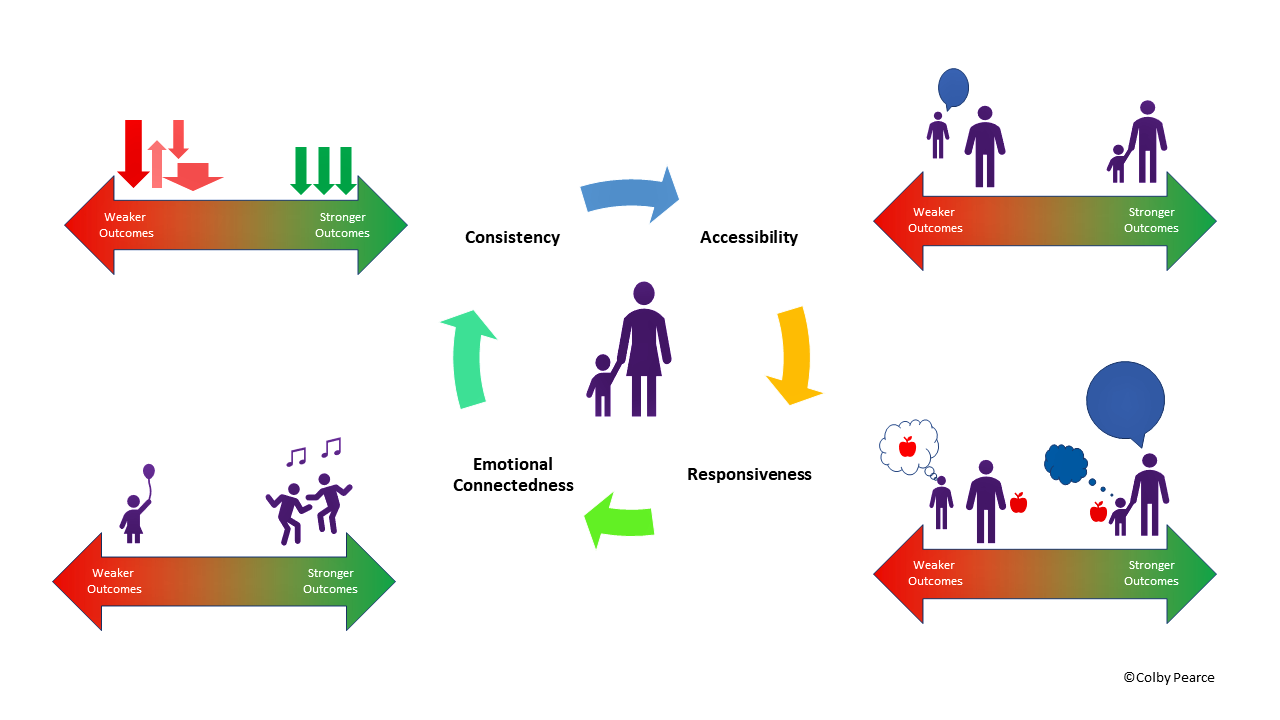




 Attachment and Resilience