Dear Followers of this Blog.
I have released another self-paced learning module on the topic of contact between children and young people who cannot safely be cared for at home, and their birth parents.
I originally delivered the content of this module to kinship carers and professionals who support them. In delivering this content I was asked to consider the following questions:
- Why is contact with birth parents important?
- Should contact stop if birth parents do not attend inconsistently?
- Should contact stop when children have an adverse reaction to it?
I subsequently wrote this module for all adults who are involved in the care of children and young people who are cannot be safely cared for at home.
I want to preface the module by letting you know about what has informed my contemporary views about contact between these children and young people and their birth parents.
For the past twenty-eight years I have worked continuously, in various roles, in child protection. Among those roles, the most enduring have been therapeutic work with the children and young people and the provision of therapeutic caregiving support and guidance to adults who care for them at home and in other domains of their life (social workers, teachers). I have talked to a lot of children and young people in care, as well as adults who interact with them in caregiving and professional roles.
As the years have passed, I have remained connected to, or reconnected with, young adults who I knew when they were in out-of-home care. I have seen the longer-term outcomes of decisions made years prior about contact between children and young people and their birth parents. I have reflected on what theories that underpin practice in this sector, most notably Attachment Theory, provide by way of explanation for observed outcomes.
The conclusion I have come to, based on my work and reflections about childhood attachment, is that both strongly support the case for working towards and maintaining healthy connection between children and young people who cannot be cared for at home and their mum and/or dad, where possible.
An important caveat I will acknowledge is instances where the child or young person has been sexually abused by a parent, or cases of extreme and/or sadistic abuse. These are topics for other modules. Rather, I consider that the content of this module holds true for most children and young people in out of home care; that is, those children and young people who could not safely be cared for at home due to grossly inadequate care and protection.
I would also like to acknowledge that this can be a very sensitive topic; especially for carers of children and young people who are distressed or otherwise unsettled by contact with birth parents. It is not my intention to minimise this issue but, rather, shed some light on what may be happening for the child or young person, and propose a way forward.
Finally, I would advise that this module is intended to be widely applicable. As such, it does not replace professional advice and guidance in individual matters and may not be appropriate in all circumstances. I recommend that you consult with your colleagues and supporting professionals before implementing recommendations derived from this learning module.
Chick here to access the module.




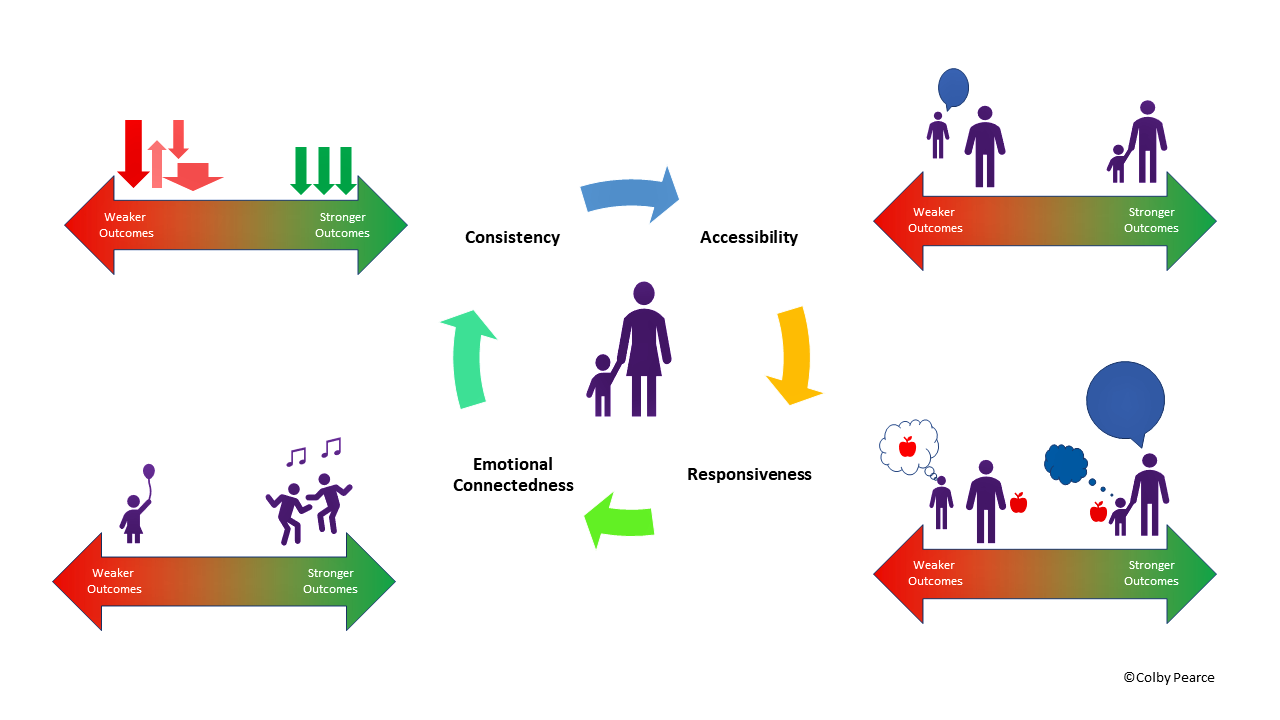




 Attachment and Resilience