How parental expectations influence emotional involvement with our children

I am the father of three boys.

I am also a Clinical Psychologist with more than sixteen years experience in child and family psychology. I have conducted more than 1000 assessments of children and their parents in child protection and child custody matters. I have appeared as an expert in South Australian Courts on more than two dozen occasions. I have treated more than 500 children. I have written two books and numerous articles about child and adolescent mental health, development and parenting. I have trained more than fifty practising clinical psychologists. I am regularly called upon to conduct teaching and training in relation to the care and management of children.

As is the case in millions of other families around the world, my children test the limits of my patience and endurance. They fight with each other and defy their mother and I. They occasionally get into trouble at school.

At times I have been unreasonably angry with them. I have ranted. I have said things I would rather not have. And, being fed up with them and with myself, I have temporarily withdrawn myself from them.

Recently, I became aware of a series of related beliefs I had been holding for some time. The beliefs went something like this. I am a Clinical Psychologist who specialises in children, families and parenting. I should have a solution for all of my children’s emotional and behavioural foibles. My childen should be well-behaved.

The inevitable result of these beliefs was frustration with my children and myself, regretted words and affective displays, and [temporary] physical and emotional withdrawal at times when they simply proved to be just like the vast majority of children growing up in a [generally] functional family system.

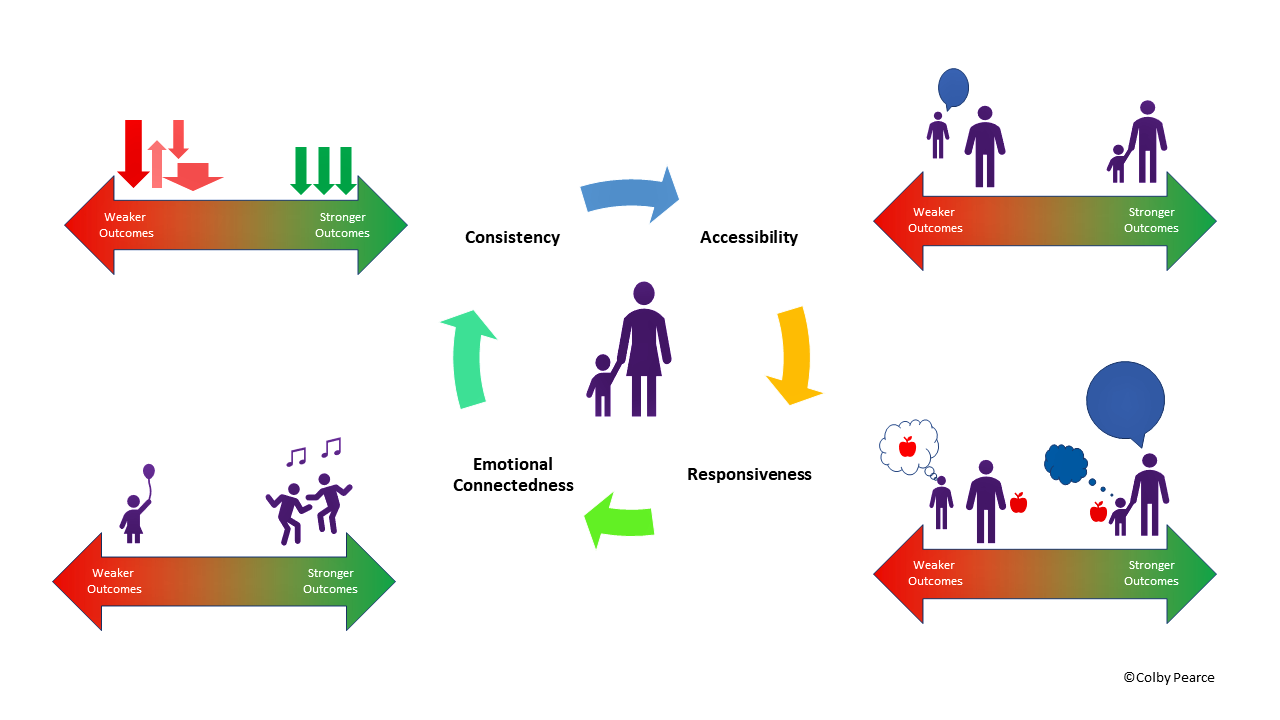
Readers of my books, articles and blogs would know that children thrive on consistency. This extends to consistency of emotional connectedness with their adult caregivers. Children are also emotionally unsettled by heightened affective displays by their parents. Heightened affective displays by parents and associated emotional distress in children make them more prone to behavioural problems and emotional outbursts.

Hence, my belief system was self-defeating.

More functional [and rational] beliefs are that my children do not have to be perfect, nor do I have to be the perfect parent, just because I am a Clinical Psychologist specialising in child and family psychology.

Since adopting these more moderate beliefs I have been better able to maintain a consistent emotional presentation and involvement with my children, including in the face of their difficult and challenging behaviour.

So, give your children and yourself a break. Be moderate in your expectations of yourself as a parent and your children’s adjustment. It is in their best interests, and your own!

Posted in Adoption, Attachment, Children's Behaviour, Favourites, Fostering, Parenting, Resilience, Therapy, Trauma, Wellbeing | Tagged , , , , , , , , , , , , , , , , , , | 1 Comment

Eyes are Mirrors for a Child’s Soul

Recently, I was approached by authorities at a school to conduct psychological assessments and provide direction regarding the care and management requirements of the thirteen most challenging children in the school. The school’s criteria for why these children were challenging was based on their experience of these children as difficult to manage, disruptive, and time-consuming. This request was made following a long history of other endeavours by the school, such as standard disciplinary measures, failing to achieve positive engagement in learning at the school and conformity with expected standards of behaviour amongst these children. In responding to this request, I interviewed and administered psychological questionnaires to school authorities and the children’s parents. I also interviewed the children.

Not surprisingly, I confirmed that all thirteen children were behaviourally maladjusted, according to standard psychological criteria. My assessment also revealed that most of the children also met diagnostic criteria for emotional disorders; principally, anxiety disorders and Reactive Attachment Disorder. On the basis of my assessments I prepared individual reports regarding each child, which included information about their care and management requirements. I met with educational authorities and the parents of most of the children to present the outcome of the assessment and my recommendations. I prepared a general document for parents and educational authorities about care and management strategies that promote positive engagement and adjustment in children, outlining the strategies contained in this book. I gave a presentation to teachers and support staff of the school regarding my diagnostic formulations regarding the children and recommended management strategies. During this consultancy I made reference to further therapeutic interventions that might be expected to facilitate improved engagement with adults, peers and learning amongst challenging children.

Two terms later I was invited back to the school to deliver further training to specific school staff regarding the implementation of a play therapy program aimed at improving the engagement of children at the school about whom there was ongoing concern. Upon returning to the school, I was informed that only one of the children I had assessed two terms previously remained a significant management challenge at the school. As the summer holidays had intervened, two of the students had moved on to high school and one was attending a different school. There were new students who were causing school personnel concern, as there will always be. Nevertheless, the school and I were impressed with the success of the initial intervention.

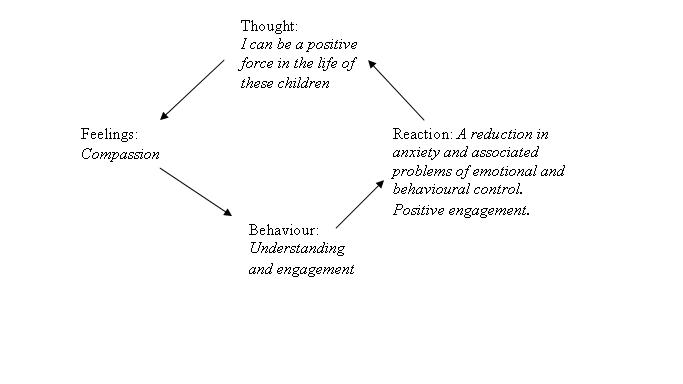
So, what was it about my initial intervention that achieved this positive outcome? Discussion with school authorities seemed to confirm that, in addition to the effects of providing direction to parents and school authorities about the care and management requirements of these children, there was a change in the perception of teaching and support staff regarding these children. Whereas the children I assessed had previously been viewed as in negative terms, I had provided evidence that the behavioural difficulties exhibited by the children stemmed from emotional difficulties, and there was a shift in perceptions of these children from bad to sad. The power of such a change in beliefs cannot be underestimated when one considers the impact of adult perceptions on the behaviour of children from the perspective of self-fulfilling prophecies, which I did. At the presentation I gave to school staff I put to those present a scenario similar to what follows (start at “thought“):

I then provided an alternative, similar to what follows:

When children misbehave, as all children do, it is important to consider that there is always a reason for the behaviour and to respond to the need as well as the behaviour. It is okay to be angry and frustrated with them from time to time, as children need to learn that relationships can be repaired. In order to raise resilient children it is important to maintain a positive attitude and disposition toward them, to love and delight in them, to spend quality time with them, to understand their thoughts, feelings and intentions and to support them in their efforts.

This post is based on material presented in my book A Short Introduction to Promoting Resilience in Children (London, Jessica Kingsley, 2011)

Posted in Adoption, Attachment, Children's Behaviour, Favourites, Fostering, Parenting, Resilience, Therapy, Trauma, Wellbeing | Tagged , , , , , , , , , , , , , , , , , , , | Leave a comment

Work-Life Balance

This strikes a chord . . . .

Posted in Wellbeing | Leave a comment

What’s in a name? The problem with the “Helicopter Parent” metaphor

A helicopter is an aircraft that, amongst other things, allows its occupants to hover, observe and, where necessary (as in the case of emergencies), intervene.

“Helicopter Parent” is a prejorative term used to refer to parents who are intrusively overprotective of their children. By intrusive and overprotective, it is meant that these parents hover, observe and intervene to clear all of life’s minor and major obstacles from the path of their children.

All parents who have raised secure, well-adjusted and resilient children were once “helicopter parents”, as defined above, to a degree. You were a so-called “helicopter parent” when you hovered, observed and intervened to respond to your pre-verbal infant’s needs. In doing so, you facilitated your child love of you, trust in you, and secure dependency; all of which are building blocks to emotional security, wellbeing and success in life.

As they get older, children do need to experience adversity so that they can learn to overcome it and trust in their ability to do so. However, they benefit from us standing alongside them during times of adversity. Standing alongside them and intervening before they experience overwhelming and disempowering failure increases the likelihood of mastery experiences. Mastery experiences are vital to the promotion of a perception of personal competence and self-worth.

Be there for your children.

The following is the prologue for my book A Short Introduction to Promoting Resilience in Children (London, Jessica Kingsley, 2011):

Once upon a time there were four children. On a warm and sunny day the parents of each child took them to an adventure playground for a play.

The first child had a wonderful time at the playground. He confidently swung on the swings, slid on the slippery-slides, toured the tunnels, and flew on the flying fox. Under the watchful gaze of his parents he tried everything and excitedly reported his feats of bravery and accomplishment to them. His parents accompanied him to each item of equipment and warmly acknowledged his efforts. They even tried some of the more difficult items to demonstrate what was possible and remained close by to catch their child if he should fall. Upon leaving the playground this child sought acknowledgement from his parents that he could come again another day.

The second child bounded from his parents’ car and eagerly entered the adventure playground, not noticing that his parents remained in the car. Observing many children at the giant slippery slide he excitedly approached it to give it a go. He was unconcerned that the other children at the slippery slide were much older than him and that the slippery slide was very high and very fast. He did not notice, nor did anyone tell him, that the slide was better suited for older children. He flew off the bottom of the slide and cannoned into the ground, hurting his arm. Shock and pain turned to tearful distress as he could not immediately find his parents for soothing of his hurts. When his parents belatedly arrived to attend to him he was difficult to soothe and angrily refused to try any other equipment. His anger and distress quickly escalated and he was carried, screaming, from the playground.

The third child approached the playground much more cautiously, preferring to remain close to his parents, holding hands. His parents guided him to the quietest corner of the playground, where the smallest and safest equipment could be found. They held his hand or carried him in their lap on the swings and the slide. When he gazed wistfully at the other children his age who were re-enacting tales of bravery and heroism in the fort, his parents encouraged him to remain with them in the sand-pit. His parents delighted in his company, and he in theirs, and he readily agreed that the fort looked dangerous and the other children played too rough.

The fourth child never made it to the adventure playground as his parents could not afford to buy fuel for their car. He spent the day alternately demanding to be taken to the playground and sulking about not being able to go.

Posted in Adoption, Attachment, Children's Behaviour, Favourites, Fostering, Parenting, Resilience, Wellbeing | Tagged , , , , , , , , , , , , , , , , , , | Leave a comment

Why is consistency so important?

Be consistent is a parenting maxim that is often spoken about. But why is being consistent so important? An answer lies in a series of experiments that informed academic and applied psychology for more than half a century.

During the 1930s, academic Psychologist B. F. Skinner developed an apparatus to study learning in laboratory animals. Referred to as the Skinner Box, this box-like apparatus incorporated a lever or bar, and a feeding chute. Rats and other animals were placed in the Skinner Box and exposed to three learning conditions. In the first condition, a pellet of food was delivered via the chute each time the animal pressed the bar or lever. This condition was referred to as continuous reinforcement. The animals quickly learnt that by pressing the bar or lever they would receive food. In the second condition, a food pellet was delivered inconsistently, such as on the first, third or fourth press of the bar or lever. This condition was referred to as intermittent reinforcement. The animals learnt more slowly that by pressing the bar food would be delivered. In the third condition no food was delivered through the chute, no matter how many times the animals pressed the bar or lever.

Now, here are the important parts. The animals in the continuous and intermittent reinforcement conditions learnt to press the bar or lever in order to gain access to food; though the animals in the continuous reinforcement condition learnt this more quickly. They also learnt (that is, understood) more quickly when conditions changed, such as when food was no longer delivered when the bar or lever was pressed. In addition, research across more than half a century has consistently shown that the animals in the intermittent reinforcement condition press the bar or lever at the highest rate and the most persistently; even after conditions are changed and they receive food consistently or not at all when they press the bar or lever. Animals in the intermittent reinforcement condition are even observed to build up piles of food that is surplus to their requirements at any particular time. In contrast, the animals in the third condition (no food) soon lose interest in the bar or lever.

So what is the relevance of this to parenting? Children develop behaviours that ensure a response to their needs and develop expectations about reliability of needs provision in the same way that the animals did in the above experiments. Children whose needs are met on a consistent basis learn more quickly how to access a response to their needs and are less demanding and preoccupied with their needs. Children whose needs are met inconsistently are slower to learn how to access a response to their needs, exhibit the highest rate of need-seeking behaviour and are the most persistent in their attempts to achieve needs provision. They will even seek a parental response just to reassure themselves that their parent is available and responsive, just as the animals in the above experiments seemed to do when they built up piles of surplus food. They are also slower to learn when the conditions under which their needs are responded to change. Anyone who has fostered or adopted a child in need can attest to this!

So, as far as possible, be consistent in your parenting of your children. Respond to their basic human needs on a reliable and consistent basis. Respond to their reasonable wishes only as often as you can maintain doing so over time.

Posted in Adoption, Attachment, Children's Behaviour, Favourites, Fostering, Parenting, Resilience, Wellbeing | Tagged , , , , , , , , , , , , , , , , , | 2 Comments

Unfair Review?

I recently received a review of my book A Short Introduction to Attachment and Attachment Disorder by Child Psychiatrist at Great Ormond Street Children’s Hospital in London, Dr Danya Glaser. The review appeared in Adoption and Fostering in 2010. Dr Glaser is co-author of the similarly-titled book Understanding Attachment and Attachment Disorder, which was published in 2006.

In her review, Dr Glaser briefly refers to the content of the book, chapter by chapter. She acknowledges that the book contains a small number of helpful strategies for caregivers of very difficult children and that it is well-structured. However, she unfairly criticises the use of the term “attachment disorder” in the book and what I refer to as its clinical features. At no point does she acknowledge the fact that the book summarises a vast and diverse literature into a broadly accessible book; nor does she make mention of the fact that the book unifies behavioral, developmental, analytic and neurobiological literatures related to trauma and attachment into a succinct and accessible book that extends what has already been written about the clinical features of attachment disorders.

Most significantly, I find it puzzling that Dr Glaser did not declare a conflict of interest and defer to another when asked to review my book, given the presence of her own similarly titled book in the marketplace.


Posted in Uncategorized | Leave a comment

Benefits of music played while you sleep

Those who have read my various articles and/or my books will be aware of the positive impact I attribute to playing soothing classical music to children while they sleep. This morning I came across this interesting article; an exerpt from which I include below:

It’s well known that listening to music can help patients. Several studies suggest patients who listen to soothing music through headphones while being put to sleep and during surgery require less anaesthetic – up to 50% less in some instances – and recover more quickly afterwards. One groundbreaking 2008 study found that melodic music actually decreased the activity of individual neurons in the brain. “There’s no question, music reduces anxiety before surgery,” says Zeev Kain, an anaesthetist at Yale University, who has done research on the subject. “It will decrease the amount of pain or anxiety medication a patient needs.”

Posted in Adoption, Children's Behaviour, Favourites, Fostering, Parenting | Tagged , , , , , , , | 1 Comment

Reassuring Children

Today, my eight year old son drew my attention to his sore knee, which he bruised falling on stairs at our home yesterday. He has a nice purple bruise in the middle of his knee. When distracted, he walks fine and does not complain about the pain. When his attention is on his knee, he complains of pain and walks with a limp.

As it happens, he complained to me about the pain in his knee this morning.  I was tempted to say that it did not look too bad and to remind him that I had seen him walking fine earlier. My intention in making such statements would have been to reassure him that he would be okay. However, I instinctively knew that this would precipitate anger, strong assertions that the pain was significant and further assertions that I was not taking the matter seriously.  I also knew that he would complain and limp until I did take the matter seriously.

So, I advised my son that his knee looked painful and that I would put a bandage on  it. After I had done this, he walked freely and did not complain of pain for the rest of the day.

The moral of the story is that empathy is the most reassuring response a parent can provide to their child.

Posted in Adoption, Attachment, Children's Behaviour, Favourites, Fostering, Parenting, Resilience, Wellbeing | Tagged , , , , , , , , , , , , , , , , , , | 1 Comment

Attached to the Unattached

My article Attached to the Unattached appears in the latest issue of SEN magazine. Check it out by following the link. I am really happy with how it has come up in the magazine and grateful for the opportunity to produce the article!

Posted in Adoption, Attachment, Children's Behaviour, Favourites, Fostering, Parenting, Trauma, Wellbeing | Tagged , , , , , , , , , , , , , , , , , , | Leave a comment

The Comeback Kid

My article entitled “The Comeback Kid” appears in this months edition of UK parenting magazine, Junior.

Posted in Adoption, Attachment, Children's Behaviour, Favourites, Fostering, Parenting, Resilience, Wellbeing | Tagged , , , , , , , , , , , , , , , , , , | Leave a comment