(Professionals – support for your work with parents to maintain a therapeutic care environment for children and young people recovering from a tough start to life.)
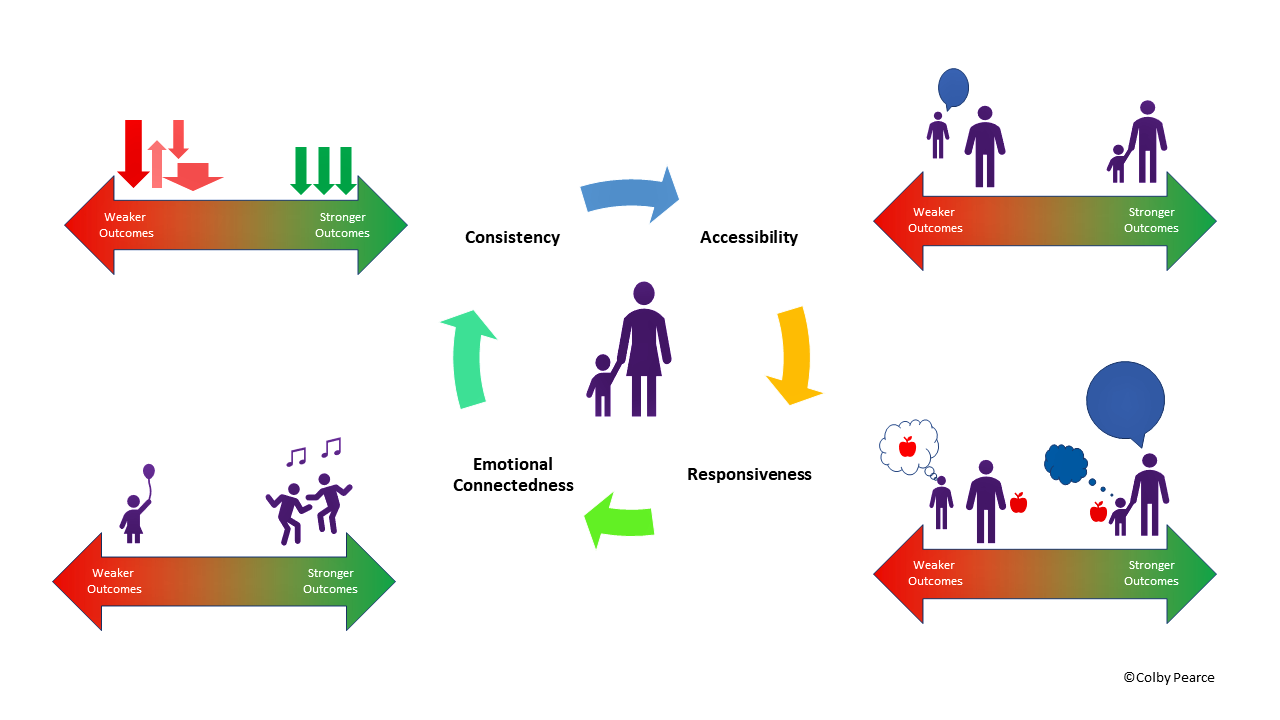
The AURA by Secure Start App supports daily reflection and attention to four key aspects of caregiving and relating that support a positive approach to life and relationships among children and young people recovering from a tough start to life.
Accessible: Supports beliefs that you are there for the child, and that they are worthy of your attention and care. Provides relief from anxiety, especially over how to get their needs met. And so much more! Check in proactively at least once a day more than you are already doing.
Understanding: Supports experience that you get it. You can be trusted and relied upon. They are worthy. Reduces anxiety. Supports new learning that the child’s experience is understood in your works (and actions, and expressed emotions). And so much more! If you know the answer to the question, don’t ask. Say the answer. Say what you see.
Responsiveness: Supports the child’s experience that you understand their needs and can be trusted and relied upon. Reduces anxiety. Supports positive ideas of self-worth and adequacy. Respond proactively to requests you would normally respond to, before the child asks. Also supports experience of your awesomeness! And so much more!
Attunement: Supports experiences of emotional connection that are foundational for emotional development, regulation, awareness of others, and regulation in consideration of the experience of others. Supports feelings of being heard and understood. Supports feelings of self-worth. Also supports experiences of your awesomeness. And so much more! Play a five minute game of their choice with them. Allow yourself to mirror their experience of the game. Return regularly to calm.
Remember this quote: I looked and I was seen, so I exist.*
Common denominators from the above AURA approach:
Attachment: Positive beliefs about self, others, and world. A functional approach to life and relationships.
Arousal: Reduces anxiety and behaviours of concern associated with the fight/flight/freeze respons (incl. controlling, aggressive, destructive, running, hiding, zoning out/not listening).
Accessibility (to needs provision): Functional new learning that you can be relied on for needs provision without obsessing over you and/or their needs.
Get the app here:
Apple App Store:
https://lnkd.in/gypEUC8V
Google Play Store: Coming soon.
*Attribution: Donald Winnicott

Colby Pearce
-
-

Supporting consistent Therapeutic Caregiving -

Companion App for Therapeutic Classrooms and alignment with home. A practical guide to Attachment & Attachment Disorder

Resilient Kids

Secure Start – Trauma Informed

Self-Paced Learning Modules

The CARE Curriculum
-

Sister Site






Pingback: What I would have birth parents hear after the removal of their child | Attachment and Resilience
Pingback: Why does my child antagonize others and then complain of being bullied? | Attachment and Resilience
Pingback: Why does my child lie? | Attachment and Resilience
Pingback: Why does my child smile when I am angry? | Attachment and Resilience
Pingback: Why do my kids destroy their belongings? | Attachment and Resilience
Pingback: Why is my child’s room always messy? | Attachment and Resilience
Pingback: Five strategies for addressing issues with compliance in children | Attachment and Resilience
Pingback: Understanding and Managing Children’s Unsettled Behavior After Parent Contact | Attachment and Resilience
Pingback: What is ‘good’ parenting and caregiving? | Attachment and Resilience
Pingback: Getting Behaviour Management Right for Deeply Hurt and Troubled Children and Young People: A Triple-A Approach | Attachment and Resilience