The importance of empathy

20130804-180027.jpgThis is a reproduction of blog post I wrote approximately two years ago, so it is buried a bit in this site. Thought I would re-post under a new title because the message has been well received and, in my opinion, is important.

Today, my eight year old son drew my attention to his sore knee, which he bruised falling on stairs at our home yesterday. He has a nice purple bruise in the middle of his knee. When distracted, he walks fine and does not complain about the pain. When his attention is on his knee, he complains of pain and walks with a limp.

As it happens, he complained to me about the pain in his knee this morning.  I was tempted to say that it did not look too bad and to remind him that I had seen him walking fine earlier. My intention in making such statements would have been to reassure him that he would be okay. However, I instinctively knew that this would precipitate anger, strong assertions that the pain was significant and further assertions that I was not taking the matter seriously.  I also knew that he would complain and limp until I did take the matter seriously.

So, I advised my son that his knee looked painful and that I would put a bandage on  it. After I had done this, he walked freely and did not complain of pain for the rest of the day.

The moral of the story is that empathy is the most reassuring response a parent can provide to their child.

Posted in AAA Caregiving, Adoption, Book Reviews, Fostering, Parenting, Resilience, Schools, Wellbeing | Tagged , , , , , , , , , | Leave a comment

Shit of a kid

This shit of a kid has been married for more than twenty years.

This shit of a kid has three happy, healthy, confident children.

This shit of a kid was the first member of his paternal family in living memory to attend university.

This shit of a kid has twenty year history of publishing in his areas of specialisation.

This shit of a kid has maintained a successful independent child and family psychology practice for more than ten years.

This shit of a kid has extensive experience teaching and training the next generation of Clinical Psychologists.

This shit of a kid holds and has held senior appointments in his profession.

Still, some words are not easily forgotten.

Choose your words carefully when speaking to a child.

rainbow

Posted in AAA Caregiving, Parenting, Resilience | Tagged , , , , , , , , , , | 1 Comment

Locus of control and youth suicide

In this, the last post for a little while about my historical publications concerning youth suicide and mental health, I want to introduce you to the following paper: Pearce, C.M., & Martin, G. (1993). Locus of Control as an Indicator of Risk for Suicidal Behaviour Among Adolescents. Acta Psychiatrica Scandinavica, 88 : 409-414.

Locus of control represents the extent to which an individual attributes causality for what happens in their life to their own actions (internal) or extraneous factors (external). At the time of writing this article I thought that having a pervasively external locus of control when bad things happen in life would predispose a person to a kind of helplessness depression (Seligman); hence my interest in it’s possible contribution to understanding suicidal feelings and behaviours among adolescents. I now know that wrongly attributing too much responsibility to oneself for bad events that happen in a person’s life can result in depression and associated suicidal feelings. I suspect, however, that in contrast to those with an external locus of control, those with an internal locus of control are more likely to take the view that they can act effectively to change their circumstances without resorting to suicidal acts; hence the effect observed in this study.

The implication for treating suicidal individuals is to assist them to experience a sense of potency and influence over outcomes in their life.

The paper was the first published in Acta Psychiatrica Scandinavica, which I recall was the eighth most widely read psychiatric journal in the world at that time. Google indicates that the article has been cited 58 times in the 20 years since its publication.

If you would like to read the article, click here.

Posted in Resilience, Wellbeing, Youth Suicide | Tagged , , , , , , | Leave a comment

The significance of touch

If only I knew then what I know now! This sentiment particularly applies to the third in a series of posts on this site about published articles that arose out of the collaboration between Professor Graham Martin and myself between 1991 and 1995. The article in question is the following: Pearce, C.M., Martin., G., & Wood, K. (1995). Significance of Touch for Perceptions of Parenting and Psychological Adjustment Among Adolescents. Journal of the American Academy of Child and Adolescent Psychiatry, 34 : 160-167.

Another publication in the prestigious Journal of the American Academy of Child and Adolescent Psychiatry! We were on a roll and I clearly recall Graham’s disappointment that I chose Clinical Psychology over a career in mental health research.

In this paper we published results of our investigations into the role of physical contact experience in perceptions of parenting and psychological adjustment among adolescents. I loved writing this paper as it gave me a chance to revisit the ideas and implications of the seminal work of Harry Harlow on the role of contact comfort in infant rhesus monkeys (Harlow, H.J. (1958). The Nature of Love. American Psychologist, 13:673-685); work that I would again revisit when writing A Short Introduction to Attachment and Attachment Disorder.

Not surprisingly, what we found was that self-reported physical contact experience from parents was related to perceptions of parental care and psychological adjustment among adolescents. That is, the more frequent positive contact experiences (e.g. hugs) and the less frequent negative contact experiences (e.g. smacking), the better the perception of parental care and the lower the incidence of depression, conduct problems, suicidal ideation and deliberate self-harm.

The reason why I lamented not knowing then what I know now at the start of this post relates to how I would discuss these results in the context of my knowledge of Attachment Theory and Child Protection. Of particular significance to me is the role of contact comfort in the perception of parental care and the promotion of positive adjustment among adolescents (and, people of all ages).

Anyway, we live and we learn, and this was still an important step in my knowledge development and in my career development.

For those of you who wish to read the full text of the article, click here.
Posted in Attachment, Wellbeing, Youth Suicide | Tagged , , , , , , , , , , | 1 Comment

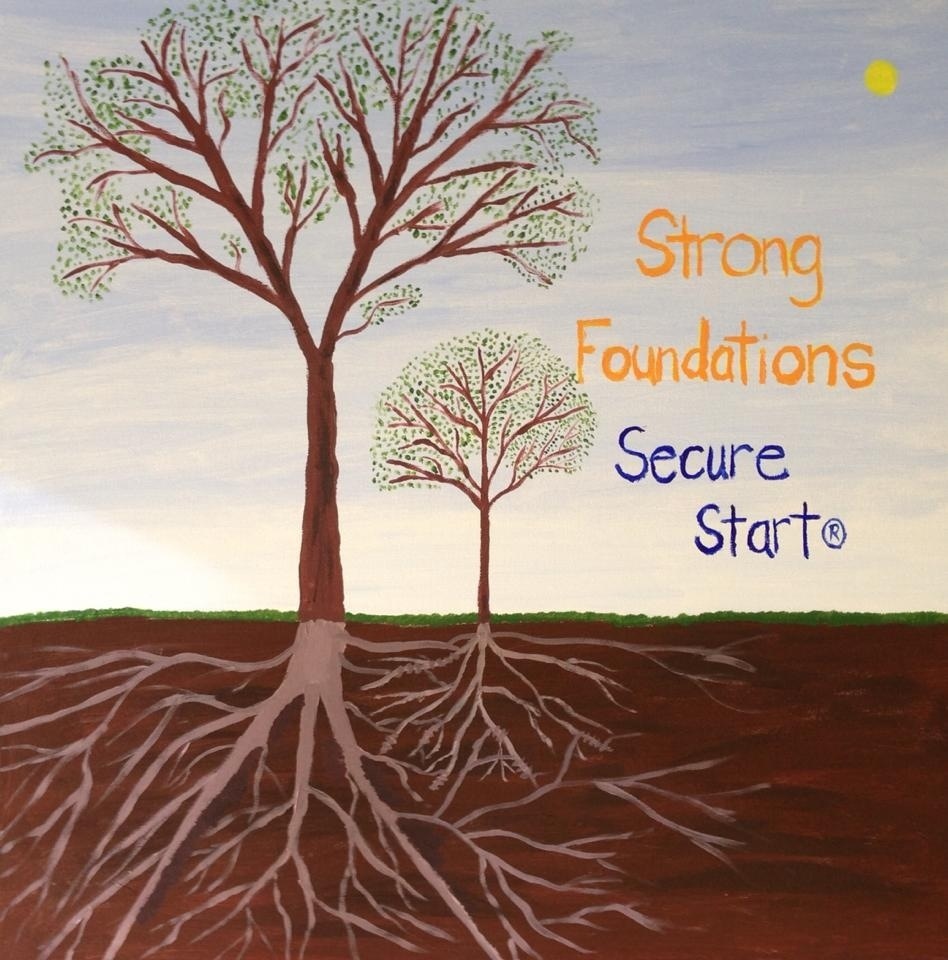
Strong Foundations

Posted in Uncategorized | Leave a comment

Music preference and suicidal behaviour among adolescents

In my earlier post Predicting Suicide Attempts Among Adolescents I refer to a series of research papers that arose from my collaboration with Professor Graham Martin in the early 1990’s. The first paper published as a result of that collaboration was the following: Martin, G., Clarke, M., & Pearce, C.M.. (1993). Adolescent Suicide: Music Preference as an Indicator of Vulnerability. Journal of the American Academy of Child and Adolescent Psychiatry, 32 : 530-535.

What a coup! The Journal of the American Academy of Child and Adolescent Psychiatry  had the fourth highest readership of all psychiatric journals at that time in the world and was the most read child and adolescent psychiatric journal. And this was our first paper in a peer-refereed journal! The topic was sensational at the time, which undoubtedly helped get the paper published. Heavy metal music had been linked in the media to teenage suicides. But this paper did not report that listening to heavy metal music led to suicidal behaviour among adolescents. Rather, what it reported was that acknowledging relatively unconventional music preferences was an indicator of suicidal behaviour among adolescents. This was particularly true of teenage girls who acknowledged a preference for hard rock/heavy metal music in the early 1990’s.

The findings presented in this paper were an important step in the crystallisation of my thoughts about the importance of a sense of connectedness and identification with the ideas and values of mainstream society in the regulation of aberrant behaviour; the antithesis of what Durkheim referred to as Anomie in his seminal text Suicide. It is history that, in my career as a Clinical Psychologist, I have focused on the strengthening the bonds that connect us to others and to mainstream ideas and values.

Google indicates that this paper has been cited 122 times in the twenty years since its publication, and even a casual search of the internet will show that it influenced the thoughts and writings of many others.

And one more thing; it was the acceptance of this paper for publication that tipped the scales in my favour for acceptance into a Masters Degree in Clinical Psychology in 1993.

If you are interested in reading the full article it can be downloaded here.

Posted in Youth Suicide | Tagged , , , , , , , , | Leave a comment

Predicting suicide attempts among adolescents

On this, World Suicide Prevention Day, I thought it fitting to draw your attention to one of my earlier publications: Pearce, C. & Martin, G (1994), Predicting Suicide Attempts Among Adolescents. Acta Psychiatrica Scandinavica, 90 : 324-328.

Between 1991 and 1995 I was employed as a research officer at the local Child and Adolescent Mental Health Service (Southern CAMHS) here in Adelaide, South Australia. Most of my time in the role was spent conducting research and preparing journal articles on the topic of youth suicide. The partnership that was formed with Professor Graham Martin was a productive one and, in a sense, launched (mine) and relaunched (Graham’s) careers: mine, as it facilitated my acceptance into a Masters Degree in Clinical Psychology and my career as a Clinical Psychologist; and Graham’s, as it launched his hugely successful career in suicide research and prevention. Several papers were published in international, peer-refereed psychiatric journals at that time and, time permitting, I intend to provide a brief synopsis of each paper and links to downloadable versions in the coming days and weeks.

In Predicting Suicide Attempts Among Adolescents I endeavoured to show how knowledge of the spectrum of suicidal behaviours could be used to accurately predict those teenagers who did and did not acknowledge having made a suicide attempt. An assessment methodology was formulated and formed an integral component of an Australia-wide General Medical Practitioner education video/program: Youth Suicide: Recognising the Signs (Child Health Foundation). A key finding of the study was that the presence or absence of a suicide plan and deliberate self-harm in combination was highly predictive of teenagers who had and had not made a suicide attempt.

Google suggests that this paper has been cited in 57 other research articles in the years since.

Ultimately, my career took a different path, with publications in the areas of childhood Attachment, Resilience and Psychotherapy. Nevertheless, one of the publications I am most proud of is Predicting Suicide Attempts Among Adolescents.

If you are interested in reading the full article it can be downloaded here.


Posted in Youth Suicide | Tagged , , , , , | 5 Comments

Strong Foundations

20130804-180027.jpg

Posted in AAA Caregiving, Adoption, Favourites, Fostering, Parenting, Resilience | Tagged , , , , , , | 1 Comment

Secure Start

Beyond the rainbow there is sunshine . . .

colbypearce's avatarAttachment and Resilience

rainbow

View original post

Posted in Uncategorized | Leave a comment

Secure Start

rainbow

Posted in AAA Caregiving, Adoption, Attachment, Fostering, Parenting, Resilience, Schools, Trauma | Tagged , , , , , , , , , | 2 Comments