Yesterday I was visited by a six-year-old boy who has a history of family trauma and is being raised by a relative carer. Upon entering my consulting room he immediately sought my box of assorted animals and rifled through it, looking for a gorilla he has previously identified as “King Kong”. Upon finding King Kong he immediately and enthusiastically began play-acting battles between King Kong and the other animals, where King Kong was always victorious. He confidently asserted that King Kong could take on all-comers and never be defeated in battle. He acknowledged a wish that he could be like King Kong and defeat all of his enemies. He was hopeful of being like King Kong when he is “a teenager”.
Looked-after children who have experienced significant family trauma, whether they be in foster care, adoptive care, kinship care or residential care arrangements, typically share the following characteristics:
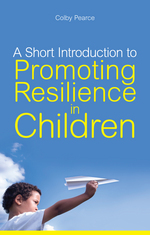
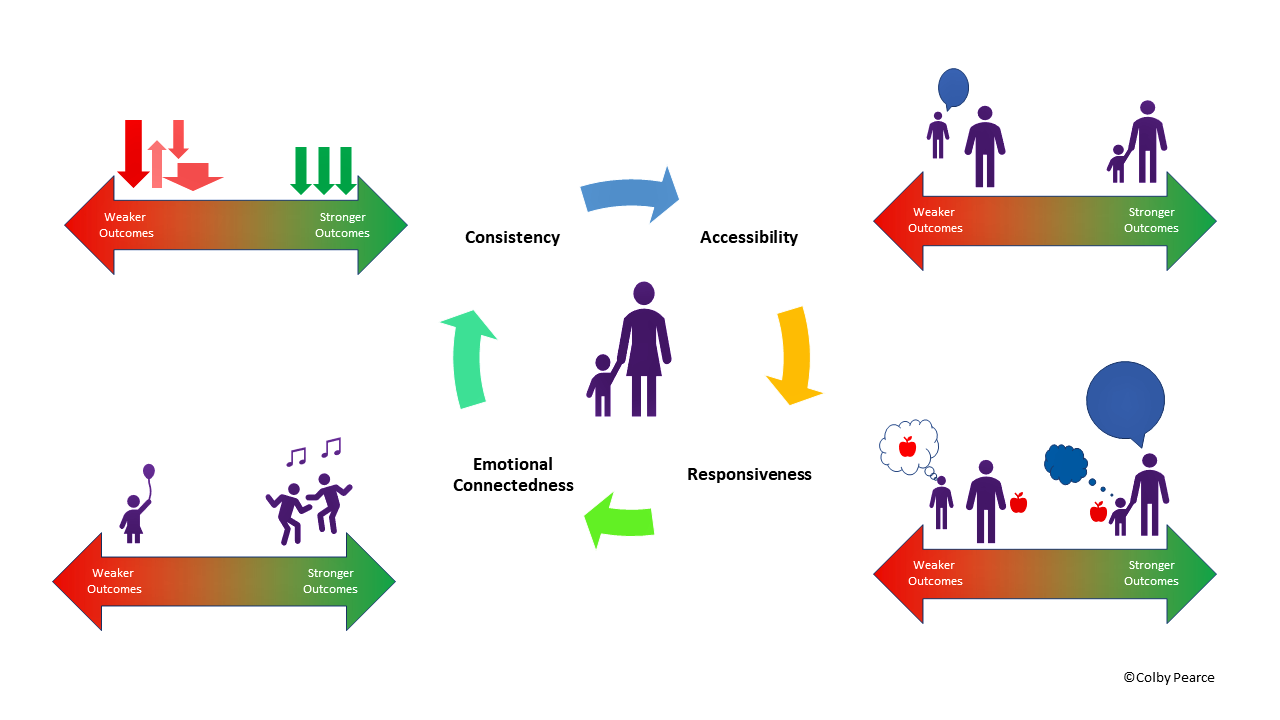
A child’s resilience requires more than just a “resilient mindset” or “positive thinking”. It requires deeply-held and profound beliefs, formed during infancy and early childhood, that they are a good and capable and deserving person, that adults in a care and management role will be accessible, understanding, responsive and emotionally-connected, and that the world is a safe and nurturing place full of many exciting possibilities. It also requires optimal levels of physiological arousal, such that the child is better able to perform at their best and experience success and mastery. Moreover, it requires a preparedness to explore the world unencumbered by a concern with accessing unmet or inconsistently met universal human needs. These are the core premises of A Short Introduction to Promoting Resilience in Children.
A child’s resilience requires more than just a “resilient mindset” or “positive thinking”. It requires deeply-held and profound beliefs, formed during infancy and early childhood, that they are a good and capable and deserving person, that adults in a care and management role will be accessible, understanding, responsive and emotionally-connected, and that the world is a safe and nurturing place full of many exciting possibilities. It also requires optimal levels of physiological arousal, such that the child is better able to perform at their best and experience success and mastery. Moreover, it requires a preparedness to explore the world unencumbered by a concern with accessing unmet or inconsistently met universal human needs. These are the core premises of A Short Introduction to Promoting Resilience in Children.
Yesterday I was visited by a six-year-old boy who has a history of family trauma and is being raised by a relative carer. Upon entering my consulting room he immediately sought my box of assorted animals and rifled through it, looking for a gorilla he has previously identified as “King Kong”. Upon finding King Kong he immediately and enthusiastically began play-acting battles between King Kong and the other animals, where King Kong was always victorious. He confidently asserted that King Kong could take on all-comers and never be defeated in battle. He acknowledged a wish that he could be like King Kong and defeat all of his enemies. He was hopeful of being like King Kong when he is “a teenager”.
Looked-after children who have experienced significant family trauma, whether they be in foster care, adoptive care, kinship care or residential care arrangements, typically share the following characteristics:
they consider themselves to be misunderstood, vulnerable and powerless;
they consider others to be malevolent in intent towards them; and
they consider the world to be a harsh, unfair and potentially dangerous place.
As a consequence of these beliefs, originally developed in an environment of deprivation and pain, their predominant emotional response when interacting with others is anxiety. Behavioural sequelae of anxiety include:
An intense compulsion to control all people and situations;
Aggression towards people and property;
Hyperactivity;
Avoidance; and
Physical and emotional withdrawal.
The role and function of these behaviours is to neutralise a perceived threat and achieve feelings of physical and emotional safety.
In short, looked-after children often feel unsafe and engage in very predictable behaviours in order to achieve feelings of safety.
Unfortunately, in most instances these behaviours are maladaptive to context, in that the person with whom they are interacting does not pose a real threat. They are also self-defeating, in that the person with whom they are interacting is more likely to respond with annoyance and anger in association with the behaviour.
Adults who care for and manage looked-after children often respond in a predictable manner to the anxiety-driven behaviours of these children. In various ways, they seek to control and discipline the child. In doing so, they confirm the child’s maladaptive beliefs, referred to above, about self, other and world. They perpetuate these beliefs, the child’s anxiety and the associated maladaptive, antisocial behaviour.
Looked-after children who have a history of family trauma require new thinking and a new approach to their care and management. They need for adults in a care and management role to understand that these children feel unsafe and anxious a lot of the time. They need for adults in a care and management role to understand that the maladaptive and antisocial behaviours exhibited by these children is a consequence of them feeling unsafe. They need for adults in a care and management role to help them feel safe.
Once they feel safe, looked-after children who have a history of family trauma begin to form trusting relationships with others. Once they feel safe, looked-after children with a history of family trauma become concerned about remaining on good terms with those they trust. In association with this concern, looked-after children begin to conform to conventional expectations and standards of behaviour.
It is the relationship an adult has with a child that is the strongest form of influence they have over the child’s behaviour.
A final thought: Attempting to control a person is a symptom of fear. Engaging with acceptance and empathy is a sign of strength.
I have recently collated a number of blog posts into two “compendiums”, which appear in Menu’s on the right hand side of this site. One compendium includes articles relating to the care, management and treatment of children who have experienced family trauma. This compendium is likely to be of interest to those who care for these children and those who work with them in education and clinical contexts. The second includes articles about attachment-informed parenting and is likely to be of interest to a broader audience. Tell me what you think of each compendium.
This was a very popular post that has become somewhat buried in this site, so I thought I would reproduce it here. Enjoy! 🙂
In my practice one of the more common struggles reported by parents and caregivers is getting children off to sleep in their own bed. What follows is a simple method to address this issue that I often recommend, and that I used with my own children.
Before I get to the method, I want to advise that there are many and varied reasons why children have difficulty getting off to sleep in their own bed. Time and space do not permit me to go into all possible reasons here. What I would say is that the method presented here is appropriate for many of the reasons why children have this difficulty. It is offered as general advice and is not a substitute for a full assessment and recommendation from an appropriately qualified paediatric sleep specialist.
Firstly, children’s sleep patterns are subject to a sleep-wake cycle, which is physiological in nature but strongly influenced by bed-time and wake-time routines. A stable and consistent bed-time and wake-time are important for establishing a stable sleep-wake cycle. That’s right, a stable wake-time is just as important as a stable bed-time. If your child is having difficulty getting off to sleep, don’t let them sleep in. Wake them up at a consistent time every day, regardless of how long it took them to go to sleep. Their wake-time should usually be approximately twelve hours after their bed-time.
The sleep-wake cycle is also affected by exposure to light and its impact on melatonin production. Melatonin production is implicated in the onset of sleep. Light is thought to suppress melatonin production. So, ensure that your child is in a light-reduced environment for at-least thirty minutes before their bed-time. If your child requires a night light, use an orange one as it has been suggested that orange light does not suppress melatonin production as much as other forms of light.
Now, once it is bed-time, I suggest that you put your child to bed and sit or lay alongside them for approximately twenty minutes. In that time, you should read to them and sing them lullabies. Read first; then sing. As with other aspects of parenting and caregiving, consistency is important here. I suggest rotating through a small number of books and a small number of lullabies across consecutive nights. Children draw comfort from the predictability of the bed-time routine, thus preparing them for the separation involved in going to sleep. After a while, the lullabies are likely to become associated with feelings of sleepiness, with the result that the child begins to feel sleepy when the same lullabies are sung to them.
If your child falls asleep during the above, you are free to leave the room. If they are still awake, you move to the next stage of the method. This involves providing the profound reassurance the child requires to cope with separation and go to sleep. If it works, it will circumvent the child’s effort to engage in proximity-seeking behaviour, such as calling out, getting out of bed, searching for you, complaining of having a tummy ache, asking to go to the toilet, and so on.
After you have read and sung to your child, say to them something like “I am just going to put the light on in the next room and I will be right back. You can stay awake until I come back”. Then, you literally walk out of the room and walk back in almost straight away. You acknowledge that the child is okay and then say “I am just going to put the kettle on and I will be straight back. You can stay awake until I come back”. You then do this and when you return to the child you say something like “I am just going to the toilet and I will be straight back. You can stay awake until I come back”. You then do this and when you return to the child you say something like “I am just going to have my cup of tea and I will be straight back. You can stay awake until I come back”. With each separation, you tell the child that you are doing an activity that takes longer and longer to complete. You keep doing this until, when you return to the child, you find them to be asleep.
Speaking of activities that have temporal (i.e.time) meaning is more easily understood by the child than saying “I’ll be back in a minute”. Choosing longer and longer activities involves exposing children gradually to separations, such that they do not become overly anxious, call out or get out of bed. It is important to return to the child before they call out or get out of bed, because parent-initiated proximity is more reassuring than child-initiated proximity. So adjust the separation as required to ensure that you get back to them before they leave their bed to find you! Telling the child to stay awake is an important way to circumvent potential conflict and associated parental frustration, with the result that the child is calmer and more likely to fall asleep. Put in a different way, this is a useful way of making use of “reverse-psychology”.
Playing relaxing classical music softly in the child’s bedroom is a useful adjunct to the above. Finally, enjoy this special time spent with your child. I did, and experienced sadness when my youngest said “dad, I don’t need you to stay with me anymore”.
To access a PDF of this article and other resources, click here.
Guess How Much I love you, by Sam McBratney, was a favourite bedtime story for my youngest son. Such was its impact that the final line “I love you right up to the moon . . . and back” became an oft-repeated expression of the loving connection we shared.
My son is nearly eleven years of age now and long past are the days when I would lay alongside him and read and sing to him until he contentedly fell asleep. We still have our bedtime ritual, incorporating a series of thumb wrestles and rock, paper, scissors; after which he still falls happily asleep.
A few nights ago the Guess How Much I Love You line came up again. This time, instead of responding with the oft-repeated “right up to the moon and back” I told a story from my own childhood of my father’s home brewed beer.
My dad used to brew his own beer. I am not sure where he went wrong, but when he opened the bottle from some batches the beer simply grew! I recall watching as the froth from the beer would continue to grow right over of the top of the glass from which he was drinking, accompanied by excited exclamations for my dad to drink up quickly before it was lost.
I likened my love for my children to this auto-regenerating beer my father brewed. It is always growing, regenerating itself after each sip.
My son simply smiled that deeply contented smile of a child who knows they are loved.
Perhaps the most little known and understood aspect of childhood trauma is the impact inadequate needs provision has on the child’s perception of how their basic human needs will be met in future, and their associated actions to satisfy their needs. Yet, over eighty years of psychology research clearly shows that inadequate and inconsistent parental responsiveness will promote an enduring preoccupation with needs and high rate and great persistence in securing needs provision. The same research also shows that simply changing the conditions for needs provision, such that a parent or caregiver responds consistently to the child’s signals regarding unmet needs, is not sufficient to reduce the child’s preoccupation with historically unmet needs or the rate and persistence of their need-seeking behaviours. So long as the parent or caregiver responds to the child’s signals regarding their needs, the child will continue to believe that they themselves are responsible for their needs being met. It is only through responding to the child’s needs proactively (that is, before they do anything to draw attention to their needs) that the child can develop an understanding that their needs are understood and important, and that they can depend on their caregivers to satisfy their needs. The consequences of this change in the child’s perceptions is anxiety reduction and opportunities for mutually-satisfying relationships through the lifespan.
A Tale of Three Mice: An Attachment Story
Once upon a time there were three mice.
The first mouse lived in a house that contained, along with furniture and other household goods and possessions, a lever and a hole in the wall from which food was delivered. Each time the mouse pressed the lever he would receive a tasty morsel of his favourite food. The mouse understood that, when he was hungry, all he had to do was press the lever and food would arrive via the hole. The mouse took great comfort in the predictability of his access to food and only pressed the lever when he was hungry.
The second mouse lived in a similar house, also containing a lever and a hole in the wall from which food was delivered. Unfortunately, the lever in his house was faulty and delivered food on an inconsistent basis when he pressed it, such that he might only receive food via the hole on the first, fifth, seventh, or even the eleventh time he pressed the lever. This mouse learnt that he could not always rely on the lever and that he had to press the lever many times, and even when he was not actually hungry, in order to ensure that he would have food. Even after his lever was fixed he found it difficult to stop pressing it frequently and displayed a habit of storing up food.
The third mouse also lived in a similar house, containing a lever and a hole in the wall from which food was to be delivered. However, the lever in his house did not work at all. He soon learnt that he could not rely on the lever and would have to develop other ways of gaining access to food. This belief persisted, even when he moved to a new home with a fully-functioning lever.
Source: Pearce, C. A Short Introduction to Attachment and Attachment Disorder. London: Jessica Kingsley, 2009
This is another of my older posts that has become somewhat buried in this site. I thought I might give it a new lease on life as the message is critical to understanding preoccupied and demanding behaviours in children.
Be consistent is a parenting maxim that is often spoken about. But why is being consistent so important? An answer lies in a series of experiments that informed academic and applied psychology for more than half a century.
During the 1930s, academic Psychologist B. F. Skinner developed an apparatus to study learning in laboratory animals. Referred to as the Skinner Box, this box-like apparatus incorporated a lever or bar, and a feeding chute. Rats and other animals were placed in the Skinner Box and exposed to three learning conditions. In the first condition, a pellet of food was delivered via the chute each time the animal pressed the bar or lever. This condition was referred to as continuous reinforcement. The animals quickly learnt that by pressing the bar or lever they would receive food. In the second condition, a food pellet was delivered inconsistently, such as on the first, third or fourth press of the bar or lever. This condition was referred to as intermittent reinforcement. The animals learnt more slowly that by pressing the bar food would be delivered. In the third condition no food was delivered through the chute, no matter how many times the animals pressed the bar or lever.
Now, here are the important parts. The animals in the continuous and intermittent reinforcement conditions learnt to press the bar or lever in order to gain access to food; though the animals in the continuous reinforcement condition learnt this more quickly. They also learnt (that is, understood) more quickly when conditions changed, such as when food was no longer delivered when the bar or lever was pressed. In addition, research across more than half a century has consistently shown that the animals in the intermittent reinforcement condition press the bar or lever at the highest rate and the most persistently; even after conditions are changed and they receive food consistently or not at all when they press the bar or lever. Animals in the intermittent reinforcement condition are even observed to build up piles of food that is surplus to their requirements at any particular time. In contrast, the animals in the third condition (no food) soon lose interest in the bar or lever.
So what is the relevance of this to parenting? Children develop behaviours that ensure a response to their needs and develop expectations about reliability of needs provision in the same way that the animals did in the above experiments. Children whose needs are met on a consistent basis learn more quickly how to access a response to their needs and are less demanding and preoccupied with their needs. Children whose needs are met inconsistently are slower to learn how to access a response to their needs, exhibit the highest rate of need-seeking behaviour and are the most persistent in their attempts to achieve needs provision. They will even seek a parental response just to reassure themselves that their parent is available and responsive, just as the animals in the above experiments seemed to do when they built up piles of surplus food. They are also slower to learn when the conditions under which their needs are responded to change. Anyone who has fostered or adopted a child in need can attest to this!
So, as far as possible, be consistent in your parenting of your children. Respond to their basic human needs on a reliable and consistent basis. Respond to their reasonable wishes only as often as you can maintain doing so over time.
Disclaimer: While great care is taken to ensure that the advice on this site is widely applicable and based on sound psychological science, it may not suit the individual circumstances of all visitors. If you have any concerns about applicability to your circumstances, please consult a qualified professional near to you.
Join 5,447 other subscribers
Colby Pearce
Search this site
Supporting consistent Therapeutic Caregiving
Companion App for Therapeutic Classrooms and alignment with home.


 Yesterday I was visited by a six-year-old boy who has a history of family trauma and is being raised by a relative carer. Upon entering my consulting room he immediately sought my box of assorted animals and rifled through it, looking for a gorilla he has previously identified as “King Kong”. Upon finding King Kong he immediately and enthusiastically began play-acting battles between King Kong and the other animals, where King Kong was always victorious. He confidently asserted that King Kong could take on all-comers and never be defeated in battle. He acknowledged a wish that he could be like King Kong and defeat all of his enemies. He was hopeful of being like King Kong when he is “a teenager”.