Overcoming Attachment Trauma

colbypearce's avatarAttachment and Resilience

This is a post for those adults who relate to children who have experienced trauma in their primary attachment relationship(s); whether you may be their parent, relative carer, kinship carer, adoptive parent, foster parent, residential carer, teacher or education support worker.

I have written much about the care and management requirements of children who have experienced trauma in the context of their primary attachment relationship(s) and the rationale behind my recommended care practices.  My views are easily accessible via this blog site, my website and my books.

In this post, I want to make clear what I consider to be the minimum requirements for the care of these children.

In my experience, children who have experienced trauma in the context of their primary attachment relationship(s) exhibit clear signs of difficulty in three key areas: (1) the beliefs they hold about themselves, others and the world in which they live (known…

View original post 1,496 more words

Posted in Uncategorized | Leave a comment

Overcoming Attachment Trauma

This is a post for those adults who relate to children who have experienced trauma in their primary attachment relationship(s); whether you may be their parent, relative carer, kinship carer, adoptive parent, foster parent, residential carer, teacher or education support worker.

I have written much about the care and management requirements of children who have experienced trauma in the context of their primary attachment relationship(s) and the rationale behind my recommended care practices.  My views are easily accessible via this blog site, my website and my books.

In this post, I want to make clear what I consider to be the minimum requirements for the care of these children.

In my experience, children who have experienced trauma in the context of their primary attachment relationship(s) exhibit clear signs of difficulty in three key areas: (1) the beliefs they hold about themselves, others and the world in which they live (known as attachment representations or attachment working models or schema); (2) the level of activation of their nervous system (commonly referred to as arousal); and (3) behavioural systems associated with accessing needs provision.

The shorthand name I use to refer to this approach is AAA Caregiving: Attachment, Arousal, and Accessibility (to needs provision).

Other proponents of therapeutic caregiving practices for children who have experienced trauma in the context of their primary attachment relationship(s) typically emphasise the importance of attachment, arousal activation and regulation systems, or both. I contend that we can only truly assist children who have experienced trauma in their primary attachment relationship(s) achieve security if we also address the behavioural systems that arose in a historical caregiving context where the basic human needs of the child were met inconsistently; if at all.  Readers of my books, articles and blogs posts will be familiar with my contention that where a basic need (in the case of such research, food) is able to be satisfied inconsistently or not at all there will arise an enduring preoccupation with the need, as manifested in frequent and persistent attempts to gain access to needs provision (in the case of historically inconsistent needs provision) or behaviours not bounded by social conventions (e.g. stealing) to achieve needs provision (in the case of historically absent needs provision).  Ninety years of operant conditioning experiments, as well as the experience of foster, adoptive, residential and kinship carers the world over, attests to the fact that maladaptive behavioural systems to achieve needs provision persist even after the child is placed in a more responsive care environment.

So how do we lessen the historically traumatised child’s preoccupation with their basic needs in order that we might also lessen their reliance on inordinately demanding and antisocial behaviours to secure needs provision and create a space for the development of new behaviours? Many proponents of attachment-based parenting practices advocate being aware of the child’s cues regarding their needs and responding consistently to those cues.  I think that this is fine when the child is very young or is an older child whose needs have, in fact, been met on a reasonably consistent basis historically. However, among those older children whose needs were met inconsistently or not at all during their early formative years (e.g. 0-4 years of age) I prefer that adults in a caregiving role make themselves aware of the child’s needs and reasonable wishes and address them proactively; that is, before the child even signals that they have a need or reasonable wish that they want addressed. The basic difference I am highlighting here is that when a child does something and their need is met, it is reinforced that they need to do something to get their needs met. Put another way, their inordinately demanding or deceptive behaviour is reinforced. But when their need is met without them having to do something to make it so, they begin to learn that they can trust adults in a caregiving role. This is a fundamental aspect of helping children to achieve attachment security and should be the focus of all endeavours amongst children who have experienced trauma in their primary attachment relationship(s).

So how do adults who relate to children who experienced trauma in their primary attachment relationship(s) become more proactive in their caregiving? I suggest that they keep a daily diary for a week of all the requests the child makes concerning needs or reasonable wishes and all the behaviours they exhibit to access needs provision (e.g. taking food without asking; initiating hugs; constantly seeking you out). I also suggest that the time the request or other behaviour occurs be recorded in the diary. I then encourage the adult(s) study the diary to see if there are needs that are consistently expressed (e.g. the need for a snack after school; the need to feel loved; the need to feel safe) that can be addressed before the child asks or does anything else to draw attention to the need or achieve needs provision.

So, if a child is frequently asking for or taking food without asking, offer them food before they ask for or take it. If a child is frequently seeking hugs, hug them before their seek a hug (or, if you work in a school, give them a pat on the back).  If a child is frequently seeking you out, seek them out before they come looking for you. When you do so, the child has the experience that their needs are understood, important and will be responded to without them having to go to great lengths to make it so.

With regard to the beliefs a child who experienced trauma in their primary attachment relationship(s) holds regarding themselves, others and their world (a.k.a. attachment representations) it is necessary to recognise that these beliefs began as thoughts that were reinforced by the responses of adults in a caregiving role to the emotional and behavioural sequelae of the thought.  For example, the child who has the thought that nobody cares about them will feel angry and resentful, will act demonstratively, and will have their demonstrative behaviour responded to with either admonishments or selective ignoring; both of which confirm the original thought. In time, and with the same or similar pattern repeating, the thought becomes a belief.

So how do adults who relate to children who have experienced trauma in their primary attachment relationship(s) weaken maladaptive beliefs and avoid creating new ones? My recommendation is that they stop responding to the child’s emotions and behaviours in a way that confirms the original thought. Rather, it is my strong contention that adults who care for these children must respond with understanding. They must say out loud what the child is thinking, feeling and why they did what they did. When they do this, the child has the experience that their inner world is understood and important. This is an important source of validation that circumvents the process by which maladaptive thoughts become beliefs and weakens existing maladaptive beliefs.

So, when you are relating to a child who has experienced trauma in their primary attachment relationship(s) you should observe the context and the child’s manner and, rather than asking a question about their experience, you should instead make a statement relating to what you guess the child is thinking, feeling or why they are doing what they are doing.  For example, if a child approaches the car looking morose at the end of the school day, instead of asking “How was your day”, you might instead say “I can see something happened today that really bothered you”.  If a child acts aggressively towards another child, rather than saying “what did you do that for”, you might say “I guess he did something that you did not like”. In addition to being a source of validation that circumvents the development and maintenance of maladaptive beliefs, verbalising understanding in this way also enables you to better address the child’s antisocial behaviour productively as the child is more likely to listen to the person who listened to them first.

Finally, children who have experienced trauma in their primary attachment relationship(s) tend to be especially prone to hyperarousal. A consequence of this is that the parts of their brain that are responsible for logical thinking and thoughtful behaviour are less activated and the parts of their brain that are responsive for instinctive, survival responses are over-activated. As a result, these children are prone to controlling, aggressive and destructive behaviours, hyperactivity, or to being withdrawn and shut-down. These behaviours are part of the child’s in-built mechanism for neutralising perceived threats and restoring feelings of wellbeing. Unfortunately, the response they provoke in others typically confirms and perpetuates their hyperarousal.

Colby Pearce ResilienceIn my book A Short Introduction to Promoting Resilience in Children I consider the role of music in influencing arousal levels and refer to research literature concerning music that promotes states of arousal where children feel at their best, think at their best, act at their best and perform at their best. In my various publications I advocate that children who have experienced trauma in their primary attachment relationship(s) be exposed to soothing classical music all night, every night while they are sleeping. As certain types of classical music can soothe those who need soothing and stimulate those who need waking up, I also suggest that such music should be a daily feature of the classroom environment, as it can be expected to benefit all children.

So, my minimum requirements for caring for children who have experienced trauma in their primary attachment relationship(s) are:

1. be proactive in addressing needs and reasonable wishes;

2. be understanding of the child’s thoughts, feelings and intentions; and

3. expose the child to soothing classical music all night, every night.

For more information please refer to the Attachment Trauma page on my website or to my book A Short Introduction to Attachment and Attachment DisorderColby Pearce Attachment National Psychology Exam

Posted in AAA Caregiving, Adoption, Attachment, Fostering, Parenting, Schools, Trauma | Tagged , , , , , , , , , , | 11 Comments

Benefits of music played while you sleep

colbypearce's avatarAttachment and Resilience

Those who have read my various articles and/or my books will be aware of the positive impact I attribute to playing soothing classical music to children while they sleep. This morning I came across this interesting article; an exerpt from which I include below:

It’s well known that listening to music can help patients. Several studies suggest patients who listen to soothing music through headphones while being put to sleep and during surgery require less anaesthetic – up to 50% less in some instances – and recover more quickly afterwards. One groundbreaking 2008 study found that melodic music actually decreased the activity of individual neurons in the brain. “There’s no question, music reduces anxiety before surgery,” says Zeev Kain, an anaesthetist at Yale University, who has done research on the subject. “It will decrease the amount of pain or anxiety medication a patient needs.”

View original post

Posted in Uncategorized | Leave a comment

The Hawthorne Effect in Schools

The notion of the Hawthorne Effect is derived from a series of experiments conducted in the 1920s and 1930s at the Hawthorne works of the Western Electric Company. In these experiments, the experimenters manipulated aspects of the working conditions of some employees in order to study the effects of these changes on employee productivity and wellbeing. The most famous were the so-called “Illumination Experiments”. In these experiments, productivity improved with successive increases in illumination in a work area, then increased again when the illumination was subsequently reduced. This led to the conclusion that it was not the level of illumination that played a role in worker productivity, but the perception of the worker that management was interested in them and in their working conditions.

Several years ago I was asked to conduct assessments of thirteen children who were of the most concern to staff at a particular school, in terms of their engagement and behaviour. My assessments incorporated interviews of each child, their parent(s), their classroom teacher and senior staff at the school. I prepared a diagnostic report for each child and made recommendations regarding each child’s care and management requirements. I conducted individual feedback sessions with the parents of each child, and with their teacher. I also provided general education to staff of the school about engaging children who are disengaged and who exhibit challenging behaviour in the education setting.

I returned to the school the following year, approximately six months later. Only one of the original thirteen children continued to be of concern to school authorities, in terms of their engagement and behaviour.

Since that time I have observed the same effect in other schools with whom I have an association.  When school authorities and teaching staff take an active interest in those children who are disengaged and presenting a behaviour management challenge in the school, such as by instituting special programs for them, the behaviour and engagement of these young people invariably improves! In contrast, when school authorities rely primarily on suspension and exclusion of the student from school, their engagement and behaviour invariably deteriorate further.

So, take an active interest in the disengaged and those who exhibit challenging behaviour in the school setting. It really is the only viable way forward with these young people!

If you found the information in this article useful, please share it using the sharing buttons below.

Please also subscribe to this blog to receive further ideas and guidance when it becomes available.

Enter your email address to subscribe to this blog and receive notifications of new posts by email.

Follow the links below to my two new resources supporting consistency of care and effective communication between home and school for children recovering from a tough start to life:

Click here for more information and to access our resource for carers who are supporting children who are recovering from a tough start to life.
Click here for more information and to access our new resource for teachers who are managing children who are recovering from a tough start to life.

For more information about my work visit securestart.com.au.

You can access more information about my programs by clicking the links below:

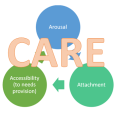
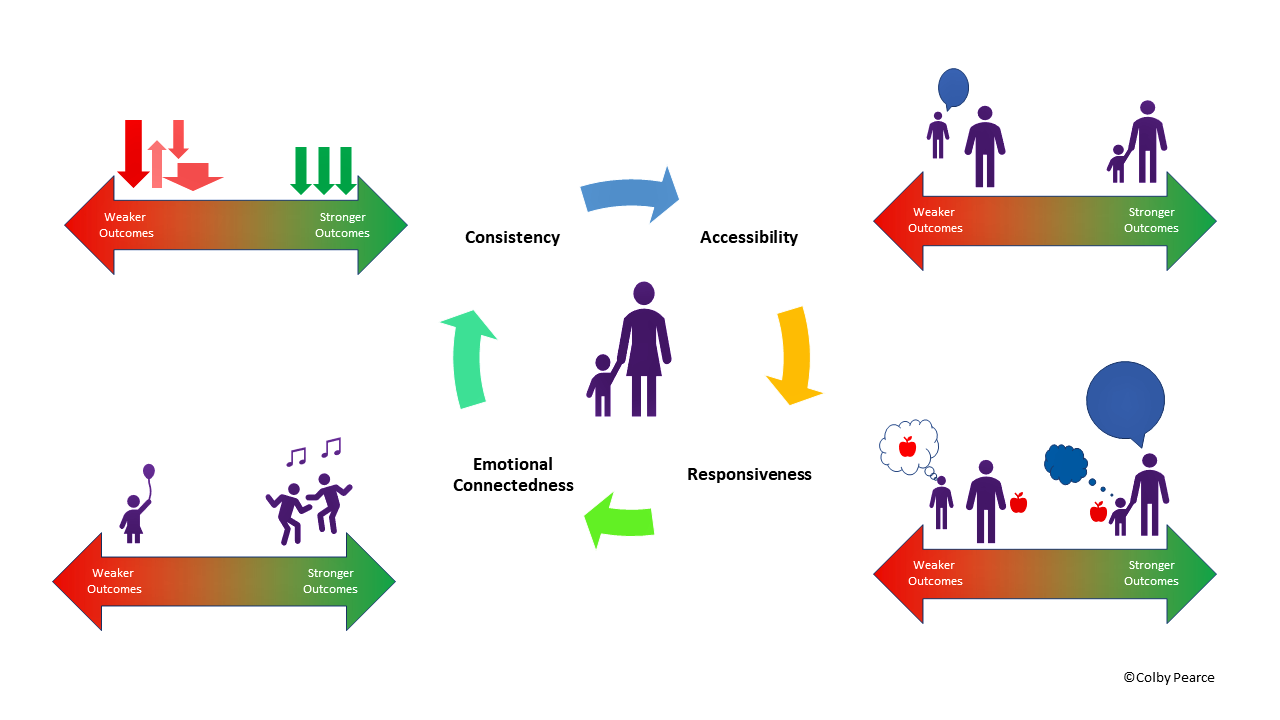
CARE embedded in AAA

Triple-A Model of Therapeutic Care

The CARE Therapeutic Framework

Helping Children and Young People Realise their Potential

Another place to connect with my work is to follow one or more of my pages on Facebook:

Secure Start Therapeutic Care

Secure Start

To Connect with me on LinkedIn or Twitter click below:

LinkedIn

Twitter

Wesite Header R

colbypearce's avatarAttachment and Resilience

The notion of the Hawthorne Effect is derived from a series of experiments conducted in the 1920s and 1930s at the Hawthorne works of the Western Electric Company. In these experiments, the experimenters manipulated aspects of the working conditions of some employees in order to study the effects of these changes on employee productivity and wellbeing. The most famous were the so-called “Illumination Experiments”. In these experiments, productivity improved with successive increases in illumination in a work area, then increased again when the illumination was subsequently reduced. This led to the conclusion that it was not the level of illumination that played a role in worker productivity, but the perception of the worker that management was interested in them and in their working conditions.

Several years ago I was asked to conduct assessments of thirteen children who were of the most concern to staff at a particular school, in terms of their engagement and behaviour. My assessments incorporated interviews of…

View original post 402 more words

Posted in Uncategorized | 2 Comments

AAA Caregiving in Schools

colbypearce's avatarAttachment and Resilience

In A Short Introduction to Attachment and Attachment Disorder I presented a model of therapeutic re-parenting of children who have experienced complex developmental trauma. In A Short Introduction to Promoting Resilience in Children I showed how the same model can be applied to parenting of all children, with the intention of fostering their resilience. In various other publications I refer to this model as AAA Caregiving. Where it makes sense to do so, I use the generic word caregiving instead of the more specific word parenting. My intention in doing so is in recognition that of the fact that caregiving is incorporated into a wide range of roles adults perform in relation to children. Hereafter I will briefly present how a AAA Caregiving approach can be applied by adults who work in schools.

The AAA in AAA Caregiving refers to Attachment, Arousal and Accessibility to needs provision.

Attachment 

The…

View original post 461 more words

Posted in Uncategorized | Leave a comment

Three Loving Parental Acts that Enhance Child Wellbeing

A popular post about AAA Caregiving. Love to receive your feedback’

colbypearce's avatarAttachment and Resilience

In my practice I am regularly asked the following question: What can I do to help my child? In the context of a child, adolescent and family psychology practice, the question is best understood as what can I do to promote my child’s wellbeing?

There are many perspectives and recommendations in the parenting and psychology literature about what parents can and should do to promote their child’s wellbeing. It can, quite literally, be overwhelming for parents to know what is best for their child. Keeping this in mind, I have reflected long and hard about fundamental aspects of good parenting and practical strategies for implementing them.

I believe that a lifetime of happiness and fulfillment stems from children developing a secure attachment to their primary caregiver(s) during their preschool years. Secure attachment relationships stem from the infant and young child experiencing their primary caregiver(s) as:

  • Accessible,
  • Understanding, and
  • Emotionally Connected.

As…

View original post 492 more words

Posted in Uncategorized | Leave a comment

Proactive Needs Provision Required to Heal Trauma Hurts

This is an aspect of developmental trauma that requires greater attention!

colbypearce's avatarAttachment and Resilience

Perhaps the most little known and understood aspect of childhood trauma is the impact inadequate needs provision has on the child’s perception of how their basic human needs will be met in future, and their associated actions to satisfy their needs. Yet, over eighty years of psychology research clearly shows that inadequate and inconsistent parental responsiveness will promote an enduring preoccupation with needs and high rate and great persistence in securing needs provision. The same research also shows that simply changing the conditions for needs provision, such that a parent or caregiver responds consistently to the child’s signals regarding unmet needs, is not sufficient to reduce the child’s preoccupation with historically unmet needs or the rate and persistence of their need-seeking behaviours. So long as the parent or caregiver responds to the child’s signals regarding their needs, the child will continue to believe that they themselves are responsible for their…

View original post 507 more words

Posted in Uncategorized | Leave a comment

Respond to the need as well as the behaviour

This is a popular post that I thought I would reblog. Happy reading!

colbypearce's avatarAttachment and Resilience

Much is being written about empathic care and being in-tune with the needs of children. Below is an excerpt from my book A Short Introduction to Promoting Resilience in Children (London: Jessica Kingsley, 2011), which, itself, is based on material I originally published in A Short Introduction to Attachment and Attachment Disorder (London: Jessica Kingsley, 2009).

Colby Pearce Resilience

Colby Pearce Attachment National Psychology Exam

To respond with understanding protects against reinforcing unhelpful beliefs about oneself and adults in a caregiving role. Responding to the need as well as the behaviour is one method by which an adult in a caregiving role can respond with understanding. Nearly all human behaviour has a function and purpose and children rarely misbehave for misbehaviour’s sake. Among other things, misbehaviour can serve as an emotional release (such as when children are tired and over aroused) or as a strategy to draw attention to an unmet need. Maladjusted and pre-verbal children are typically unable…

View original post 208 more words

Posted in Uncategorized | Leave a comment

Opening Dialogue with Schools

Colby Pearce ResilienceI am often reading and hearing about the frustrations of parents and carers of children with special needs when interfacing with their children’s school. What follows is my attempt to open dialogue with a school that has otherwise proved resistant to accepting and implementing specialist advice about the individual care and management requirements of some of my clients. I am hoping that it creates the possibility for conversation between the school and I. As it happens, the model and strategies I refer to is what I would recommend anyway for the children I see who have experienced family trauma. Let me know what you think.

I am writing to touch base with you in association with my professional involvement with a number of your students.

I anticipate that you field regular requests for special consideration regarding the care and management of individual children at school. I understand that it is often not possible or appropriate to implement special considerations for all children for whom they are sought. 

This email is not about my views about what special considerations should be put in place regarding the care and management of the children with whom I am involved. 

Rather, I wanted to convey to you my views about school-wide management strategies that are important in building resilience amongst the children at your school. 

The fundamental premise of my views about building resilience is the idea that all children have within them the capacity to be resilient.

Resilience stems from regular and repeated experiences of overcoming challenges and achieving feelings of mastery. Feelings of mastery, in turn, promote a resilient mindset.

Children are more likely to accept challenges and experience feelings of mastery, thus developing a resilient mindset, when three important preconditions are met. These are:

  • That they are calmly alert;
  • That they trust that there are adults present who understand and support them; and
  • That they are confident that their needs will be consistently met.

Achieving calm alertness requires that children have a structured day that also incorporates routines, boundaries and regular opportunities for short bursts of vigorous physical activity. Calm alertness is also achieved by exposing children to specific types of auditory input during the day, such as exposing the children to Mozart piano concertos after breaks and prior to the completion of graded work. 

Trust is achieved in association with children having the experience that their inner world is understood and important. Children experience their inner world as being understood and important when adults reframe questions as statements about what the child might be thinking or feeling, or what their attitudes and motivations were.

Children’s confidence that their needs will be consistently met is promoted by adults addressing their needs proactively. When a child asks, the child learns important lessons about adult responsiveness. But when an adult responds to the child’s need before they ask, such as attending to the child and offering assistance before the child asks, the child learns learns that their needs are understood and important, and that they can rely on others to respond to their needs without having to go to extraordinary lengths to draw attention to them. 

As it happens, I have written a book about promoting resilience in children, which is published in the UK and USA and sold worldwide. The details of the book are as follows:

Pearce, C. (2011). A Short Introduction to Promoting Resilience in Children. London: Jessica Kingsley Publishers.

There is more information about promoting resilience on my website: www.securestart.com.au

Please do not hesitate to contact me if I can be of any further assistance to you or the school in building resilience amongst the children who attend there.

Posted in AAA Caregiving, Resilience, Schools, Trauma | Tagged , , , , , , , , , , , , | 1 Comment

Reassuring Children

Reassuring Children: An older post but still relevant!

colbypearce's avatarAttachment and Resilience

Today, my eight year old son drew my attention to his sore knee, which he bruised falling on stairs at our home yesterday. He has a nice purple bruise in the middle of his knee. When distracted, he walks fine and does not complain about the pain. When his attention is on his knee, he complains of pain and walks with a limp.

As it happens, he complained to me about the pain in his knee this morning.  I was tempted to say that it did not look too bad and to remind him that I had seen him walking fine earlier. My intention in making such statements would have been to reassure him that he would be okay. However, I instinctively knew that this would precipitate anger, strong assertions that the pain was significant and further assertions that I was not taking the matter seriously.  I also knew that…

View original post 68 more words

Posted in Uncategorized | Leave a comment