

Conventional behaviour management, as it is widely used in the care and management of children, incorporates three main techniques:
- Reinforcement of wanted or desired behaviours;
- Punishment of unwanted or undesirable behaviours; and
- Extinction of unwanted or undesirable behaviours by ignoring or otherwise removing the intended outcome (reward/reinforcer) for such behaviours.
The psychological science behind these techniques comes from the Operant Conditioning Paradigm. Developed by academic psychologist B. F. Skinner in the 1930’s, the Operant Conditioning Paradigm asserts that a behaviour becomes part of an individual’s repertoire if in its action the individual receives some form of desired or desirable reward or achieves a desired outcome.
Think of a conventional school classroom. Children learn that in order to gain the attention and assistance of the teacher they must raise their hand. When they raise their hand they are rewarded with the teacher’s attention and assistance. Of course, during their early schooling children are told that this is the behaviour they must perform in order to gain the teacher’s attention and assistance. They are reminded to do so when they call out or seek the teacher’s attention and assistance by other, less desirable means. Children also see other children raise their hand and gain attention and assistance from the teacher (a.k.a. social learning). But what if the teacher did not respond to hands being raised or only responded sometimes? Would raising one’s hand become part of a child’s behavioural repertoire to gain the teacher’s attention and assistance?
The answer to this questions lies in the three main conditions under which an action was reinforced (or not) in the original operant conditioning experiments. In these experiments in the 1930’s rats and pigeons were placed in an experimental apparatus called a Skinner Box. The Skinner Box was a plain box with a lever or button and a chute. The chute was connected to a feed bottle located above the Skinner Box. The apparatus was set up to release a food reward (or not) via the chute in response to presses of the button or lever. The basic experiment involved seeing how well the animals learnt to press the button or lever under different reinforcement conditions. The reinforcement conditions were as follows:
- Consistent (or Continuous) Reinforcement, whereby the animal received a food reward for every press of the button or lever;
- Inconsistent Reinforcement, whereby the animal received a food reward sometimes but not others when they pressed the button or lever; and
- No Reinforcement, whereby the animal never received a food reward for presses of the button or lever.
Animals in condition 1 soon learnt to press the button or lever in order to access a food reward. Once they had learnt this, these animals appeared to only press the button or lever when food was required.
Animals in condition 2 were slow to learn to press the button or lever to access a food reward. Once learnt, these animals pressed the bar or lever at a higher rate and with greater persistence than the animals in condition 1.
Animals in condition 3 soon lost interest in the button or lever and never learnt to access food by pressing the button or lever.
What has all this got to do with human children? Apart from remembering that we too are animals, think of the infant’s acquisition of spoken language. The infant babbles and occasionally makes a noise that approximates a word. Perhaps, in imitation of what they hear from their mother-figure, that noise is “mu” or “ma”. The response of the mother-figure is typically delight and the bestowing of attention on the infant. The infant is rewarded for uttering “mu” or “ma” and, repeated consistently enough, the infant learns to secure their mother-figure’s attention and delight by saying “mu” or “ma”. Such is the beginning of language acquisition.
So, in terms of behaviour management, children learn new, wanted and desired behaviours most quickly, and only perform such behaviours when required or it is desirable to do so, when the behaviour is consistently reinforced/rewarded. Where the behaviour is reinforced inconsistently, the children are slow to learn and, when they do, they are prone to engaging in the behaviour with high rate and great persistence, which can be a problem. If it is never rewarded/reinforced, they never learn.
Punishment works differently. Punishment involves substituting the desirable reinforcer/reward for something undesirable for a behaviour that has already gone through an operant conditioning process. In further research Skinner delivered an electric shock to rats instead of the food reward. Referred to as aversive conditioning, the rats in these experiments soon stopped pressing the lever. However, in subsequent research Skinner was also able to demonstrate that the rats experienced a significant fear response as a result of being shocked for presses of the lever. In humans, fear impairs learning and can precipitate undesirable behaviours associated with the fight-flight-freeze response, thereby negating the benefits of punishment. In addition, punishment is less effective at stopping an unwanted or undesired behaviour when it is delivered inconsistently.
Ignoring the unwanted or undesirable behaviour that has already gone through a conditioning process, also called extinction, is the third behaviour management technique referred to above. In operant conditioning terms, it involves taking away the reward/reinforcer. In further research involving rats and pigeons that had learnt to press the button or lever under conditions of either consistent or inconsistent reinforcement, the food reward was taken away. What happened next is, from my perspective, one of the most interesting and least widely known aspects of the operant conditioning paradigm. As you might expect, the rats and pigeon’s who originally received a food reward for each and every press of the button or lever were quick to learn that conditions had changed and soon stopped pressing the button or lever when the behaviour was no longer reinforced. In contrast, the rats and pigeons whose behaviour developed under inconsistent reinforcement conditions were slow to learn that conditions had changed and continued to press the button or lever with a high rate and great persistence.
In behaviour management terms, extinction works best when the unwanted or undesirable behaviour was originally rewarded/reinforced on a consistent basis and when the reward/reinforcer is taken away completely. Extinction is less successful when the unwanted or undesirable behaviour was rewarded/reinforced on an inconsistent basis. The child is slow to learn that conditions have changed and will continue to display the unwanted or undesirable behaviour at a high rate and great persistence, giving the impression that extinction is not working.
What is worse, if you cannot ignore (or remove the reinforcer) or punish the unwanted or undesirable behaviour consistently, the child and their behaviour is on an inconsistent reinforcement paradigm; meaning that they will continue to perform the unwanted or undesirable behaviour in anticipation of it being rewarded/reinforced at least some of the time.
Behaviour management is further complicated by the fact that, for many children, their unwanted/undesirable behaviours developed under conditions of inconsistent reinforcement; as is the case in children raised in chaotic households or where abuse and neglect are a feature. These latter children might view punishment and extinction as desired outcomes of their behaviour, though abused and neglected children are also more likely to exhibit undesirable behaviours associated with activation of the fight-flight-freeze response when they are punished or denied access to a desired outcome.
Adults in a caregiving role with children cannot rely solely on conventional behaviour management to address all unwanted or undesirable behaviours. Fortunately, there are other, effective ways to promote positive behaviour in children. These are the subject of much of my written work and the programs referenced below.
If you found the information in this article useful, please share it using the sharing buttons below.
Please also subscribe to this blog to receive further ideas and guidance when it becomes available.
For more information about my work visit securestart.com.au.
Follow the links below to my two new resources supporting consistency of care and effective communication between home and school for children recovering from a tough start to life:


You can access more information about my programs by clicking the links below:
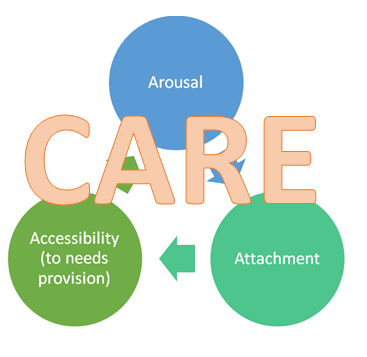
Triple-A Model of Therapeutic Care
The CARE Therapeutic Framework
Helping Children and Young People Realise their Potential
Another place to connect with my work is to follow one or more of my pages on Facebook:
To Connect with me on LinkedIn or Twitter click below:
If you prefer to use a form:









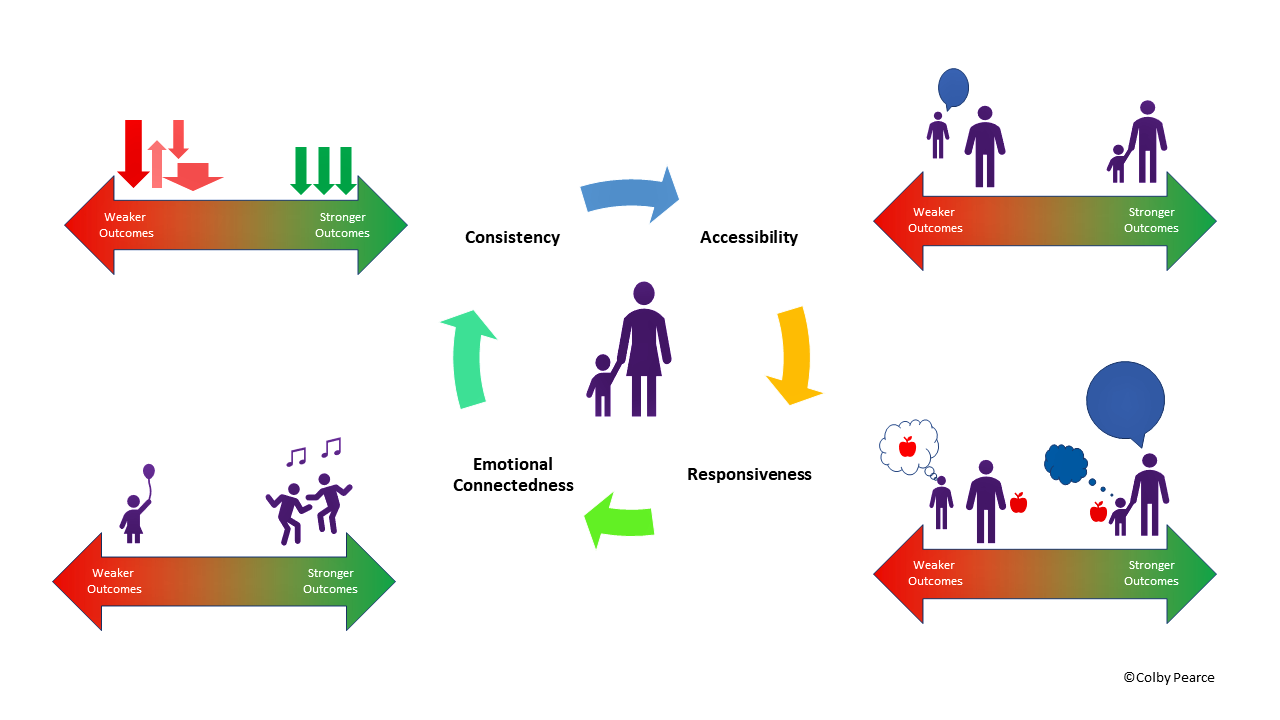




 Attachment and Resilience