Punishment without understanding equals invalidation

colbypearce's avatarAttachment and Resilience

People do not act for no reason.

They may act in response to an idea.

They may act in response to an emotion.

They may act in response to a need that requires satisfaction.

They may act because the way their brain developed impairs their capacity to think before they act in the presence of a trigger (stimulus).

If we accept the truth that people do not act for no reason, then we must similarly accept that when we punish a child for their actions without making any effort to try to understand why they did what they did, we are essentially communicating to them that their thoughts, feelings, needs and biological characteristics are unimportant or invalid.

Repeated often enough, the child develops the belief that they are unimportant and invalid.

The consequences of invalidation include behavioural problems, emotional problems, preoccupations with needs and a lack of regard for…

View original post 26 more words

Posted in Uncategorized | Leave a comment

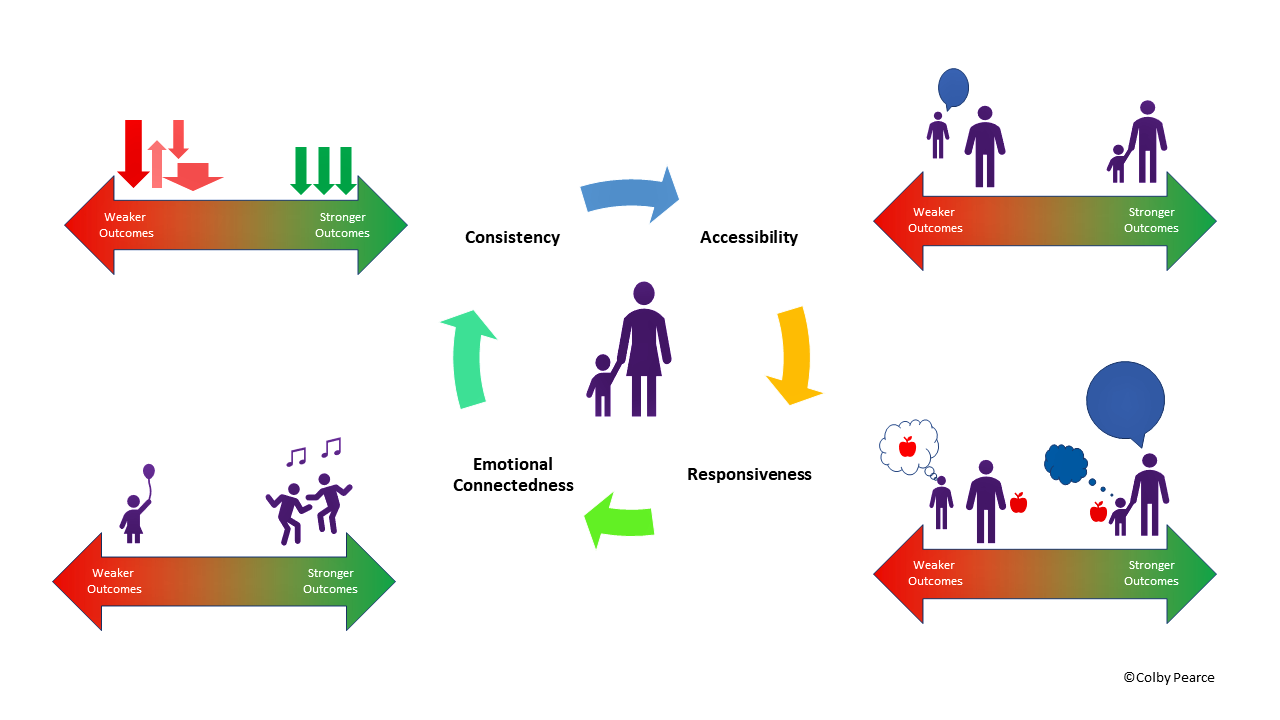
Triple-A Model of Therapeutic Care

Triple-A Model of Therapeutic Care.

Posted in Uncategorized | Leave a comment

Bestselling Adoption Titles

Please visit the Secure Star site for these and other bestselling titles.

Bestselling Adoption Titles.

Posted in AAA Caregiving, Adoption, Attachment, Fostering, Parenting | Tagged , , , , , , , , , , , , , , , , | Leave a comment

Bestselling Autism-Spectrum Titles

Please visit the Secure Start site for these and other bestselling titles.

Bestselling Autism-Spectrum Titles.

Posted in Parenting | Tagged , , , , , , , , | Leave a comment

Bestselling Parenting Titles

Please visit the Secure Start site for these and other bestselling titles.

Bestselling Parenting Titles.

Posted in Adoption, Fostering, Parenting | Tagged , , , , , , , , , , , , | Leave a comment

Reparative Attachment Therapy

Reparative Attachment Therapy.

Posted in Adoption, Fostering, Resilience, Therapy, Wellbeing | Tagged , , , , , , , , , , , , , , , , , | Leave a comment

Triple-A Model of Therapeutic Care

Triple-A Model of Therapeutic Care.

Posted in AAA Caregiving, Adoption, Attachment, Fostering, Parenting, Trauma | Tagged , , , , , , , , , , , , , , , , , , | Leave a comment

Managing Our Own Emotions in the Presence of Our Child’s Challenging Behaviors

Managing Our Own Emotions in the Presence of Our Child’s Challenging Behaviors.

Posted in AAA Caregiving, Adoption, Attachment, Children's Behaviour, Fostering, Parenting, Resilience, Wellbeing | Tagged , , , , , , , , , , , , , , , , | Leave a comment

Self-regulation in the presence of challenging behaviours

This article, by Colby Pearce, was originally published on 10/4/14 by Parenting Beyond Punishment as part of their No-Spank-Challenge.

Some thoughts on how to manage your emotions in the presence of your child’s difficult and challenging behaviours

I am the father of three boys.

I am also a Clinical Psychologist with more than nineteen years experience in child and family psychology. I have conducted almost 1000 assessments of children and their parents in child protection and child custody matters. I have appeared as an expert in South Australian Courts on more than two dozen occasions. I have treated more than 500 children. I have written two books and numerous articles about child and adolescent mental health, development and parenting. I have trained more than fifty practising clinical psychologists. I am regularly called upon to conduct teaching and training in relation to the care and management of children.

As is the case in millions of other families around the world my children have, at times, tested the limits of my patience and emotional self-control. They have fought with each other and defied their mother and I.

At times I have been unreasonably angry with them. I have ranted. I have said things I would rather not have. And, being fed up with them and with myself, I have temporarily withdrawn myself from them.

Several years ago, I reflected on the matter of my becoming unreasonably angry with my children. In doing so I became aware of a series of related beliefs I had been holding for some time, and which were impacting directly on my emotions and emotional closeness to my children. The beliefs went something like this. I am a Clinical Psychologist who specialises in children, families and parenting. I should have a solution for all of my children’s emotional and behavioural foibles. My children should be well-behaved.

The inevitable result of these beliefs was frustration with my children and myself, regretted words and affective displays, and [temporary] physical and emotional withdrawal at times when they simply proved to be just like the vast majority of children growing up in a functional family system.

Readers of my books, articles and blogs would know that children thrive on consistency. This extends to consistency of emotional connectedness with their adult caregivers. Children are also emotionally unsettled by heightened affective displays by their parents. Heightened affective displays by parents and associated emotional distress in children make them more prone to behavioural problems and emotional outbursts.

Hence, my belief system was self-defeating.

More functional [and rational] beliefs are that my children do not have to be perfect, nor do I have to be the perfect parent, just because I am a Clinical Psychologist specialising in child and family psychology. They, like me, need to make mistakes in order to experience life lessons. Amongst other things, they need to learn that family relationships transcend situational conflicts.

Since adopting these more temperate [and realistic] beliefs I have been better able to maintain a consistent emotional presentation and involvement with my children, including in the face of their difficult and challenging behaviour. The importance of this cannot be understated. Not only have I modelled emotional self-control under conditions of adversity, I have preserved the strong and secure attachment relationships I worked so hard to achieve for my children.

When all is said and done, it is the relationship we have with our children that is the most powerful determinant of their wellbeing and adjustment.

So, give your children and yourself a break. Be temperate [and realistic] in your expectations of yourself as a parent and your children’s adjustment. It is in their best interests, and your own!

#childpsychologistadelaide #Adelaide #securestart

Posted in AAA Caregiving, Adoption, Children's Behaviour, Fostering, Parenting, Wellbeing | Tagged , , , , , , , , , , , | Leave a comment

Teens, Alcohol and Drugs

Drug and alcohol consumption amongst teens is of significant concern to a great many parents.

Parents are often desperate for good quality information and guidance about how they should manage this issue with their own teens.

Some time ago, and after watching a locally-produced video on the issue, I felt compelled to share some of my thoughts as a professional and a parent of teens. Hereafter is what I wrote and the time, and it still holds true or me to this day!

My first thought was that I was still the most significant role model my sons had. They looked to me for an example of what it is to be a man and a father. They observed my activities and behaviour and formed ideas about my beliefs and attitudes.

Whether they adopted the same or similar beliefs and attitudes rested, in large part, on my second thought. The relationship I has with my sons was the single biggest determinant of whether they would accept or reject my beliefs, attitudes and example of what it is to be a man and a father. Without a strong and true relationship; that is, a relationship where they experience me as being sensitive and understanding about their thoughts, feelings and experiences; my sons were unlikely to accept my example and the ideas and values that underpinned it.

My third thought was that independence, and independent-thinking and decision-making, were important developmental tasks of the teen years, as they prepared for adulthood. Though every fibre of my being would have liked to take all decision-making out of their hands when it came to such issues as their exposure to drug and alcohol-use at gatherings of their peers, I realised that in order to preserve a strong and influential relationship with my teens I needed to offer them the experience that I trusted them to make sensible decisions. That was my fourth thought.

I also needed them to believe that they could make sensible decisions about what was best for them and our family.

My final thought, at least as far as this article went, was that sensible decision-making by our teens that was consistent with the values of our family stemmed from the parenting we offered them throughout their lives; parenting that placed the relationship at the centre of all endeavour was the key here.

For practical strategies for developing and maintaining strong and influential relationships with your children, my articles entitled “In order to be heard we first need to listen”, “Why punishment is problematic” and “Three loving parental acts that enhance child wellbeing” are a good place to start. They all appear on the this site. For more detailed information, I would refer you to my book, A Short Introduction to Promoting Resilience in Children.

An encore thought: unless our teens experience us putting ourselves in their shoes, we cannot reasonably expect them to consider our experience of the consequences of their decision-making. After all, consideration of our experience is arguably one of the first things we would like them to think about when they make decisions regarding drugs and alcohol.

Posted in Children's Behaviour, Parenting, Resilience, Wellbeing | Tagged , , , , , , , , , , | Leave a comment