Managing behaviours of concern exhibited by deeply hurt and troubled children and young people can be challenging, with conventional approaches like time-out, reward charts, and removing access to a desired item or privilege rarely resulting in a desired outcome. Often the behaviour becomes worse. Even if there is a reduction in the behaviour, these children and young people are prone to adopting very negative dispositions towards you and themselves; especially when the management strategy is punishment.
Hi, I’m Colby Pearce. I haven’t recorded a video recently because I’ve been very busy with the Secure Start podcast, but today I had the urge to make the following video. Getting behaviour management right for deeply hurt and troubled children and young people can be a challenge.
What I hope to do in this video is take you through a process which I anticipate will allow you to respond sensitively, therapeutically, and effectively to behaviours of concern exhibited by these children and young people. I want you to think of a child in your care or who you work with. Write down their name.
Next, I want you to think about a behaviour that you or others are concerned about. Write down the behaviour. Now, in relation to the same child or young person, consider the following questions.
If they could or would, how would they truthfully describe themselves, other people, and their world? Write down your answers. How fast is their motor run? That is, how activated is their nervous system? Write down your answer. If you’re not sure, consider the following.
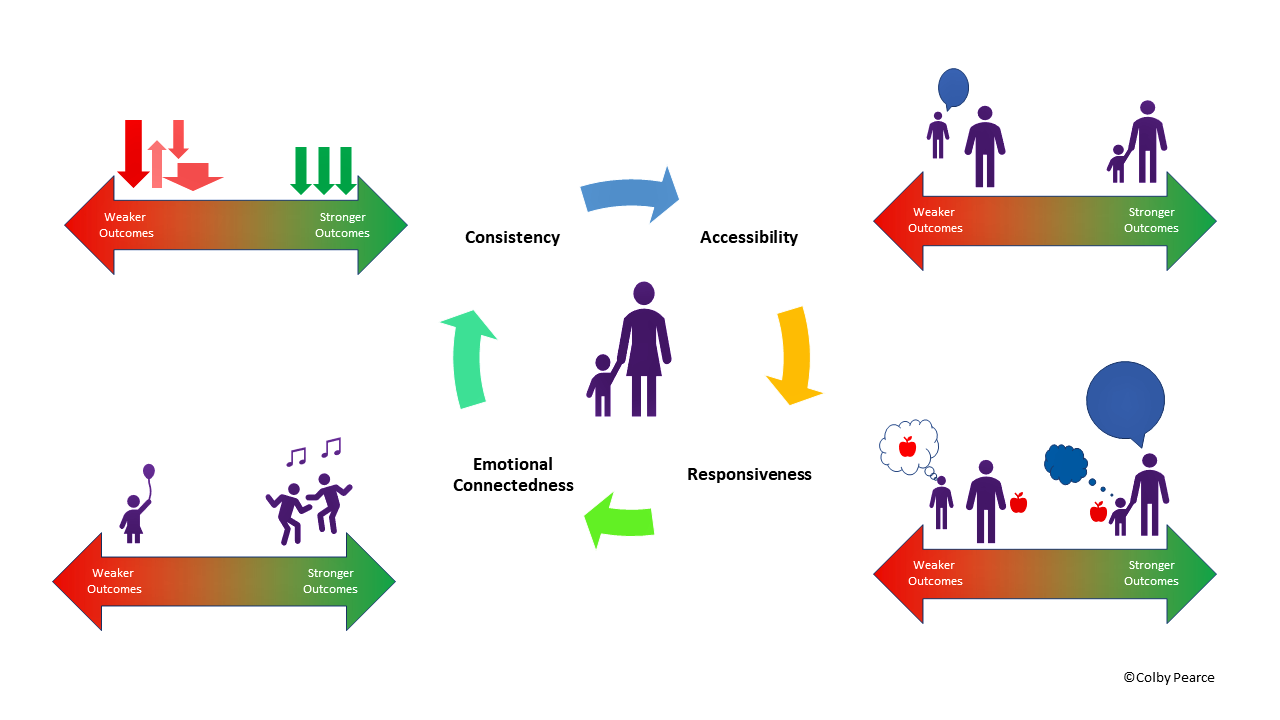
Are they typically restless? Do they have trouble sleeping? Are they anxious? Do they tantrum easily? These can be signs of an internal motor that is running too fast. The third question is, what do they appear to have learnt about how to get their needs met? Write down your answer. If you’re not sure, are they more or less trusting and accepting of adult care? Are they particularly demanding of your accessibility and responsiveness? Or do they appear to accept that you are there for them and will respond to their needs as they arise? Are they overly self-reliant? Returning to the behaviour of concern and your answers to the previous three questions, what do you consider might be the real reasons for the behaviour of concern? Write down your thoughts.
In consideration of all your previous responses, what can you do to respond to the real reasons for the behaviour? Write down your answer. What do you think will be the outcome of responding in this way? Write down your thoughts. How might the child or young person approach life and relationships differently if you responded to the behaviour in this way? Write down your thoughts.
To respond therapeutically and effectively to the behaviours of concern exhibited by deeply hurt and troubled children and young people, I strongly encourage you to follow the above steps. If you need help to develop a response to each of those steps and questions, I recommend that you consider my book, A Short Introduction to Attachment and Attachment Disorder, and the learning resources that you can find on my website securestart.com.au. And a final reflection, in consideration of the above process, how might you respond to a behaviour or behaviours of concern exhibited by an adult who has their own experience of childhood trauma and is themselves deeply hurt and troubled? I anticipate that you will find the above process just as helpful.
I recently interviewed Cath Knibbs on The Secure Start Podcast. Cath is an international authority on online harms to children, and a great speaker to boot! You can watch the podcast at the link below or listen here.
Cath’s Bio:
Cath is a Researcher, Psychotherapist, Author, Speaker, and Doctoral candidate looking at the real harm children suffer in a world of technology, which is advancing quicker than many adults can keep up with.
Cath has a background in Engineering in the Army, IT, and Computer Tech of over 25 years, and over a decade of working with children and adults directly around issues relating to the internet, from Bullying to Porn viewing, from cybercrime to cybersecurity and more.
Cath writes about issues such as the impact of tech on the developing child, the impact of cyber trauma and the issues of immersive technology on eyes, brains, and bodies.
Cath runs a company educating professionals about child safeguarding around tech and digital spaces, and she teaches therapists how to be ‘safe AND secure’ when using tech to ensure they protect their clients.
Transcript
Welcome to the Secure Start podcast. And the thing that I would certainly say is the vulnerabilities offline result in far more vulnerabilities online. What we tend to do at the moment is talk about the use of technology as though it is a tool and we forget so often it is the medium.
Welcome to the Secure Start podcast. I’m Colby Pearce and joining me for this episode is a global expert in children’s online behaviour and associated online harms. Before I introduce my guest, I’d like to acknowledge the traditional custodians of the land we’re meeting on, the Kaurna people and the continuing connection the Kaurna people and other Aboriginal people feel to land, waters, culture and community.
I’d also like to pay my respects to their elders past, present and emerging. My guest this episode is Catherine Nibbs. Catherine is a researcher, psychotherapist, author, speaker and doctoral candidate looking at the real harm children suffer in a world of technology which is advancing quicker than many adults can keep up with.
Cath has a background in engineering in the army, in IT and in computer tech of over 25 years and over a decade of working with children and adults directly around issues relating to the internet, from bullying and porn viewing to cyber crime and cyber security and more. Cath writes about the impact of tech on the developing child, the impact of cyber trauma and the issues of immersive technology on eyes, brains and bodies. Cath runs a company educating professionals about child safeguarding around tech and digital spaces and she teaches therapists how to be safe and secure when using tech to ensure they protect their clients.
Welcome, Cath. You’re welcome, Colby, for inviting me on because I’m very excited to talk about this and thank you to that beautiful rendition and nod to the land you’re on. We do that as a sign of respect for the traditional custodians of this land that we refer to Australia and their continuous connection and habitation of this land that spans at least the past 40,000 years.
So, Cath, I’ve given a little bit of a bio or summary of your work, but I’m just wondering how you would describe the work that you do. In a nutshell, well, some of that description makes me sound younger than I actually am because it’s over 30 years I’ve been working in and around technology, so we’ll just skip that bit but I would say what I’m doing in my role is I work from the micro to the macro in terms of trauma. One of the things that isn’t on that description is my background in functional health, so I’ve been doing that since 2018 and using functional testing such as checking for gut microbiome, DNA, what we call single nucleotide polymorphisms, I can actually see on a cellular level what trauma does and how it impacts the body and when I’m looking at technology, I’m looking at what we do individual all the way through to the macro in terms of society and how we’re changing, if you like, as a species.
So, I would certainly say what I do is working individually, collectively and metaphysically, if that’s not too deep for, what time are we on? Tuesday morning. Yeah, it’s the afternoon for me here in Australia but yeah, yeah, wow, that is fascinating and I wonder, is that associated with the PhD that you’re completing which I referred to or? Um, no, the PhD is in how young children, so I’ve worked with seven to ten-year-olds, how they perceive the impact of viewing distressing inappropriate graphing imagery and this is a, it’s a piece of research that really hasn’t provided any new, any new findings really in terms of children are affected by this stuff on a, let’s say, a nervous system level, on a psychological level, on an emotional level and it’s almost like I’ve had to do the research to prove to people what I’ve been saying for the past 15, 20 years. Yes, yeah, yeah.
Well, I guess that in some ways is the role of research, isn’t it? Is that, yeah, is that research is, I often describe research as being scientifically, the scientific inquiry into the things that we already believe to be true. Yeah and, and I guess what we do as clinicians is considered anecdotal until we have a piece of research that backs it up. That’s right, that’s right, which can be reassuring but also frustrating, I guess.
Yes, yeah. You know, certainly you, you would be aware perhaps that I sometimes write about things like practice expertise and titled expertise and a lot of titled expertise emanates from universities and probably has more standing than, than practice expertise. So it’s good to hear from someone who is both a practitioner and a formal researcher who is conducting research that’s bearing out, I guess, what, what you have known from significant practice in this field.
Yeah, so that’s fantastic, Kath. Yeah. And how did you get, like, how did you get into this area of work? In a nutshell, my, if I go all the way back to my childhood, because that’s where we always go when we’re, we’re clinicians in this space, my father was a radiographer in the prison service after leaving the army and he worked in and around what’s called Category A prisons.
So these are prisons where people are serving life, lifelong sentences for really macabre and abhorrent crimes. And when I was younger, he would talk about the crimes that some of these criminals have, have engaged in. And I must have been nine, 10.
Obviously, there’s reasons why my dad talked to me in that way. And we’ll not talk about his dysfunction for doing that. But I got really fascinated in well, why would somebody do that? And because of the, if you like the dysfunction in the family, I went down the route of physics, not people.
But I actually came back to people after the career in engineering and going into computing. Because I was raising my own children, I was working in the computing industry. Yeah.
And what I was dealing with. So this is when the really started to take a really prominent part in people’s life, particularly in business. So this was like 1996 1998 2000.
And I had young children who were beginning to get used to computers, I introduced them to technology very early on. And what I noticed is the way in which the adults use the internet, and the way in which children use the internet. And that was really my foot in both camps.
And then I decided to train as a therapist, because I jokingly say, computer sat my soul, it’s a, it’s a very quiet industry to work in, in most cases, and I’m a chatty person. So I went and trained as a psychotherapist. And whilst doing so did a little bit of work in some of the secondary schools.
Yes. And I was finding what children were doing online was kind of in between a set of teenagers, really, what the teens were doing differed to the primary school aged children versus what the adults were doing. And we were not talking about this in 20 2010.
If we go back, that’s that’s really when I started. Yeah, it was being missed. And I continuously say, and that’s the generation of children that we let down.
Now, in 2025, 15 years later, we are now talking about the harms that children face. And this is thanks to online safety, trust and safety, and of course, a recent TV programme, which we’ll probably get into. But also, it’s the space in which now, we’re looking backwards saying we should have put guardrails in place, we should have taken care of the children.
And because of the ubiquitousness of this space, now, we are now recognising that children can be harmed. But I would certainly say, the phrase I tend to use is we look at the ACEs study for trauma. But what we didn’t look at were cyber ACEs.
And these are the ones that you can be harmed by on the internet. And that that goes all the way back to early 2000s for the last 25 years, really. So you’re really talking about cumulative harms when you’re talking about the ACEs study, which is for those who are not familiar with it, that’s the adverse childhood experiences study that really contributed to our idea, contributed to our knowledge about the impact of cumulative harms during childhood on health and wellbeing in adulthood.
And yeah, it’s very interesting what you’re, the parallel that you draw in terms of, I guess, children’s exposure. And in the same way that the ACEs study referred to complex trauma experiences, because there were multiple trauma experiences, probably experienced multiple times. You’re clearly drawing a line of association between that concept and what happens in the online world for children and young people.
Yeah. Yeah. And the reason for that, Colby, is because everything we do online is attachment based.
When you actually get to the crux of the modus operandi and the why we do what we do, there is so much neurobiology involved in using technology, being on technology, doing what we’re doing. And unfortunately, that’s the bit that has been missed, because what we tend to do at the moment is talk about the use of technology as though it is a tool, and we forget so often it is the medium. And that’s one of the phrases that I’ve used for a long time, it’s a tool and a medium.
And when we’re talking about screen time and the metrics that are being discussed in ways that reference addiction and things like that, that’s not taking into account the why we do what we do. And when you actually get down to the crux of it, it’s about socialising, it’s about connection, it’s about engaging with your peers. And each and every part of the developmental trajectory of children is about that technology and how they interact with it, or how others interact with it in front of them.
So everything has an impact on attachment. And the thing that I would certainly say is the vulnerabilities offline result in far more vulnerabilities online. But when we’re talking about children who are in environments where technology is present, and it’s overly used at the detriment of the real world connection, we are seeing a different kind of process emerging.
And I call that attachment. Very good. Yes.
It’s fascinating listening to you talk about it, and particularly the link that you draw to attachment. My mind was going to thinking about children’s online behaviour, as you were describing it as being a place where connection is achieved, a significant place where connection is achieved. And it’s through those, each of those connections plays a role in what children and young people’s attachment style is.
So you may well be familiar with my work, I draw a distinction between attachment relationship and attachment style. Children and young people can have multiple attachment relationships, and they all differ based on their experiences of those relationships. Their attachment style is something of an amalgamation of all of those experiences.
And it’s very interesting. And the penny’s dropping for me, even as we speak, as that you have included real world and online relationships as contributing to a child’s attachment style, which is very important in the way in which children and young people and eventually adults approach life and relationships. And it’s like the rudder, the rudder that steers them through life.
Yeah. Yeah. I mean, that’s why I went off to do my TEDx, because I found myself in that position with my own children.
So one of the things I’ve looked at is early developmental needs when there’s a three parent family, the mum, the dad, the device. And I was really interested when I was doing my baby ops about what sense do babies make of their world when perhaps the parent is only interested when the flashlight is on and the camera’s on and they’re paying attention to this thing. And this thing gets pointed at them, and then their cadence and tone changes.
And of course, the prosody around connection is around, hi, let’s take a picture. And then the parent goes back to looking in the phone. What do babies make of this new way of being in the world? And what happens when that distracted parenting becomes about what I call other children inside the device? Because babies can’t recognise themselves.
And when mum, dad or other relatives are like, oh my goodness, look at your picture here, swipe, swipe, swipe. Is that another infant in the room? Is that a sibling? Is it a baby that could be a threat? What is really going on in those first 1001 days? And the reason I went off to do the TEDx is because I was sitting in my living room. This is going back quite a few years because my children are adults now, but nearly 30 in terms of their age.
And I was sitting there with one of the first ever iPads. And I’m tapping away thinking, look at me doing my extra hours. And I’m being a very busy mum.
And here I am tip-tapping away. And my children were playing on their consoles and devices. And I realised nobody had spoken for an hour.
And I had this realisation. I went, OK, everybody stop. We need to not do this or we need to not do this as often as we currently are.
And it was about really having a conversation. Fast forward to, I don’t know, probably about five, six years ago, I was on the telephone, the good old fashioned, and I’m here, the good old fashioned finger and thumb telephone. And my eldest son sent me a piece of research.
I opened my phone and started to read it because we were having a conversation. And he went deadly silent. And he said, you’re not paying attention to me, are you? Whoa.
And that was a moment where I thought, oh my goodness, even in a telephone conversation, I’m not present because I’m reading the piece of research, which means I can’t do multitasking. And as a result, I kind of dropped that into the middle of the talk about this real world connection. And what I’m beginning to see, well, not beginning.
This has been happening for 15 years. Children who do not get their needs met, and I call it out here, go looking for their needs in there. And in there is whatever kind of technology they can find, or whatever app, device, game, et cetera, et cetera.
Wow. I think we all have a certain level of understanding that these devices intrude into our real life and realtime interactions. I got goosebumps when you talked about what do babies make of this three-way interaction.
That is fascinating. Probably the topic of a much longer, I think, podcast interview. But I’m really, yeah, now that you’ve brought it up, I’m fascinated to hear more about what you’ve said and what you believe to be the case about that.
Can I just put my caveat in there, actually? It’s not to blame parents. I understand, and I think I’ve written this in my first, parenting is the hardest job in the world. And if you’ve got a brand new baby and you’ve got, I don’t know, 300 people on your Facebook page, because that’s where us old fogies are apparently.
If you’ve got 300 people telling you how you need to be as a parent, that can be so overwhelming for these new parents. Maybe there’s a reason why they’re online so long. Maybe it’s because should I be doing this or should I be doing that? Should I be doing sleep training? Oh, my goodness, I gave them food too early.
I’m feeding them too often. Contradiction, contradiction, contradiction. Plus, the health visitor who comes round, maybe they’ve got 300 friends that have been telling them what they need to do as a professional.
We are overwhelmed with not doing things in air quotes, the right way anymore. We have no real way of sitting with our instincts anymore when this device can be telling you continuously comparison, comparison, comparison. You’re not good enough.
You haven’t done enough of this. Your baby’s not doing that. They’re not standing.
They’re not sitting. They’re not walking. And I totally understand that must be overwhelming for brand new parents.
But also, parenting is so difficult that in the early days when babies are sleeping, it used to be you would stick the television on. Well, you can now sit and play a game. You can talk to your friends.
And for new mums, I guess that’s a way that they can still have some form of connection, whereas the isolation of the parents before the phone, so it’s pros and cons. It’s interesting because while you were speaking about that, when we think about tech, and of course, our first concern is always our children and whether we have, by embracing online tech, with the alacrity that we have as a society, whether we have created, I guess the grossest generalisation is that we’ve created a generation of anxious children and young people, or more to the point, we’ve created a generation of anxious young adults. But what I’m hearing you say also is that it’s more generalised, ubiquitous, I think is the word, than that, in that we’ve also created a generation of anxious adults who have a medium by which to constantly compare and contrast their performance in various roles, as well as the general stuff, you know, how they look, what their interests are, and all of that sort of thing.
What Alain de Botton, my favourite modern day philosopher, refers to as status anxiety. He wrote a fantastic book about it. Yeah, his most recent one is absolutely gorgeous.
Yeah, I haven’t read the most recent one, but wow. I could sit and talk to you about tech, I think, for much longer than we’ve both got. But if you could, I’m actually really interested to hear a summary of your, where you land with tech, and in terms of what you would say to professional people like me, and yourself, and what you would say to parents about tech, and what you might even say to governments about tech.
Well, do you know what? That segues really nicely into, I have just written a book, right, which will be out in July with Penguin, and it’s called Tech Smart Parenting. Because I am pro-tech, I am pro-parenting, and I am pro-education. And those three need to go together, in terms of the world we now live in is technological.
So I will just go back to your reflection on the anxious generation being a particularly provocative piece of literature that has not summed up the world of technology very well, mainly given the author is not steeped in technology, has arrived and done a recent, it’s kind of like an overview, without understanding all of the different domains and spaces and ways in which technology is used. Hasn’t included games, hasn’t included immersive environments, hasn’t included the internet, wants to just talk about social media without actually defining what social media is. So that’s just my little rhetoric reflection on that particular book.
Absolutely. Sorry, I was just going to jump in and say, yeah, I think my understanding is that there is a distinction to be made, or at least if we’re going to talk about the impact of tech and the online world on children and young people, we need to look more broadly than social media, if we’re going to talk about what we’re noticing about the changes in the emotional health and wellbeing of our young people, we need to not just look at tech and the online world, we need to look at everything that is happening in society. Yeah, there is, I’ll actually send you a link to it.
There’s a very good podcast that I’ve not long watched, which is an attachment specialist talking about actually the mental health crisis started before technology, which I’m sure yourself being in this domain, this is not a new arrival and because of tech, it’s much more complicated and nuanced. I didn’t suddenly get busier. I didn’t suddenly get busier in 2010.
There is, yeah, there is something to be said about, I get it, clickbait books and book titles sell. And unfortunately, I’m watching this particular professional at the moment, distance diagnosing people on the internet when he knows nothing about family situation. Actually, they’ve just appeared on a big US platform, a very well known TV presenter has just hosted them.
And one of the lines was, so no tech, no social media, but if they want to take a laptop into their bedroom, then I just kind of rolled my eyes and went, then you really do not understand what the dangers are and where they come from. And the reason I say that, Colby is because the reason I’m in the world of cyber trauma is because of something that happened to my children when they were about 10 or 11 on these flip phones, which are allegedly safe. I can tell you they are not because all of the spaces that children can interact and engage with all have the same kind of harms.
And they can be accessed in many different ways. They can be accessed at a library, they can be accessed. I actually know of recently of a child managing to do something on a McDonald’s device in the restaurant.
So children are savvy enough to know how to get around if they’re not allowed on social media, because there’s no way to regulate this vast internet. So going back to my, my position on this, I would say we need education for parents that a does not shame and blame, because that’s what I’m seeing at the moment, there is a huge drive to say, well, you gave them the damn devices, you should know better you you must you can you and what I’ve seen as a fallout is scared and angry parents. And when we’re scared and angry, and we go into fight flight freeze, we want the thing to go away, which is why the campaigns at the moment, for no phones, no social media, no, whatever it is, smart tech, this, that and the other.
They’re coming from a place of fear of the unknown. And it’s being driven by lots and lots of narratives in the mainstream media, and certainly by TV shows saying, Oh, my goodness, this particular outlier case could be your child and, and that isn’t helping anybody. And the children that are growing up now are going to be Prime Ministers, they’re going to be the technicians, they’re going to be the surgeons, they’re going to be the librarians, they’re going to be trade people.
And they are going to do that with technology, which also includes AI. And if we’re going to make this this approach, get rid of smartphones, get rid of social media, what is it that we’re going to miss out on by teaching children how to survive in the real world? Yeah. And it harks off going back to hunter gatherer tribes and saying, we’re not going to have fire in the camp, because it could actually burn our village down.
So we’re not going to learn to live with fire, because it could potentially be dangerous. Whereas another, another hunter gatherer tribe might say, well, we’re going to contain ours with stones. And we’re going to use it.
And we’re always going to have somebody taking care of the fire to make sure it doesn’t go beyond the bricks, so to speak. And what we’re doing at the moment is we’re saying we’re going to be a village that has no fire, there we are, we’ve progressed far more than the tribe next to us, who have learned to harness and contain it. And to educate people about the dangers, but also fire can cook food, fire can keep us warm.
And this goes to that metaphysical approach. So Heidegger talked about this, actually, and called this techne. This is the use of tools, if you like, to improve the environment and society and progress.
Hmm. Thank you. So I’m pro-progress.
Yep. Yep. And powerfully so, if I might say.
And of course, I’m coming to you from a country that is seeking to ban young people access to social media until they’re 15. And in fact, I have passed legislation that’s been passed, bringing that into effect. And the mind goes to, you know, whether we’ve learned anything from prohibitional approaches.
Not so far. No, no. But at least the government is on the side, the government can say they’re on the side of concerned parents.
And that’s a good thing. Yeah, it is in how parents feel supported. Yeah.
However, the gripe, the gripe across the world from the academics is this is not research based. And I will give you a good example. In terms of Pete Ketchell’s has written a book called Unlock.
So Professor Pete Ketchell’s. And he talks about the way in which sometimes we implement good ideas with the vested interest only to find out later it wasn’t the best approach. And that has happened repeatedly in medical settings where we’ve considered, for example, where somebody has a head injury and we do the little hole known as trapanning, where you actually do that.
That has not been for the best interest of the patients, as it turns out. But it sounds like a good idea. And if we think about what what we’re doing at the moment, this is that it’s really an anecdotal.
I don’t know how to, in air quotes, control my child. I don’t understand the technology. So I’m going to shout from the rooftops.
It is damaging my child because that’s the only thing I can say as a parent because I don’t understand what’s happening. And because there is a movement of parents saying I’ve heard it and I’m going to go into the things that really gripe me in terms of I’ve heard it gives them a dopamine fix or a dopamine hit when people don’t even understand what dopamine is or how it actually works within the body. I believe they’re addicted because they won’t get off it, whereas the understanding about what children are doing and why they can’t come off the game or why they can’t come off the platform at this point in time is about relational processes.
But what we do is we get scared and we get angry and then we shout at the government and the government says, well, best we keep our voters on side. We will support this movement. And sadly, the bit around we’re going to ban social media hasn’t even defined it.
And what I have seen is certain platforms are still available, but the Internet isn’t banned and neither is gaming and VR, AR, XR, all of the different new immersive technologies. And the government is pretty much saying there we are. We’ve put a gate around the pond, but we haven’t done it for the skate park and we haven’t done it for the swings and the rides and we haven’t done it for the graveled area and we haven’t done it where the dangerous dogs run.
It’s almost like we’ve done our part because we’ve done the health and safety over this particular aspect in the city park and parents feel relieved. But it hasn’t really sorted the issue out yet. Yeah, yeah, yeah, yeah, yeah.
Wow. There’s a lot in there. I think you mentioned the word Segway earlier and I wonder if this is a good place to Segway into the topic of the Netflix show Adolescence, which I guess very much from my observation taps into some of these issues that you’re talking about, not least of which the concern that exists around the impact of social media on children and young people’s behaviour.
I just want to ask you firstly, well, I’m probably going to ask you a double barrel question. The first part being just your general impression of the show and in particular, how it portrayed social media use amongst young people and the contribution it made to the plot, I guess, of the show. So I think I used the word earlier, but I will make sure that I do use it here again.
It is a fictional outlier story, OK? And certainly in terms of the actors in it, I enjoyed the programme. It was, if it was a book, it might be what’s called a page turner for certain. The story was fast paced, which I’m going to do the idiosyncratic.
If we’re going to talk about what social media does in terms of how they influence us and how they hook us in air quotes, that’s the same as the cinematic way in which this story was told. We went from an opening scene that was very energetic. It had lots of unknown questions and answers as to what was happening.
Why was this child being arrested? Is this really how the police arrest children? Et cetera, et cetera. So it absolutely captured our attention and gave us that dopamine spike. And I’m being slightly ironic, sarcastic here, OK? So what the programme did was really good in terms of creating that attention economy in the same way that social media does.
And given that it was a screenplay, the way in which the story started to pan out on the first and second episode were kind of indicative of if we didn’t know anything about the policing service, we would expect that’s how they arrest children. And that is not necessarily the case. That is a very, very rare case that somebody would be arrested in that way, particularly if they were known to be 13.
So for me, there was quite a lot of eye rolling. Well, that’s not how it happens. That’s not how it happens.
But in terms of entertainment, I enjoyed watching it. In terms of the actualities in practice, is this? No, it did not. It did not go in line with what I know as a child therapist, certainly what I know in the criminal justice system, certainly in terms of being around children who are within this system in this way.
And that’s because I work with children in the criminal justice system and in this particular way. What was interesting was the tiny little nugget, and this is the bit that seems to have captured everybody’s attention, was the police’s son who said, Dad, it’s all about the manosphere and began to talk about an environment that isn’t usually talked about in that way by 13 and 14 and 15 year olds. And I have had so much fun since the programme talking to my 12, 13, 14, 15, 16, 17 year old clients, because many of them have watched it, including the ones that are underage.
And their response has been, we don’t even talk like that. And we don’t use the emoticons and the emojis like that. And that’s not how we behave.
That’s the adults not getting us again. And one client reflected, and do you not think, this was my favourite, and do you not think that now you adults are talking about the emojis, that we’re not going to change what we’re doing? I laughed and said, but that’s what all children do. Yeah.
So what it did do, was it named, or it kind of gave a nod to the environments in which misogyny, and I particularly despise this term, toxic masculinity is being discussed. There’s no such thing as toxic masculinity. It’s masculinity and toxic behaviour.
And toxic behaviour always has a root cause, which comes from, and I’m sure I do not need to say this to you at all, Colby, that children do not rock up as toxic adults. You know, there is a trajectory, there is a story. And the way in which the story has been told is, it’s an absolutely outlier case.
This does not happen in general day to day practice. However, we’re back to that blame, shame, scare, shock and awe, in which parents are now frightened. Maybe my child is a potential killer.
Maybe my child, well, that is true of everybody who lives on the planet. We are all one, I think the way to phrase this is probably we’re all one fight away from being a dangerous person. And that, for anybody who’s interested, actually, there is a book called Ordinary Men.
It is not a very nice, gentle read. It’s about how behaviours happen in Nazi Germany, how ordinary men became these killers. And that’s the thing about the human psyche.
We are all one error away from a lifetime sentence in prison, for example. And what it has done, certainly, is bring to the surface conversations that we need to have about children, about boys. But the social media influence wasn’t discussed enough for it to make sense in the programme.
I can say with absolute certainty, not all boys who watch pornography turn out to be killers, not all boys who watch pornography turn out to be sex addicts, not all boys, not all boys, not all occasions, not all situations. And the reason I say that is because I’ve worked with a number of them for 15 years. This is not a, I’m not throwing this out to defend the programme.
This is based in a long time of being a clinical practitioner. What the programme has effectively said is porn, social media, gaming and being out of the sight of parents is the thing that caused the problem. And what I’m not seeing being discussed is really what it was like for a young boy to not get on with his father in that way.
There was no discussion about how he got on with his mother. There was certainly a lot of shame, a lot of parental conflict, a lot of like parental modelling in terms of the way the father behaved. That was completely missed.
And that’s the bit we haven’t focused on. And yet, again, I don’t need to say this to you, when you go back and look at attachment processes of children who end up in criminal justice systems, there is always that child to parent neglectful or abusive attachment process underneath it all. What we have done is we’ve found the common enemy to point towards.
It’s social media, it’s pornography, it’s gaming, there we are, job done, wash our hands of it, make it go away. And certain speakers in the so-called manosphere. So, yeah, very interesting points that you make passionately, Kath.
I think it’s just yet another example of an inherent need is not the right word for it, but an inherent focus on the behaviour of concern and a lack of consideration of the reasons those behaviours exist. And Daniel Kahneman would be, or is, probably rolling in his grave, as the phrase goes, because if ever there was a situation that absolutely played out, type one and type two errors, as he called them, in terms of the errors of misjudgment, the errors of speedily making a decision based on intuition that is not true, this is it. Yeah.
Yeah. Yeah. Yeah.
It’s been my own reflections that we’re missing the point, really, in our society or communities, concern about young boys. We’re missing the point by creating labels, by concern about the online presence of certain people. The point that we’re missing is consideration of the experience of our boys growing up.
Absolutely. Absolutely. And, for example, why they’re turning to connections, connection on the internet to help them to understand who they are as a male person.
And you said something earlier, which I think will resonate, which is that young people seek in the online world that which they’re missing in the real world, so to speak. I mean, the online world is the real world, but you know what I mean. Yeah.
So, if our boys are attracted to or consuming a certain type of content, then we really need to be looking at, well, what’s actually going on with our boys, in terms of their connections in the real world, in the non-online world. Yeah. So, there’s two little points that I want to dip into here.
One is early childhood experiences of everybody’s equal, and I’ll come to that one in a second. But if you look at, like the internet writ large, and how these podcasts occur and take place, what I would say is we are getting a cocktail phenomena. And the screenwriter and the conversation about Andrew Tate is quite minimal.
So, what I’ll say is, you get what I have colloquially called the bro science podcasts, okay. It’s a number of podcasts of adults talking to adults. And some of those podcasts are Jordan Peterson, they are Joe Rogan, you know, some of the biggest podcasts in the world.
And it’s adults talking to adults about adult sexual behavior. And in that space is where Andrew Tate lives. I’ve mentioned him.
And Andrew Tate’s audience is not 13 and 14 year old boys, because he can’t sell to them. And whilst he operates in what I call the porn industry approach, which is customer of tomorrow, his audience are people who are putting money into his wallet. And that audience are young, young males, usually around 18.
Plus, the males that are consuming the Jordan Peterson and Joe Rogan content tend to be a little bit older. And what happens is then there is a conversation that takes place between the adults who are on the podcast, and the adults consuming the content. And then we have the slightly younger adults who are regurgitating and having the conversations without necessarily having that level of understanding that maybe Jordan Peterson is his own monarchy in his own right anyway.
But there is something about an 18 year old young male who might be saying the same things using the same language that’s picked up by a younger sibling by young boys who hear it being talked about, I don’t know when they’re on the football or rugby field. And what I find is the 9, 10, 11, 12 and 13 year olds are using phrases that they don’t even understand. And if I was to ask them, do you understand the 8020 rule, which was cited in the programme, they don’t know what it means.
And they certainly do not have an understanding about this incel movement, which I find kind of interesting, because all 13 year olds, in most cases, are not having sex, they’re not in those kinds of relationships. So by default, they are not involuntary celibate, they are celibate by the very fact that they haven’t developmentally progressed to where they are having sexual contact at 16, 17, 18, 19. And it’s this, I would certainly say, go and have a look at William Costello’s reflection on the incel movement, because the way in which this was portrayed in the programme is, as I keep saying, an outlier, this is really, really unusual, and not the norm.
And then, of course, I think, to answer the question about why do boys do this? And I’m actually going to throw it back as a question to you in a second, is when my when my children, so that I’ve raised boys, okay, when they were in primary school, in the early 2000s, going into the 2010 and onwards, there was a whole approach of everybody’s a winner. There was on sports days, we all do it together, and we all get a certificate. And I challenged this at the school.
And I said, where is the element of competition, which exists naturally in evolution? Where is the competition between children racing each other in the egg and spoon race, because you have to handle disappointment. So I took my children into martial arts, that was the first thing I did. Because you learn by losing in martial arts.
And that is how you develop an ability to understand where you sit in terms of society in terms of where you sit with your skill set. But also how you can handle disappointment, and how you can handle victory. And what what I have seen is this.
Certainly the 2020 plus the 20 to 30 year age group are that cohort of children who did not get the competition during school. I certainly remember my schooling days where your grades were read out in front of every other child. Oh my goodness, it was heartbreaking if you didn’t, you know, if you didn’t get your high score, or if you were a low score.
Actually, what we tend to do is we grade the children into classes. And the top set as they’re called, certainly here is the way they say, well, we’re top set. So we know by default, we’re much cleverer than the lower set or the common denominator.
And that is a normative part of adolescence, that is a normative part of growing up. And that’s actually what happened in the adolescence movie is there was a child who was given a statement, he was called an incel by the emoji, he was called it as an insult. And my my question would be about that TV programme is where did it address who helped that young person manage that approach of being bullied of being called names of having disappointment around his father of the non-victory status.
So my question to you, then Colby would be, so what how do I phrase this? So what is it that we’re we’re not doing? And the reason I’m asking you is because you are a man and I am not. I have lived in environments, certainly within the army, where there’s a lot of male masculinity and a lot of male attitudes, and I’ve raised two boys, but I am not a male. So I cannot talk from that perspective.
What do you think we’re not doing? We’re not getting right. So usually this is the the the last part of the podcast, Kath, and where I, I acknowledge that I’ve asked a number of questions and it’s your turn to ask me a question. And I do I actually do that routinely in my practice when I’ve asked people.
And as I’ve said on a previous podcast, all the kids ask me how old I am. That’s it. That’s their question, which I give them a somewhat vague answer to.
Now, what are we not doing for our boys? I think we’re in it to answer your question would probably take the time of another of our podcasts. But where does one start? I think, look, I think we’re failing our boys in so many ways, as a general opening statement. I think that in our society, my wife and I often talk about having three boys of our own.
We’re worried about the way society is going to be for them. I think society has moved to one to a place of accountability. So men need to be accountable for some of the problematic behaviours that do exist in our society.
Men need to understand, for example, that the dynamics of intimate partner violence and consent in sexual matters, our young men need to know all that. But our young men need, we’re not proud, I don’t think we’re proud of our young men as a society. I think where we’re failing them is that the messages are too much focused, a bit like what you’ve been talking about, not so much outliers, because the rates of domestic or intimate partner violence in our communities, for example, are not insignificant.
So I wouldn’t necessarily call it an outlier. It is a significant problem in our community. However, not all men, you know, the vast majority of men are not perpetrators of intimate partner violence, are not perpetrators of problematic sexual behaviour towards their partners.
I don’t think our boys get that message. They get the message that we’re worried about them. We’re worried about their capacity to do harm.
They don’t get the message so much that we’re proud of their achievements, that we’re even proud of the differences between what a person, what a male gendered person can contribute in all aspects of society and celebrating the distinctions between masculinity and femininity. Sorry, Kath, you did ask the question. It could be a very long answer.
It’s a complicated question. It is. I guess it’s like everything else, nuanced.
It is very nuanced. Multi-faceted. I think, so if I really would sum it up, it was a question without notice, but that’s okay, because I love questions.
I always promise I’m being able to answer any question put to me. I would put it like this. Our boys are exposed from a relatively young age to a lot of concern about masculinity as such, perhaps.
I think masculinity has become conflated with issues like intimate partner violence and and sexual violence. So the message that they have been given is that to be a man is to be a problem. To be masculine is a problem.
Now, the problem with that is what we know from attachment, which is if you marginalise people, if you make people feel marginalised in society, in community, then normal social rules and mores, the expectations of others, have less influence over how they go about approaching life and relationships. They withdraw psychologically as a defence against being shamed. So I think to sum up my broader views about this topic, I would say to the extent that we have marginalised males or made them feel bad and inadequate for the behaviour of a proportion of males, we have in fact contributed to an outcome where we will continue to see problematic male behaviour, problematic behaviours amongst males in our community, and we may even see growth in those behaviours of concern in circumstances where the people who are calling out the behaviour would say, well, no, that’s not our intent.
Our intent is actually to promote accountability and informed reflection by men about the harms they could potentially commit, so that they can approach life in a much more self-aware way and not commit problematic behaviours. And my concern would be that you’ll never get to that point if you start from a place of it’s a problem being male. I might change one word in that, because the thing that I’ve found, Colby, is it’s you’re the problem.
So it’s not being a male is a problem, it’s you are the problem. And for me, to reflect something that a child said in my office, and I’ve said this out on social media a number of times, he was asking a question actually about approaching a woman and said, I’m not going to bother because I don’t want to be called a rapist. And I went, wow, if that’s the attitude and that’s the fear that young males are holding, and some of it will be conscious and some of it will be unconscious, if that’s what we have done as a society, is create this feeling that you are the problem, it is no wonder that there is a retaliatory response at the moment.
Because I think, and I’m going to quote my friend here actually, who I’m going to suggest you talk to at some point as well. Lisa Edison, who’s created shame containment theory. And she talks about shame containment is all about you, you contain your shame.
But what we know about shame from many, many years of the research is shame seeps out and it comes out as rage. And it comes out as aggression and it comes out and if we are continually pointing the finger that you being male are the problem, then this contained shame is going to be uncontained and uncontained shame is that really primal aggression that comes from a place of well, I might as well anyway, if that’s your, and it’s kind of people’s opinions, isn’t it, I guess. And it’s the, well, it’s almost like the dogs in Seligman’s helplessness experiments.
If I’m damned if I do and I’m damned if I don’t, then I might as well just do what I want to do, rather than do what I want to do in consideration of how society thinks about what you want to do. And so I think so that, yeah, again, not to not to be meaning to be repetitive. And by the way, I’m always interested in suggestions for interesting people to speak to.
I do. I do think that that the very social ills that people are trying to address here are likely to be maintained or even worsened in circumstances where it is a shame to be male. I’m feeling incredibly sad deep down at the moment as we’re talking about this.
I really, really feel incredibly sad for the men who are emerging and the males yet to be men. I really worry in terms of. Absolutely, we need to address violent behavior, but also we need to understand where violent behavior comes from.
And I think what we have done is what I call the finger pointing exercise, and it has never worked in society. And I just wanted to acknowledge on behalf of those men, I feel incredibly sad that we have done this. Yeah.
And we society. So I think I think if we just bring together a number of threads of our conversation, it is the case that when a problem arises. Our society tends to focus too much on the behavior of concern and too little on the reasons why those behaviors exist.
And that inordinate focus on the behavior of concern would, in my view, maintain and perhaps exacerbate the behavior or increase the. Now I’m starting to lose my words, Kath. Increase the prevalence of the behavior.
So the very response is a significant part of the problem. Kath, it’s been awesome to speak to you. There’s been so many things that have come out of this conversation that I hope are thought provoking for people.
People can contact you, I guess, via your website. Yeah, probably. Probably the easiest way to find out where I am is on TikTok, Instagram.
I am on Facebook, but I would certainly say that it’s more of the social media channels. And it isn’t always me who is on the social media channels because we we put out because I’m now doing I think it’s called micro influencer because I’m putting out helpful videos for parents. A lot of it is prerecorded.
Then it gets shared on particular days and times. And at the moment, I’m doing another blog around really this pornography conversation because I think I think we also get that one completely wrong. And I think that so I once heard a professional say, why is porn so horrid? And I thought, when did research become values based? Rather than looking at.
Yeah. So people can find you on those mediums that you’ve mentioned. I know that I know that you also have a website because I was on it earlier.
And you’ve got a book coming out, which sounds fascinating, and I can’t wait to read it myself. So thank you very much for agreeing to be on this fledgling podcast and thank you. It was it was a good conversation.
There are things where I was like, I don’t think I’ve covered that in my I don’t think I’ve covered that I need to do something separate there. But that always happens. So thank you very much, Colby.
Nicola is a Lecturer, Clinical Supervisor and Social Care Consultant, and has worked with children and families in community and residential settings for 24 years.
Nicola’s work has included overseeing the provision of residential and community-based services to children and families involved in child protective services.
Nicola also works intensively with foster carers to support their provision of care to children and young people.
Over a five-year period Nicola studied at the Tavistock and Portman Trust NHS, London. There she completed a Professional Doctorate in Social Care and Emotional Wellbeing.
Nicola completed post graduate training in clinical supervision in 2021 at Dublin City University (DCU). She provides therapeutic support to Sexual Assault Unit Teams across Ireland in the form of professional therapeutic reflective practice spaces to frontline practitioners.
Nicola consults to senior managers in organisations nationally and internationally, and provides individual and group supervision to social workers, social care workers, forensic teams, and frontline workers at all levels in community and hospital settings. Nicola works clinically in frontline practice with foster families.
Nicola has a special interest in wellbeing, racism, and emotional and relational health in health and social care settings. Nicola is a visiting lecturer at Trinity College Dublin, Munster Technological University Cork, and the Tavistock and Portman NHS foundation Trust.
In this episode we discuss supervision in social work and social care settings.
Transcript
Welcome to the Secure Start podcast. I know about my motivations. I’m aware, I’m kind of watching out and I have the right support in place.
One of the things I’ve come to understand is that, you know, often the intensity of the work that people do and the strength of emotion associated with that work can disrupt people’s capacity to think. And emotions can be so intense and disturbing and unbearable that me and other people that do work, we develop defensive processes to deal with the emotions. And so I’m always quite careful about, it’s not my job ever to go in and say, get rid of these and here’s a better way.
What I hope that I can offer is a safe, consistent frame in which we can make sense of the work. So welcome to the Secure Start podcast. I’m Colby Pearce and joining me for this episode is a respected member of the child protection and social care community in Ireland.
Before I introduce my guests, I’d like to acknowledge the traditional custodians of the land that I’m meeting on, the Kaurna people and the continuing connection they and all Aboriginal people feel to land, waters, culture and community. I’d also like to pay my respects to their elders past, present and emerging. My guest this episode is Dr. Nicola O’Sullivan.
Nicola is a lecturer, clinical supervisor and social care consultant and has worked with children and families in community and residential settings for 24 years. Nicola’s work has included overseeing the provision of residential and community-based services to children and families involved in child protective services. Nicola also works intensively with foster carers to support their delivery of care to children and young people in need.
Over a five-year period, Nicola studied at the Tavistock and Portman Trust NHS in London. There she completed a professional doctorate in social care and emotional wellbeing. Nicola also completed postgraduate training in clinical supervision in 2021 at Dublin City University.
She provides therapeutic support to sexual assault teams across Ireland in the form of professional reflective practice spaces for frontline workers. Nicola consults to senior managers in organisations nationally and internationally and provides individual and group supervision to social workers, social care workers, forensic teams and frontline workers at all levels of community and hospital settings. Nicola works clinically in frontline practice with foster families.
Nicola has a special interest in wellbeing, racism and emotional and relational health in health and social care settings. Nicola is a visiting lecturer at Trinity College Dublin, Munster Technological University, Cork and the Tavistock and Portman NHS Foundation Trust. Welcome, Nicola.
Nicola Thank you, Colby. A bit nervous after all that. That’s okay.
Hopefully, we can put you at ease once we start getting into it and talking. Now, I just was going to let you know that I introduced myself as living and working and coming to this meeting on Kaurna land. Kaurna are the local Aboriginal people of the Adelaide Plains, where I live here in South Australia.
This is something that we customarily do when we meet. It is really a show of respect to the local Aboriginal people and Aboriginal people in Australia more generally, acknowledging the 40,000 to 60,000 year history of Aboriginal settlement in Australia. The podcast is a little bit of a mixture of getting to know you a bit better questions and then more direct questions about your work.
I guess the first question that I was interested to ask you, Nicola, and thank you very much for coming on the podcast, probably should have said that a little while ago, but the very first question I wanted to ask is how did you come to be pursuing this path in your work? Nicola Well, I suppose it’s a long story, but the short version, I did experience trauma as a young child, both familial trauma and serious medical trauma. Unlike some of my colleagues in this field, I have chosen not to speak about it in great detail in public because of my work mostly. But I suppose both of those experiences shaped my drive to care and pushed me towards initially the path of a residential care setting, child care setting.
Yes, I’ve been driven since leaving secondary school without a very good education because of acute illness to study and progress. And I think I measured myself against that. And at my most vulnerable, I probably still do.
So this was my unconscious driver. I wanted to be known as Nicola, the intelligent student, the hard worker, clever Nicola instead of poor Nicola. Did you hear about her? But I have to say, Colby, I wasn’t so aware of the connection between my life experience and my finding myself in a caretaking role.
And so this often got in the way of me being effective in my work. And it reminds me of a paper actually by Vega Roberts called The Self-Assigned Impossible Task. She talks about the idea that, you know, me and maybe most of us are attracted to kind of working in particular settings because they offer occasions to work through kind of unresolved personal issues.
And I suppose if we if we take it that that’s correct, then practitioners like me with similar internal needs find themselves in similar health care settings. And I think that the needs that we bring kind of interact with the needs that the families bring. But there’s a problem with that, and I think there was a problem with that for me, and, you know, to understand children and families, I needed to have some empathy and to try and consider the young person’s experience.
But if that pain, I think, in my case and in others, perhaps closely resembles the worker’s own pain. So if the pain in the child closely resembles the worker’s own pain and conflicted past experiences, then their experiences at work may constantly threaten their capacity. And so that’s that that was my sort of experience.
So I think it was of great importance for me to have some insight into my reasons for choosing the role and setting. And for me, that was a kind of a key factor in my work and one that I didn’t come about to thinking about until about 11 years into my work. And so in continuing and kind of blind sort of pursuit in health and social care, I arrived at the Tavistock in 2012, immediately after completing a master’s in child protection that previous June on a mission kind of to get a PhD.
I wasn’t really thinking about what it might mean to travel to England to do this. I didn’t think about the Tavistock, what this place came to mean to me. And it was interesting because all of my learning really has involved a kind of combination of attending college and working full time.
And actually, I remember speaking on the phone to the course professor, the late Andrew Cooper, and he said to me, you know, Nicola, this is a very different type of learning, you know, involve a lot of thinking and reflection. And I said thoughtlessly, yeah, that’s fine with me. And I just signed up.
And so I began the professional doctorate journey. And I suppose that was life changing. And I brought with me, to be honest, a lot of kind of unconscious items, you know, early, early kind of experiences.
And I suppose I brought my role as a mother, my grief and loss as a daughter, my working in a former mother and baby home in Ireland, and my lack of thinking about that. And I guess I managed those hidden thoughts and anxieties, but they did manifest in an overconfidence and a motivation to work hard and get out of that place as quickly as possible without really seeing me at my most vulnerable. And yeah, but I suppose despite that, I met some very patient doctoral supervisors who who gently and very kind of tactfully, you know, supported me to get to know that part of myself.
And I suppose I’m telling you all this because that kind of teaching and learning experience is quite unique and it allowed me to look at myself in many ways and to kind of get to grips with myself. And I would say that it has brought me safely to my current path. So I feel like a kind of a more solid, safe practitioner because of that experience.
I know about my motivations. I’m aware I’m kind of watching out and have the right support in place. And I think it’s so necessary when we move into this working space with other humans that we that we have those kind of pieces of ourselves somewhat intact, you know.
But I have to say that if I knew what was going to happen in that journey in the Tavistock, I probably wouldn’t have gone. Okay, really? Yeah. Yeah, because I suppose it was painful.
It was a painful journey. I learned things that I didn’t really want to know. Hmm.
It’s interesting. I have, there’s two kind of threads that I’m picking up or that I’m reflecting on as you talk about that. One is that certainly research has indicated the helping professions do attract people disproportionately who have experienced their own early adversity growing up.
And the other thing that strikes me about what you’re talking about is in this space, in the child protection and out of home care, or more broadly, the child welfare space, there is a definite need for practitioners to be self-aware. And that process, I guess, of self-awareness, as you’ve beautifully described it, can be a painful one and one that is defended against, I guess, to the detriment of practice potentially. And you’ve mentioned there were people that you studied under academics that you worked with.
Were there any particular professional influences that you look back on and think that they’ve really made a positive contribution to your work and the direction that you’ve taken? Yeah. I mean, I think most definitely. And I suppose probably my doctoral supervisors, Dr. Tim Dartington and Professor Andrew Cooper.
And for the very reasons I spoke to, you know, to you about moments ago, and I suppose Andrew in particular passed in 2023. And I was a student of Andrew’s and of the professional doctorate in social care and social work. And when I met him in 2012, I’d never heard of him.
I’d never read any of his work. And I would say I arrived from Ireland as a sort of a younger woman who was quite watchful, elusive and quite a complex human being. And I was very occupied with kind of wanting a student card, a timetable and all the other things to sort of legitimize my role.
And so in some control in the environment. But I have to say that Andrew’s response was very kind, very gentle and kind of full of a type of compassion that I valued, but also found challenging. And I thoroughly enjoyed his writing.
He wrote a beautiful paper called Hearing the Bluebird Sing. And he said that he chose to become a social worker himself as a way of continuing to try and heal his whole family and to continue his parents’ work of healing and sustaining communities. And for me, the idea that one would find themselves in this work at that point because of their own personal experiences, particularly in their family system, was, believe it or not, a brand new idea to me.
And Andrew and Tim in particular, I think, stayed the pace with me. And the very sort of gently and as I said earlier, sort of sort of helped me to come to see some of my own experiences and to see, I think, what I bring with me now to my work is they saw my strategies, you know, my defensive strategies that you spoke about as. Ways of being creative and they appreciated them so often now in my work, I bring I bring these ideas, I’ll say things to parents as you know, like, please don’t drop, please don’t lose your defences, you need them, you know, and it’s very important that they’re intact until we have something that might offer something better or something different.
So and I think, you know, it continues to be a kind of an unknown thought to many social workers that I work with today and social care workers. And this idea of what brings them to the work, their kind of drive, something that they sometimes discover in the process of work discussion groups that I facilitate with them. And the other key point, I think, that I learned from some of this work is the idea, a kind of a deep understanding of the idea of using ourselves as a resource in the direct work with service users and what and the idea that it’s a sort of an embodied thing, if you like.
And and the need for us, I think, as practitioners to attune to the flow of the emotional transactions between ourselves and our service users and colleagues, which I think are constantly occurring kind of underneath the surface of the relationships, whether we kind of recognise them or not. And that form of experiential learning has influenced me hugely and inspired my research study with child protection social workers at the time. I think the idea of psychoanalytic theory, because I was at the time of stock and helped me, I think, to understand more about interactions and relationships.
And I came to understand my own Irish culture, the painful history of childhood in Ireland, the chronic treatment of women, especially unmarried mothers and babies and my parents and grandparents history and their painful experiences. And I suppose I was confronted with my own ignorance about history. And so I think I bring that to to the work that really influenced me respecting history.
And it’s interesting how you introduce the podcast. And I suppose I have a much greater appreciation for what came before us. And I didn’t quite kind of have that, you know.
Currently, I would say that I’ve enjoyed thoroughly learning about supervision and having completed training in 2021 and to supplement my doctoral research and on reflective practice. And I have to say, I love the writing and work of Dr. Ashley McMahon, especially. A beautiful paper she wrote on reflective touchstones that foster supervisor humility, I love this idea.
And I think something else, you know, in thinking, you know, about this is that I’ve. That I have to say is my journey and learning about racism and anti-racist practices and anti-racist supervision practices. And that that kind of learning has been influenced by a lot of people, but especially Dr. Amina Adan, Ngozi Cadmus and others.
And I feel like I’m on a steep learning journey about my whiteness and my privilege and my own racism. And and I’d say that’s a project that’s kind of ongoing and it’s deeply challenging, but it’s necessary. I love Ngozi’s TED talk and her sharing of information on LinkedIn.
I think it’s super important for us white professionals. We have a responsibility to consider it and to think about it in our own position in society. So that’s ongoing.
And then kind of finally, I suppose, without breaking the confidence of, you know, one or two of the foster families I work with, I work with a relative foster family at the moment. And to be honest, I really I very much appreciate their honesty with me. You know, they tell me what I do, what I say that really bothers them.
They tell me when I get it wrong. And I’m really challenged to notice the ways that I what I say isn’t helpful. And also the power kind of in my words.
So a lot, I suppose, you know, there’s a lot that’s influenced me kind of historically and very present, you know, in the present day. I remember as I was listening to you speak, I remember an idea that I had very early in my career and which ran counter to my professional training as a clinical psychologist. And the first place I chose to articulate that idea was at a job interview with our local child protection service.
And I can’t remember the question, but the answer that I got was one about, I think the question must have been about managing the emotional load of the work or something similar to that. I mean, we’re talking a long time ago now. And in my answer, I included some comments about that, that reflected acknowledgement of our own personal reaction to the work that we do.
So all of my training was about being objective and being, you know, having a professional distance from our client. And I didn’t find that to be helpful in the least, that idea or not particularly helpful. I very early on cottoned on that it was our own reaction, our own emotional reaction to our clients was a significant resource.
And it’s actually proven to be a massive resource because in my work, it’s helped me to be able to express in my words, in my ideas, in my writing, a deep understanding and empathy of the children, young people and adult stakeholders in their life. And I also, the other thing that when you were talking about your university supervisors, I don’t want to go too much into it, but I thought it reminded me of the therapeutic relationship, at least as I see it, which is one of a gradual exposure to connection in a contained in a sensitive, responsive and understanding growing environment. And I think you may well have seen the podcast that I did with John Whitwell a couple of weeks ago, where he talks about Winnicott’s idea of the growing environment.
Well, John was talking about the growing environment. I have a very similar metaphor that I use, but talking about Winnicott’s ideas that the growth is in the child. It just may, and you could extend that to the growth is in the person.
They just need the right environment. And that in a sense is a large part of their job. Yeah.
I mean, that certainly rings true for me. That’s how it felt, you know, it felt containing, it felt building environment. Yeah.
Yeah. Yeah. So I read your paper a week ago that I’d asked you to send through to me a little while ago when it came out.
It was very interesting and I could see obviously that the psychoanalytic influences in your work, and in your paper you refer to psychodynamic systems theory, which was new to me for some reason. I hadn’t seen it expressed like that, but I wonder if you would mind, at least for my own edification, if not for others who may listen to this podcast, explaining in your words what psychodynamic systems theory is, and I’m hoping I’ve got that the right way around. Yeah.
Systems psychodynamic theory. Yeah. Yeah.
Yeah. I mean, I suppose it’s not the only model that influences my work. So just to say that, and I think that I find myself kind of constantly moving between like up close, being very close to people and their experiences.
And so in that way, I’m very interested in the attachment literature, you know, or your area of expertise. And I think that I’ve always been interested in stories. So I love the story of John Bowlby and I love what drove his motivation, you know, what drove him to write about separation.
And I think that kind of speaks to my love and very deep interested in people’s experiences. And I think that human stories are vital in imparting key clinical messages about human development across the lifespan. And what I also see that human stories help us to understand in a broader and deeper way, the institutional spaces and the practices within them.
So and. So I’m interested in the up close and personal, and here’s where I think attachment theory is helpful, of course, but I also find myself moving out again more broadly and connecting and with the kind of systems and society in which we work and live. And so that sparks my interest in systems, psychodynamic theory.
It’s an it’s an interdisciplinary field that kind of looks at that integrates three disciplines, the practice of psychoanalysis, the theories and methods of group relations. So the ideas of group, group work groups and open systems perspective. So the idea of the unit as a system.
And I think for me, it provides a way of thinking about kind of the energizing or motivating forces resulting from the kind of interconnection between various groups and sub units of a social system. And so practically, I think I’m interested in connections and interactions and also what happens beneath the surface, especially what drives people and what are the parts of the organization that function to block connection. And I think that psychodynamic theories can be very useful in helping us to understand organizational processes.
I think they can be helpful in understanding, helping us to understand the roles people take up and the tasks associated with those roles. So system psychodynamic offers is quite a lot to kind of hook into and sort of helps us to sort of unpack things. And it brings together for me, I mean, maybe other people who are who are much more, you know, learned on system psychodynamic theory will have other things to say.
But for me, I think it brings together the person, the organization, the group, us as group group animals, if you like, and the role we take and the tasks associated with those roles. And I think we often use psychoanalytic theory in ordinary health and social care practice. You know, for example, we often refer to parallel process, transitional objects, transference and counter transference projection.
And I’d like to think that I work hard to bring these ideas kind of out of the clouds, so to speak, you know, try and hopefully track processes in the work between workers and between workers and families and workers and kind of organizations. Yeah, I it’s interesting listening to you to talk about it, because it’s it. And my thought really goes to the the relationship between psychodynamic process and trauma informed practice, the the the process of really looking into people’s deeper motivations or their inner world and how that is influencing or impacting the way in which they approach life and relationships.
So, yeah, there’s there’s very much an alignment between the practice of practicing from a psychodynamic point of view. And I have a saying about trauma informed practice, which is goes along the lines that it’s less about developing strategies to address behaviors of concern and more about understanding and responding to the reasons for those behaviors. And so I think there’s very much that alignment.
Yeah. Yeah. Between the two.
I think as well, though, as I’m thinking, you know, what’s what I feel is important to say, too, is I’m I feel kind of that deeply aware and sort of deeply motivated to not to be careful about. How? We use these kind of theories, and, you know, I think about my own experience and had Andrew and Tim sort of. Sort of pounced on me with all of these theories and sort of, you know, showed showed me my defenses much too quickly and ran off, you know, and so I do think about the pace of this stuff, the gentleness and the respect with how we use the information that we have.
And actually, you know, I feel a bit nervous sometimes about trauma informed work that. Are we making sure that as practitioners we have appropriate supervision and actually paying as much attention to ourselves and our own processes as we are to the people that we work with? And I think for me, I’m always sort of keeping an eye on that, if you like. Doses, I keep an eye.
So I use the term dose and keep that concept very much alive in my mind, because the dose needs to be small and gradual, and it needs to be contained within a within a working relationship. So it was a it was going to be a question without notice, but you’ve partly answered it because as as as you were talking, I was thinking about the ethics of the of approaching this work. And in a sense, how do you describe the work to an organization that would engage you? So that, you know, so that they are for forewarned in a way or aware of what but what would look like? Yeah, I mean, I guess it depends on the kind of work that’s happening.
And I think I’m always thinking about being careful and being steady. And I love I love what you said about the doses in the right amount and in a contained environment with the relationship. I just love that.
And it speaks to me. And one of the things I’ve come to understand is that, you know, often the intensity of the work that people do and the strength of emotion associated with that work can disrupt people’s capacity to think. And emotions can be so intense and disturbing and unbearable that.
Me and other people that do work, we develop defensive processes to deal with the emotions, and so I’m always quite careful about it’s not my job ever to go in and say, get rid of these and here’s a better way. What I hope that I can offer is a safe, consistent frame in which we can make sense of the work. And I do that with the support of my own supervisors who are kind of keeping an eye on my blind spots and sort of watching my pace with the work.
And I think that’s very important. I think the defensive processes in practice serve to protect workers and sometimes foster carers and children themselves. And I think from the worker’s point of view, if they did not have these defenses, they couldn’t endure the work.
But the absence of understanding them and the need to lower them when appropriate can disrupt practice. And I suppose that’s what I’m interested in kind of thinking about very gently and very carefully, of course, in the context of a relationship. And I think it’s very important to think as well that you know, some people just don’t want to reflect, some people don’t want to do it, and some people are not ready to do that.
And I have to say, if I had gone to the Tavistock five or six years earlier, I would be one of those people, you know. And so I think when we’re ready, sometimes we come to that and sometimes we don’t. And yeah, I’ll stop there.
It’s such an interesting field. And I think that self-awareness, again, we come back to the idea of self-awareness that we were talking about a little bit earlier. And it’s not, as you say, and I really like this, it’s not about getting rid of your defenses, it’s just being aware of them.
Exactly. And being, and I probably have approached my career on a slightly different tack, but very much, I mean, it was memorable. Let me just say, I didn’t get the job, by the way, but I think there are other factors at play there.
But I’ve always found out, as I said earlier, our own experience as being a very rich source of understanding of others. And as you say, the work is difficult. It’s confronting.
A lot of people go into child protection work with the intent, the idea and the intent that they’re going to help families. And so what workers are required to do in terms of ensuring safety of children, it kind of, well, it can run counter to the very reasons that they get involved. And you’re probably aware, but, and this is where this very much, there’s a lot of attention, at least here, being given to kind of moral fatigue, the idea of moral fatigue, the idea of working in an area and performing in a way that runs counter to your own values and those reasons why you entered the work.
And yeah, you would need your defenses in definitely in those circumstances. But what we don’t want is a situation where people stop thinking about what they’re doing. Exactly.
And stop thinking about how their own place in that dynamic. Yeah. And I guess I think that’s where the use of some theory and also the use of kind of a good supervision or reflective practice model can help if and when it can be taken up.
And yeah. Yeah. Yeah.
So I guess just, I don’t want to ask a question that kind of goes over some territory that we’ve already gone over, but are there any further comments that you would make about how you see reflective supervision practice, including perhaps from a range of theoretical um, stances, but, but, but particularly from the psychoanalytic systems one, are there any, any further comments that you would make about how that benefits people working in this space and ultimately, um, the clients who they’re delivering a service to? Yeah. I mean, I, I think it’s important to say, first of all, you know, that getting in touch with our emotional experience. This is at work and also having a sense of what’s just happened in a practice encounter.
It does require capacity to kind of, and stamina and does require us to get in touch with and kind of stay in touch with some very difficult thoughts and emotions. And in a paper that I wrote, I’m not sure if this is the one you read, but with some social care workers, I talk about this in much more detail, but essentially what I kind of suggest is that in moments of great distress, including survival and the bereavement of the kind that we’ve written about in this paper, in that paper, it’s very hard to connect with experience, sense of it and to trust another with that experience. And I think the worker’s capacity to engage with their own emotional experience is complicated by what Bion refers to as this idea of attacks on linking.
And, um, this is kind of the process that we use to destroy thoughts, thoughts, and feelings associated with frightening experiences. And it incurs it sort of usually occurs when the experience kind of severs the capacity of us to think about them. And that often happens with the death of a baby.
And in that paper, I speak about how creating a space to think and to bring the work in written form and to sort of present the work to a gentle and welcoming and kind group where the focus is not on a solution, but on deepening and expanding the practice experience. I think that can offer something, um, very therapeutic and, and safe. Um, yeah.
And I think, I think what I have found is that it can lead to a deeper understanding and meaning around the work. Um, yeah. Yeah.
It’s, it’s, it’s almost, I mean, I’m thinking of, uh, constructs or concepts that are, um, that are floated around, I guess, in the, in the childhood trauma and, and, uh, child and family welfare space. But one of them, um, is the idea of the model. And, um, I’ve been, yeah, I’ve been talking about it for a long time.
I’m not sure if it’s in the first edition of my attachment book or not, but, um, I’ve always been very much drawn to, um, ensuring that my practice and the way in which I interact with people, um, very is, is very much aligned with how I want those people to then in turn interact with other people. Um, so if we want people to interact with others, with, with whom they’re working in a therapeutic way and establish a therapeutic alliance with them, in some senses, the supervision arrangement that we have with the, or the supervisory relationship, um, is going to overlap with, with, with a, with a therapeutic process, perhaps significantly. Yeah.
I think to have a safe kind of space that’s kind and gently challenging, um, practitioner can bring their work and make sense of that work is priceless. And, and I feel that it’s directly connected to the child and family experience. Exactly.
Exactly. As you say. Um, yeah, uh, it’s very important, especially I think right now, I think we live in a left dominated brain, sort of a left brain dominated society where it’s all about tasks and procedures and processes and where there’s more opportunity to distance ourself from children and families than ever before.
And we’re at risk of acting and staying out of touch with reality by discounting the reality of other people’s experiences and of our own experiences. I think that the result of that is that the meaning of the work progressively becomes less clear. Yeah.
And we find it very difficult to find reparative opportunities. And it’s these opportunities that make us feel a bit better about the work and make us feel a bit better about ourselves in the work. So supervision and kind of safe reflective practice, um, is very important there and good supervision and will for beyonds terms.
And you’ve mentioned it, you mentioned earlier, mentioned it, you know, we started is psychologically containing and provide practitioners kind of solid support. Um, yeah. Yeah.
Interesting. Isn’t it? When, when I think back over the supervision experiences I’ve had over the years and, um, um, especially in psychology, psychology in Australia, I know it’s different in, in the UK and in Europe really moves quite significantly away from psychoanalytic thinking, um, into other areas. Um, um, now, so Nicola, I was wondering, this is kind of bringing together a few questions and, and ones that I’ve given you notice of and perhaps not given you notice of, but I, God bringing it, bringing it, bringing it, the threads together.
I’m just, I’m wondering if you were invited by an organisation to come in and, and offer or deliver, um, supervision to staff. When you go into me, when you’re meeting with, with, um, the, the individuals who are seeking to engage you, what would you say to them is, uh, the supervise supervision approach you would take or recommend? What would it look like? Um, so it depends on the organisation, of course, that goes without saying, um, it depends on the context and the role and the task associated with, with the job. But, you know, my sense, what I think I’d find myself saying is that supervision should be regular.
It should occur in a safe space, whether it be online or in person. I believe it should happen with the supervisor has had some supervision training. Um, I think it should include attention to the worker’s professional development, their personal experience and their working role and associated task.
Um, what I would say to workers, I think this is really critical is that when we are at work, especially in the human services, we bring all that we are to that work. And it’s, it’s to say that we leave our personal lives at the door and much research shows us that this just doesn’t happen, especially in the spaces where we’re working with trauma and we’re meeting people with similar, who look similarly to our own loved ones who act similarly to our own loved ones, children, nieces, nephews, parents, partners. Um, but in supervision spaces, we are interested in the intersection between the work itself, your personal self and your professional role.
Often supervisees will say to me, you know, is this therapy? And here’s where a good supervision model is very important. And the supervisor’s own supervision, supervision consultation is really important. We have to keep our eye where it should be.
We can’t be going off track and the model keeps us safe, safe and secure in that space. We are interested in the intersection between the personal and the professional and the work itself and therapy for those of us who’ve had therapy focuses on us as a person on our personal experience. Yes, of course, the work might come into that, but you see the main focus is on our own personal kind of emotional psychological journey.
The supervisor, if of course the personal experience often comes into the space, but the supervisor’s job is to focus on how and why it’s connected to the work. And that’s where the supervision model is, is really critical. And supervision should be underpinned by a model that’s known very explicitly by the supervisor and the supervisee.
Of course, I personally use this, the seven eyes, seven eyed model, um, um, by Peter Hawkins. And, uh, I find that really helpful because it also places an eye on the context in which the supervision takes place. So you can see how this connects with my like for the system, psychodynamic thinking.
Of course, I bring my own theories and influences, but the model keeps the supervision focused and really on track in my view. It’s very interesting. And, um, I think what it really reinforces is that, um, there is so much more to supervision than people generally perhaps think or expect supervision to be.
Um, listening to you, I think it’s, it’s very important before you accept or, uh, you know, get involved in supervision pro processes or a role, sorry, that there’s a lot of, there is preparatory work and ensuring that everyone understands their roles and, and what’s going to happen. Um, and interestingly, um, I’ve had, had said to me at the end of supervision sessions that, um, that was very therapeutic. And when I’ve heard that said, I, I, I guess I have thought, um, isn’t that interesting? Uh, that’s very interesting that that’s the person’s reaction to it.
It, you know, I think therapeutic process. So in beauty imbues my approach that, um, even when I’m delivering supervision or even when I’m training, I guess there is that, um, intent to hold people collectively in a, in a safe and contained space and allowing that allows in which they feel safe to connect and reflect. And I, um, I mean, I mean, people pick that up though.
I mean, I really liked that. And like, people know that don’t they? So when they’re saying, you know, that felt really therapeutic, I wonder, I don’t know, but I wonder, is it that they’re saying I feel connected to, I feel safe. I feel heard.
I feel seen. And like, that’s such a gift, isn’t it? You know, and one of the things that supervisees say in supervision research is, of course, this will be familiar to us. The relationship matters, you know, that’s right.
The alliance with the supervisor, that really matters. Yeah. Um, so drawing together some more threads.
One of the, one of the things that I, I noticed in child protection is the, um, we’ve talked about defences in psychology, um, and particularly in psychologists who work with anxiety, we would refer to it as avoidance. There’s a lot of avoidance. And in fact, there’s a lot of sanctioned avoidance.
Um, so, um, there are the safety, the safety actions and the safety behaviours that are engaged in, in the child protection face, uh, uh, in the child protection, um, area is often driven by avoidance. And I think we’re as, as clinical psychologists as I am and in other professions as well. Um, what, one of the, the psychology one-on-one things that we should know and, um, is that avoidance only makes people more anxious.
And I, you know, and I reflect that back with, you know, when, um, when people stop thinking about the work that they do because of the impact perhaps that it’s having on them, then they only become more anxious about the way that they do. If you, if you subscribe to, um, the theory, which has been well known for a very long time, that avoidance only, uh, compounds anxiety and that as it is in the therapeutic relationship, but in the supervisory relationship, in the work that we do, it’s only through gently approaching the personal, um, experience of the work much the same ways as how the most effective way of dealing with phobias. Um, you know, you don’t overcome phobias by avoiding them.
You, you overcome them by. I don’t know. I’m afraid spiders.
So we, I would say when people say, well, what about spiders? And I would say, well, you’ll always be scared of spiders, but you can make, you can make the problem with a phobia, the different. And look, I come from, I come from a country where everything is trying to kill you. Remember, we haven’t had some pat here.
Um, we, we, you know, even in my garden now, there’s likely to be a brown snake, the second most deadly snake in the world out there. The good news is they’re perhaps more scared of us than we are of them. Although, you know, some people find that hard to believe I, whenever I see them, uh, they’re always heading away from me these days.
Um, but any, but yeah. So, um, one of the things I was just going to pick up on what you said there in terms of anxiety, as I think one of the tasks for us, and especially now, I think more than ever is to understand the source of the anxiety. I think traditionally we, we would often think about the source of the anxiety as being about being so close to child abuse.
We would call that kind of primary anxiety. We, you know, it’s just, it’s the anxiety about to do with the kind of task that we have. A gorgeous paper written by, based on a study by Isabel Menzies back in the 1960s.
She talks about the kind of primary anxiety associated with the task of nurses. I think now we have other forms of anxiety in especially social work and social care practice. And I think we, it’s anxiety to do with being inspected.
I do think we need to be inspected. Don’t get me wrong, but I think we have tipped the balances tipped. And my concern is that we have workers who are more worried about if they’re inspected than worried about the family.
And that kind of secondary anxiety should be a real concern for us because what we see is that that is now organizing the behavior of the worker. And then the other piece that we have to be concerned about is the escape voting. Workers are very worried about if something happens in my case, it’s going to be in the and I’m going to be scapegoated.
And we have lots of evidence of that. So for me, one of the questions would be, where’s the source of the anxiety coming from? And for us, a lot, it’s coming from above and below. And I think it’s a desperate place for them to be in often.
But that doesn’t mean that they’re not good at their job. And also for some, for many of them, they enjoy it. Yeah.
Yeah. Anxiety is such a, I think of anxiety as something that is potentially limiting and to the extent that people are limiting about the way in which we experience and approach life relationships and roles. So, yeah, that anxiety that you refer to of being scapegoated is absolutely prevalent here in my local jurisdiction.
And, you know, just from our conversation, I would anticipate it would be prevalent in many, if not most jurisdictions. But I would also, I’d say one other thing, just in a final point from my end about anxiety, which is that like defenses, anxiety is not something that we should be getting rid of. Everyone experiences anxiety.
Anxiety can be quite a helpful emotion. As I say to my client group, it stops us from doing dumb things that put us at risk. So anxiety, it’s a normal emotion.
It’s a natural emotion. But when it’s a problem is when it impacts adversely on the way in which we would naturally, helpfully, and as part of a good life approach. Yeah.
Life and relationships and roles. And if I was too, if I was too anxious of snakes, my garden would be a jungle and there would be more snakes living there. So we get, we’ve been, we’ve had a lovely chat from my perspective and hopefully from yours too, Nicola.
But a couple of just final questions that I meld together. One of the reasons why I’m this podcast and selecting the two, the people that I am to be on it is to kind of capture the wisdom of people who’ve been working, working in this space for decades often. And cause I, I particularly reflect on new practitioners starting out in the field and, and their experience of the work and also the client group and particularly the children, young people experience of them, the workers.
So I’m wondering if there was, if there was any particular things or wisdom that you wish you knew, and you’ve kind of touched on this a little bit earlier in the podcast. If there is any, any advice that you would give to your younger self or any wisdom that you would give to your younger self and, and as melding that into another question and that you would probably give to other professionals starting out in, in this field. I think I would say to myself, my younger self, you know, to go, go gently, you know, try, try not to feel so much shame about your own history and find people who are wise and kind and open and curious and uncertain.
Find people who are generous with their own vulnerability, who’ll be able to meet you gently and carefully and find those people. And I think I would also say to my younger self, always be generous in your work, take risks, believe in your own sense of things and make use of that. Um, for new practitioners, I think I would say find generous practitioners who are experienced and kind say, beware of using professional social media platforms too much.
They can potentially make you feel ill-equipped. We lose a sense of ourselves often when we scroll too much on these sites. And I would say privilege learning from experience over knowledge about something.
Um, and I would also say, find a good supervisor, ask them about their influences. Like you’ve asked me this evening, check what makes them tick and don’t forget, you can always change a supervisor and actually having a supervisor for years and years might feel comfortable, but it might not necessarily be good. So it’s good to shift, shift about and change.
Do you think that it’s not, it’s nice to be, to have a supervisor who challenges us a bit? Absolutely. Absolutely. And I think it’s the role of a supervisor.
Yeah. I think it shows interest. And as a therapist, I think as well.
Yeah, it shows interest. In my own work, uh, with, with our children and young people who are deeply hurt in, in, in, in relationship, um, I see my role as one of, of, of, um, challenging them a bit by, um, gradually, gently, um, exposing them to, to relational connection. That’s where growth, growth, growth comes in, not just, I guess, in the containing environment, but in the, the, the, the containing environment supports growth, but, um, a little bit of challenging in that environment does as well.
It’s like the fertilizer, I guess. Definitely. I mean, it has, I would say, you know, having spoken about Andrew and, you know, said very nice things, I would say the other feeling that I had a lot of the time was this deep sense of discomfort at what I was trying to get me to kind of see.
Um, yeah. And it’s one of the things I value most. Lovely.
So in my therapeutic work, I try not to ask a lot of questions, but particularly at the very beginning of my work, where I may ask a few more questions, uh, or if there is a, an event, something that’s happened that I do need to ask a few questions about, I tend to be more reflective and just, you know, make observations of what I am seeing the child experiencing. But when I do ask what feels like a lot of questions to me and perhaps to them as well, I always say, well, I’ve asked you a lot of questions. Have you, do you want to ask me a question? What question? They always ask me how old I am.
They often ask me how old I am. I am. I was giving my age in months, um, until someone worked it out.
Now I do it in dog and cat years. Um, but yeah, which is quite, quite, uh, leads to quite a bit of laughter and working out of their age. Um, but, um, this is particularly so this is with adults as well.
When I’m, when I’m asking them a lot of questions, um, I ask them if they’ve got any questions for me. So have you got any questions for me or time being as it is perhaps something that you’d like to ask me before we finish off? Yeah. Well, I, I thought about this.
I mean, I have a good few questions to ask you, so maybe we could reverse sometime and I could be interviewing you. Um, yeah, I think I would like to know what are your influences, your major influences. Um, but I’d also really like to know, so I don’t, I don’t know if you can answer them both, but I’d also really like to know, you know, you’ve been in this field for a long time.
Um, what would you say sustains you? Yeah, that’s a very, I think, um, the relief, the relief of suffering, um, is the sustaining motivation. What sustains me in the, in my capacity to continue with the work is my family, my wife and, and my, and my children. Um, I, it’s, which is not to say that I find the work easy.
Um, I don’t, and in many respects, the longer you work in the field, uh, in, or in certain respects, the harder it becomes, the more you, you know what you don’t know. So I have, I, I meet regularly with Patrick Tomlinson. I don’t know if you know him.
You probably do. You see he’s very active on LinkedIn, which is where I, um, made the connection with you. Um, and I also, um, uh, this, I think this podcast, this podcast has really become my way of, um, meeting and, and experiencing connection with people who have similarly worked in the space for a long time and, and feeling, um, share a shared experience, acknowledging the shared experiences that we had.
So I think, I think one of the things that I say to my client group is that not all problems can be fixed, um, but if they can’t be fixed, um, it is really important that they, that, that they understood and that you feel understood in relation to it. So I think again, it’s, it’s the, it’s the, the personal and professional relationships that I have, um, that sustain me. And, um, and as I, you know, I’ve been 30 years working in this space, 35, if you include the research that I was doing before that, um, yeah, I, more than ever, I’ve felt the need for connection with like, like-minded and like-experienced individuals.
In terms of that, yeah, my main, my major influence is probably the, the major influence would be Bolby and, and his work and related people. Um, and something that you’ve touched on, which is, um, my experience of the work has been my, my greatest influence. I have, as I said, it was very early in my career and in, uh, in answering a particular question that I was very, very conscious and very conscious thereafter of, um, paying close attention to what the person in front of me and also my reaction to that person.
So I agree. I think experience is our greatest teacher and greatest influence. Thank you.
Thanks for that. It was a long one. I really like the, um, really like what you said about, you know, we may not be able to solve this problem, but if we can understand it, if that person can feel understood, it’s so helpful.
Yeah. You know? Yeah. I love the way you phrased that.
So thanks. It’s one I trot out to children who don’t want to go to school. Yeah.
We understand that you don’t like school, but you have to go to school. Not said as bluntly as that, but, you know, uh, but yeah, but that is a, uh, an example of something that just comes up all the time with children is that, yeah, they often don’t want to school. Um, but there is a legal requirement in Australia and I guess in other parts of the world as well, that, you know, their parents are required to make them go to school.
So anyway, look, thank you very much, Nicola for agreeing to come on. I’m hoping that that was, um, as positive and enjoyable experiences as it was for me speaking to you. And I’m really pleased to have made the connection in person after, uh, messages backwards and forwards and, uh, comments on, on LinkedIn posts and the like.
Um, so yeah, thank you again. And yes, if you, if you ever want to do a reciprocal, uh, interview, uh, I’d be, I’d be happy to do it. I’m a very wordy person, so you might need to leave a little bit longer.
Thank you so much for having me and thank you for your interest and your attention to my work. That’s just such a gift. So thanks.
In a recent interview with Catherine Knibbs on The Secure Start Podcast, as part of my ‘question without notice’ segment I was asked what we are not doing for, or getting right, with our boys. This followed on from a discussion about the Netflix series, Adolescence, in the broader context of my interview of Cath about online harms our young people are exposed to. This led to the attached excerpt from the podcast, in which we both wrestled with this complex, nuanced, and highly important question, and the broader question of how we address societal concerns about intimate partner and sexual violence committed by men. I hope you like it.
Watch here:
Transcript:
So, my question to you then, Colby, would be, so what, how do I phrase this, so what is it that we’re not doing, and the reason I’m asking you is because you are a man and I am not. I have lived in environments, certainly within the army, where there’s a lot of male, masculinity, and a lot of male attitudes, and I’ve raised two boys, but I am not a male, so I cannot talk from that perspective. What do you think we’re not doing, we’re not getting right? I think to answer your question would probably take the time of another of our podcasts, but where does one start? I think, look, I think we’re failing our boys in so many ways, as a general opening statement.
I think that in our society, my wife and I often talk about having three boys of our own, we’re worried about the way society is going to be for them. I think society has moved to one, to a place of accountability, so men need to be accountable for some of the problematic behaviours that do exist in our society. Men need to understand, for example, that the dynamics of intimate partner violence and consent in sexual matters, our young men need to know all that.
But our young men need, we’re not proud, I don’t think we’re proud of our young men as a society. I think where we’re failing them is that the messages are too much focused, a bit like what you’ve been talking about, not so much outliers, because the rates of domestic or intimate partner violence in our communities, for example, are not insignificant. So I wouldn’t necessarily call it an outlier, it is a significant problem in our community.
However, not all men, the vast majority of men are not perpetrators of intimate partner violence, are not perpetrators of problematic sexual behaviour towards their partners. And I don’t think our boys get that message. They get the message that we’re worried about them, we’re worried about their capacity to do harm.
They don’t get the message so much that we’re proud of their achievements, that we’re even proud of the differences between what a person, what a male gendered person can contribute in all aspects of society and celebrating the distinctions between masculinity and femininity. Sorry, Cath, you did ask the question. It could be a very long answer.
It’s a complicated question. I guess it’s like everything else, nuanced. It is very nuanced.
Multi-faceted. I think, if I really would sum it up, it was a question without notice, but that’s okay, because I love questions. I always promise I’m being able to answer any question put to me.
I would put it like this. Our boys are exposed from a relatively young age to a lot of concern about masculinity as such, perhaps. Yeah.
I think masculinity has become conflated with issues like intimate partner violence and sexual violence. And so the message that they have been given is that to be a man is to be a problem. To be masculine is a problem.
Absolutely, yeah. The problem with that is what we know from attachment, which is if you marginalise people, if you make people feel marginalised in society, in community, then normal social rules and mores, the expectations of others, have less influence over how they go about approaching life and relationships. They withdraw psychologically as a defence against being shamed.
So I think, to sum up my broader views about this topic, I would say, to the extent that we have marginalised males or made them feel bad and inadequate for the behaviour of a proportion of males, we have, in fact, contributed to an outcome where we will continue to see problematic male behaviour, problematic behaviours amongst males in our community, and we may even see growth in those behaviours of concern in circumstances where the people who are calling out the behaviour would say, well, no, that’s not our intent. Our intent is actually to promote accountability and informed reflection by men about the harms they could potentially commit, so that they can approach life in a much more self-aware way and not commit problematic behaviours. And my concern would be that you’ll never get to that point if you start from a place of it’s a problem being male.
I might change one word in that, because the thing that I’ve found, Colby, is it’s you’re the problem. So it’s not being a male is a problem, it’s you are the problem. And for me, to reflect something that a child said in my office, and I’ve said this out on social media a number of times, he was asking a question actually about approaching a woman and said, I’m not going to bother because I don’t want to be called a rapist.
And I went, wow, if that’s the attitude and that’s the fear that young males are holding, and some of it will be conscious and some of it will be unconscious, if that’s what we have done as a society is create this feeling that you are the problem, it is no wonder that there is a retaliatory response at the moment. Because I think, and I’m going to quote my friend here actually, who I’m going to suggest you talk to at some point as well, Lisa Edison, who’s created shame containment theory. And she talks about shame containment is all about you, you contain your shame.
But what we know about shame from many, many years of the research is shame seeps out, and it comes out as rage, and it comes out as aggression, and it comes out. And if we are continually pointing the finger that you being male are the problem, then this contained shame is going to be uncontained and uncontained shame is that really primal aggression that comes from a place of, well, I might as well anyway, if that’s you. And it’s kind of people’s opinions, isn’t it, I guess? Yeah, again, not to not to be meaning to be repetitive.
And by the way, I’m always interested in suggestions for interesting people to speak to. I do I do think that the very social ills that people are trying to address here are likely to be maintained or even worsened in circumstances where it is a shame to be male. I’m feeling incredibly sad, deep down at the moment, as we’re talking about this, I really, really feel incredibly sad for the men who are emerging, and the males yet to be men, I really worry in terms of absolutely, we need to address violent behaviour.
But also, we need to understand where violent behaviour comes from. And I think what we have done is what I call the finger pointing exercise, and it has never worked in society. And I just wanted to acknowledge on behalf of those men, I feel incredibly sad that we have done this.
Yeah, and we society. So I think, I think if we just bring together a number of threads of our conversation, the conversation, it is the case that when a problem arises, our society tends to focus too much on the behaviour of concern. And too little on the reasons why those behaviours exist.
And that inordinate focus on the behaviour of concern would, in my view, maintain and perhaps exacerbate the behaviour or increase the prevalence of the behaviour. Yeah, so the very response is, is a significant part of the problem.
John was formerly a UKCP registered Psychotherapist and a full member of the British Psychotherapy Foundation (BPF).
John was also the Chair of Trustees of the Gloucestershire Counselling Service and Trustee of the Planned Environment Therapy Trust and the Mulberry Bush Organisation.
Between 1985 and 1999 John was the Principal of the Cotswold Community, a pioneering therapeutic community for emotionally unintegrated boys.
Thereafter, between 1999 and 2014 John was the Managing Director of Integrated Services Programme (ISP), the first therapeutic foster care programme in the UK.
I was very much interested in John’s views from working across these different types of out of home care. I hope you will enjoy our conversation too.
In the same way that a secure base is the springboard for the growth of the child, knowledge of past endeavours and lessons learnt are the springboard for growth in current and future endeavours.
If we do not revisit the lessons of the past we are doomed to relearning them over and over again, with the result that we may never really achieve a greater potential.
In keeping with the idea we are encouraged to be the person we wished we knew when we were starting out, it is my vision for the podcast that it is a place where those who work in child protection and out-of-home care can access what is/was already known, spring-boarding them to even greater insights.
Transcript
Welcome to episode two of the Secure Start podcast. And I think it probably took about three or four years before the therapeutic culture was really established. Their unintegrated personalities meant they needed a very integrated environment to hold them, contain them, to manage them.
I often use gardening as an example that part of what we’re doing is emotional gardens, that we’re trying to create conditions to enable these plants to grow, these children to grow. The conditions that we create are vitally important. Once we’ve got those conditions right, growth will occur.
Winnicott actually described that the growth inside a bulb, I mean, the growth is there within the bulb. It’s not, you’re creating conditions for that growth to occur. And it’s a bit, and I feel that’s very crucial in creating therapeutic organisations that we have to realise that the growth potentially is there within the person and our job is to create the conditions for that.
Welcome everyone to the Secure Start podcast. I’m Colby Pearce and joining me for this episode is a highly respected former leader in residential and therapeutic foster care in the UK. I say former because he is now retired and has been for the past 10 years.
Nevertheless, I could not pass up this opportunity to talk with him and anticipate that listeners will enjoy our conversation too. Before I introduce my guest, I’d like to acknowledge the traditional custodians of the land that I’m meeting on, the Kaurna people and the continuing connection that they and other Aboriginal people feel to land, waters, culture and community. I’d also like to pay my respects to their elders past, present and emerging.
My guest this episode is John Whitwell. Now, John was formerly a UKCP registered psychotherapist and a full member of the British Psychotherapy Foundation. John was also the chair of trustees of the Gloucestershire Counselling Service and trustee of the Planned Environment Therapy Trust and the Mulberry Bush organisations.
Between 1985 and 1999, John was the principal of the Cotswold community, a pioneering therapeutic community for emotionally unintegrated boys. Thereafter, between 1999 and 2014, John was the managing director of Integrated Services Program, the first therapeutic foster care program in the UK. I’m very much interested to hear John’s views working across these different types of elder home care.
I hope you will enjoy our conversation too. So welcome, John. John Whitwell Pleased to be here and having a chance to talk with you.
And just because you are from the UK and will hopefully have people listening from other parts of the world, that little intro that I gave about the Kaurna people and the local Aboriginal people is something that is more and more characteristically being done in Australia at the beginning of meetings. It’s a sign of respect and acknowledgement for the long history of Aboriginal people’s ownership of Australia prior to white settlement. So John, I really enjoyed catching up with you a couple of weeks ago and getting a bit of a sense of what our conversation would look like.
I really want to start because our audience, of course, didn’t have the benefit of being part of that conversation. Can we just start with the Cotswold community and perhaps if you could give me a brief description of the community and your role there over time? Sure. Well, the Cotswold community was an unusual place by UK standards in the fact that it was based on a 350 acre farm.
And the reason it was there was that it was an approved school from 1942 till 1967. And approved schools were basically like junior borstols or young offenders institutions. The boys were sent to the approved school by the courts for offences that they’d committed.
And they actually had a term of, I think it was probably up to two years, and they could earn their way out earlier. Very similar to the prison system, but for good behaviour. But the approved school system in the UK was coming into disrepute and more and more research was showing that far from rehabilitating young offenders, they were actually leaving approved schools and having a higher rate of reconviction than they were before going.
And then there were various scandals which hit approved schools as well, which hit the headlines of abuse in approved schools. So the writing was on the wall for their future. And it was at that time that the organisation that was running the approved school, it was a charity called the Rain Foundation, decided when the headship became vacant to really go for a very radical change, a very brave change, really, and a pioneering change.
And they were supported by the government, the British government, in doing that, because the British government were already working on abolishing the approved school system and creating something else. So they were interested in this change taking place at the Cotswold school to see, to give them some ideas about how things could change nationally. The crucial thing in that process was appointing Richard Balbirnie as the principal, because he was very, very clear what he wanted to create.
And he needed to be sure that the Rain Foundation were going to back him 100% in that. And also the government as well. And it was needed, because I think everybody knows that if you change an institution radically, you’re going to have a tough time.
And he didn’t have the luxury of closing the place down and reopening with new staff and new children. I mean, basically, he had to bring about change on the hoof with whoever was there. And that’s a really hard thing to do.
And it was very graphically described in the book by David Wills, called Spare the Child, which was came out in the early 1970s, a Penguin paperback. So it was actually very available in just about every bookshop in the country and very readable too. I think that’s one of the crucial things I’d say about therapeutic communities and therapeutic organizations is that they need to have good leadership with a good understanding of the task.
And sadly, one of the things that I’m going off on a bit of a tangent here, but one of the things that I saw happen in the 80s and 90s in the UK, that organizations were worried about the kind of financial situation. So they started to appoint more business people in leadership roles. And that often proved to be fatal, because with all the best one in the world, those people didn’t fully appreciate the fine balance that there is in running a therapeutic organization, and how quickly it can go wrong.
So coming back to the Cotswold school, so Richard Bell Burney, overnight abolished all the things that had been keeping the thing ticking over previously, like corporal punishment just stopped. And these things don’t seem like big deals now, because we don’t have them. But at the time, it was a very big deal.
And the staff were not in favor, the staff were afraid that if they, if someone abolished all the kind of punishments in the place, which was, in their view, keeping things kind of steady, it was going to be chaos. And actually, it was chaos for a while, because the staff weren’t behind the changes. And most of the young people, the boys who were here then, took it as weakness and spent an awful lot of time running around and on roofs and, and so on.
So it required a lot of support from the organizations involved, particularly the charity and the government, not to pull the plug on this when they saw things going a bit awry and realize that this, this was something you had to go through. And I suppose I’d rather likened it to what happened really, with the collapse of the sort of Berlin Wall and the collapse of sort of communist regimes in Europe that everybody initially thought this was fantastic. And then chaos ensued.
And then people started to want to go back to the way things were before, because at least it was the devil they knew. Yeah. And that was one of the processes and one of the difficulties in the change that took place at the Cotswold School.
But Richard Balbony was was very clear in the direction he wanted to take things. And I think it probably took about three or four years before the therapeutic culture was really established. It involved bringing people in, he had to sort of sift out through the staff that were there, those that were going to be positive about the change he wanted to make.
It was also crucial for him to bring in Barbara Drucker Drysdale as the consultant child psychotherapist. And she was already well established and well known in the UK through her work in starting and running with her husband, the Mulberry Bush School, which I’m pleased to say is still going very strongly and doing great things. One of the very few places that probably almost the only one that survived from the sort of 1940s and 50s and has continued and managed to adapt and change and still keep its primary task.
Incredible. It is. It’s quite really, very remarkable.
But Barbara Drucker Drysdale and Richard Balbony had worked together before. And so they he knew that she was going to be very much on board with what he was wanting to do. And of course, her understanding through her own work as a child psychotherapist and her cooperation with Donald Winnicott meant that she was able to bring in the philosophy and the practice and the understanding of working with emotionally unintegrated children.
And these are children who are have got no very little capacity to manage their own behaviour, are very chaotic. Inside, they’re really very small children, indeed, even though they might be 11, 12, 13 years of age. And very, very difficult to look after in group care, because they are very disruptive.
Naturally, it’s their need for attention often comes in out in such negative ways, which is difficult for staff to cope with. Because it tends to bring about sort of quite quite a negative reaction, rather than an understanding reaction as to where they’re coming from. Yes.
So building that culture took quite a time. And it did mean having to use the term, it sounds a bit kind of brutal, but weed out those staff that weren’t really weren’t really aligned with that. But that was done.
And with, as I say, with the support of the managing organisations behind the Cotswold community. So the farm was quite important. I mean, in the approved school days, it was used very much to send boys out to work on the farm.
But really, that changed dramatically. For the Cotswold community as a therapeutic community, it provided a very positive environment. I mean, when you’re surrounded by the sort of chaos of children, to actually look out the window and see somebody doing an ordinary job, doing ordinary things like ploughing a field or, or bringing in some cattle, it’s kind of just kind of brings you down back to earth, literally back to earth.
And, and some of the boys also enjoyed helping out on the farm. They weren’t made to do it, they wanted to go and help feed the cattle or be involved in the lambing season or helping to stack bales after harvest and things like that. I mean, they, it was something that was an additional part of their life, which made life interesting.
And of course, most of the boys who came to the Cotswold community came from city, inner city areas. And so for them, it was a big change. And initially, they possibly found being in the quietness of the countryside quite difficult, but that didn’t tend to last long because they made sure it wasn’t very quiet for very long anyway.
So the Cotswold community was a completely kind of integrated environment. The boys lived in four separate households, quite small groups by those times, I mean, in groups of up to 10. Nowadays, 10 is regarded as quite a large group.
It was interesting then, we were actually bringing groups down from the size of 20 during the preschool times to, to under 10. And the households that they lived in were quite self-sufficient, they had their own staff teams, they cooked their own food, they did everything together. They also, I mean, had their own garden and territory, which was theirs, which they looked after and their space.
There was a school there as well. So the boys went to school within the Cotswold community, it was completely separate from the households, they, they walked to school, they had their own, they had their own school groups. The teachers who worked with them in school also came and helped out in the households for some time in the week.
And again, crucial, the crucial part of all that was really good communication between all parts of the organization. And that’s what a lot of the boys, their unintegrated personalities meant they needed a very integrated environment to hold them, contain them, to manage them. So if there was something went wrong in the school, it was vitally important that that, that information came back to the household straight away, and vice versa.
So the people working together, there wasn’t, it wasn’t, it was trying to reduce the possibility of splitting between different parts of the organization. And again, I see in the UK today, I mean, it’s very easy for a child to have a problem in school, and for the parents not to know for weeks. And vice versa, as well.
The school doesn’t know that this child is coming into their school every day, and is having to deal with huge problems at home. The Cotswold community had to avoid that. And, and it did so very well.
There was a lot of time spent in, in discussions and meetings between all the all the all the different staff. And that’s something that Richard Balbony knew was very vitally important and encouraged. One thing I haven’t, I haven’t really focused on and mentioned is the importance of the organization having a clear primary task.
Yeah. That was something that Richard Balbony brought to the, to, to the Cotswold community. And the clear primary task was helping emotionally unintegrated children.
Now, the reason that was important was because there were many other groups of people working in the community. There were also administrators, we had a maintenance team, who looked after the place and helped fix broken windows and stuff like that. We had the farming staff.
We had people who helped to come in and cook and clean and so on. All those people also had to take on board the primary task and realize. So the maintenance team, for example, I use this as an example, could feel very fed up that they just repaired a window and the following day had to come back and repair it again.
And understandably, they could feel frustrated about that. But they also had to and were helped to understand that this was the nature of the work and it was nothing personal. No one was attacking them, but they, they needed to get behind all the work that was going on.
And when there’s damage, it’s really physical damage, it’s really quite important that it’s fixed quickly, because if you just leave it, it just builds up and you get more and more. As we know, as we see in society generally. And interestingly, if I can switch to ISP, very briefly, one of the things that the lack of the primary task in some groups there was very clearly shown to me early on by the drivers at ISP.
ISP, because it had to, unlike the Cotswold community, obviously wasn’t on one side, and it had to help ferry children around to get to school or get to different sort of parts of the care that they needed, had cars and drivers who would help take children somewhere. When I went there, their reason to be was keeping the cars clean. And they would get furious if, and they banned children taking drinks or food into the cars because they just didn’t want to mess.
I had to, one of the things I had to do is kind of say to them, look, your task isn’t to keep cars clean, your task is to help these children who are finding transitions incredibly difficult to get from A to B and get to B in a reasonable emotional state. And it might be to have a contact meeting with their birth family, or something really important like that. And they might be quite worried about it and what’s going to happen.
So it might be really important that they can take some food in the car during the journey, because we know that emotionally integrated children often find that a great comforter. But that’s just another, I mean, it’s a kind of, in a way, a small example, but how important the primary task is, because it gives you something to measure things by and refer things to. So if you’re having a problem with a staff member, who isn’t really getting it, you can remind them and say clearly how, why this, why it’s important we do what we’re doing.
Yeah, it’s interesting hearing you talk about the primary task. And I’ve always thought about the primary task as being that one thing that all the rest of your endeavour is kind of supported by or rests upon. And I’m hoping we’re aligned in that, in I guess that definition.
And I think you’re right. The point that you make, and there’s so many points, there’s so many things I could pick up on from your description of the community. But I think the alignment of the staff to a common purpose, it’s still very much important to ensure that in any endeavour that that is being undertaken in this space, in the out-of-home care space, that there is alignment of the major players in doing that.
It doesn’t take much to trigger or otherwise bring about a return to chaos. I think of the primary task in the work I do, John, as being connection, that connection, our relationships, our reparative relationships with the young people. But it’s followed very closely by consistency.
Because what we know about our client group, about the young people, is that their first learning environment or even environments, their history of inadequate care, of difficult care, of early adversity, was characterised by inconsistency, inconsistent parental responsiveness. Because generally speaking in this space, parents, it’s not the case that the children were never cared for, but it was the care provided by parents was inconsistent, often due to the other factors at play in their lives, the things that were getting in the way of them being the best version of themselves as a parent. So I think alignment is crucial.
Any misalignment, as you described with ISP, with the drivers, that can just be that one thing, that the young people might have the thought, you know, I knew it. I’ve had all these people being nice to me or responding to me with understanding, but this one experience can then become generalised to, I knew it, you’re all the same, my beliefs, my understanding of how relationships work, have been confirmed just by this one experience with a driver. Yeah, yeah.
And I agree very much so with what you’re saying. When you said about the primary task and where it originated from, I mean, I don’t know that these people actually did it, but one of the other consultancies that was vitally important for the Cotswold community was from the Tavistock Institute. And that started with Ken Rice, A.K. Rice, who was very well known.
And he wrote the first working note of the Cotswold community with a kind of organisational structure. Because in order for the Cotswold community to work as a therapeutic community, it had to change the whole way the organisation was structured. Because as an approved school, it had been very top down, with the headmaster having or being all powerful over everything.
Richard Bell Burney turned that on his head because he really wanted the people who are doing the direct work with the children to have the confidence and the ability to be able to make decisions, to be able to be good role models of being kind of caring, responsible adults in the children’s lives. And the approved school system was the exact opposite of that, because the people who were at the coalface were seen as the kind of least important people in the organisation, whereas they became the most important people in the organisation, really, for the therapeutic approach to work. And Ken Rice started that.
Unfortunately, he died two years after doing that. So his consultancy ceased. And then that was taken over by Isabel Menzies-Light, again, who was a very well known organisational consultant.
She’d worked, she’d done a very well known study on nursing in hospital, and how anxiety was managed by nurses in that organisation. It’s still a classic work. And she worked with the Cotswold community for about, I suppose it must have been about seven or eight years.
And then that was, from the Tavistock, was taken over by Dr. Eric Miller. That line of consultancy was vital, because it wouldn’t have worked, I don’t think, had it been just Barbara Drysdale on her own, yeah, working away at the day-to-day interaction with children, that was vitally important, crucial. But if the management structure had not been around to support that work, it would have just come undone very quickly.
So the two threads of consultancy, the two aspects were so crucially important to the success of the Cotswold community. I can’t stress that enough. And I personally learned a huge amount from both consultancies, really.
And Isabel Menzies, let me, for example, I’ll give you an example of some of the things that she focused on. She was a great believer in the value of scarcity, which may seem a bit of a contradiction in terms of what we’re talking about. But she believed that, as in families who have to work together when they haven’t got infinite resources or infinite money.
So as a therapeutic community, we’re in the same boat. And we sometimes have to face the fact we couldn’t do everything we wanted to. We couldn’t have as many staff as we wanted to.
We couldn’t have huge amounts of money for having banquets every night or, I mean, and how we worked at that scarcity was really, really important for the children that they were a part of figuring things out. Like, OK, we would like to do this, but actually we can’t. So what can we do with the resources that we’ve got? And it was a really important kind of learning experience for us all, not just the children.
I mean, as adults, we were kind of learning all the time through that. So I really valued Isabel Menzies’ life’s work on the importance of scarcity and how you manage it. I mean, again, there’s so much I can pick up on.
I think it’d be interesting for our listeners to hear how much contact staff were having with these external consultants. And so, you know, at what frequency and regularity was that contact happening? And I think also, I want to put this into the same question, although they might be best treated separately, I’ll leave it to you. But what was the prime, you’ve taught, referenced the therapeutic approach.
What was the primary therapeutic approach that that they were supporting? OK, well, take Barbara Drysdale first, because she was the probably the main consultant for the community. Bear in mind, we had four households. She came, she didn’t do a long day, probably she came for about five or six hours, three days a week, and saw each of the staff teams once a week.
But she also had time to see individuals, some individuals, I mean, not everybody, you basically had to, to queue up to see her, so to speak, individually, but you might get a chance every two or three weeks to see her for an individual consultation. And the consultations were quite brief. I mean, there were no longer than probably half an hour for individuals and for a group no longer than an hour, which, you know, is quite brief.
But she had also, that suited her style, because she was probably quite a directive consultant, which may sound a bit unusual for a child psychotherapist who might be characterized as somebody who sits in silence most of the time. But she wasn’t like that. And that was probably quite important in the early days, if you were going back to when she started with Richard Balbony.
She really had to be quite definite about what was needed to be done. And that meant probably saying and talking more than probably most consultants would normally do. But this was about establishing initially the culture.
Yeah. So three days a week, for five hours or so she was there in by today’s standards, that’s that’s a lot of contact and involvement with with the organization. And she also met with the education school staff as well.
So many groups had a chance to meet with her. And it was all part of everybody getting on board with the primary task. There were other consultants who came in less frequently.
I mentioned the Tavistock Institute, they would probably come and spend a day with us once a month. We also had an educational psychologist who worked with the education staff team. And that was probably also once a month.
And we also had somebody was difficult role, a person called Dr. Faye Spicer, who was a psychiatrist who came in and it was an unusual kind of role for her to take because it was a kind of on that sort of medical psychiatric boundary. Bearing in mind that there would be times when we as an organization would be quite worried about the risk we were taking with a particular child who was perhaps exhibiting some very extreme behaviors. And we needed we needed to work on this and discuss this with a psychiatrist who could help us look at what how to manage that risk.
What was the what was the reasonable risk to take? And that again was probably for once a month, really, sometimes a bit less. It’s a well supported team with with different functions, different functions from care staff to teachers at the school, everyone in alignment. I’ve often said, and this is part of the reason why I’ve developed programs for professionals, for carers and for schools is what it’s the actual reason why I’ve done all that is because I think the best outcomes are achieved by getting alignment in all the major domains of a child’s life or at least as many major domains of the child’s life as you can get that alignment.
You mentioned that it took about four years though to and that would be a struggle that a lot of contemporary residential care providers would identify with, which is getting all the staff in a program, I guess, singing from the same hymn sheet. So it’s rough. I think there are probably factors there with it having previously been, I guess, what in my parlance would be a reformatory and staff that had a different role and then having to take on a more therapeutic role that may well have elongated the process.
But I think that that challenge of getting everyone, as I said, singing from the same hymn sheet is still a contemporary challenge. I wonder, do you think that the frequency of involvement with Barbara and with other consultants, what role you think that had in terms of facilitating alignment, a live focus on the primary task? Yeah, I think it was exceedingly important. I mean, to give you another example, the frustration sometimes that a group living household staff team could feel when they were dealing with some sort of very, very challenging behaviour with the best will in the world could lead that team to believe that they just need to get rid of this child to make everything all right, because this one child is absolutely taking everything apart.
So the staff team would go to Mrs Drysdale, Barbara Drysdale’s consultancy in a frame of mind that wasn’t very therapeutic, in all honesty, was probably thinking, are we, to survive, we’ve got to get rid of this child. Can you support us do this? I mean, wouldn’t come out as clearly and sharply as that question, but everything that would be presenting and what they got back from Mrs Drysdale invariably was, no, we’re not going down that road. What we are going to look at is actually how things develop like this, because one of her key principles was that the acting out of children was down to a breakdown in communication.
And that invariably meant that you, it put pressure on the adults to help the child to communicate, not to complain about their acting out, but to come back to the origins of it. And usually there were things which we as adults had missed. And it could be something fairly obvious, like some contact with a birth parent that had really upset the child and bottled it up and then exploded, exploded over something quite trivial.
It might have been just an ordinary frustration, which instead of just being, you know, the exhibiting frustration had become a huge explosion. And then when you actually got to talk with the child about that, they would probably relate it back to something that had happened a few days before, which, which people had missed at the time and hadn’t realised. It’s that sort of thing, unpicking, unpicking things.
And of course, it’s tremendously good for learning as well. I mean, it does bring people together. And I was going to say the role of consultants go back to your question, I think is very important in helping people to understand that and, and keep on task.
So it’s interesting to hear that, because just as an example, what I’m referencing is Barbara Docker Drysdale’s reference to communication. And because I think 30, what are we now? 40, 30, 40, 50 years later, people are again, or maybe still talking about behaviour as communication in, in, and whether that’s exactly the same as what Barbara was talking about, or a little bit different, but there is very much in the community, therapeutic community in out of home care. These days, there’s very much a focus on understanding what the child is telling us through their behaviour, telling us about their experience through the behaviour.
So less of a focus on on the behaviour itself and more on more of a therapeutic response to the reasons for the behaviour. Yeah. The other aspect of communication I haven’t mentioned, which Barbara Docker Drysdale, in her writing, demonstrated that she was very, very gifted at communicating with children symbolically through through their play.
And, and that’s, that’s something that she helped to develop in the community so that she would encourage different play materials to be available. And so that when, when, when the focal carer to a particular child had individual time with him, and they would they would often be playing, it might be in sand with various toys, and helping to sort of see the world that the child was creating and, and kind of respond in a sort of sympathetic way, you know, in a in a way which isn’t taking over from the child, very much not that, but can get alongside. And it’s quite a quite a skill that nothing.
Well, I’d say it’s a gift almost, because I’d be the first to hold up my hands that I’m not great at symbolic communication. Whereas someone like Barbara Docker Drysdale was just brilliant at it. And when I saw her with children, I mean, you know, it was like, she was kind of entering at another level in terms of communication.
So that was an example, I suppose, of being able to not wait for acting out for communication, but to sort of get in and understand the inner world of the child through playing. Yeah, absolutely. John, I feel like we could talk for hours about the Cotswold community.
I’m aware that I also want to talk to you a little bit about your other major role of your career. Before we move on to a brief discussion about ISP, overall, how would you describe your time at the Cotswold community? Initially, it was very, very hard. And I nearly didn’t survive it, I have to say.
Because it was, I went to the Cotswold community thinking I was quite experienced, because I’ve had three years working in a probation hospital, only to be completely flattened by the fact that I knew next to nothing about a more psychodynamic approach. I was having to start again. And the other difficulty for me was being assigned to a household that hadn’t achieved a therapeutic culture.
And we were struggling, we were struggling in all honesty. So my first year there was a tough one. It did me some good, I have to say, looking back, because it helped me appreciate how easy it was to slip back from a therapeutic culture into something that wasn’t, you know, groups are fantastic, when they’re very positive, and they bring everybody forward and take everybody along.
But there’s also a very negative side to groups as well. And if a group is in a downward spiral, everybody gets infected by that. So that was a really crucial lesson for me to learn very early on.
And I spent a lot of time making sure we never went down that road again. I mean, I suppose everything I did subsequent to the Cotswold community was based on what I learned there really. So having the privilege to work with the consultants we had, I can’t think of another environment in the UK that I would have had that experience.
So yeah, it was very hard, but very, very positive, and enabled and gave me a real sense of direction in terms of what I wanted to do. And which certainly helped me when I moved across to ISP. And perhaps I should just say briefly, the reason I decided to move, partly from the fact I’d reached the age of 50, I thought, if I’m going to do anything else in my life, I have to go now.
Otherwise, I’m really past my sell-by date. But also, I began to feel there were lots of pressures on coming, which I thought were going to make residential therapeutic work harder in the UK. I mean, staff were increasingly working shift systems.
There was a lot of anxiety about risk taking. Understandable, because there’d been some pretty awful things happened in residential institutions in the UK over the years. But it just felt that the reaction to those awful things were just going to make it more and more difficult to, in my view, to do the work.
And I’d go as far as to say that had the Cotswold community been thought about in the 1990s, I don’t think it would have happened in the UK, in all honesty. Certainly, I think Richard Dalbernie and Mrs Drysdale, because they were so kind of determined about what they were doing, I think might have struggled to get the backing of the organisations that they were able to get the backing of at the time when they started. I may be wrong about that.
That’s just my personal view. But anyway, it led me to think about moving. And I saw an opportunity with the integrated services programme, which had been started by foster carers in 1987.
So I went there in 99. So it had been going for a good few years already. And they were looking for someone to take on the overall management of the organisation who had experience because they tried the twice in my working life, I’d taken over from the charismatic founder directors.
My role in life was not to be one of those people, but to be the next generation. And so it was interesting, I didn’t, I didn’t actually at the time consciously do this. When I look back, I think, well, that can’t, that can’t have been accidental that I ended up in two organisations as the next leader from the founder director.
And the ISP had had two goes at recruiting somebody to take on from the from the founder director, and both had failed. So they were looking for someone who had more of a track record in therapeutic care. And that’s why I got the job.
It was a difficult job to take on because it’s, it was very different organisation to a therapeutic community. Naturally, the carers, it’s more fragmented. I mean, the carers, the care is going on in everybody’s individual homes.
And so whereas we had the benefits of the Copswell community of everybody being together on one site. And so I described earlier, you could, you could aim for good communication between all parts of the organisation almost instantly. That wasn’t the case with ISP.
So I had to work at that was one of the things we really had to work hard improving communication. And one of the syndromes of deprivation that Barbara Docker Drysdale identified was the archipelago child. And these are children who got pockets of functioning amongst a sea of chaos.
And the therapeutic task with these children is to help to grow the pockets of functioning. So they start to gradually join up. And the sea of chaos diminishes.
That all sounds very sort of graphic and, and a bit, a bit poetic, but it is. But it is basically what we’re trying to do. And it can take a few years with a child to achieve that anyway.
But I saw ISP was like that ISP was like an archipelago child. There were pockets of good practice going on. But there was also a lot of stuff that needed sorting out.
And I found my task was really how can I help build on the good things that are there. And it took a few years to achieve. One of the reasons why I was so keen to speak to you was what lessons you or what understandings did you garner or attain while you’re at the Cotswold community that that were of a benefit to a therapeutic foster care service? I think there were a whole variety of things, really.
One of the first things I think one of the first things that ISP had a difficulty with me when I first arrived, was that I wasn’t prepared to give instant answers to things. They had a culture of, of expecting, whenever there was a problem, that the founder, director would give them an answer straight away, sort it out. Didn’t have to be the right answer.
They would just get an answer. When I came in, people would would be banging on my door or phoning me up and saying, what do we do? So actually, I don’t know. Let’s think about it.
And that was a complete culture shock for them. I mean, I think initially, they saw me as a complete idiot who didn’t know anything. But fortunately, again, I had the support of the board of directors.
And the chairman of the board said, Do you know, he said, I, I just, I just gave three cheers when you when I heard the word, the words, I don’t know. It’s the first time that it sort of heard it. That was kind of one thing, that that capacity to stop and think and reflect, not, not react instantaneously.
So vital practice, the opportunity, stopping and thinking about what you’re doing and why you’re doing it. Yeah. And this was trying to get that through to foster parent carers as well.
Because I mean, there was much in the practice of foster carers, which was which was very good. And you would certainly probably put it in the bracket being therapeutic. They wouldn’t necessarily know that they were doing that.
And that was one of the things I wanted to sort of build up in the organization was the whole training program for foster carers, whereby they could appreciate what they were doing and also understand some of the behaviors they were dealing with, because they also suffered the same things that we did at the Cotswold community where a child would instead of lapping up all the great care would throw it back in the carer’s face. And, and that lack of gratitude for being looked after is something that I think a therapist has to learn that you’re going to have to weather those sort of storms without expecting to be thanked for it. So linked to that was also the importance of consultancy.
Now, ISP when I arrived there had quite a number of therapists working working there already. But their role was entirely to see individual children for individual therapy when it was needed. And the change I started to bring about was using those therapists in a different way as well, where they could, they could be involved with the staff team discussions, they could also, because there are many children who might, people might say, well, they really need to have individual therapy, but the child is nowhere near wanting it or ready to use it.
But the carers would benefit greatly from having a regular time with a therapist to help understand what was going on, as indeed, the residential workers at the Cotswold community did. And so that was that was a really important change I made. It did mean we had to expand the therapy time in the organisation to allow for that, because there were still children having individual therapy as well.
But a much more that was the development of the network around the child of all the different people working. I mean, obviously, crucial to that was the foster carers. But there’d be this, the social workers in the organisation, the therapist, we also had and developed what we called advisory carers.
These were people who’d been experienced foster carers, who were able to take on a role supporting newer foster carers, based on the on hard-won experience. Because one of the things that foster carers really got very fed up about was being talked down to by social workers, as they saw it, who’d never once in their life had a child, never once looked after a child, and felt that they were being kind of seen as second class citizens professionally. Whereas we were making them, these were absolutely vital, crucial to the child developing.
And the network around the child was also a network around the foster carers to support them in that crucial role. And these are the advisory foster carers knew that, I mean, because they’d done it. And that was that was a very important part of the culture.
Yeah, so it impresses upon me in both as a culture of continuous growth through education and support from significant others. Yes. Yeah, we, the training programme in both the Cotswold community and ISP was really vital.
I mean, because we would take, I mean, at the Cotswold community, we were taking in quite young staff, who’d not necessarily been very experienced. And we had to select them very carefully to have the potential to learn. And they had to come into an environment which was going to support them.
Because there weren’t at that time, I mean, I know things have changed since, but at that time, there weren’t qualifications, which meant someone could walk straight in and do the work. We had to provide that training environment there. And in a way, the same for the foster carers, we had to provide, enable them to develop the tools that they’re going to need and the understanding that we’re going to need.
So we had a, we had a three year training programme for foster carers. And we had a whole range of, of trainings that we would expect them to go through and to embrace. And that was, that was something that really took a while to develop.
But gradually, as people saw the benefits of that, and they saw the way children were, were growing and developing themselves, I mean, they got a lot of positive feedback. It reminds me, it reminds me of something that you talked about at our, you know, previous, just initial meet, when you talked about our mutual connection, Patrick Tomlinson, who introduced us, and you telling me about how he kind of organised training for staff at the Cotswolds community. And I had, if we had more time, if we had another time, it would be really good to have a bit of a chat about that from your end.
Of course, I can also speak to Patrick about it. Hope to have him on the podcast as well. So much to talk about.
John, I feel like I could sit here for hours, but unfortunately, I don’t have those hours and we’ll need to kind of make some final comments. But before we do, you did refer earlier to the advice that you would give to leaders in residential and foster care endeavours these days. But I wonder if you might just quickly say again, what advice from your long career working in both aspects of our home care that you would, you think is probably a bit like the primary task, the most important thing, piece of advice that you could give them? Sorry, that’s a bit of a question.
That’s quite a difficult one. Yeah, I think that really comes to mind. And I can remember, actually, you mentioned Patrick, I remember talking this over with Patrick quite recently.
And that is, we know that outcomes for children are really important. So what I’m going to say is not in any way denying that. But my worry in the last few years in the UK has been the focus on outcomes to such an extent that I think there’s been a misunderstanding.
Because all that I learned at the Cotswold community and subsequently at ISP is about, if you get everything in place, if you successfully create this therapeutic culture, the outcomes will come. The outcomes will come. And I think the focus on outcomes, my worry is, it’s a silly example, but it’s a bit like, I often use gardening as an example, that part of what we’re doing is emotional gardeners, that we’re trying to create conditions to enable these plants to grow, these children to grow.
The conditions that we create are vitally important. Once we’ve got those conditions right, growth will occur. And it’s a bit like a gardener picking up a packet of seeds with pretty flowers on, showing it to the seeds.
This is what you need to do. This is what you need to be like. And expect this to, whereas, I mean, you know, it isn’t going to be like that.
Winnicott actually described that, you know, that the growth inside a bulb, I mean, the growth is there within the bulb. It’s not, you’re creating conditions for that growth to occur. And it’s a bit, and I feel that’s very crucial in creating therapeutic organisations that we have to realise that the growth potential is there within the person.
And our job is to create the conditions for that. And it’s not easy. And there’ll be many things to test you along the way.
And you need to also be have the support of other organisations around you to do that. That’s that that is kind of, I think, one of the most important things I’ve learned, I would say. I love it.
Yeah. Bruno Bettelheim, if I can just very quickly say just something’s come to mind. Bruno Bettelheim was asked by somebody, what is a cure? And he said, Well, it’s, it’s doing the best you can every day.
And then it might add up to something. And you might then at the end of the process say, that’s a cure. But at the time, you don’t know, you’re just doing the best you can every day, for as long as it takes.
Yeah. And I thought that’s, that’s, I like that. I thought it was pretty, pretty good.
It’s a great, it’s a great metaphor and reminder. Just before you leave us, John, if you could give your younger self just starting out your professional journey, some advice, share some knowledge with them, with them that you wish you could have had advice you could have had or knowledge you wish you could have been had as well. What do you think it would be? Well, again, that’s difficult.
Because if I sometimes say to myself, if I knew everything I knew now, why don’t I go back and do the same thing again? Because, because sometimes ignorance is bliss. And when I went out, when I kind of stumbled into doing therapeutic work, I didn’t fully, in all honesty, I didn’t fully appreciate what I was getting into. And, and some of the things that I some of the knocks I had to take and, and the tough times I had to put through my own family, I, you know, I think, would I do that again? I hope and think I would.
But you know, sometimes, you do take a leap of faith. And, and for me, when I was working at the probation hostel, I came across this book by David Wells, I’d mentioned before, called Spare the Child, which was about the change coming at the Cotswold, that was taking place at the Cotswold community. And he just had a wow moment with thinking, this is all the things that I’m aware of in our hostel that we’re not doing.
We’re just, we’re not getting below the surface. And I really wanted to do that. Little did I know that getting below the surface was, was going to be really tough and would really impact on me.
And there were times when I really felt like giving up. But, but it really was, really was worth it, I guess, when I look back, and I’m pleased I did it. Sorry, it’s not really the right answer to your question.
But it’s what comes to mind. Yeah, it’s an answer. So look, John, that was it was a very enjoyable conversation and very enjoyable to hear more from you.
I will include in when I distribute or advertise this podcast, the link to your website, which has lots of valuable information for people working in the sector to access. And look, on behalf of our listeners, and also myself, thank you very much for agreeing to do this podcast for being on and hopefully, you might agree to doing it again sometime in the future. Yeah, no, I’m very, very pleased to and thank you for inviting me.
It’s been a pleasure. And I hope I’ve said something that’s been quite useful for some people.
I recently started a podcast. This is a project I intended to launch more than a year ago. Unfortunately, life intervened.
My first guest is Sally Rhodes.
Sally has a Master of Social Work, and a Graduate Diploma in Family Therapy.
Sally, commenced working in residential care in 1985, then followed her passion for strengthening families through working intensively in family preservation services.
In 2004 Sally established Connecting Families, a therapeutic Reunification and Family Preservation service, which has grown to 17 practitioners.
Sally is trained in Narrative Therapy, Marte Meo, Dyadic Developmental Psychotherapy, the Neurosequential Model of Therapeutics ,and Signs of Safety.
Sally was awarded a Churchill Fellowship to work in the UK with the Resolutions Approach – Working with Denied Child Abuse.
Connecting Families is now the largest Reunification Service is South Australia and, together the team has safely reunified over 1200 children, and prevented the removal of many more. In Connecting Families, Sally has selected practitioners who share her commitment to social justice and human rights, and ethically driven practice.
Sally provides training and consultation to Government and Non-Government organisations and remains a strong advocate for vulnerable families. Sally has been integral in leading the development of a Partnering for Safety approach to child protection through training and consulting, and is passionate about family led decision making and bringing the child’s voice into child protection work.
I hope you enjoy our conversation.
About the Secure Start Podcast
In the same way that a secure base is the springboard for the growth of the child, knowledge of past endeavours and lessons learnt are the springboard for growth in current and future endeavours.
If we do not revisit the lessons of the past we are doomed to relearning them over and over again, with the result that we may never really achieve a greater potential.
In keeping with the idea we are encouraged to be the person we wished we knew when we were starting out, it is my vision for the podcast that it is a place where those who work in child protection and out-of-home care can access what is/was already known, spring-boarding them to even greater insights.
Transcript
I think I always knew this, but I know it far more powerfully now, is that the decisions that we make, the things that we write, the recommendations that we make about families have long-lasting impact. So therefore, think very, very carefully about what you write, what you decide, because it has consequences. And I know that to be so true now, that I probably didn’t know as strongly back then.
Hi, and welcome to the Secure Start podcast. I’m Colby Pearce, and joining me for this episode is a highly respected practitioner in my home jurisdiction. Before I introduce my guests, I’d like to acknowledge the traditional custodians of the land that we are meeting on, the Kaurna people, and the continuing connection they and other Aboriginal people feel to land, waters, culture and community.
I’d also like to pay my respects to their elders, past, present and emerging. So my guest for this episode is Sally Rhodes. Welcome, Sally.
Thanks, Colby. So Sally is, as I said, a practitioner in my home jurisdiction here, and we’re both used to paying our respects to the traditional custodians of the lands we meet on. So for those who may be listening or watching overseas, this is a customary paying of respect to those traditional owners.
Now, Sally has a Master of Social Work and a Graduate Diploma in Family Therapy. Sally commenced working in residential care in 1985, then followed her passion for strengthening families through working intensively in family preservation services. In 2004, Sally established Connecting Families, a therapeutic reunification and family preservation service, which has grown to 17 practitioners.
Sally is trained in narrative therapy, multi-mayo, dyadic developmental psychotherapy, the neuro-sequential model of therapeutics and signs of safety. Sally was awarded a Churchill Fellowship to work in the UK with the Resolutions Approach, working with denied child abuse. Connecting Families is now the largest reunification service in South Australia, and together the team has safely reunified over 1,200 children and prevented the removal of many more.
In Connecting Families, Sally has selected practitioners who share her commitment to social justice and human rights and ethically driven practice. Sally provides training and consultation to government and non-government organisations and remains a strong advocate for vulnerable families. Sally has been integral in leading the development of a partnering for safety approach to child protection through training and consulting, and is passionate about family-led decision-making and bringing the child’s voice into child protection work.
Wow, there was a lot there, Sally. Obviously, I’m going to move the editor. All right.
So, Sally, I guess I just really want for our listeners to hear more about you as a person and also as a professional. So, my first question to you is how did you come to this field of endeavour? Yeah, well, you know, I had cause to think about this last year when we were celebrating 20 years of Connecting Families, and I actually really stopped and thought about how did I get here, really? Because nothing’s ever by accident, is it? So, I started to think about my childhood and where I grew up and what my influences were, and it occurred to me that my dad was a really big influence in my life in terms of thinking about injustice and standing up for the oppressed. He always stood up for me, which was something that was, I was a bit of a naughty kid.
So, I used to get in trouble at school a lot, and he always wanted to know my side of the story, which was refreshing and not normal back then. I’m talking the late 60s, early 70s. And also, mum and dad volunteered at a children’s home.
It was run by nuns, and there were homes. There was about four. My memory was that there were like four homes on this property, and they had 10 kids each in them, and mum and dad would go there on weekends, rostered on, to support the nuns looking after the kids.
So, I would tag along. And it just struck me that this was a really unusual situation for children not to be living with their families, and I think that that was my first exposure to it, and I was exposed to it for a long time, over three or four years, probably, that mum and dad went there, that I would go with them. And I knew these kids, too.
I went to school with a lot of them. So, that was that, and then I think that sparked something in me that I wanted to do. So, I didn’t know what it was, and then I didn’t go straight into social work, but I knew that that’s what I wanted to do.
But I went and did nursing first, which I hated, and I left very quickly. And then I went and studied, and I found my way. So, this was in northern New South Wales, so not the state that we currently are in now.
This was in a little town called Grafton. But then I moved over here to South Australia in 1985, and I got a job with the Department for Community Welfare, as it was known then, in residential care. And I was 22, and I just thought at that point I was too young to do generic social work, and I wanted to work with young people.
It felt the right thing to do. So, I was there, and I stayed in residential care for eight years. And I think that experience really fuelled, again, this sort of kids just need not be in these situations.
We really should be working to try to keep children at home. So, a family preservation service in South Australia started in 1993. That was the first one, called Keeping Families Together, and I won a position in that.
And I stayed in doing that from 1993 to 2004 in various different roles, but all working intensively with families, and either in family preservation or reunification. And then the agency that I worked for, Anglicare, lost the tender to continue doing that work. And I was approached to set up on my own, well, set up to work with the families that had been in our service, because the agency who won them that contract to carry on the work for whatever reason didn’t set up.
And so, fortuitously, these sort of families fell into my lap, and that’s how it started in terms of connecting families. Just, yeah. And that’s all I’ve ever wanted to do, really.
It’s a long-winded answer to your question, Colby. No, not long-winded, but very interesting. It really goes to show, I guess, that when you, you know, how influential our experience is growing up, our experiences in childhood are in terms of the future course of our life.
And, in fact, research that I can remember hearing about a long time ago about who enters the helping profession, who enters the helping profession, so to speak, tend to be people who have been in some sort of caring role as they’ve been growing up. And, yeah, and I think that rings true not only for myself, but a lot of people I’ve spoken to about this. And interestingly, just to pick up another point that you made in there, that is that the impact that residential care had on you and on practice, and a sneak peek into another podcast episode is that I’ll be speaking to someone who ran a residential care home in the UK for a very long time and then moved across to run the UK’s first therapeutic fostering service.
So our listeners can listen out for that as well. So just moving on, you’ve talked about your dad as being a significant personal influence on you growing up. And you’ve probably also referred to your observations of the children and the environment that they were living on as major influences.
But who were your professional, major professional influences, would you say? Yeah, look, many and varied, really. But, you know, and I guess I didn’t really, I suppose I did, but I can’t even remember who they might have been, but certainly when I came to Adelaide and I did the narrative therapy training with Michael White, so Michael White was a really big influence on me, and local therapists here in South Australia. So a therapist, well, psychologist called Alan Jenkins, his partner, Maxine Joy, Rob Hall, a social worker.
These were locally based Adelaide, but I think world renowned, really, in their craft and their expertise. And Alan used to come to our team meetings when I worked in keeping families together and consult with us, and I just used to sit there in awe, really. So he was a really big influence to me.
And of course, you know, Michael White and the whole narrative therapy, Dulwich Centre, in terms of, you know, I guess I was a bit of a, I had the values and the attitudes and the beliefs about why I wanted to do this work, and I really needed to get some skill, I guess, in terms of how to talk to people and to think more deeply about that, I suppose, you know. And so they were a big, and then over the years, people like Dan Hughes, Bruce Perry, you know, yourself, Colby, in terms of your writings around attachment and the science of safety, people, like, you know, all of that has influenced have influenced me, and I’ve been, you know, that all of those people I’ve named, their work and their way of thinking just resonated with my way of thinking. And it helped me, you know, move forward in being able to help families have that breadth of sort of knowledge and expertise, I suppose, to be able to think, come to, you know, talk with people with a whole lot of different things in your head and frameworks to operate from.
Yeah, so quite a diverse group there. I think, you know, thinking about my own professional journey and the work of Michael White and others, and Alan, and the Dulwich Centre, who I was probably exposed to at a similar time to you when I was a developing practitioner. I think a lot of what I heard from them resonates more and more with me as I move on with my life and career.
Certainly, the stories that we tell about ourselves, I think, are very powerful in the way in which we approach life and relationships. Yeah, yeah. Yeah, I think that’s true, actually, in terms of, for me, you know, probably at the time, I didn’t realise how influential they were, and that they were, and how privileged I was to have them so accessible.
You know, they’re in my hometown. I, you know, I’ve got video of Michael White interviewing me, you know, it’s precious now to look back on that. And, yeah.
And maybe we need to be, you know, maybe we need to have practised, I guess, for a period of time to be able to join the dots up, I guess, in a sense around those early influences and, yeah, and the impact that they’ve had on us and our professional journey and the way in which we approach our professional and personal life. Yeah. It’s very interesting.
I’m also aware, and I mentioned to you, mentioned in the intro, that you did do a Churchill Fellowship in the UK. And I know a little bit about what a Churchill Fellowship is, but I wonder if you would mind just describing it, what a Churchill Fellowship is, and what it was like completing it, who you did it with, or who you, yeah, work with, and how it’s influenced your practice going from there. Yeah, so the Churchill Fellowship was actually set up by Winston Churchill, really, for, you know, Australians to have the experience to be able to go abroad, you know, to expand their skills and knowledge in a specific area that they weren’t able to get in Australia, you know, like, so this was the original sort of thinking around it, and that you could then bring back that skill and knowledge, and to better the community.
So that was sort of the broad, and I think that still holds true. However, you know, with modern technology these days, you really don’t have to travel, you know, you can do it, but, you know, they’re still offered. So I, when actually talking about influences, there’s some other people who were very influential in my life before I did the Churchill, and they were the John Gumbleton, Colin Luger, Susie Essex, three UK social workers therapists who worked for the NSPCC, is that right? Yeah, National, yeah.
And they started writing about the resolutions approach, which is a way of working with families where there’s denial around, and particularly around injury, unexplained injury to infants. So those very, you know, polarising as well as perplexing cases where you’ve got a baby that’s got injury, and parents who basically say they don’t know how it happened, and in a medical profession saying, well, this is how we think it happened. And so, you know, they become very stuck cases that, you know, and I was coming across them in my work of, you know, families with seemingly no other kind of factors that would have caused concern to anybody, but a baby that had these unexplained injuries.
And so you ended up with a situation that either the children just didn’t go home because of this stuckness around the acknowledgement, or they did go home because people just gave up and put them home, and so no work was ever done. And I didn’t think either of those scenarios were good, basically. So I started looking for, you know, any ways of working around this, really.
And I came across these guys, and made contact with them in the UK by email and phone, and started having some consultation with Colin Luger, one of them. And then the idea of applying for Churchill came up, so I did. And it’s quite a daunting process, really.
You know, they give away about 100 nationally a year, but in South Australia, I think the year I went, there were nine given away. And you have to, you know, put in an application, it has to be very succinct to, you know, to basically explain to a group of people not from this profession, you know, wide range of people making decisions about who gets them, and then go to it, get to an interview process, which is, you know, 20 people there was sitting around a big boardroom table and coming in and actually doing a presentation and then getting questions. Anyway, I was lucky enough to get one.
I think it was so interesting. You know, I think it is interesting. You know, I think it really piqued the interest of the people who were making that selection.
So I went to the UK, I went to Bristol, which is where Colin and John live. Colin has sadly passed away. He passed away in 2015.
But when, you know, see when I went, he was still alive. And I spent six weeks there in the UK with them doing, you know, traveling all around England, because even though they’re based in the UK, their referrals came from all different parts of the of the UK. So we would travel to meet with family.
So I watched them, I talked to them, I talked to families about their experiences, I interviewed judges, children solicitor, I met with some other academics, I met with I met Peter Dale, who’s another influencer male is Peter Dale. He wrote a book called fine judgments. He’s another UK social worker, psychiatric social worker.
And yeah, and then I came back, I had to write a report about that for the trust. And I went and met with the youth court here in South Australia to talk about it, because really, if I could get the court understanding it, that was going to help. You know, I did presentations to the department about it.
And I think it has it influenced me, you know, in a sense around that there were people on the other side of the world thinking exactly the same way that I do. Yeah, I think there was something really heartening and a sense of security about that, that, you know, that these issues were happening everywhere, and that there were people who were turning their mind to how can we actually help these families stay together, but in a safe way. And, you know, they are the trickiest cases, because people do take such a stand about, we need to know, we need to know what happened, if we don’t know what happened, how can we ever make this safe.
So there’s a, I’ve done a lot of talking with people over the years around trying to get them to think about that in a different way. And why people wouldn’t talk about it, you know, the sense of shame, all of the disincentives to talk about how an infant got injured, you know, the criminal charges, loss of friends, family, whole range of things, you know. So, yeah, and as far as I know, we are probably the only service that provides resolutions way of working, certainly in South Australia, if not across Australia, I haven’t come across anybody else.
So it’s a niche. And I think that nicheness, you know, that, you know, helped in terms of gaining reputation across the sector around, you know, here’s some people who will actually work with these kind of families and, but rigorously, it’s not fluffy work in any sense. Yeah, and so Colin and John continued to be, Colin, particularly up until his untimely passing, like he was very unexpected.
And in terms of him getting sick, that was, but he, I continued to consult with him up until then. And then John, for a little while after that as well, but, and I’m still in touch with John, he’s retired. Yeah, they were great, great influences, really.
Yeah, they are difficult cases. Yeah, from my own work, while you’re talking, immediately thinking of a couple of cases, one in particular, that I became involved in, or was asked to become involved in very early in my career. And similarly to you, I was aware that the local child protection authorities, the emphasis that they placed on admissions, and admissions as being a precursor to looking at the possibility of reunification or reunifying.
And I remember even then, being very much aware of, or thinking a lot about all the impediments to those to making those admissions. And whether, as you say, whether there is actually another way that can ensure safety, but doesn’t rely on an admission. Yeah.
And I think there are ways to go about doing that. And you referenced one of those models or approaches. Yeah.
I think it’s very much a way, I mean, they are approaches, but it’s very much a way of thinking rather than a way of doing in a way, there are certain things, steps through the process, but it is, you can’t actually do the work if you don’t, if you don’t sort of think about this in, it’s about being able to hold a degree of uncertainty and not knowing, but also, suspending doubt, like all of these, all of these sort of principles of the model really around, thinking about denial, like when I’ve done some training on this, I remember talking to a bunch of supervisors when I first came back, and I said to them, I want you to turn to the person next to you and tell them the thing that you are most ashamed of in your life. And they all just stood there and stared at me, like I was mad. But the point I was trying to make was, that’s what you’re asking families to do.
You’re asking them, if we take on that belief that yes, they’ve unintentionally caused some injury to their child, that they then have become aware of. And then you’re asked, and they’re so deeply ashamed of that, you know, that you’re asking them to tell you a pillar of power in their life, what you did. And I just think it’s, unless you get alongside of people and approach them with empathy and compassion, in a non-judgmental stance, you, you’re, that’s going to shrink shame.
And you may get some partial acknowledgement. You certainly get people motivated to make sure that what happened will never happen again. And that’s all we want to do is just to make sure future harm doesn’t occur.
Yeah. I think the shame element is a powerful impediment and the regulation of that shame is a powerful way forward. Yeah.
And I remember something that we said something a little bit earlier where you were saying that not only the making of the admission means that not only do child protection authorities know about what happened, but it comes out one way or another that, that family and friends may also find out more about that. And I’ve done a similar activity with when I’ve done training in the youth justice area, and I had practitioners come one by one in and disclose similarly to me, an act that they were, it’s going back a few years ago now, but it was, it was an act that they were ashamed of doing, and it may well have also had a, an offending element to it. And they had to disclose it to me one by one.
And they had a choice about whether they come in and do that or not. Everyone did it, but everyone seemed to be quite uncomfortable about it. And I will note that I was never asked back.
I had met one of those, one of the person, and I, in subsequent training that I also delivered in the court, youth court, but I was never asked back. And I think it’s when we, where we expect families to make admissions and the whole movement forward depends upon it. They’re not just making admissions to child protection authorities, they’re making admissions potentially to their family and friends as well, as you say.
So that little activity that you did, and that, and that I did, as, as uncomfortable as it was, probably still doesn’t really get at what it’s like to make admissions in child protection processes, because to make it similar, we would broadcast what they, what was disclosed to the group, at least, and to family and friends. And so, yeah, there are very powerful disincentives to make admissions. And yeah, when I, I always thought that, I always think that nobody does anything for no reason.
And it’s, and I’ve always applied that in my practice with children, or, you know, for as long as I can remember. And I think that in trauma-informed practice, it’s all about responding to the reason. And I think similarly, it is possible to navigate a way forward by responding therapeutically to the reasons for a child to become, to be hurt, without necessarily hanging it all on an ambition.
Yeah. And, and also, you know, you know, there’s this big focus on acknowledgement and admission, or whatever. And, you know, and I guess my way of thinking after years and years of working with families in this area, is that acknowledgement on it, of its own, doesn’t necessarily bring about safety.
You know, people can acknowledge that they’ve done something, or they’ve behaved in a particular way, doesn’t mean they’re not going to do it again. So, you know, it’s not enough. And, and I think that’s what certainly the, you know, the science of safety model, you know, the principles and practices of that model, and that approach got me really thinking about that as well, that you have to be actively demonstrating a change, or doing something differently over a period of time.
It’s not enough to say, oh, yeah, you know, yeah, you know. There seems to be a belief that an admission is as an acknowledgement of a preparedness to change. Yeah.
And it’s, it may be the case in some instances that that, but my thinking about it is that the admission is probably not the main incentive to change. Rather, it’s the therapeutic relationship that we develop with the parent client, and our endeavours to regulate shame and regulate their closed, them being closed off, and rather to opening them to meaningful conversations. And, and what follows from that as being probably the, what we should be putting most emphasis on as a starting point.
Yeah. Parents engaging with the process, rather than parents making an acknowledgement. Yeah.
Yes, certainly saying, you know, and because I think that the focus on you must acknowledge, and this is not necessarily even in denied childhood, just in anything, really, you must acknowledge this, or you must acknowledge the harm that you’ve caused your child, or you must, you know, the way that the statutory organisations come to try to get people to do that is just not therapeutic in any way. It’s very shaming. And, you know, potentially quite frightening, really, for people, because they don’t know the consequences of if they do acknowledge, you know, so, yeah, I agree.
And I think it’s, you know, when, you know, thinking about this work, I mean, I don’t think I, I would have known this 30 years ago, you know, this has been a process for me also around just, you know, I remember, way back, there was a book written by Maluchio and Pine, which is around reunification, and because people just talk about the stages, you know, the steps and the thing, and it’s, it’s not like that, you know, it’s because of this, what we’re just talking about now, you know, it’s a really around understanding the complexities of people’s lives and experiences and building relationships so that they can navigate their way through that, to come out of that, you know, in a way that they can demonstrate to people that I want to be a safe parent and I can be. Yeah, shame is such a destructive or can be such a destructive emotion and a process that deepens shame works against a goal of a safe reunification between a child and their parents. Yeah, I feel like we could talk about it for a long time.
There’s some other things I wanted to ask you, though. I wanted you to just, you’ve given a little bit of an intro to how Connecting Families came about, but perhaps you can tell me a little bit more, or tell us, the audience as well, a little bit more about the work of Connecting Families, and you mentioned 1200 Safe Reunifications since 2004. What do you think, what are the ingredients for both the success of Connecting Families and reunification work more generally? Yeah, I mean, that’s interesting, isn’t it, too, because, you know, Connecting Families in 2004 was me.
So, and then by 2006, there were three of us, but the three of us were, so Deb Pickering and Sarah Gray, whom I worked with in Anglicare in reunification and family press services. So they were, we’d already had existing relationships, and they had the same values and attitudes and beliefs that I do. And I, because I was just getting inundated with referrals, I just couldn’t, and you know what it’s like in private practice, you just never say no to anything.
So I needed to bring people on to help with that. And so that’s kind of what happened over a period of time. More and more people came on board that I had, I had selected based on my previous working relationships with them, knowing what their attitudes and values were to sort of over the time.
So Matt Davis, another person from, you know, when I was in Anglicare, Tracey Laddams, who I worked with in residential care. So Tracey and I have been now have a 40 year long working relationship. It’s amazing to think about really.
Tracey was in Keeping Families together as well, and then Connecting Families. And Matt, you know, 30 years, Deb, 30 years, we’ve been working together for a really long time, the core group of Connecting Families. That is now expanded, 17 in that bio since then with one person has left, so it’s 16.
And they are people that I have come across in my career, where we have, we’ve gelled and I’ve known that they approach the work the same way that I do. So, you know, we’ve got a large team now with three men, and we did have three Aboriginal practitioners, we now only have two. And I think the reason why we’ve been so successful in the work is because we are a collective voice.
You know, when I stopped to think about it, there’s, you know, it’s hard work, you know, this Colby, you know, it’s really hard work. And often, we are butting heads with the statutory agency, we are butting heads with the court, we’re butting heads with everybody, because we might approach it differently and have a different view. And I think with us being having so many people in the team, and we all approach the work in the same way and think about families and that the children ought to be with their families, if that’s at all possible, and if not, with very close enduring connection to family, that having many of us speaking that, I don’t know what it is, but it just brings about a sense of safety in the team to be able to do that.
And in a sense that, you know, we are, we’ve got each other’s backs, we can support each other, and to continue to do the work. So I think, you know, I despair at competitive, I don’t know what happens in other parts of the world, but competitive tendering processes where agencies win a tender to provide a service for three years, and then they put it out again, and then someone else might win it. So no one develops long term practice wisdom, you know, long term, and that you have people that are really passionate about this work, it’s not just a job, it’s not, it’s actually a career.
So I think that’s what I’ve been able to gather together. And when I think about 21 years now, almost that we’ve been going as Connecting Families, you know, that’s a long time for one service, and I don’t see it ending anytime soon. And so that collective wisdom just grows and grows and grows.
And I think that’s why we are successful, because the values and the attitudes and the beliefs, but but also the skill set that people develop over time, and then can pass on to each other is immeasurable. I don’t I don’t know how you measure that. I don’t know how you replicate it.
And, you know, I feel really lucky to have this group of people around me. So I think that that’s why I think Yeah, yeah, thank you for that. I think what you’re what I’m hearing you say is the importance of a team that is aligned in their approach to practice.
And is speaks with a consistent voice. And I think there is something very psychologically safe about teams where people are all on the same page and aligned in their practice. I think, you know, in some respects, we we celebrate diversity.
But also, I think we need to acknowledge that teams work well, in the this kind of way of being aligned and supportive of each other. And being and speaking with a collective voice. I think the collective voice provides is authoritative in the work that we do.
And I think you mentioned, go back to one of your responses about the Churchill Fellowship. We think about we’ve talked a little bit about in in our backwards and forwards conversation here about things that are really powerful in, you know, factors in human behaviour and, and the way in which people approach life and relationships, we thought a bit about the role and importance of shame, but also validation. You know, the the the experience that that we’re not just the only one thinking and working in this way, that our thoughts and beliefs and approach are valid, are acceptable, are worthy.
These are very powerful conditions, I think, in which to in our shared areas of endeavour approach, approach the work with as much psychological safety as we can muster to protect ourselves, because it is it is a difficult area of endeavour. And when you when you work in a over a long period of time, I don’t think you can do it. I don’t think you can do it without depleting yourself drastically if you don’t have a team and peers who, as you say, have got your back, but who also believe in what you believe in.
Yeah, yeah. And I think also it can challenge you, you know, because, you know, I think about, you know, the work of Eileen Munro and, you know, her talking around, you know, the I can’t remember the actual quote, but the most protective thing is to admit that you might have got it wrong. And I think and I in child protection work, you know, and I think that having a team around where we can talk about, you know, you can get different perspectives on things.
You can be going, you know, am I am I not am I missing something here? You know, I think that having a collective voice is not just about being, you know, gee, we’re all right. And that’s not what I that’s not what I mean. And it’s really more around saying where we want to come at things with rigour.
You know, we want to make sure we’re doing things properly and right and thoroughly. And I think when you’re on your own, you can lose you can lose that objectivity. You know, you basically it’s good.
It’s healthy to have people around to sort of go. Yeah, I’m not quite sure about that. So we do a lot of co-working in this as well.
A lot of the team, you know, will work with two practitioners. Sometimes we might have a family where they might they might end up with five of the team because someone’s doing someone’s doing security. Tracy might be doing a relapse prevention plan around substance misuse.
So they’re seen by a lot of people in the team. And we don’t always agree about where the families are on there and the progress that they’re making. And I think that’s really healthy.
It is. I agree. And I guess most people who talk about teams, I would anticipate, talk about the importance of having diversity of background and diversity of beliefs and opinions.
And yet I would say that those things are fantastic where there is a secure base within the team. And the secure base is one that regulates shame or is non-shaming. And the secure base is one where we feel of togetherness and connection and belonging.
And in another podcast, shout out to Lynne Payton and her success is never accidental podcast. I talked about how teams are very functional teams are very much like an attachment relationship. And I think in order to explore other ideas, to take risks, carefully managed risks, to make mistakes, own up to them, learn from them, move on from them.
You need the security that we’re talking about, the psychological safety that we’re talking about. Yeah. I think the preparedness to be vulnerable and know that you can be vulnerable in that space and people will just hold you really in that.
And for me, it’s very much a parallel process about what we’re trying to do with families is to support them to be vulnerable, but to feel that there’s safety in doing that. So… That’s very much aligned with what an attachment relationship is. Yeah.
Looks like what we’re talking about with attachment. Attachment is about a relationship in which the person can be vulnerable or is vulnerable and can orient to someone who is able to support them, protect them, respond to their needs and create a situation and a circumstance where the person can grow. So just moving on because it’s been a long chat already, although I’m aware that there are podcasts out there that run to three hours.
Oh my goodness. But I wanted to ask you what advice you would give to your younger self starting out in your professional journey now? And you’ve made some reference to it, but if you could just expand upon that. Look, lots of things probably, Colby.
Yeah, look, I feel like I have touched on certainly… I don’t think I ever thought that I knew everything back then anyway, but I would certainly be saying to myself, you’re going to learn a lot along the way. You know, this is continuous learning and continuous growth. And in fact, you’re going to change your mind about things as well.
And that’s okay, you know, because some of our ideas are shaped and we haven’t really had enough time to actually think about really, really is that do I really think that, you know? So I think that and I know we had talked about this once before, but there’s not a hierarchy of knowledge. I think when I was a younger social worker starting out, and this is no offence to psychologists, you know, I think, but you know, there was always this thing, and there still is, that psychologists trump social workers in terms of, or then, you know, psychiatrists trump psychologists and doctors, somehow the medical profession are revered and they can never get it wrong. I don’t hold that to be true anymore.
And that’s not to be disrespectful about any of those professions. You know, I have respect for all of them, but I have respect for my own and I have respect for the knowledges and wisdom that comes with people who’ve practiced things for a very long time. So I don’t feel, so I think what I would say to my younger self is don’t be intimidated by those other knowledges.
They’re valid, but they’re not the only way of thinking about things, and your way is just as valid, you know, I think that. So I think, you know, I probably hold, you know, these days, I hold great respect for people, you know, like yourself, like other practitioners who have stuck it out, and have an immense amount of knowledge and wisdom. And, and, you know, I see people in the Department for Child Protection here that have been there for, you know, 30, 35 years and doing a hard job, and I respect them that they’ve stayed there and done that.
And they have a lot of knowledge, you know, so that, and you know, it’s okay to make a mistake. What I really liked, I liked all of that answer, but I think the acknowledgement that you will change your mind. And I think two things about long careers.
One is that you’re never, you’re never going to have the same view, I think, or at least it’s healthy to not have the same view, a year down the track, five years down the track, 10 years down the track, then you then you have right now you need to be open to that and prepared to accept that with, with experience and observation, you are, you are going to change your thinking and opinions about things, unless you have a very rigid adherence to what you and who would, who would argue that it is healthy to maintain a rigid adherence to what you knew when you were fresh out of university or first in this, I don’t know that anyone would, would do that. Wouldn’t we call it stuckness? You know, similarly, and I have changed my position on things across a long career. And in particular, one area that has been particularly influential with me, for me, two areas, actually, one, one is working very closely with families that are on the cusp of statutory intervention.
And the and the validity and importance of intervening in those circumstances where, you know, it’s 50 50 as to whether whether statutory authorities should and could get involved. The other area that has been very influential for me is working with care leavers is, and in particular, seeing care leavers that I knew as children taken into care. So both of those areas have been very influential in my position.
Yeah, as I’m sure it is with others. Yeah, yeah. We’ve got a family at the moment in the service that is for Mac, one of the workers in the team, fourth generation.
So the family. Yeah. Yeah.
Yeah. So, you know, the dad was an injured infant, actually, back back when. And so we worked with his parents.
I was the manager of the team at that point. This is back in Anglican days. And then Mac had worked with the this dad’s father was in residential care.
And then so Mac had met the great. Well, I don’t know. We were just like, yeah, well, we’ve been we’ve been at this for too long.
We’re getting to this. But, you know, it was really interesting because this dad, what you know, when when Mac realised that, you know, he was who he was, he you know, we talked about it. And I said, you have to tell him, you have to let him know that you you knew him as a baby, which he did.
And and that worked. You know, that that was fantastic because they, you know, they formed a really close connection, actually, now. And and this dad has successfully had his three children returned to his care and is doing really well, you know.
And I think that that longevity of, you know, of him knowing that that Mac knew his story was very helpful, you know. So whilst it was sad, it was also really it was fortuitous that Mac was the one that, you know, coincidentally picked it up. Yeah.
Yeah. Yeah. But I do I do think that those knowing knowing what’s up, you know, I think that’s the other thing, Colby, is that I think I think I always knew this, but I know it far more powerfully now is that the decisions that we make, the things that we write, the recommendations that we make about families have long lasting impact.
So therefore, think very, very carefully about what you write, what you decide, because, you know, it has consequences. And I know that to be so true now that I probably didn’t know as strongly back then. No.
Because, you know, I even think back to families where we recommended that children go into long term care that would I do the same now? Probably not. You know, I even though they weren’t fantastic home situations that were better than what got provided in the long run. So I’d probably go back and undo some of the things that I if I could, if I could, based on the knowledge that I had at that time, I was probably doing what I felt was the right thing.
Yeah. Yeah. Similarly.
Yeah. Sally, that that’s, I think, a very powerful and bright place to bring our conversation to a close. Thank you very much for agreeing to be on my podcast.
And maybe in the future, we might get you back to talk a little bit more about some of this, this and similar. That would be good. Thank you, Colby.
One of the more insidious impacts of early relational/developmental trauma lies in the area of language development and, especially, inner state language. In an environment where parents are grossly preoccupied with their own challenges, opportunities for language growth are stunted. Put simply, there is not the regularity of sensitive back and forth interactions between parent and child, where the child tunes into what the parent is saying, and the parent is speaking the words that go with the child’s experience, such that in time they will become the child’s own words. The parent may not even have the words, themselves, to put to the child’s experience, as a consequency of their own history of early relational/developmental trauma.
In the absense of a sophisticated inner state language, the child is unable to articulate about their experience, just as the parent is unable to articulate their own experience and that of the child in a sophisticated way. Language expression is limited to simple dichotomies, such as “good” or “bad”, or “happy” or “angry/sad”.
In turn, in the absense of sophisticated language, the child can only internalise whether they have been “good” or “bad”, or are “happy” or “angry/sad”. The parent can only use these concepts when referring to the child.
Children and young people who struggle to articulate about their experience rely overly on primitive gestures to communicate about their experience and get their needs met. The most primitive are crying and the social smile. They become alternately charming and demonstrative.
Unfortunately, as they progress through childhood, these primitive relational behaviours are inadequate to fully communicate about their experience and secure needs provision. Adults may frequently misunderstand the intent of the child, such that they inadvertently confirm the negative, about themself (“I am bad”) and others (“you are mean”).
These, then, become central components of the child’s inner voice, and influence how the child approaches life and relationships, right into adulthood.
The sad reality is that the parent and child both struggle to articulate themselves effectively, resulting in maladaptive behaviours that have negative impacts for them both.
If we are to break the cycle of children in care growing into adults with children in care, we need to focus therapeutic endeavours on language development (and the motivation to express oneself in words) as much as anything else.
In this post I share with the reader a statement of my competencies and experience that I bring to my work and any role I am engaged for. It is also represented on the About Me page of this site. Do let me know if you think I would be a good fit for you, your team, or your programme, to offer supervision support, training, and guidance.
Statement of Competency and Experience
Preamble:
Please note that as a recently departed national Chair of the Psychology Notifications and Compliance Committee (PNCC1), and a national Deputy Chair of the Psychology Immediate Action Committee (PIAC), I have a demonstrable history of maintaining the highest standards of practice and integrity in the service of public safety. As such, all statements made below regarding my competencies and experience are made matter-of-factly and truthfully.
General:
I am a Registered Psychologist in the National Health Practitioner Regulation and Accreditation Scheme (NRAS), with an area of practice endorsement in Clinical Psychology. I have maintained continuous registration as a Psychologist since 1995. I am also the owner of the independent psychology practice, Secure StartÒ. Secure Start has operated continuously since August 2002. At the present time I deliver psychotherapy services to children and young people for whom the Department has authority to place (and adult stakeholders in their life) through my Belair rooms and clinics I deliver on behalf of DCP Psychological Services in Kadina and Port Pirie. I am also a consultant supervisor for local social enterprise, Connecting Families, and consultant supervisor and trainer for Martinthi, a program supporting kinship placements for Aboriginal and Torres Strait Islander children in care that operates as a joint initiative of InComPro Aboriginal Organisation and Uniting Care Wesley Bowden (UCWB). Further, I provide consultant supervisor services to two Directors (Owners) of social care enterprises in the UK, and I provide occasional support in relation to three of my training programs currently delivered by the TUSLA (Child and Family Agency) Fostering Service in Donegal, Ireland. In addition to my psychotherapy service provision to children and young people under guardianship, I provide psychotherapy services to community members referred via their general medical practitioner and the National Disability Insurance Scheme (NDIS). I am also the author of two books.
To the best of my knowledge, I have the longest history of continuous and direct service provision to children and young people in out-of-home care, and adult stakeholders in their life, of any Clinical Psychologist in South Australia, spanning almost thirty years. I also note that, alongside my clinical work, half of my career has been spent in the service of public safety through the regulation of the psychology profession.
Shapes Strategic Thinking and Change
In my years of employment, this aspect of my work started in 1991. Between 1991 and 1995 I was employed as a Research Officer at Southern Child and Adolescent Mental Health Services. As part of this role I provided advice and guidance to Emeritus Professor Graham Martin OAM about research strategy, implementation, and outcomes in adolescent mental health, with a special focus on teenage suicide. Please refer to my curriculum vitae for further information, especially a list of publications in peer refereed journals. Of note, Professor Martin’s first (jointly authored) peer reviewed publications in international psychiatry periodicals were achieved as part of this collaboration. Of further note, one of my first-authored publications[1] became the evidential basis for the assessment framework in a national teen suicide prevention initiative (Youth Suicide: Recognising the Signs), targeting general medical practitioners.
Between 1995 and 2002 I was employed as a Clinical Psychologist in what is now known as the Department for Child Protection (DCP). During my employment I recognised the need for a broad-based explanatory framework in which to embed the Department’s work and decision-making. Ultimately, this led to me developing (with help from Patricia Rayment and Kylie Eitzen) the Department’s first in-service training on Attachment Theory, which was first rolled out to staff in 2002. Since then, attachment theory has become the most enduring theoretical basis for child protection decision-making in South Australia and is embedded in the current legislation. Of note, when the new legislation came into effect I delivered training to the judicial officers of the Youth Court of South Australia in attachment theory and its application in child protection decision-making.
From August 2002 I began my private practice, part-time. I transitioned to full-time in January 2003. Across the past 22 years I have fulfilled all duties that come with being a practice owner, including the management of staff, finances, ethical and legal obligations, and practice direction.
Supervision of psychology trainees was an enduring interest and I supervised my first trainee (now a senior manager in child protection in South Australia) in 1997. Many of the trainees I supervised between 1997 and 2005 were subsequently employed by the Department for Child Protection. In 2005 I was separately approached by representatives of the psychology departments of the University of Adelaide and the University of South Australia to establish and manage child psychology training clinics. This represented an opportunity to scale supervision to meet a growing demand for psychologists in child protection. Ultimately, I went further with the University of South Australia and negotiated a collaboration with the Department for Child Protection which directly supported significant growth in the employment of graduate psychologists in the Department’s Psychological Services. At one stage, nearly all of the psychologists employed by the Department has been trained by me and/or through the Child Wellbeing Clinics I established at the Salisbury and Marion offices. It is worth noting that the clinic model I established was subsequently adopted by Flinders University of South Australia and the University of Adelaide in clinics that operated for almost a decade after my departure in 2008.
I have maintained an enduring interest in the care of children and young people who could not be safely cared for at home and developed resources for foster carers and others in association with this interest. These resources ultimately coalesced into the first edition of my book, A Short Introduction to Attachment and Attachment Disorder (2009). Prior to publication, the book had also served as an orientation manual for trainees I supervised, including the more than thirty trainees that went through the Child Wellbeing Clinics between 2006 and 2008. While I was directing the Child Wellbeing Clinics there was a significant change in placement arrangements in South Australia, and exponential growth in so-called ‘emergency care’. At this time I considered that I had the resources and the ‘workforce’ to assist the Department in the prevention of placement breakdowns (and reliance on emergency care). While this did not proceed, this led me to developing carer resources and training programs that resulted in:
The implementation of the Triple-A Model of Therapeutic Care (Centacare Family Preservation Foster Care Program, 2014-2015)
The implementation of the Triple-A Model of Therapeutic Care (TUSLA Fostering Service, Donegal, 2016-present)
The implementation of the Kinship Care Program (DCP funded, sector-wide program, 2018-2020)
The implementation of the CARE Curriculum (Martinthi Aboriginal Kinship Care program, 2021-present).
In addition, between 2010 and 2024 I held various appointments as part of the National Health Practitioner Regulation and Accreditation Scheme (NRAS), which operates under the Health Practitioner National Law in each State and Territory. In July 2022 I took over the role of Chair (Acting) of the NT/SA/WA Regional Board of the Psychology Board of Australia and was subsequently chosen by the National Board to Chair a newly formed Psychology Notifications and Compliance Committee (PNCC1), and act as a Deputy Chair of the Psychology Immediate Action Committee (PIAC). I held these positions until the expiration of my three-term limit (nine years) for appointment to National Committees and Regional Boards, in June 2024. The PNCC was a new committee formed as part of the Psychology Board and NRAS scheme’s transition to nationalisation and comprised a membership of practitioner and community representatives drawn from regional boards around Australia. In this role I was responsible for on-the-ground change management and the delivery of a cohesive and successful committee that served and protected the public interest. I was also responsible for maintaining a culturally safe environment for aboriginal members and practitioners who had matters that were considered by the Committee. For more information about my role I would ask that the selection committee seek a response from the Chair of the Psychology Board of Australia, Rachel Phillips, during consultation with referees.
A final note, applicants for registration as a psychologist who must pass the National Psychology Examination are referred to a recommended reading list that is approved by the Psychology Board of Australia. Since the inception of the Exam requirement, in 2011, my book A Short Introduction to Attachment Disorder has appeared on the list and, for much of the intervening period to date, was the only child psychology resource on the list. At the time of its appearance on the list, my only involvement in the National Scheme was as a member of the Health Practitioner Tribunal of South Australia, and I had no knowledge of the book’s inclusion until 2012, nor interaction with National Board and Committee members until 2013. I am mentioning this here as the book’s placement on this list represents that my work was considered to support the goals of the National Scheme, which was the provision of competent and safe psychology services to the Australian public.
Achieves Results
Between 1991 and 1995 the research program I supported achieved its first international, peer reviewed publications in Psychiatry journals, two of which achieved positive mention in yearly reviews in the Archives of General Psychiatry. The program also secured funding to implement the Early Detection of Emotional Disorders research program, which commenced in 1995 and continued for a further two years after my transition to a role in DCP. In addition, and as mentioned above, one of my first-authored publications[2] became the evidential basis for the assessment framework in a national suicide prevention initiative (Youth Suicide: Recognising the Signs) targeting general medical practitioners.
Since this time, some of the results achieved include:
The integration of Attachment Theory into child protection decision-making and practice in South Australia
The development and delivery of psychology training clinics as a joint initiative of the Department for Child Protection, the University of South Australia, and Secure Start.
The development and delivery of staff and carer training programs that guide service delivery locally and internationally
A successful psychology practice, spanning 22 years of operation
Successful support of the transition of psychology notification and compliance matters to a national committee structure in the NRAS scheme.
I would add that these are macro results and do not reflect results achieved on an individual level with children and young people in need (and adult stakeholders in their life) across a long career of service provision.
Drives Business Excellence
Aside from my twenty-two-year-old independent psychology practice, I would point the reader to the following.
Though not the highest status person on the team, between 1991 and 1995 I was responsible for providing direct support and guidance into a research program that was immediately successful in developing the careers of Professor Graham Martin and myself. Our first joint publication was in the Journal of the American Academy of Child and Adolescent Psychiatry. At the time, this was a top-ranked psychiatry journal (maybe, it still is). This publication was influential in my gaining entrance to a Clinical Psychology Master’s Degree at the University of Adelaide.
Again, though not the person with the highest job classification, between 1995 and 2002 I drove the Department’s psychology service towards embracing a broad-based explanatory framework in Attachment Theory and led the development of the first in-service training module for the wider Departmental staff.
After I left the Department, I was approached by two local universities to set up child psychology training clinics. The Child Wellbeing Clinics operated under my direction between 2006 and 2008 and established a training structure that was operationalised for almost a decade afterwards and further met the Department’s need to expand its psychology workforce.
In October 2015 I met with representatives of the TUSLA (Child and Family Agency) fostering service in Donegal, Ireland. The outcome of this meeting was the service adopting the Triple-A Model of Therapeutic Care for its foster care program. For the next three years I travelled to Donegal each year to conduct training for TUSLA staff and foster carers, and in 2018 I trained twelve local trainers (six foster carers, six staff members) in the delivery of the Triple-A Model of Therapeutic Care. It is noteworthy that the Model was positively referenced by local carers far more positively than any other packages that are in this market (Ref: Training Needs Analysis conducted by the fostering service in Donegal) and was positively mentioned by Ireland’s independent assessment authority for health and social services (HIQA) when reviewing the TUSLA Fostering Service in Donegal. It is also noteworthy that this training package, and related packages I developed for school staff and the therapeutic management of complex and challenging behaviours, continue to be implemented by the Fostering Service in 2024.
Finally, I would reference my work mentioned above in the NRAS Scheme, particularly in relation to the leadership I provided as part of the transition from a Regional Board structure to a National Committee structure. I would also reference the consultant supervisor (and trainer) roles I provide to Connecting Families, Martinthi, and two social enterprises in the UK. In my work in the NRAS Scheme, with Connecting Families, and with Martinthi, I have been responsible for demonstrating and maintaining cultural safety for aboriginal professionals, carers, and members of the public.
Forges Relationships and Engages Others
Across the past thirty-four years, and especially across the past thirty, building effective relationships has been the cornerstone of my work, from organisational leaders to the deeply hurt and troubled young person referred to me and adult stakeholders in their life. My success in doing this extends from my capacity to consider the individual experience of each person (and organisation) I am engaged with in an open, reflective, and compassionate manner. Much of my work, including my books, periodical articles, blog articles, training packages, podcast appearances, and YouTube videos reflect relationship-oriented practice that achieves strong working alliances through accessible and respectful communication. I would add that across the past thirty years I have delivered training programs to diverse audiences, including professional staff, parents and caregivers, and high school students studying Psychology, reflecting my capacity to tailor my communication to the needs of my audience.
In recent times, my capacity might best be reflected in my role in leading and supporting practitioner and community members through a significant change period, as part of my appointment as inaugural Chair of the Psychology Notifications and Compliance Committee of the Psychology Board of Australia. In this role I was required, in a very short space of time, to create an effective and happy team from diverse members, in the pursuit of an effective committee that safeguarded the Australian public who access psychology services. In this role I was also required to effectively perform all of the duties of a leader, especially managing diversity of opinion in the pursuit of consensus decision making. I took on this role at the request of the National Board and demonstrated my capacity to be a team player in successfully promulgating the nationalisation agenda of the Psychology Board of Australia and Australian Health Practitioner Regulation Agency (AHPRA).
Across my career I have built a network of connections in the child protection and out-of-home care space locally, nationally, and internationally, including in the UK, Ireland, and the USA, and refer the reader to my programs and recent podcast appearances that have been cited on my curriculum vitae in evidence of this.
Exemplifies Personal Drive and Professionalism
I believe that the career I have had reflects my commitment to taking on and responding effectively to the problems others struggle with. I have also been privileged to be entrusted with some of the highest roles and offices in my profession in Australia with respect to the regulation of the psychology profession and protection of the public. I have valued and learnt from high achieving mentors and anticipate continuing to do so. Across a long career I have worked in public, private, university, and regulatory sectors, and extensively in highly scrutinised roles and environments.
Final Comments
I believe that family connections are the most healing connections, and I continue to advocate for the safe reconnection and return of children and young people to their birth parents and family. My blog and YouTube videos reflect this. I particularly support connection to culture, community, country, and family for our Aboriginal and Torres Strait Islander youngsters and endeavour to promote this in all my work and especially through my supervisory and training roles in the Martinthi program.
[1] Pearce, C and Martin, G (1994) Predicting Suicide Attempts Among Adolescents, Acta Psychiatrica Scandinavica, 90 : 324-328
[2] Pearce, C and Martin, G (1994) Predicting Suicide Attempts Among Adolescents, Acta Psychiatrica Scandinavica, 90 : 324-328
This video stems from preparations for supervision I was delivering to a social enterprise that works in the child protection and out-of-home space, with a mind to they might feel acknowledged, and acknowledge each other, in the challenging and rewarding work that they do.
Transcript
I caught up with some old friends yesterday that I haven’t seen or interacted with in more than a decade. As you do when you come together with old friends there was an exchange of information about our children and what’s happening in their lives and also what’s happening for us professionally in our work. This was nice and it got me thinking about when was the last time I was asked by someone in my own profession or in related fields what it’s been like providing a frontline continuous psychology service to children and young people who have experienced a tough start to life for nigh on 30 years.
In turn, it got me thinking about what would I say and probably the truth of the matter is that it impacts you. All my career I’ve either worked in a local child protection department or agency or been a private provider for them. Having had my own practice for more than 20 years it means that I have been continuously involved in service delivery to deeply hurt and troubled children and adult stakeholders in their life and that does impact you in both positive and negative ways and in terms of those negative impacts it’s got me thinking about what is a simple and straightforward way to mitigate any adverse effects of the work for people like me who have had a long career of continuous service provision.
The answer that I’ve come to is that it’s not that dissimilar to what is the answer to mitigating the adverse effects for the children and young people and that is that we need to feel acknowledged for the work that we do, feel listened to and understood and it is disappointing to consider that even after 30 years of working in the child protection and out-of-home care space my experience is that I haven’t been asked.
So if you know a practitioner who has had a long career working at the coalface providing frontline services to deeply hurt and troubled children young people start a conversation with them ask them about their experience ask them what knowledge and wisdom they have garnered across a long career. It’ll help them and it may help you too.
This is the second of what I plan to be a series of short videos about my thoughts on psychotherapy service delivery, with a special focus on service provision to children and young people who have experienced relational and developmental trauma.
In this video I speak about what psychotherapy is and the first instalment of the therapeutic framework that informs my approach to psychotherapy service provision with deeply hurt and troubled children and young people.
Transcript
This is the second of a series of diary entry type videos that I’m making about psychotherapy process, and in particular, psychotherapy process with children and young people who are recovering from a tough start to life. Amongst my client group, these are children who have experienced developmental slash relational trauma at home with mum and or dad, such that they couldn’t be safely cared for at home.
In part one of this series on case noting, I talked about the importance of having a theoretical framework that you’re working to. And I alerted to that I will talk more about this in subsequent videos.
Now, the definition that I like to use for psychotherapy is that it involves the application of psychological knowledge and techniques to the therapeutic remediation of a client’s presenting difficulties. I have an overall theoretical framework, the AAA model, which you can read about on my web and blog sites and in my books. AAA stands for attachment, arousal, and accessibility to needs provision.
In terms of attachment, which I’ll talk about briefly here now, the majority of my clients have been deeply hurt in the context of their primary dependency relationships. And indeed, some have also been hurt again and again as placements have become troubled and broken down and they’ve cycled through placements in the out-of-home care system. So by the time they come to see me, they’re often highly defensive about relational connection. And this tends to be at the heart of the presenting behaviors of concern for which they are often referred to me.
So alongside defensiveness about relational connection, the children and young people that I see present with a set of internal working models or attachment representations as I refer to them. So these are beliefs deeply and generally subconsciously held about self, other and world that influences the way in which the child or young person approaches life and relationships.
Now, we all have a spectrum of beliefs from positive beliefs about self, other and world, commonly referred to as secure attachment representations or secure working models, interning working models, down to very disordered ones at the other end of the spectrum. And we all just move backwards, forwards a bit along that spectrum. And we’re relatively under the influence of positive and negative beliefs, depending really on what’s happening in our life contemporaneously and what’s happened in the past, in particular, in past relationships.
So a person who’s had a conventional nurturing upbringing, they predominantly sit up the secure end of that spectrum of attachment beliefs. A person who’s had very difficult and traumatic upbringing primarily sits down the needy end. So this is how the children and young people that I see present. And as I said, their behaviors of concern that they are referred to see me for stem from these negative beliefs about self, other, and the world.
So in terms of the methods that I use to address that, I’m just going to touch on them very briefly and I can expand upon them in another video. The first is, I think of the impacts of relational trauma as being a bit like a phobia, where the phobia is relational connection. So our children and young people present very defensively about relational connection and exhibit a range of transferential behaviors that are problematic in terms of their contemporary relationships. So in psychotherapy service provision, I deliver what psychologists and others know to be the best methodology for, the most evidence-based methodology for addressing a phobia, which is exposure, graded exposure. So I deliver in a graded way, exposure to relational connection, building up to quite an enriched experience of relational connection for the young person that is alongside that, experienced as fun and safe and satisfying for them. So exposure is a key component.
The other thing that I do, and bearing in mind the child or young person’s often subconsciously held negative attachment beliefs about themselves, other people and their world, I intend to facilitate during therapy experiences that directly challenge that, directly challenge the idea that they’re unworthy, unacceptable and incapable, directly challenge the idea that adults are unkind, unresponsive, untrustworthy, and that they’re unsafe in the world. Now I do that through play and other activity. It needs to be about the child or young person’s experience of the interaction, more so than what we say to them about their worth, the trustworthiness of others and their safety in the world.
They’ll easily discount the things that we say about those topics. They find it harder to discount direct experience that they are a worthy, acceptable, adequate and competent child or young person, that adults are kind and understanding and can be trusted and that they can be safe in the world.
So I think this video has gone a little bit longer than I intended it to. So I think I’ll sign off here, but do look out for my next video where I’ll talk a little bit more about theoretical framework and methodologies associated with that. And perhaps two or three down, we’ll talk about the importance of the theoretical framework in informing what we’re looking for in terms of meaningful change. So desired outcomes.
Disclaimer: While great care is taken to ensure that the advice on this site is widely applicable and based on sound psychological science, it may not suit the individual circumstances of all visitors. If you have any concerns about applicability to your circumstances, please consult a qualified professional near to you.