Why wont my child communicate?

The content of this post is drawn from my self-paced learning module on the topic of Behaviour as Communication. It was developed for carers of children recovering from early relational trauma that necessitated placement away from home. The complete module can be accessed here. I have included a sample of the content of the module, below. I anticipate that it would take less than one hour to work through the full module. You can purchase a PDF version of this and other self-paced learning modules here.

Children learn to communicate with words in a care environment where their caregivers:

1. Acknowledge their attempts at communication,

2. Speak the words that go with the child’s experience, and

3. Use words to communicate about their experience.

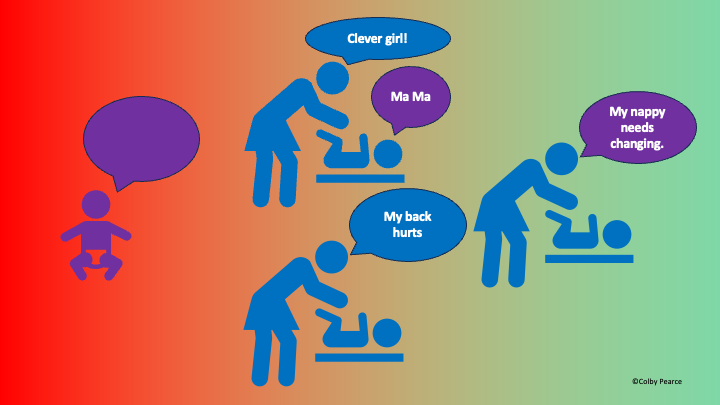
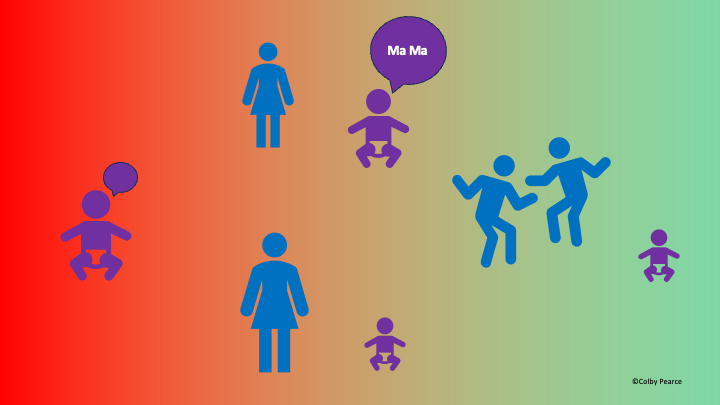
Regarding the first of these, children learn words in a caregiving environment where, in amongst their babble, their caregivers respond with joy and encouragement when they babble something approximating a word. For example, think about the reaction of the mother when their infant first babbles “Ma” in a conventional nurturing care environment. The mother communicates joy and encouragement to the infant. Through the emotional connection that is in place in such moments, the infant experiences a corresponding positive emotion that reinforces their vocalisation of “Ma” when orienting to their mother. As time passes, the infant babbles other approximations of words and is similarly acknowledged and reinforced for those vocalisations over others that do not sound like words to their parent. In this way, the infant begins to express sounds that lead to a response from their parents over sounds that do not.

In addition, in a conventional nurturing care environment parents can be observed to speak to their infant with ‘their voice’. That is, the parent says out loud what their infant is believed to be thinking or feeling, or what they need from the parent. If you are unsure of what I am talking about and have a pet, think about the way in which you speak to them. Through many such interactions, the infant begins to learn what words go with their experience and needs. When able to do so, the infant uses these words and, in conventional circumstances, is acknowledged with joy and pride at having done so, thus increasing the likelihood that they will use their words again.

Further, in a conventional nurturing care environment, the infant observes their parents using language to communicate about their experiences and their needs. In such an environment, the infant learns to use words to communicate about their experiences and needs via parental modelling.

In combination, these three aspects of the infant’s care environment support the development of language to communicate, and its use.

If we then turn our minds to children and young people who are recovering from a tough start to life, what then for their language development and use? When parents struggle significantly in the caregiving role due to their own mental health difficulties, substance abuse issues, relationship difficulties, and/or inadequate parenting knowledge, it is clear to see that the language expression of children and young people who come from that environment is likely to be limited.  Put simply, due to inadequate acknowledgement of, and responsiveness to, their attempts to communicate with words, these infants grow with both a reduced vocabulary to express their experiences and needs through words, and less motivation to use them. Rather, they rely overmuch on gestures to communicate, and their behaviour can often be seen to mimic those first behavioural strategies to secure a caregiving response, namely the cry and the social smile. They can be described as overly emotionally demonstrative, though with a restricted range of affect, overly charming, or alternate between the two. These behavioural strategies serve to regulate caregiver engagement and responsiveness. They often communicate that the child or young person has a need that they are preoccupied with, or that they are feeling unsafe. Unfortunately, for the older child they are rarely seen as such by adult caretakers, leaving them feeling chronically misunderstood. This compounds a range of problems experienced by children and young people recovering from a tough start to life, and adults who interact with them in a caregiving role. 

Children and young people who are recovering from a tough start to life benefit from the caregiving adults in their life seeing their behaviour as having communicative intent and reflecting their experience and needs. As occurs in conventional nurturing care environments, they need adult caretakers to communicate understanding of their experience and needs through their own words and actions.

(To read on, click here!)

Posted in AAA Caregiving, Fostering, kinship care | Tagged , , , , , , | Leave a comment

Why does my child make mountains out of molehills?

The content, below, is drawn from my self-paced learning module on the topic of Trauma and Regulation. It was developed for carers of children recovering from early relational trauma that necessitated placement away from home. The complete module can be accessed here. I have included a sample of the content of the module, below. I anticipate that it would take less than one hour to work through the full module. You can purchase a PDF version of this and other self-paced learning modules here.

What do we mean by ‘trauma’?

I think the most appropriate place to start is what do we mean by trauma? In this context, trauma refers to an experience, or experiences, where the child or young person in your care was hurt or frightened or not responded to, such that their ability to cope was overwhelmed and they experienced significant and/or protracted distress. In this context, the trauma occurred at home in circumstances where mum and/or dad were finding life very difficult themselves due to mental health factors, relationship factors, addiction factors, or a combination of these, and where these circumstances negatively impacted the care they were able to give to their child. In circumstances where this was a very serious and ongoing problem, the child or young person in young care was placed away from home, ultimately with you. This was a protective intervention, but it was also one that comes with its own impacts from being placed away from mum and dad.

What is the impact of trauma on the developing brain?

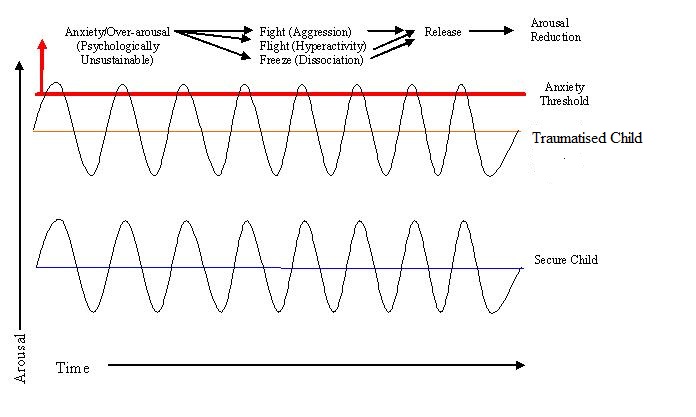
This trauma usually began early in the child’s development and shaped their development; particularly, their brain’s adaptation to their environment and experiences. The infant’s brain is known to be very sensitive to experience. The infant’s brain also tries to establish a stable internal state in response to external conditions; a state referred to in the scientific literature as homeostasis. When the infant is repeatedly overwhelmed and in distress, their ‘normal state’ becomes one of being on high alert. Physiologically, we speak of the brain being in a state of high arousal, where arousal refers to the level of activation of the child‘s brain and central nervous system. Thus, when the infant is repeatedly overwhelmed and in distress, heightened arousal becomes their ‘normal state’.

What happens when heightened arousal becomes the ‘normal state’?

When emotions are high, arousal is too!

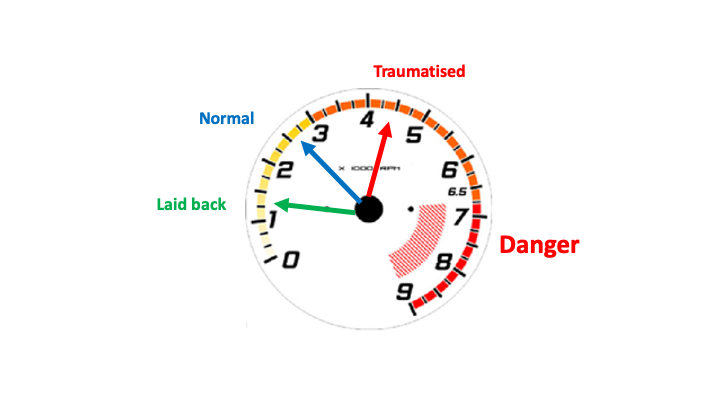
If we think of the brain, or central nervous system, as being like the motor in a car, the motor of children and young people who have experienced trauma runs faster than the motors of other children and young people who have not experienced trauma. This impacts them in a range of ways, including their emotions, their behaviours, and their learning. It leaves them prone to heightened distress and activation of the fight/flight/freeze response, which forms part of the brain’s protective system for managing heightened feelings of fear and distress. Unfortunately for them, the very behaviours that are deployed as part of the fight/flight/freeze response to manage feelings of threat and restore feelings of wellbeing are rarely seen as such, with the result that their fear and distress can be reinforced and perpetuated when adults become upset in response to the child’s behaviour.

Fight: controlling, aggressive, destructive, manipulation
Flight: running, hiding, avoiding, hyperactivity/agitation
Freeze: unresponsive, ignoring, not listening

Mountains out of molehills and self-soothing

Children and young people whose motor runs too fast make ‘mountains out of molehills’. Seemingly little things bother them a lot. These can be sensory experiences, such as certain noises, textures, and tastes, even the way things (eg people) look. They may dislike certain foods, or the way certain clothes feel on their body. They may prefer to withdraw to their room or keep their hood pulled up and their earphones in. They are often hot (and bothered), and they typically struggle to get to sleep and stay asleep through the night. They may be preoccupied with accessing and eating food, as food is a source of comfort and oral soothing. They have an exaggerated need for consistency and can be quite demanding of this, as consistency and sameness are also soothing.

Heightened arousal and diagnostic formulations

Children and young people whose motor runs too fast struggle with, and are easily overwhelmed by, the demands of daily life. They may appear uncoordinated at sport and struggle academically at school. Their behaviour is often mistaken as a sign of an underlying disorder, such as oppositional defiant disorder, conduct disorder, attention deficit-hyperactivity disorder, autism spectrum disorder, or a learning disorder. They often feel inadequate, helpless, and unworthy.

They do not, necessarily, have a disorder or lack ability or worth. They lack something else.

What do you think they lack?

(To read on, click here!)

Posted in AAA Caregiving, Fostering, kinship care | Tagged , , , , , , | Leave a comment

A child of the world

I woke from a dream and in it a young boy of five, excited to accompany his older brother to the canteen, stands happily in the midst of giants.

Largely unseen in the rush and hubbub, he is jostled and bumped towards the front of the queue.

Quickly, his smile fades as he struggles to hold his ground.

Eyes wide and mouth open, he looks first to his brother and then around him at the moving fray.

As someone pushes back through the crowd he is bumped and fights to remain standing.

His efforts are in vain, and he falls to the ground.

He jumps straight back up, but his face is crumpled, and tears are springing from frightened eyes.

I step forward to stabilise him and make a safe space around him.

I know not who he is but that he is a child of the world.

He turns to face me and I see that I am mistaken.

It is me.

Posted in Uncategorized | Leave a comment

Making decisions about contact with birth parents: The role of Attachment.

Dear Followers of this Blog.

I have released another self-paced learning module on the topic of contact between children and young people who cannot safely be cared for at home, and their birth parents.

I originally delivered the content of this module to kinship carers and professionals who support them. In delivering this content I was asked to consider the following questions:

  • Why is contact with birth parents important?
  • Should contact stop if birth parents do not attend inconsistently?
  • Should contact stop when children have an adverse reaction to it?

I subsequently wrote this module for all adults who are involved in the care of children and young people who are cannot be safely cared for at home.

I want to preface the module by letting you know about what has informed my contemporary views about contact between these children and young people and their birth parents.

For the past twenty-eight years I have worked continuously, in various roles, in child protection. Among those roles, the most enduring have been therapeutic work with the children and young people and the provision of therapeutic caregiving support and guidance to adults who care for them at home and in other domains of their life (social workers, teachers). I have talked to a lot of children and young people in care, as well as adults who interact with them in caregiving and professional roles.

As the years have passed, I have remained connected to, or reconnected with, young adults who I knew when they were in out-of-home care. I have seen the longer-term outcomes of decisions made years prior about contact between children and young people and their birth parents. I have reflected on what theories that underpin practice in this sector, most notably Attachment Theory, provide by way of explanation for observed outcomes.

The conclusion I have come to, based on my work and reflections about childhood attachment, is that both strongly support the case for working towards and maintaining healthy connection between children and young people who cannot be cared for at home and their mum and/or dad, where possible.

An important caveat I will acknowledge is instances where the child or young person has been sexually abused by a parent, or cases of extreme and/or sadistic abuse. These are topics for other modules. Rather, I consider that the content of this module holds true for most children and young people in out of home care; that is, those children and young people who could not safely be cared for at home due to grossly inadequate care and protection.

I would also like to acknowledge that this can be a very sensitive topic; especially for carers of children and young people who are distressed or otherwise unsettled by contact with birth parents. It is not my intention to minimise this issue but, rather, shed some light on what may be happening for the child or young person, and propose a way forward.

Finally, I would advise that this module is intended to be widely applicable. As such, it does not replace professional advice and guidance in individual matters and may not be appropriate in all circumstances. I recommend that you consult with your colleagues and supporting professionals before implementing recommendations derived from this learning module.

Chick here to access the module.

Posted in Training Programs, trauma informed | Tagged , , , , , , | Leave a comment

Self-Paced Learning Modules

Online, Self-Paced

Dear followers of this blog.

For much of the past twenty-eight years working in child protection I have developed and delivered content designed to support the endeavours of carers and professionals who interact with children and young people recovering from a tough start to life. In recent times I have organised my content under the title The CARE Curriculum. This includes

  • The Triple-A Model of Therapeutic Care (continuously delivered in the TUSLA Fostering Service in Donegal, Ireland, for the last eight years)
  • The Kinship CARE Curriculum (currently implemented as part of the Martinthi Aboriginal Kinship Care program in South Australia)
  • Connected Classrooms (a school-based programme for implementing trauma-informed care in schools, currently delivered in Donegal, Ireland, by trained trainers in the TUSLA Fostering Service)
  • Responding Therapeutically to Complex and Challenging Behaviour: A Triple-A Approach (Recently delivered to the TUSLA Fostering Service in Donegal, Ireland).

Although I continue to deliver training in Australia alongside my ongoing psychotherapy practice (including the above), my commitment to the children and young people I work with means that there is a limit to my availability, currently.

In consideration of my commitments I have begun to make some of my training offerings available via online, selfpaced learning modules. These can be accessed via the Secure Start website, including by using the link in the menu above. There are and will be a mixture of free and paid-for modules and handbooks, reflecting both my commitment to making my content widely available while also acknowledging the significant time that goes into the development of training content and modules.

If you would like to speak to me about any of the training modules or, even, my availability to deliver training on behalf of your organisation, please do still get in touch (colby@securestart.com.au). The world has changed and online delivery (including self-paced learning modules) is more possible than ever.

In addition to training, I offer trauma-informed consultation and supervision to organisations who interface with the child welfare sector. Click here to find out more.

Finally, if you have a topic you would like me to cover in a blog or training module, do get in touch.

Posted in AAA Caregiving, Attachment, Fostering, kinship care, Parenting, Schools, training, Training Programs, trauma informed, trauma informed care, trauma informed practice, Trauma Informed Schools | Tagged , , , , , , , , , , , , , | Leave a comment

Responding therapeutically to complex and challenging behaviours: A Triple-A Approach

Yesterday, I finished preparing this training package for delivery by my trained trainers in Ireland. It includes three PowerPoint presentations, comprehensive trainer notes (scripts and delivery notes) for each session, comprehensive participant handbooks (x3), and various other resources for use during delivery. As usual, I underestimated how much work I would put into such an endeavour, and how difficult it would be to make the time around my psychotherapy practice and statutory commitments. I now have the following comprehensive training packages:

  • The Triple-A Model of Therapeutic Care (Currently delivered in Ireland)
  • The Kinship CARE Curriculum (Currently delivered in Australia)
  • The Connected Classrooms Program (Currently delivered in Australia and Ireland)
  • Responding therapeutically to Complex and Challenging Behaviours (Implemented in Australia, (Coming soon to Ireland)

In addition, I have a number of ‘special issues’ training packages, on topics such as ‘self-care’ and ‘supporting strong developmental outcomes for children and young people recovering from a tough start to life’.

All of my training packages are based on almost thirty years direct work with children and young people recovering from a tough start to life, and adults who interact with them in a care and management role.

All of my training packages have been developed in my own time. I cannot compete with individuals and organisations that receive grants and other funding to develop education programs, and so I cannot make them freely available. Nevertheless, if you or your organisation might be interested in any of these packages, do get in touch.

Posted in Uncategorized | Tagged , , | Leave a comment

Sam’s Story

Hello. I developed the video, below, and the story that accompanies it, to help young people, and adults who interact with them, to better understand the impact of attachment trauma and their development and approach to life and relationships. I hope you like it.

Posted in trauma informed | Tagged , , , , , , , , | Leave a comment

Redundancy as a goal of trauma-focused psychotherapy

When you take on the psychotherapy role with a child or young person who is recovering from as tough start to life in out-of-home care, there is a real possibility that you will become the most consistent and enduring adult in their life, and of the therapeutic relationship being the most reparative one.

In such circumstances, it is difficult to bring therapy to a therapeutic close, and the child or young person will actively resist and protest this. Some service providers will not even start therapy in circumstances where this might occur, such as among children and young people in residential care, or those with a history of placement changes and breakdowns.

I draw reassurance from the “one good adult” literature and evidence base. Better that the child or young person has/had at-least one good adult in their life. Better again if they also have reparative contact with birth parents/family, stable therapeutic care, stable trauma-informed education placement, and opportunities to form reparative relationships with adults beyond the home and education settings (eg sporting clubs, scouts, cadets, etc).

When these further opportunities for reparative relationships occur, therapy can be meaningfully and therapeutically (and carefully) brought to a close without triggering renewed feelings of grief and loss for the young person, and associated trauma-based responding.

So, therapy must include and/or support endeavours to provide children and young people with opportunities to develop other enduring, sensitive, and responsive relationships through supported (re)connection with birth family, stable therapeutic care placements, trauma-informed care and management in school, and opportunities to engage successfully in community activities.

Ultimately, we need to make ourselves, as therapists, redundant!

Posted in Therapy, trauma informed | Tagged , , , | Leave a comment

What’s in a name? A Short Introduction to Attachment and Attachment Disorder

Colby Pearce - Attachment

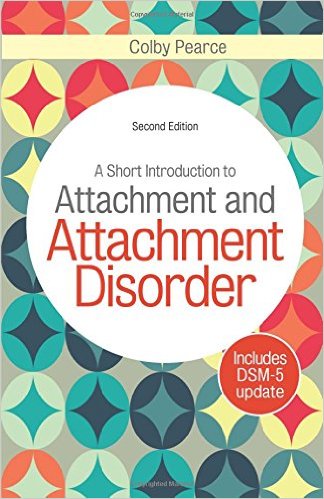
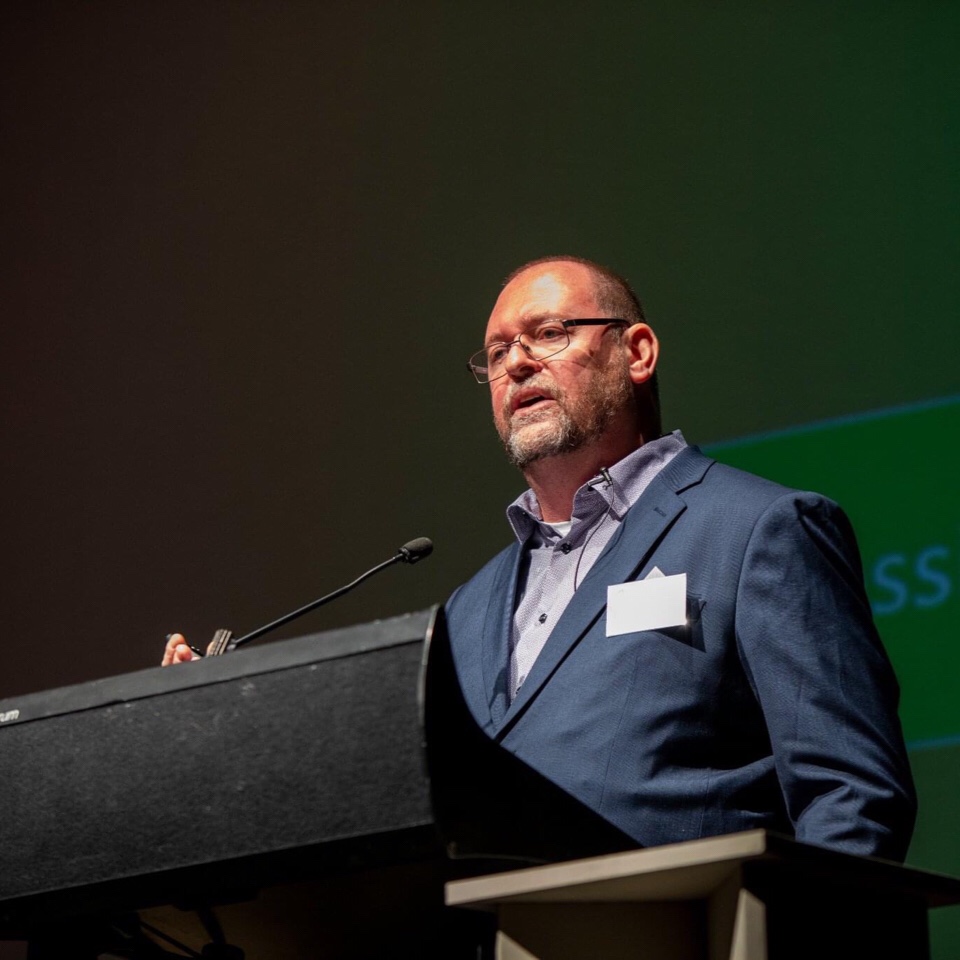
What’s in a name? The image above was taken six years ago. Sadly, I don’t look quite the same these days! I am photographed, here, with the second edition (published December 2016) of one of my books, which was first published back in 2009. The second edition involved considerable revision of the first edition, as the content of the first edition derived from my writings on the topic between 1999 and 2009. In the period from 2009 to 2016 my thoughts on the topic of the book developed in significant ways. Similarly, if I was to work on a third edition, I daresay there would be further important revisions.

One revision I would like to make, if I was able to do so, is to the title. I would substitute ‘disorder’ with ‘trauma’, as I think that this would better reflect the content of the book. While there is content about Reactive Attachment Disorder (RAD) and Disinhibited Social Engagement Disorder (DSED) in the book, the formulations and reparative caregiving and treatment guidelines are relevant to children and young people who have experienced attachment trauma more broadly, including those children and young people whose grossly inadequate care is variously described as relational trauma, early trauma, developmental trauma, and/or complex trauma.

I would also like to make it clear in the title that there are guidelines for caregivers and professionals, including reparative caregiving strategies and a treatment approach.

Moreover, I would like to further avoid giving the impression that attachment trauma invariably leads to an attachment disorder diagnosis; though there are times when RAD and DSED are appropriate assessment formulations and guides for therapeutic supports (albeit, RAD and DESD are rare disorders).

So, with the passing of time the book, like my appearance, would look different; albeit that much of what is in the book remains relevant to readers interested in attachment trauma.

For more information about my books, including how to purchase them via my affiliate links, please click the image in the side menu.

Posted in Attachment, Fostering, kinship care, Parenting, trauma informed | Tagged , , | Leave a comment

Why do my child’s support professionals say that behaviour management doesn’t work?

Conventional responses to behaviours of concern, such as reward and punishment strategies, are widely considered to be ineffective in addressing the complex and challenging behaviours exhibited by children and young people who have experienced complex, relational, or early/developmental trauma. This is because a number of the preconditions for reward and punishment strategies to work do not exist among these children.

For example, in order for rewards to work, the child or young people needs to believe, based on prior learning, that you will follow through with the promised reward if they exhibit desired behaviour (or inhibit undesirable behaviour). Children and young people who have experienced grossly inadequate care find it hard to trust that adults will follow through with their promises. Rather, they expect to be let-down and are not motivated to work to achieve a reward, instead believing that that they are unlikely to be successful and you won’t follow through anyway.

Further, children and young people who have experienced abuse and neglect view punishments as further evidence of their inherent badness and of the meanness of adults. Rather than being motivated to comply with behavioural expectations to avoid punishment and maintain positive relatedness, they strongly hold on to their beliefs that they are inherently bad and unlovable and that adults are mean and uncaring. They persist in their behaviour of concern because it satisfies a need, including the need to feel like they can influence what happens in their world. They do so without consideration of the impact of their behaviour on their relationships with others, because they don’t expect to have good relationships, especially with adults in a care and management role, anyway.

Responding to behaviours of concern exhibited by these children and young people requires a different approach. It requires us to acknowledge and accept that all behaviour occurs for a reason. If it did not achieve a desired outcome when it was first exhibited and at-least sometimes thereafter, it would have been dropped in favour of a more successful behaviour.  It then requires us to consider what the reason for the behaviour is and respond to that in a way and until the behaviour stops or is exhibited at more normalised frequency, intensity, and duration. This is the therapeutic response to complex and challenging behaviours exhibited by children and young people who are recovering from a tough start to life.

Posted in AAA Caregiving, Adoption, Attachment, Fostering, kinship care, trauma informed, trauma informed care, Trauma Informed Schools | Tagged , , , , , , , , | Leave a comment