
Colby Pearce
-
-

Supporting consistent Therapeutic Caregiving -

Companion App for Therapeutic Classrooms and alignment with home. A practical guide to Attachment & Attachment Disorder

Resilient Kids

Secure Start – Trauma Informed

Self-Paced Learning Modules

The CARE Curriculum
-

Sister Site
Tag Archives: Child Protection
Drawing the line: Regaining parental authority safely when caring for a young person recovering from a tough start to life
Preamble Taking on the care of a young person whose parents were finding life hard, such that their care was inadequate, presents some common challenges for the adults responsible for their contemporary care. These challenges stem from circumstances in which … Continue reading →
Posted in AAA Caregiving, Fostering, kinship care, Parenting, trauma informed
|
Tagged adoption, attachment, Child Protection, child psychologist, child welfare, child welfare leadership, foster care, fostercare, fostering, kinship care, parenting, Social Care, trauma informed, trauma informed care
|
Leave a comment
We need to rethink foundational assumptions in child protection
The unpolished truth is that many children and young people are really struggling in out-of-home care, and so are adult stakeholders in their lives. It is not an overstatement to say that psychological safety is often compromised at all levels … Continue reading →
Posted in AAA Caregiving, Adoption, Attachment, Fostering, kinship care, Parenting, trauma informed
|
Tagged adoption, attachment, Child Protection, fostercare, fostering, kinship care, parenting, socialwork, trauma informed
|
Leave a comment
What should be the focus of our work in child protection and social care?
In this short video, drawn from an interview I participated in for Therapeutic Residential and Foster Care for Traumatised Children, I address the question of what I think should be the focus of our work in child protection and social … Continue reading →
Why does my child react so badly to me saying “no”?
In this video, I explain why children recovering from developmental trauma, in particular, react so extremely the word “no”, and suggest some ways to respond therapeutically to this. The video is intended to be of most interest to those who … Continue reading →
Posted in AAA Caregiving, Fostering, kinship care, Parenting, trauma informed, trauma informed care
|
Tagged attachment theory, Child Protection, child welfare, foster care, fostering, kinship care, parenting, parents, Social Care, trauma informed, trauma informed care, trauma informed practice
|
Leave a comment
What is Trauma Informed Practice? The CARE Curriculum
In this video, I lay out the key reflections embedded the CARE Curriculum, which are integral to facilitating an outcome where our children and young people experiences themselves as worthy and capable, others as responsive and trustworthy, and their world … Continue reading →
Posted in trauma informed, trauma informed care, trauma informed practice, Trauma Informed Schools
|
Tagged attachment theory, Child Protection, child welfare, foster care, kinship care, parenting, Social Care, therapeutic care, trauma informed, trauma informed care, trauma informed practice, trauma informed school
|
Leave a comment
Why contact with birth parents is so important
I made this video to support greater understanding of the role of birth parent contact in supporting relational repair and, ultimately, attachment security among children and young people who cannot safely be cared for at home. Let me know what … Continue reading →
Posted in trauma informed
|
Tagged attachment theory, Child Protection, foster care, kinship care, Social Care, trauma informed
|
Leave a comment
What are the characteristics of good parenting?
In this video I talk about what are the qualities of good parenting. I made this video to support care and protection decision-making in child protection. If we have a set of dimensional constructs against which to evaluate parenting it … Continue reading →
Child welfare intervention outcomes: what does trust in the accessibility and responsiveness of adults look like?
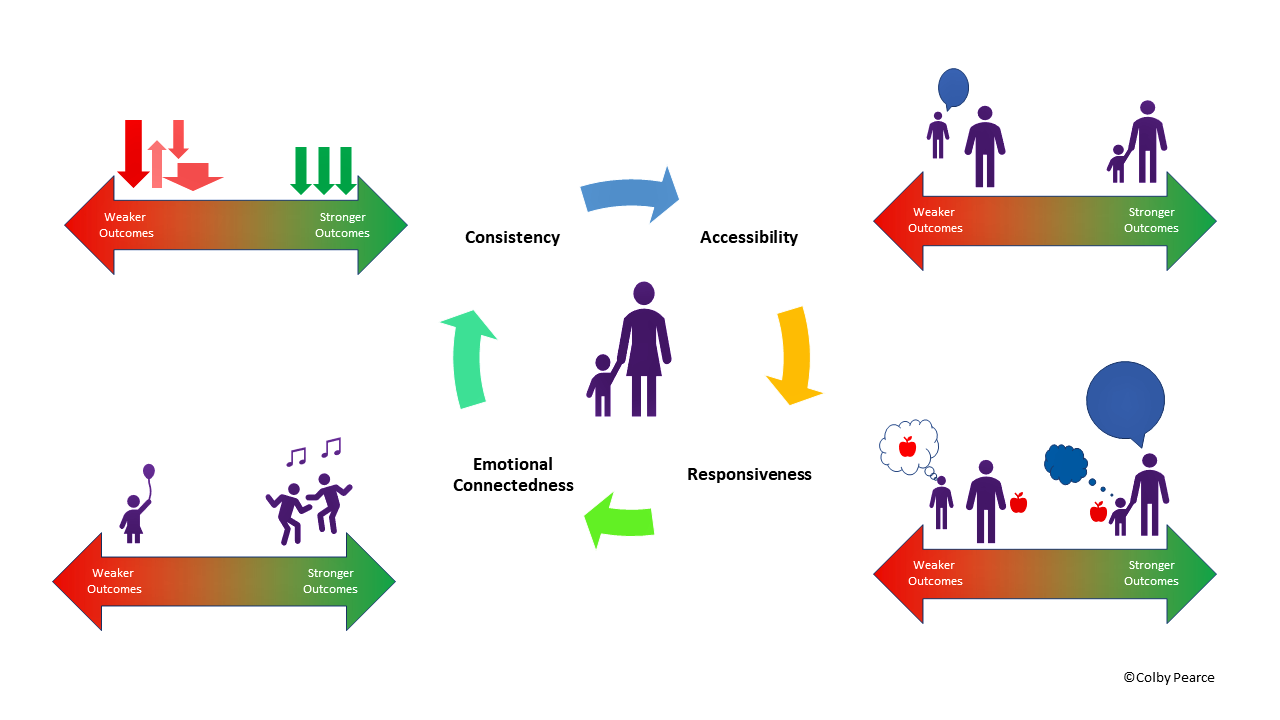
In this the final blog of the series, I will present what I think functional learning about the accessibility and responsiveness of adults in a caregiving role for needs provision looks like. I recommend that the reader also take a … Continue reading →
Posted in AAA Caregiving, Adoption, Attachment, Fostering, kinship care, trauma informed
|
Tagged Child Protection, child welfare, fostercare, kinshipcare, socialcare, socialwork, socialworker, traumainformed
|
Leave a comment
Child Welfare Intervention Outcomes: What we know and what we see
What outcomes do you expect to see as a result of my service provision? This is a question I routinely ask in my work. Put another way: These are, perhaps, the fundamental questions that get at the hopes of the … Continue reading →
Posted in AAA Caregiving, Therapy, Training Programs, trauma informed care, trauma informed practice, Trauma Informed Schools
|
Tagged Attachment Disorder, attachment theory, Child Protection, child welfare, child welfare leadership, foster care, kinship care, psychologist, psychology, schools, Social Care, Social Work, socialworker, trauma informed
|
3 Comments
What do children in care need to recover from relational trauma?
In recent posts I have referred to three things that children in out-of-home care need, and need adults who are responsible for their care and welfare to understand, to support their recovery from complex relational trauma. These three things are: … Continue reading →
Posted in AAA Caregiving, Adoption, Attachment, Fostering, kinship care, Parenting, trauma informed, trauma informed care
|
Tagged attachment, attachment theory, Child Protection, child welfare, child welfare leadership, fostercare, kinshipcare, Social Care, social care worker, therapeutic care, trauma informed
|
Leave a comment




 Attachment and Resilience