
Colby Pearce
-
-

Supporting consistent Therapeutic Caregiving -

Companion App for Therapeutic Classrooms and alignment with home. A practical guide to Attachment & Attachment Disorder

Resilient Kids

Secure Start – Trauma Informed

Self-Paced Learning Modules

The CARE Curriculum
-

Sister Site
Tag Archives: attachment theory
What are the characteristics of good parenting?
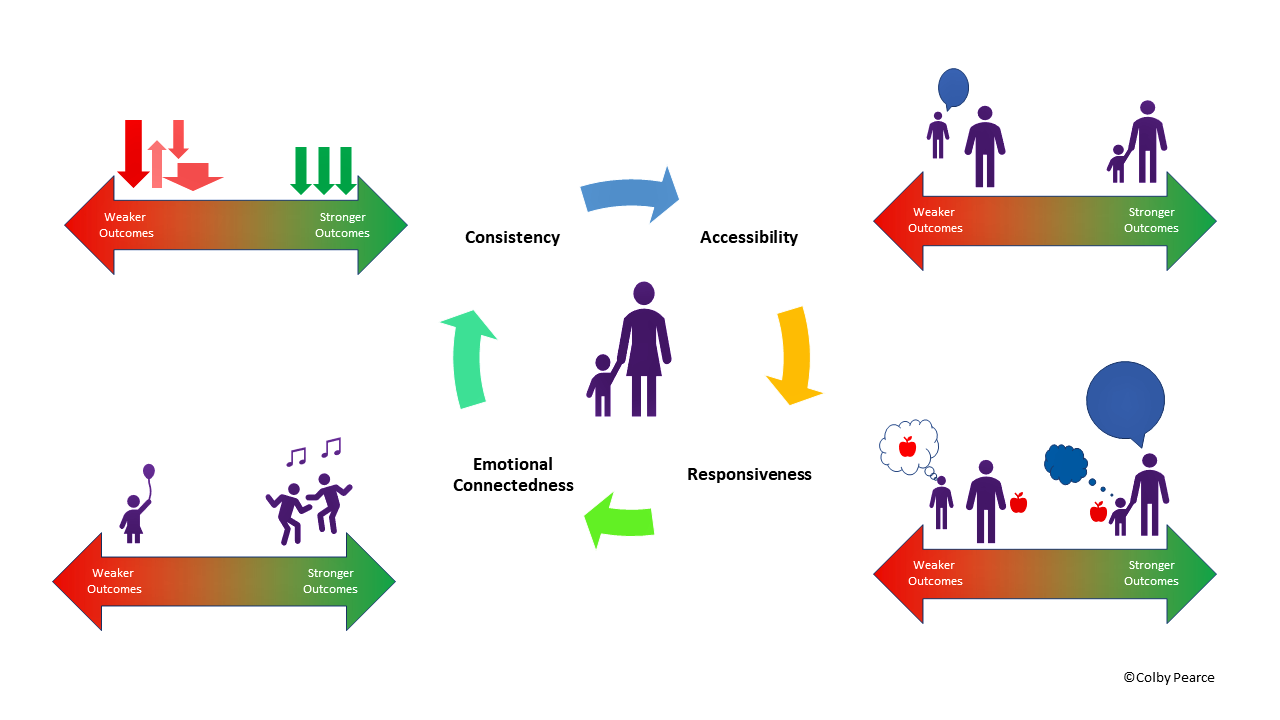
In this video I talk about what are the qualities of good parenting. I made this video to support care and protection decision-making in child protection. If we have a set of dimensional constructs against which to evaluate parenting it … Continue reading →
Making decisions about contact with birth parents: The role of Attachment.
Dear Followers of this Blog. I have released another self-paced learning module on the topic of contact between children and young people who cannot safely be cared for at home, and their birth parents. I originally delivered the content of … Continue reading →
Posted in Training Programs, trauma informed
|
Tagged attachment, attachment theory, childprotection, childwelfare, childwelfareleadership, socialcare, traumainformed
|
Leave a comment
Outcomes in child welfare: What a well-modulated nervous system looks like
In this, the third blog in this series, I will write about what a well-modulated nervous system looks like among children and young people who are recovering from a tough start to life. Please also refer to the first and … Continue reading →
Posted in AAA Caregiving, Fostering, kinship care, trauma informed
|
Tagged adoption, attachment, attachment theory, child welfare, fostercare, kinshipcare, socialcare, socialworker, trauma informed
|
1 Comment
Child Welfare Intervention Outcomes: What we know and what we see
What outcomes do you expect to see as a result of my service provision? This is a question I routinely ask in my work. Put another way: These are, perhaps, the fundamental questions that get at the hopes of the … Continue reading →
Posted in AAA Caregiving, Therapy, Training Programs, trauma informed care, trauma informed practice, Trauma Informed Schools
|
Tagged Attachment Disorder, attachment theory, Child Protection, child welfare, child welfare leadership, foster care, kinship care, psychologist, psychology, schools, Social Care, Social Work, socialworker, trauma informed
|
3 Comments
What do children in care need to recover from relational trauma?
In recent posts I have referred to three things that children in out-of-home care need, and need adults who are responsible for their care and welfare to understand, to support their recovery from complex relational trauma. These three things are: … Continue reading →
Posted in AAA Caregiving, Adoption, Attachment, Fostering, kinship care, Parenting, trauma informed, trauma informed care
|
Tagged attachment, attachment theory, Child Protection, child welfare, child welfare leadership, fostercare, kinshipcare, Social Care, social care worker, therapeutic care, trauma informed
|
Leave a comment
Why is the child I am caring for unsettled after contact with their birth parent?
Children and young people who could not be safely cared for at home by their mum and/or dad are afforded contact with their birth parents where it is safe and appropriate to do so. Contact done well preserves a sense … Continue reading →
Posted in trauma informed
|
Tagged attachment theory, Child Protection, child welfare, child welfare leadership, trauma informed
|
Leave a comment
Why does my child follow me to the bathroom?
Those who take care of children who are recovering from a tough start to life commonly report that the child in their care follows them to the bathroom, and becomes unreasonably distressed when prevented from doing so. In my experience … Continue reading →
What I would have birth parents hear after the removal of their child
Twenty seven years speaking to children and young people (and care experienced adults) who have been removed from the care of their birth parents due to grossly inadequate care and maltreatment has left me with deep concerns about the impact of parental separation and loss on the developing child, and the capacity for alternate care and therapeutic supports alone to compensate for this. (read more at link) Continue reading →
What does my child’s recovery from early trauma look like?
Anyone who has played Spotto (Spot the yellow car) with children knows that there are many more yellow cars on the road than you typically notice when driving. Similarly, when playing I Spy there are many more things starting with … Continue reading →
Why does my child antagonize others and then complain of being bullied?
Antagonizing others and then complaining of being bullied, though it is easily viewed as irrational and self-defeating, stems from very real (and justified) feelings of being poorly treated in life. Children and young people who have experienced relational trauma are … Continue reading →
Posted in Uncategorized
|
Tagged attachment theory, childwelfare, childwelfareleadership, educators, fostercare, kinshipcare, parents, psychology, socialcare, teachers, traumainformed
|
Leave a comment




 Attachment and Resilience