What I would have birth parents hear after the removal of their child

Let me preface this blog by acknowledging that it will be controversial to some. It is a difficult topic. But, I feel I owe it to the children and young people (and care experienced adults) I work with to write it.

Twenty seven years speaking to children and young people (and care experienced adults) who have been removed from the care of their birth parents due to grossly inadequate care and maltreatment has left me with deep concerns about the impact of parental separation and loss on the developing child, and the capacity for alternate care and therapeutic supports alone to compensate for this. What I am referring to are those instances where birth parents drift out of the lives of their children when long-term orders for care and protection are made. I acknowledge that there are circumstances where great caution needs to be exercised regarding contact (eg, where concerns involve child sexual abuse), and that in some instances contact is simply not possible or in the overall best interests of the child or young person. Nevertheless, whereas many aspects of the growth and development of the removed child are addressed via their placement in stable and loving care environments, there is a risk that attachment security continues to be adversely affected where the relationship with birth parents remains unrepaired or is lost.

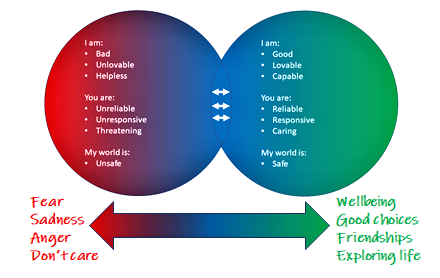
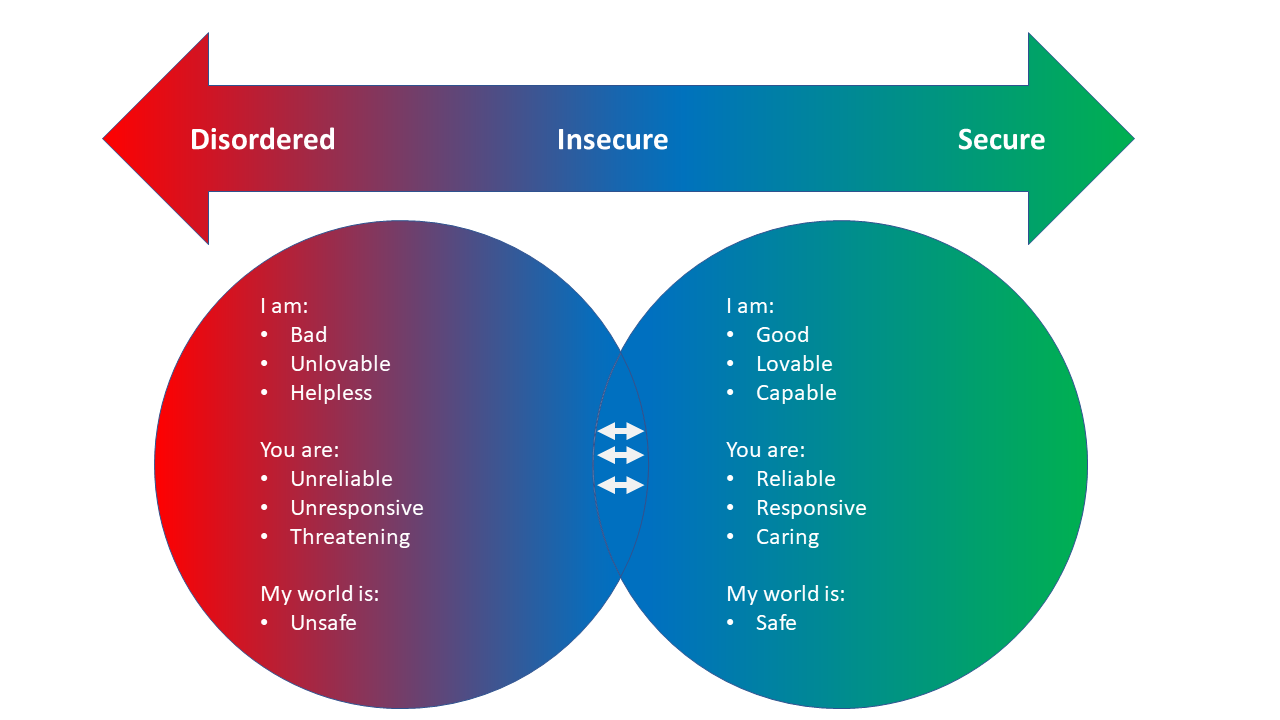
From Pearce, C (2016) A Short Introduction to Attachment and Attachment Disorder (Second Edition). London: JKP

I have written here about a how person’s overall attachment style, and their associated approach to life and relationships, is influenced by all of their attachment relationships. In short, a person’s overall attachment security derives from an intermingling of all of their key attachment relationships. Where some of those attachment relationships have been inadequate, the task of achieving overall attachment security is that much harder and rests on supporting the development of positive new attachment relationships and the repair of damaged ones.

Sadly, it is my observation that many children and young people do not get the opportunity to form the enriched attachment relationships that compensate for unrepaired ones, nor do their have an opportunity to repair those in need of it.

This brings me to the topic of this blog. What would I have birth parents hear after the removal of their child? While these comments are generally applicable to birth parents who experience the removal of their children due to serious child protection concerns, the birth parents I would particularly target this to are those who are likely to withdraw from contact and involvement in the life of their child.

Birth parents, I get that you have heard that you are a poor parent and a threat to your child. I get that what others have said sounds like your children are better off without you. I want you to know that I am concerned about what has happened that got you and your child to where we are now. It is not good for you, nor your child. Your child needs you to fight. To fight to overcome the challenges in your life that have gotten in the way of being the parent your child needs you to be. To fight to overcome the urge to give up and withdraw from their lives. One day not too far away, it will be important to your child that you tried. It will help them to feel that they mattered, and that they still do matter. Even if it is not possible for your child to safely live with you, they need you to be involved and interested in their life. This will promote their feelings of worthiness that, in turn, will support them to make healthy relationships with others and good decisions in life.

Though they may not live with you, your child still needs you.

In many instances, a child’s ongoing relationship with their birth parents is a vital aspect to their recovery from early trauma.

For an accessible method to respond therapeutically to behaviours of concern exhibited by a child in your care, see this further post: https://colbypearce.net/2026/04/23/the-4-simple-habits-that-change-a-childs-behaviour-without-punishment/

Posted in AAA Caregiving, Attachment, Fostering, kinship care, Parenting, trauma informed | Tagged , , , , , , , | Leave a comment

What does my child’s recovery from early trauma look like?

Anyone who has played Spotto (Spot the yellow car) with children knows that there are many more yellow cars on the road than you typically notice when driving. Similarly, when playing I Spy there are many more things starting with a given letter of the alphabet in your immediate environment you would usually take note of. We selectively attend to certain aspects of our environment and not to others. What we see is very much determined by where we apply our attention.

When caring for a child who is recovering from a tough start to life due to grossly inadequate care and/or maltreatment there is much concern about its impact on the developing child. It follows that most adults who care for and relate with children and young people who have experienced abuse and neglect can readily see the effects.

Consider how this impacts your role in the life of a child or young person recovering from complex early trauma. Whether you are in a caregiver role or delivering a professional therapeutic service, your knowledge of the impacts of abuse and neglect mean that you are likely to focus a lot on signs of them, including as part of your endeavour to see if the child or young person is recovering.

Unfortunately, this focus on signs of abuse and neglect means that you are more likely to keep seeing signs adverse impacts, including when the child or young person is making progress in their recovery.

We see what we are paying attention to. In order to see signs of recovery, you need to know what recovery looks like. Once you turn you mind to what recovery looks like you are more likely to see it.

A focus on what recovery looks like benefits adults who care for and relate to children and young people who have experienced abuse and neglect during the (early) developmental period, and the children themselves. Adults who are able to see signs of recovery feel more competent in the role they perform with these children and young people. This sustains their endeavours through inevitable tough times. The self-image of children and young people is strongly influenced by their experience of how significant adults in their lives see them. Observing and acknowledging signs of their recovery helps children and young people experience themselves in a more positive way.

Children who think they are bad, feel bad, and act bad. They are typically admonished for acting bad, thus conforming the original thought. When this happens over and over, this becomes a belief that influences their approach to life and relationships in an enduring way. It is not too much of a simplification to say that children who think that they are capable and worthy feel good, act good (most of the time), and are likely to be acknowledged in this through positive relatedness with others.

Here are a few of the signs of recovery to look for:

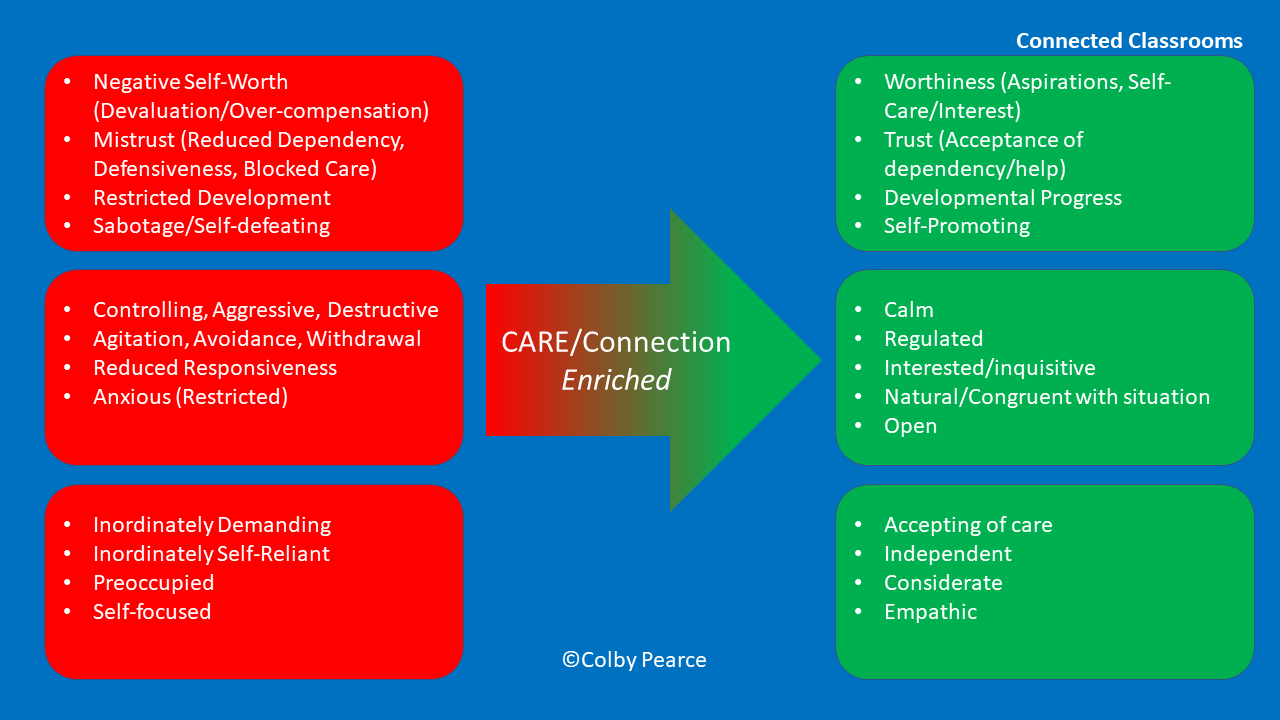
  • Attention to grooming and care about appearance – you might see this from the Primary school years onwards. It reflects an emerging sense of self-worth, care regarding the opinion of others, and an openness to being viewed positively by them.
  • Use of words to draw attention to experiences and needs, as opposed to coercive gestures. Children and young people who have experienced grossly inadequate care have poorly developed inner-state language and/or lack of motivation to communicate verbally about their experiences and needs. Using their words reflects developmental growth, improving self-worth, and growing trust in the responsiveness of adult caregivers.
  • Acceptance of care and age-appropriate dependency – reflects new learning about the accessibility and responsiveness of adults in a caregiving role.
  • A range of genuine emotion that is congruent with content and context – Children and young people who have experienced grossly inadequate care and/or maltreatment often have a restricted emotional repertoire. As a result of being inconsistently soothed during the early developmental period, they have learnt to avoid emotions, lest they be overwhelmed by them. Through caring co-regulation and natural expression by caregiving adults, these children and young people feel safe to explore a range of emotions and achieve emotional growth.

And, the big one:

  • .Self-regulation – in consideration of their own worth and the value they place on their relationships with key others in their life. This is promoted through healing connections in which the child or young person experiences themselves as good, deserving, and competent and adults as understanding, responsive, and safe. In all of your interactions with a child or young person recovering from a tough start to life, try to facilitate experiences of their worth and of yourself as someone upon whom they can depend.

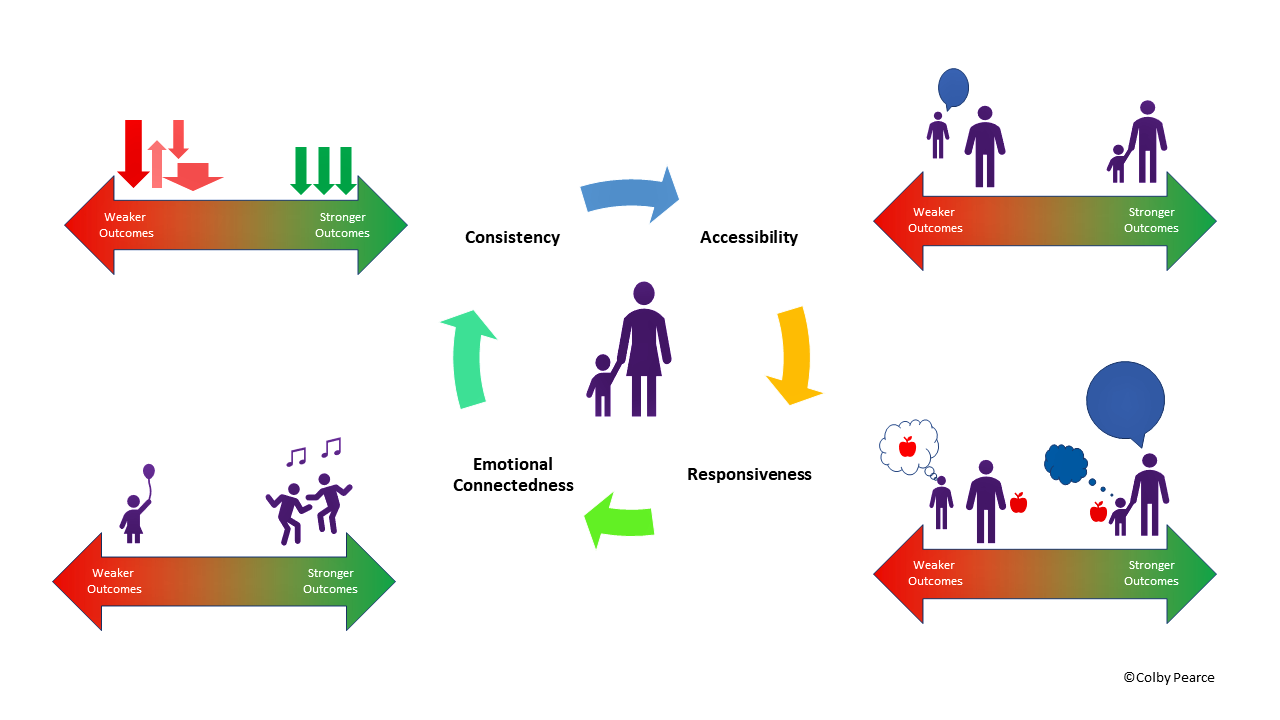
For more signs of recovery, refer to the graphic below, taken from my Connected Classrooms training, a program of The CARE Curriculum:

If you took something useful away from this article, please consider liking it and making a comment. I am interested to read what other behaviours you would like me to turn my mind to.

If you would like to make a small donation in support of me producing this blog, please consider buying me a coffee.

Buy Me A Coffee

Posted in AAA Caregiving, Adoption, Attachment, Fostering, kinship care, Training Programs, trauma informed | Tagged , , , , , , , , , , , | Leave a comment

Why does my child antagonize others and then complain of being bullied?

Read the full post, below.

Antagonizing others and then complaining of being bullied, though it is easily viewed as irrational and self-defeating, stems from very real (and justified) feelings of being poorly treated in life. Children and young people who have experienced relational trauma are prone to maintaining an exaggerated view of their vulnerability and the malintent of others towards them. Some compensate for this by adopting a persona of toughness and aggressiveness meant to warn others off ‘messing with them’. Their intent is to maintain feelings of relational safety. Unfortunately, their aggressiveness can invite a retaliatory response from others that confirms their belief in their vulnerability and the threat posed by others. Though the attribution of bullying is made towards the contemporary (reciprocating) aggressor, the feeling of being vulnerable and bullied stems from past abuse and neglect.

Children and young people who approach the world and relationships in this way are often not amenable to endeavours to explain how they provoked aggression from others towards them. Such endeavours are incongruent with how they see the world and relationships and their place in them. It is not a case of they can give it but they cant take it. These children and young people have been deeply hurt and until that hurt is healed they are destined to maintain this maladaptive approach to life and relationships.

In my experience, the way to address this issue is to focus less on their behaviour and more on the feelings of relational vulnerability and insecurity that give rise to them. We need to intentionally, and in sustained manner, facilitate experiences of their competency, worth, and of the sensitivity and responsiveness of others. This is conventionally learnt by the developing child in the home with adults who delight in spending time with them, anticipate and respond to their needs, share their highs and lows, and support their experience of mastery.

It is the relationships a child has with themselves and with the adults who care or them that is most influential in how they approach life and relationships. Where relationships have been inadequate, it is through enriched care that children and young people have the best chance to form more adaptive representations of themselves and others, and approach life and relationships in a more functional and self-promoting way.

Pearce, C (2016) A Short Introduction to Attachment and Attachment Disorder (Second Edition). London: JKP

If you took something useful away from this article, please consider liking it and making a comment. I am interested to read what other behaviours you would like me to turn my mind to.

For an accessible method to respond therapeutically to behaviours of concern exhibited by a child in your care, see this further post: https://colbypearce.net/2026/04/23/the-4-simple-habits-that-change-a-childs-behaviour-without-punishment/

If you would like to make a small donation in support of me producing this blog, please consider buying me a coffee.
Buy Me A Coffee

Posted in Uncategorized | Tagged , , , , , , , , , , | Leave a comment

Why does my child lie?

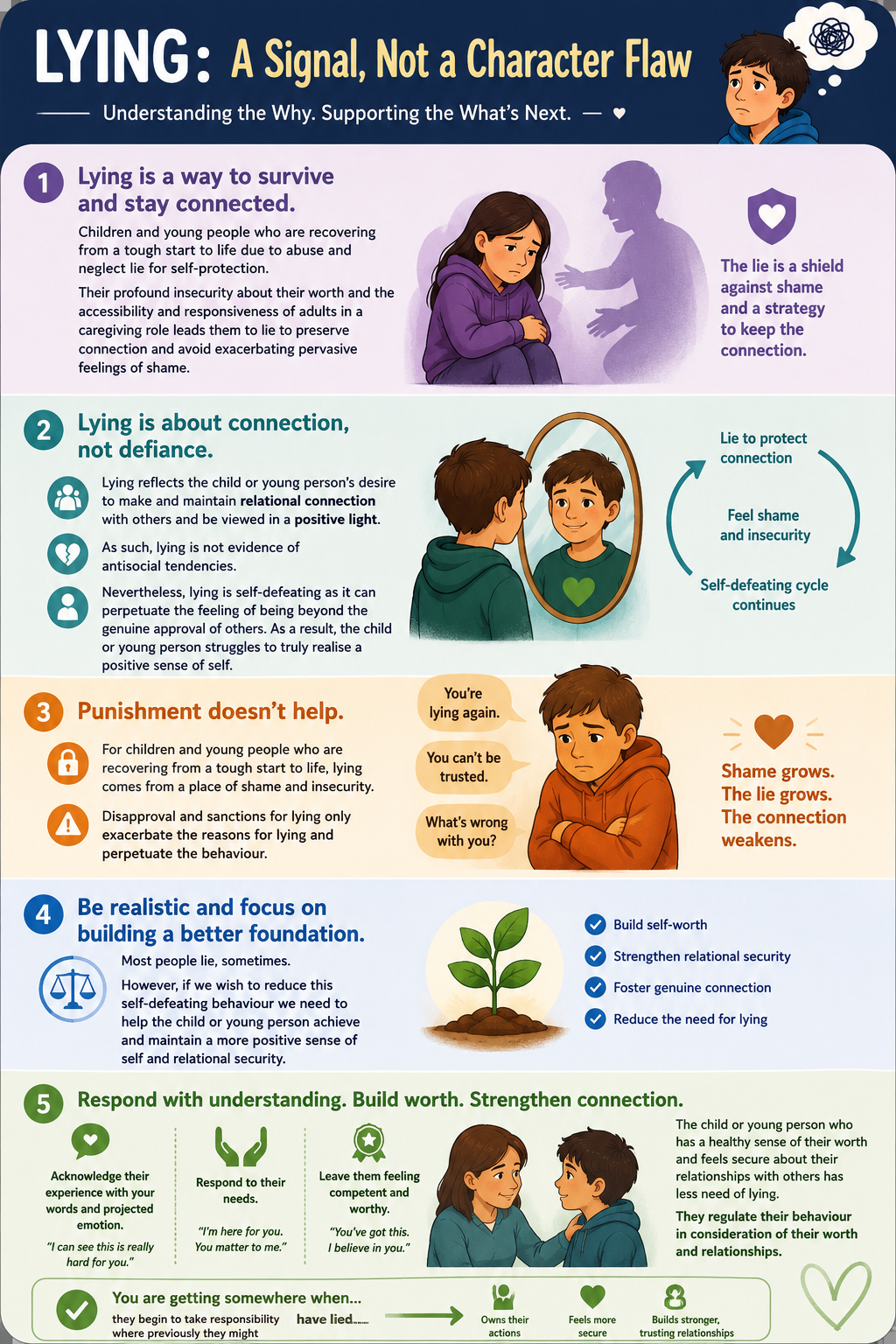
Lying is not necessarily evidence of a character flaw or lack of connection with reality. Children and young people who are recovering from a tough start to life due to abuse and neglect lie for self-protection. Such is their profound insecurity about their worth and the accessibility and responsiveness of adults in a caregiving role, they lie to preserve connection and avoid exacerbating pervasive feelings of shame.

Lying reflects the child or young person’s desire to desire to make and maintain relational connection with others and be viewed in a positive light. As such, lying is not evidence of antisocial tendencies. Nevertheless, lying is self-defeating as it can perpetuate the feeling of being beyond the genuine approval of others. As a result, the child or young person struggles to truly realise a positive sense of self.

For children and young people who are recovering from a tough start to life, lying comes from a place of shame and insecurity. As such, disapproval and sanctions for lying only exacerbate the reasons for lying and perpetuate the behaviour.

We need to be realistic. Most people lie, sometimes. However, if we wish to reduce this self-defeating behaviour we need to help the child or young person achieve and maintain a more positive sense of self and relational security.

When interacting with the child or young person who lies often, acknowledge their experience with your words and projected emotion, respond to their needs, and leave them feeling competent and worthy. The child or young person who has a healthy sense of their worth and feels secure about their relationships with others has less need of lying. They regulate their behaviour in consideration of their worth and relationships. You will know you are getting somewhere when they begin to take responsibility where previously they might have lied.

If you took something useful away from this article, please consider liking it and making a comment. I am interested to read what other behaviours you would like me to turn my mind to.

For an accessible method to respond therapeutically to behaviours of concern exhibited by a child in your care, see this further post: https://colbypearce.net/2026/04/23/the-4-simple-habits-that-change-a-childs-behaviour-without-punishment/

If you would like to make a small donation in support of me producing this blog, please consider buying me a coffee.
Buy Me A Coffee

Posted in AAA Caregiving, Adoption, Fostering, kinship care, Parenting, trauma informed | Tagged , , , , , , , , , , , , , | 1 Comment

Why does my child smile when I am angry?

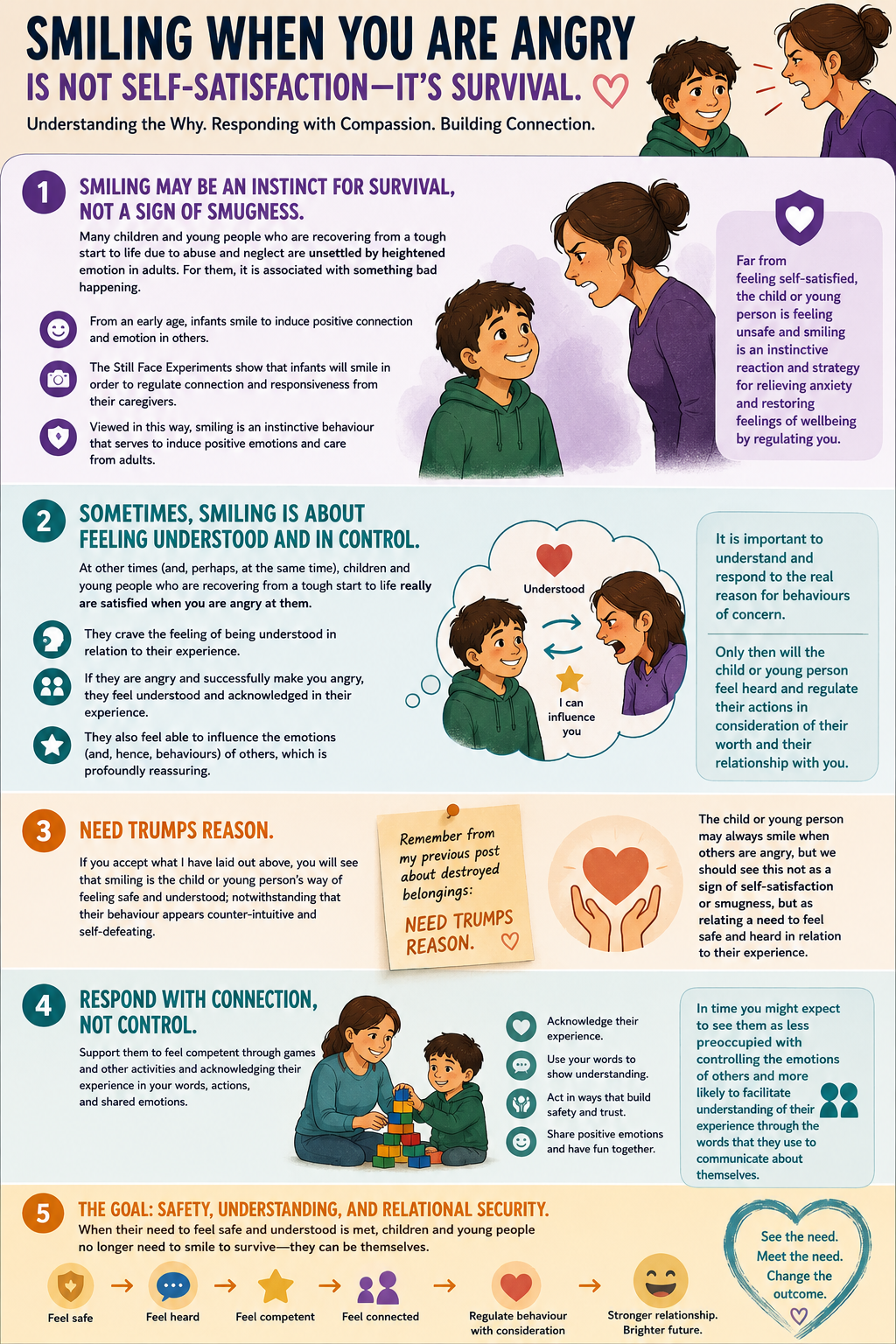
Smiling when you are angry is not necessarily a sign that the child or young person in your care is feeling self-satisfied and smug. Many children and young people who are recovering from a tough start to life due to abuse and neglect are unsettled by heightened emotion in adults. For them, it is associated with something bad happening. From an early age infants smile in order to induce positive connection and emotion in others. The Still Face Experiments show that infants will smile in order to regulate connection and responsiveness from their caregivers. Viewed in this way, smiling may very well reflect an instinctive behaviour that serves to induce positive emotions and care from adults. Far from feeling self-satisfied, the child or young person is feeling unsafe and smiling is an instinctive reaction and strategy for relieving anxiety and restoring feelings of wellbeing by regulating you.

At other times (and, perhaps, at the same time), children and young people who are recovering from a tough start to life really are satisfied when you you are angry at them. They crave the feeling of being understood in relation to their experience. If they are angry and successfully make you angry, they feel understood and acknowledged in their experience. They also feel able to influence the emotions (and, hence, behaviours) of others, which is profoundly reassuring.

As referred to in previous blogs in this series about messy rooms and destroying their belongings, it is important to understand and respond to the real reason for behaviours of concern. Only then will the child or young person feel heard and regulate their actions in consideration of their worth and their relationship with you.

If you accept what I have laid out above, you will see that smiling is the child or young person’s way of feeling safe and understood; notwithstanding that their behaviour appears counter-intuitive and self-defeating. Remember from my previous post about destroyed belongings, need trumps reason. The child or young person may always smile when others are angry, but we should see this not as a signs of self-satisfaction or smugness, but as relating a need to feel safe and heard in relation to their experience.

So, support them to feel competent through games and other activities and acknowledging their experience in your words, actions, and shared emotions. In time you might expect to see them as less preoccupied with controlling the emotions of others and more likely to facilitate understanding of their experience through the words that they use to communicate about themselves.

If you took something useful away from this article, please consider liking it and making a comment. I am interested to read what other behaviours you would like me to turn my mind to.

For an accessible method to respond therapeutically to behaviours of concern exhibited by a child in your care, see this further post: https://colbypearce.net/2026/04/23/the-4-simple-habits-that-change-a-childs-behaviour-without-punishment/

If you would like to make a small donation in support of me producing this blog, please consider buying me a coffee.

Buy Me A Coffee

Posted in AAA Caregiving, Adoption, Fostering, kinship care, Parenting, trauma informed | Tagged , , , , , , , , | 7 Comments

Why do my kids destroy their belongings?

Destruction of their clothes, toys and other belongings is not necessarily a sign of ingratitude or disrespect. Many children who are recovering from a tough start to life due to abuse and neglect are mistrustful of receiving nice things and experience them as incongruent with their perception of their own worth and deservedness. They are unsettled by inconsistency, including in their experience of adults in a caregiving role. They may break or damage their belongings in the pursuit of consistency and, also, to reduce the likelihood of them being taken by others. Their apparent lack of care for their belongings reflects a lack of attachment to them, in anticipation that they will be lost.

A mentioned in my previous post titled Why is my child’s room always messy?, the above paragraph reflects the importance of approaching the care of children and young people who have experienced a tough start to life in thoughtful and intentional manner. None of us do anything for no reason, and until we address a child or young person’s reasons we are likely to continue to see the behaviour.

The behaviours we are concerned about are generally the child or young persons way of satisfying a need that they are preoccupied with. A preoccupation with needs arises in (prior) caregiving arrangements where there has been inadequate needs provision, especially during the early developmental period. In the case of destroying their belongings, the child or young person is pursuing consistency in their experience; of themselves, of others, and their world.

A statement I often use is ‘needs trump reason‘, by which I mean the child or young person is more likely to satisfy a need ahead of thinking about their actions and consequences that flow from our disapproval. What looks unreasonable and self-defeating in our eyes is a source of comfort and I made a short video explaining this further, below:

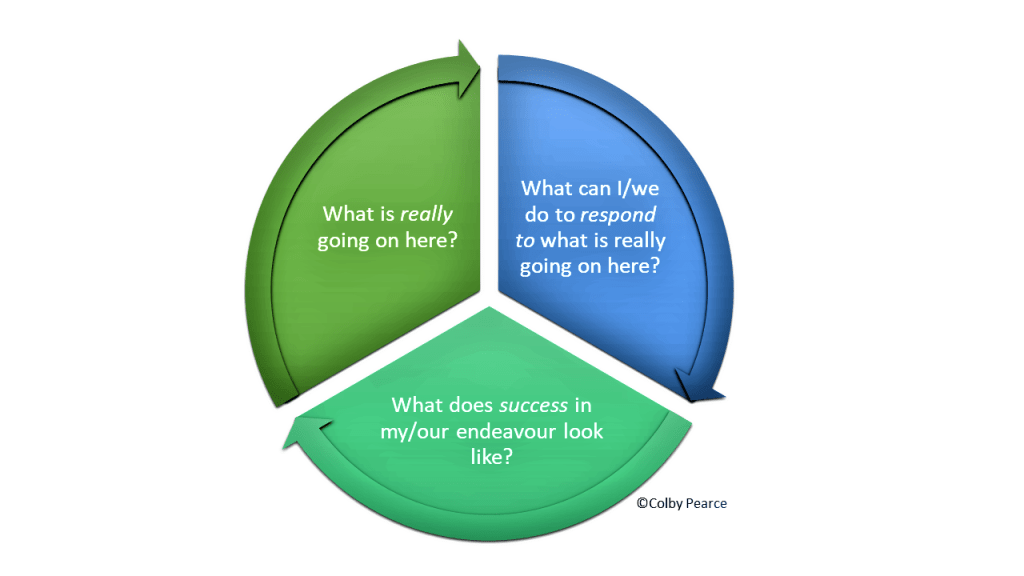
Successfully addressing behaviours of concern involves turning one’s mind to the reasons for the behaviour, responding to the reasons, and keeping an eye out for signs of success in your endeavours. In the case of destroying their belongings, this might be seen as part of a child or young person’s endeavour to achieve consistency in their experience. Consistency is calming, and this is especially important among children and young people who are prone to uncomfortable emotions and other sensations as a result of a history of recurrent and poorly relieved distress.We can respond to a child’s need for calming consistency by maintaining and extending their experience of routines and rituals, especially in relation to caregiving practices and one-to-one time. If you already have many routines and rituals and/or are having difficulty thinking about how to enrich the child or young person’s experience of consistency, make a list of all the things that happen sometimes in your home. Can any of these be turning into a consistent routine or ritual?

Success in your endeavours is likely to be reflected by the child or young person showing more care towards their belongings (and themselves).

Ultimately, trauma-informed, therapeutic caregiving calls upon is to reflect on:

  • What is really going on for the child?
  • How can I respond to what is really going on?
  • How will I know that my endeavours are working?

I made a video about the reflective process inherent on trauma-informed, therapeutic parenting (and practice), which you can view below:

I also made a video about this post here:

If you took something useful away from this article, please consider liking it and making a comment. I am interested to read what other behaviours you would like me to turn my mind to.

For an accessible method to respond therapeutically to behaviours of concern exhibited by a child in your care, see this further post: https://colbypearce.net/2026/04/23/the-4-simple-habits-that-change-a-childs-behaviour-without-punishment/

If you would like to make a small donation in support of me producing this blog, please consider buying me a coffee.
Buy Me A Coffee

Posted in AAA Caregiving, Adoption, Fostering, kinship care, Parenting, trauma informed, trauma informed care | Tagged , , , , , , | Leave a comment

Why is my child’s room always messy?

Read full blog below

Messy bedrooms are not necessarily evidence of a chaotic mind or wilful disobedience. For children who are recovering from a tough start to life due to abuse and neglect or other forms of hardship, it can be a sign that they struggle to feel secure about what they have, and that they need to see their possessions in order to feel reassured that their needs are understood and important, and that they are loved and worthy.

The paragraph reflects one of the central tenets of my work with children and young people who are recovering from adversity; the requirement that we approach the caregiving role mindfully and intentionally, considering not only the behaviour we can see but also the reason why the child or young person is doing it. This is necessary because until such time as the child or young person feels sufficiently acknowledged and responded to in relation to the real reasons why they do what they do, they will continue to struggle to feel truly heard, cared for, and worthy. The consequences of this is an ongoing preoccupation with their needs and coercive behaviours to reassure themselves about their access to those things that represent that they are loved and worthy of care.

If you accept this and are willing to try an alternative approach to addressing the issue of messy bedrooms, try using shelving to display the items that are important to the child or young person in your care, and open racks (and shelving) for clothes instead of closed cupboards or drawers. I anticipate that in time this will lead to a tidier bedroom and, perhaps, a calmer home.

If you took something useful away from this article, please consider liking it and making a comment. I am interested to read what other behaviours you would like me to turn my mind to.

For an accessible method to respond therapeutically to behaviours of concern exhibited by a child in your care, see this further post: https://colbypearce.net/2026/04/23/the-4-simple-habits-that-change-a-childs-behaviour-without-punishment/

If you would like to make a small donation in support of me producing this blog, please consider buying me a coffee.
Buy Me A Coffee

Posted in AAA Caregiving, Adoption, Attachment, Fostering, kinship care, Parenting, trauma informed care | Tagged , , , , , , , , , | 2 Comments

Attentional factors and attachment security

We all live our life moving between two worlds.

In one world, we experience ourselves, others, and our world in a positive way. We notice more of the good things when we are there.

In the other world, we experience ourselves, others and our world in a negative way. We notice more of the bad things when we are there.

The difference from person to person is how much time we spend in each world, and the consequences in terms of our feelings, actions, and choices.

Ideally, we spend as much time as possible living where we experience ourselves, others, and our world in a positive way.

It helps to notice the things that remind us we are in a good place.

What do you notice about yourself, others, and your world when you are in a good place?

You: _______________________________________

Others: ____________________________________

My world : _________________________________

Write your answers and put them somewhere you will see them each day.

Posted in Attachment, trauma informed | Tagged , , , , , , , , , | Leave a comment

What is the distinctive atmosphere or quality that you project in your role?

A quick Google search reveals that aura can be defined as the distinctive atmosphere or quality that seems to surround and be generated by a person, thing, or place (Oxford Languages).

In my work, I am particularly interested in the therapeutic benefits of relational connection and what it is about a person, be they professional or lay, that makes them therapeutic to others.

In a sense, I write about the aura of a therapeutic person, without using the term that is typically steeped in mysticism.

So, if we think about what is the distinctive atmosphere or quality that seems to surround and be generated by a [therapeutic] person, I think that the answer lies in the letters that make the word, particularly as is reflected in my work.

Firstly, the ‘A’ refers to accessible. The therapeutic person is there for others, such that they feel supported.

The ‘U’ refers to understanding. The therapeutic person understands the experience of others, such that they feel acknowledged.

The ‘R’ refers to responsive. The therapeutic person responds to the experience of others, such that they feel worthy.

The second ‘A’ refers to attuned. The therapeutic person is emotionally-connected and empathic towards others, such that they feel togetherness.

AURA: Accessible, Understanding, Responsive, Attuned.

There is one more quality that I consider is vital here: consistency. It makes a difference if a person is consistently accessible, understanding, responsive, and attuned, or not. Consistency supports an experience of the therapeutic person being always accessible, understanding, responsive, and attuned, such that their therapeutic qualities can can be depended upon.

The CARE Curriculum supports people to be more aware of their aura (as defined above) and a methodology for projecting a therapeutic aura.

Posted in trauma informed | Tagged , , , , , , , , , , , , | 1 Comment

Supporting Strong Developmental Outcomes: The case for CARE and Attachment Security

Raising children who have the best chance of achieving their potential involves connection with our task. It involves parenting with intention; thinking about what we are doing, and why. It involves holding the child in our mind; especially their experiences and their needs. It involves responding to their experiences and needs.

When children experience others to be connected with their experience and needs, they feel a sense of worthiness that profoundly supports their emerging identity and sense of worth. They feel that they can trust and rely on the adults who are connecting with their experience and needs. They develop a reciprocal connection to these adults. This reciprocal connection goes by various names, but the one I will use in this post is Attachment.

Attachment refers to the dependency relationships a child forms to the adults in their life who look after them, beginning in the first year of life (noticeable from 6-8 months), and developing progressively over the first four years of life. Central to the concept of attachment is the idea of secure base. The dependency relationship the child develops towards the adult who cares for the child (referred to as the attachment relationship and the attachment figure) becomes the secure base from which the child launches out into the world, and to whom the child returns for comfort and reassurance before launching out again. Having an attachment figure that can be trusted and depended upon forms a necessary condition for the child to explore their world without anxiety and, in doing so, supports all aspects of their developmental progress.

Not all children have the same type of attachment relationship with the adults who care for them. Attachment varies depending on the child’s experience of care. Extensive research has identified four predominant attachment styles. When thinking about the child’s development, the optimal attachment style is a secure attachment. Children who form a secure attachment to the adults who care for them use these adults as a source of comfort and reassurance so that they can launch into the world without being restricted by unnecessary worry or fear. This attachment style is optimal because development unfolds through exploration, and a secure attachment style is optimal for exploration.

Other children have an insecure attachment to the adult or adults who care for them. Some of these children orient to their attachment figures for relief from distress but are not easily reassured so that they might launch back into the world. They might be viewed as unnecessarily clingy and temperamental and, relative to securely attached children, their exploration restricted. In Attachment Theory, these children are typically referred to as having an Insecure-Ambivalent attachment style.

Other children have what is known as an Insecure-Avoidant attachment style. These children do not use their attachment figures enough for comfort and reassurance. Though they appear to be self-reliant, they are actually overly anxious which, in turn, restricts their exploration (and development).

A fourth group of children show a more concerning pattern of behaviour. They orient to their attachment figure, only to experience uncertainty when doing so. These children are referred to as having a Disorganised attachment style. They are observed to need and avoid their attachment figures. Their priority is not exploring their world (and growing and developing from doing so). Rather, the most important driver of their approach to life and relationships is achieving feelings of safety.

A fifth group of children have no attachment to anyone. These children have lacked opportunity to form an attachment to someone who provides care on a consistent basis. As with insecure and disorganised attachment styles, the development of these children is restricted by unrelieved anxiety and an intense focus on coercively controlling their environment in order to achieve needs provision. These children struggle to form mutually-satisfying dependency relationships with the adults who care for them.

Attachment styles are profoundly influenced by the child’s experience of care. A child whose parents are connected with what they are doing as a parent and with the child’s experience is more likely to develop a secure attachment style. A secure attachment style represents the optimal condition for the child to fulfil their potential and enter adulthood with the knowledge and capabilities to be successful (including in parenting their own children).

For the sake of the child’s development (and wellbeing), attachment security is the goal.

Parenting intentionally stands the best chance of supporting attachment security. Intentional parenting that supports attachment security involves the following:

  • Being a consistent presence in the child’s life
  • Being accessible to the child
  • Being responsive to the child’s experience, and
  • Being emotionally-connected to the child.

These aspects of intentional parenting can be summarised in the acronym CARE:

  • Consistency
  • Accessibility
  • Responsiveness
  • Emotional Connectedness

Hereafter, I will present each of these concepts and why they are important to attachment security and development.

Consistency

Children form attachments to adults who are familiar and continuous aspects of their life, as well as being responsive to their dependency needs. In order to for a secure attachment to develop, these adults must be involved with the child and respond to their dependency needs in a consistent way. They also need to be recognisable to the child, and so must present in a consistent way. Knowing that their recognisable adult caregivers are consistent aspects of their life and will respond to them in a consistent way supports confident exploration unhindered by anxiety about who is their caregiver.

Where there has not been a consistent adult or adults who cares for them, the child is unlikely to have formed a selective attachment to anyone. They can be excessively self-reliant, and/or indiscriminate in who they will seek a caregiving response from. They lack trust in caregiving adults, and in their own deservedness of care. They may resist care and may also be coercively controlling towards adults.

Accessibility

Children form attachments to the most available adults during the early developmental period. Children form secure attachments to adults who are accessible to them for comfort and needs provision on a continuous and consistent basis. Further, they form a secure attachment to adults who attend to them whether they are crying or quiet. These forms of accessibility support and reinforce a child’s understanding that they have a person who is responsible for their care, how to recognise them, and that their caregiving adult continues to exist during temporary separations. Knowing that they have a recognisable caregiver who is accessible to them even when temporarily separated supports a profound sense of comfort and reassurance for the child that allows them to get on with exploring their world without anxiety about the accessibility of their caregiver.

In contrast, when a child has not experienced their main caregivers to be consistently accessible to them, they struggle to accept separations and are commonly excessively demanding and preoccupied with their caregiver. During temporary separations, they are excessively anxious about where their caregiver is and who will respond to their needs. Both scenarios detract from the child’s capacity to explore and learn about their world and develop the capacities that support their success in life.

Responsiveness

Responsiveness refers to the actions of the caregiving adults perform in response to the needs and experience of the child. Responsiveness extends from consideration of what is going on for baby/child? What is happening for them and what is their need, including the need or experience that is responsible for the behaviour you see? We do this naturally during the child’s preverbal years. (Incidentally, we also do this with our pets). When the child is verbal we tend to encourage them to use their words more and more, which can be problematic, as I will explain in a bit. However, the child’s first experiences of the responsiveness of caregiving adults occur during a time when they cannot tell us in words about their needs and experiences that they require a caregiving response to. This spans much of the first three years of their life, before gradually reducing as the child becomes increasingly verbal.

When we come up with the answer to the experience or need the child has, and which may be evident in their behaviour or gestures, and respond to it, the child has their experience that their needs and experiences are understood, that they are withy, and that they can rely on the caregiving adult to respond to them. Children who form a secure attachment experience their adult caregivers as consistently responsiveness to their needs and experience. That is, their caregivers regularly and accurately ask and answer in their head the question what is going on for baby/child (?), and then perform an action that responds to the need or experience of the child. The reflection on the need and experience of the child, and the associated response, is often accompanied by words, which is significant.

Children learn language in at-least three ways:

  • Firstly, they learn language as a result of their caregivers expressing pleasure when, during their babbly, the infant says something recognisable as a word, such as the response of mum when the infant babbles Ma.
  • Secondly, they experience their attachment figures speaking to them about their experience; that is, speaking the words the child would use if they had them. I am not trying to be funny, but we tend to do the same with our much-loved pets. When we do this the child gradually learns what words go with what experience or need. That is, they learn that the word happy is what goes with feeling happy.
  • Thirdly, they watch and learn from others how they use language.

We are particularly interested in the first two. When a child’s caregivers are not consistent in these actions, the child will be relatively slower to learn language. Being slower to learn language and develop their vocabulary, the child will rely on behaviour and gesture to communicate about their experience and needs, long after the time when we would usually expect them to say what they need or what is going on for them. This can result in a punitive response, leaving the child feeling unheard and unsure of their worthiness. If this happens often up, there can be long-term impacts to their self-esteem.

The second aspect of responsiveness is the action performed to satisfy the child’s need or experience. Sometimes, it is simply the words we say that communicate understanding of the child’s experience. Other times, it is what we do in response to the child’s need or experience; such as when we feed the baby at four-hourly intervals, burp them after a feed, and change their nappy regularly and when soiled. Responsiveness to the child’s needs and experiences supports the development of cause and effect thinking; that is, the understanding that when you do this that happens. This is important as it supports the child’s knowledge of how to access a caregiving response, thereby allowing them to explore and learn about other things.

Children form secure attachments to the adults who consistently respond to their needs and experiences through actions taken, as well as the words used. Securely attached children trust that their caregivers will respond to them when needed which allows them to explore their world, learn, and develop without anxiety about responsiveness to their needs.

Where responsiveness has been inconsistent and/or inadequate, these children approach life and relationships preoccupied with their needs. They can be excessively demanding or self-reliant; often both. They have learnt that they cannot always rely on adults in a caregiving role. This limits or impairs their exploration, with associated developmental impacts.

Emotional Connectedness

Emotional connectedness refers to those times when the emotions of the child and caregiver are in synchrony with each other. Emotional connectedness extends from the adult observing the child and allowing themselves to feel what the child is feeling.  Often referred to as attunement, it is typically a natural experience to the emotion of another. Emotional connectedness typically flows from interaction and paying attention. In this sense, it can be intentional.

Emotional connectedness supports diverse aspects of emotional development. By tuning in and allowing emotional connectedness to occur, the child begins to develop an understanding of the experience of others, which is an early building block for the development of empathy. The infant connects back with the experience of the adult and follows them where they go. This allows the adult to regulate the infant’s emotions before they are overwhelmed by them. This is commonly referred to as co-regulation, and it provides a safe space for the child to explore a range of emotions without fear of being overwhelmed by them, thereby developing a broad emotional repertoire. Through repeated experiences of being regulated by the adult, the child learns to regulate themselves. Through emotional connection with their adult caregivers, the child begins to regulate their emotions and behaviour in consideration of others in order to maintain connection, thereby providing the foundations for social competence and satisfying relationships.

Most important, emotional connectedness represents another opportunity for the child to feel heard and acknowledged in their experience, thereby supporting their sense of worth and trust in others.

Children form secure attachments to adults who are consistently attuned to their experience. Again, these children feel free to explore their world, learn, and develop free of unnecessary anxiety. In contrast, those children for whom emotional connectedness has been inadequate tend to show a restricted range of affect, restricted empathy, and restricted regulation of their emotions and behaviours in consideration of others. Too often, this serves to further distance them from others as they encounter disinterest and punitive responses to their so-called inappropriate behaviour.

If you would like to read more about CARE and Attachment, the best overall coverage is in my book (Click the image for more):

Posted in AAA Caregiving, Attachment, Fostering, kinship care, Parenting, trauma informed | Tagged , , , , , , , , , , , , , , | Leave a comment