Tag Archives: psychology

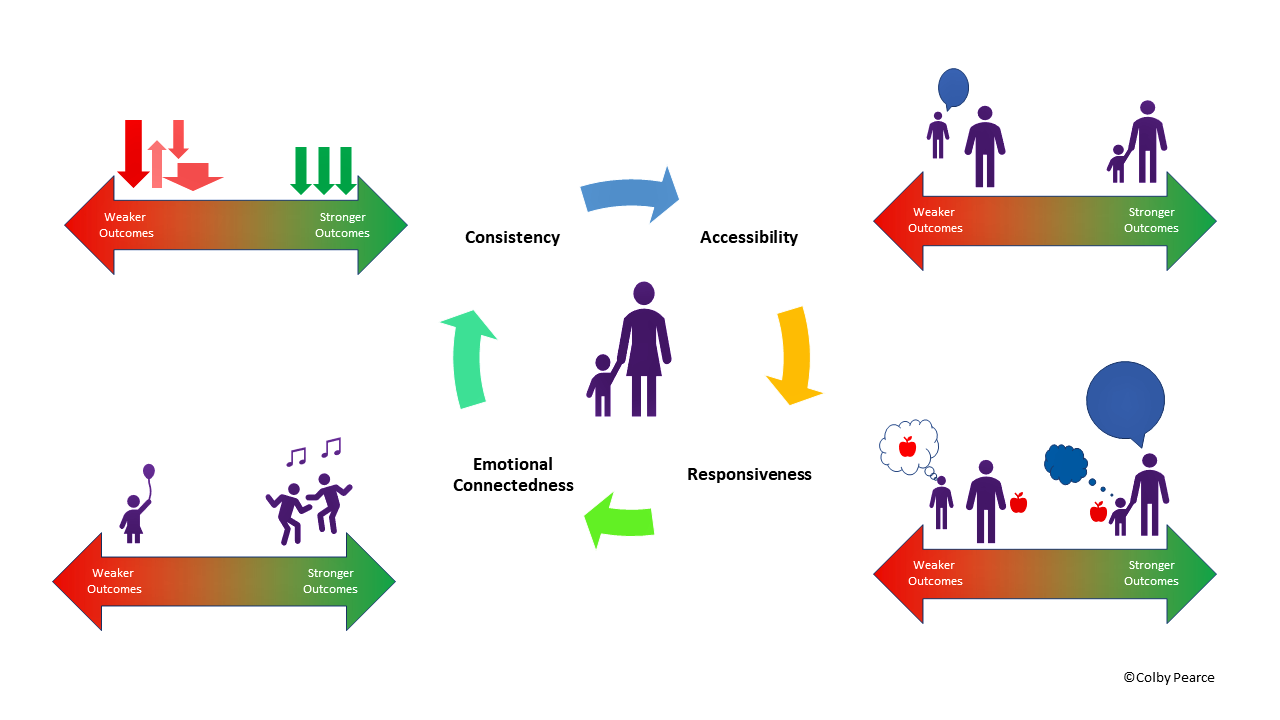
What attachment security looks like

In the first blog of this series about child welfare intervention outcomes, I wrote about the importance of knowing, and being able to say, what progress toward successful outcomes looks like. In this second blog of the series, I will … Continue reading →

Posted in Adoption, Fostering, kinship care, trauma informed | Tagged , , , , , , , , , , , | 2 Comments

Child Welfare Intervention Outcomes: What we know and what we see

What outcomes do you expect to see as a result of my service provision? This is a question I routinely ask in my work. Put another way: What are the benefits the individual(s) or organisation who engages my services anticipate … Continue reading →

Posted in AAA Caregiving, Therapy, Training Programs, trauma informed care, trauma informed practice, Trauma Informed Schools | Tagged , , , , , , , , , , , , , | 3 Comments

Achieving best outcomes from care

Twenty-seven years continuous work in child protection and child welfare, including ongoing work with young adults who have transitioned from Care, has taught me some extremely valuable lessons about long-term outcomes of a childhood spent in State Care. In particular, … Continue reading →

Posted in Attachment, Fostering, kinship care, Parenting, Therapy, trauma informed, trauma informed care, Trauma Informed Schools | Tagged , , , , , , , , , , , | Leave a comment

How do I get my child to go to sleep in their own bed?

In this blog I describe a methodology I used with my own children, and recommend in my practice. Before doing so, I would advise that this is a routine that I sustained across years. My children and I enjoyed this … Continue reading →

Posted in AAA Caregiving, Adoption, Fostering, kinship care, Parenting | Tagged , , , , , , , , , , | Leave a comment

Why does my child chew their clothes?

Chewing their clothes is not necessarily evidence of wilful damage or a lack of respect. For many children it is an exaggeration of a very natural way in which they regulate their nervous system. As such, it is better conceptualised … Continue reading →

Posted in AAA Caregiving, Adoption, Attachment, Fostering, kinship care, Parenting, trauma informed | Tagged , , , , , , , , , , | 1 Comment

Why does my child follow me to the bathroom?

Those who take care of children who are recovering from a tough start to life commonly report that the child in their care follows them to the bathroom, and becomes unreasonably distressed when prevented from doing so. In my experience … Continue reading →

Posted in AAA Caregiving, Adoption, Fostering, kinship care, Parenting, trauma informed, trauma informed care | Tagged , , , , , , , , , , , | Leave a comment

Why does my child antagonize others and then complain of being bullied?

Antagonizing others and then complaining of being bullied, though it is easily viewed as irrational and self-defeating, stems from very real (and justified) feelings of being poorly treated in life. Children and young people who have experienced relational trauma are … Continue reading →

Posted in Uncategorized | Tagged , , , , , , , , , , | Leave a comment

Why does my child smile when I am angry?

Smiling when you are angry is not necessarily a sign that the child or young person in your care is feeling self-satisfied and smug. Many children and young people who are recovering from a tough start to life due to abuse and neglect are unsettled by heightened emotion in adults. For them, it is associated with something bad happening. Continue reading →

Posted in AAA Caregiving, Adoption, Fostering, kinship care, Parenting, trauma informed | Tagged , , , , , , , , | 7 Comments

Attentional factors and attachment security

We all live our life moving between two worlds. In one world, we experience ourselves, others, and our world in a positive way. We notice more of the good things when we are there. In the other world, we experience … Continue reading →

Posted in Attachment, trauma informed | Tagged , , , , , , , , , | Leave a comment

What is the distinctive atmosphere or quality that you project in your role?

A quick Google search reveals that aura can be defined as the distinctive atmosphere or quality that seems to surround and be generated by a person, thing, or place (Oxford Languages). In my work, I am particularly interested in the … Continue reading →

Posted in trauma informed | Tagged , , , , , , , , , , , , | 1 Comment